- Company Articles
- Products and Technology
- Solution
- Sustainable Lean Solutions: 40 Aluminum Roller Track Grey's Reusability Benefits

Sustainable Lean Solutions: 40 Aluminum Roller Track Grey's Reusability Benefits
Related Product
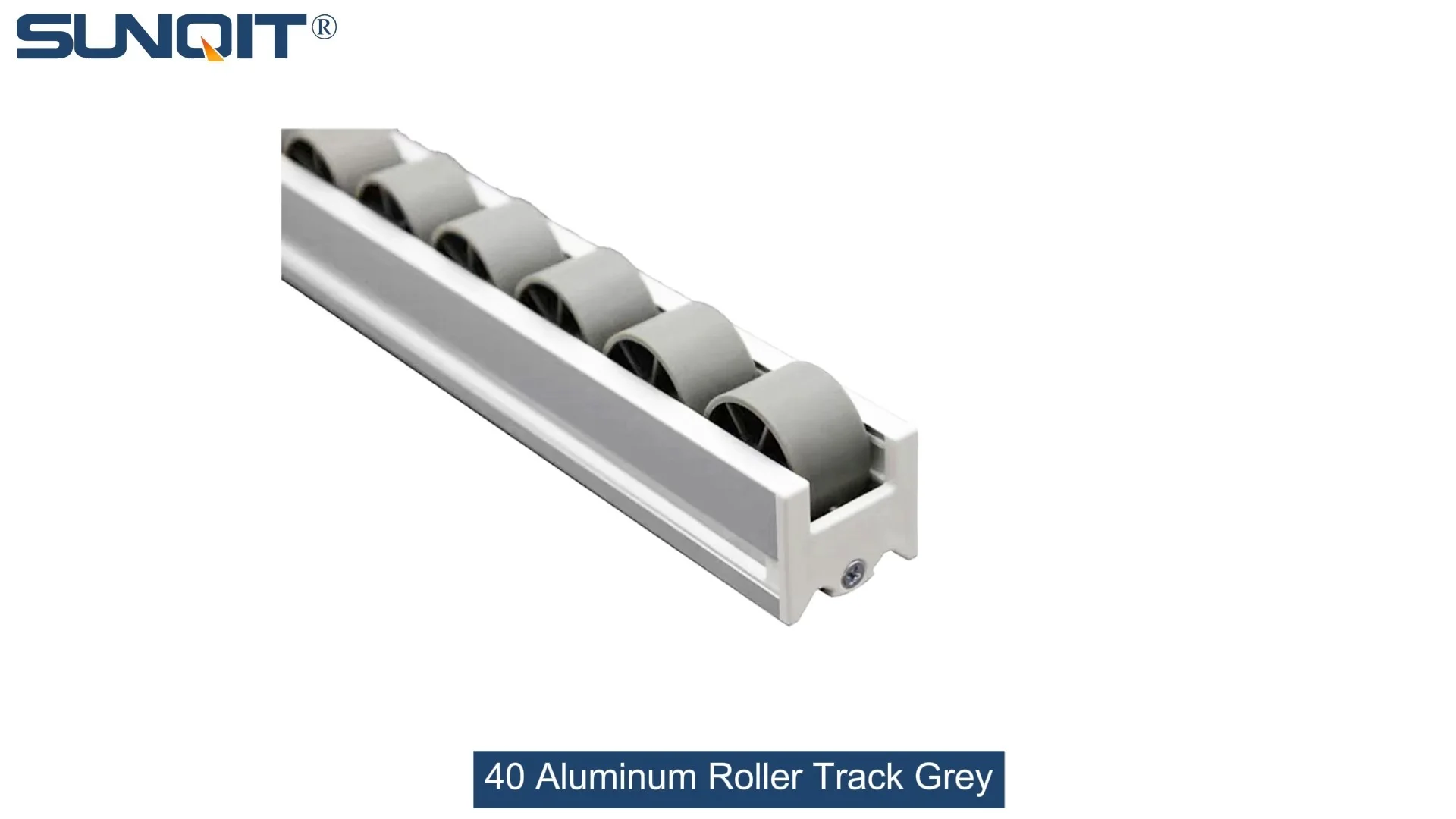
40 Aluminum Roller Track Grey
Durable and smooth-running modular roller rails. The system is fully assembled. The roller rail profile contains plastic rollers mounted on steel axles. Aluminum frame with plastic wheel make it anti corrosion,and material convey more smooth.
In today's fast-paced manufacturing world, the pressure is on. You're not just tasked with meeting tight production deadlines or cutting operational costs—there's a growing expectation to do it all while minimizing your environmental footprint. Walk into any factory, and you'll likely spot the same challenge: rigid, one-size-fits-all equipment that's tough to adapt when production needs change. That old steel roller track? It worked for the last product line, but now that you're shifting to a new model, it's either gathering dust in the corner or heading straight to the scrapyard. And that's a problem—for your budget, your efficiency, and the planet. But what if there was a solution that didn't force you to choose between productivity and sustainability? Enter the 40 Aluminum Roller Track Grey, a yet revolutionary component that's redefining what it means to build a lean, eco-friendly production line.
Lean System Meets Sustainability: More Than Just Efficiency
Before diving into the specifics of the 40 Aluminum Roller Track Grey, let's take a step back. Lean system has long been the gold standard for manufacturers aiming to eliminate waste—whether that's time, materials, or unnecessary steps in the production process. But in 2025, "lean" isn't just about trimming fat from your operations anymore. It's about building systems that are sustainably efficient: reducing resource consumption, minimizing waste, and ensuring that every tool and piece of equipment contributes to both short-term productivity and long-term environmental responsibility.
Sustainability in manufacturing isn't a buzzword; it's a business imperative. Customers are demanding greener products, regulators are tightening environmental rules, and investors are prioritizing companies with strong ESG (Environmental, Social, Governance) credentials. The problem? Traditional production setups often work against these goals. Think about it: if your conveyor systems, workbenches, or roller tracks are bolted down, welded together, or made from materials that degrade quickly, you're stuck in a cycle of constant replacement. Each time you reconfigure your line, you're throwing away perfectly functional (but inflexible) parts, contributing to landfill waste and driving up your carbon footprint. That's where the 40 Aluminum Roller Track Grey comes in—it's a bridge between the efficiency of lean system and the responsibility of sustainable manufacturing.
What Makes the 40 Aluminum Roller Track Grey Different?
At first glance, a roller track might seem like a simple tool—just a series of wheels or rollers that help move materials along a production line. But the 40 Aluminum Roller Track Grey is anything but simple. Let's break it down: it's made from high-grade aluminum profile, a material known for its strength, light weight, and resistance to corrosion. The "40" refers to its standard size, designed to fit seamlessly with common aluminum profile accessories, while the "grey" finish is not just aesthetic—it's a neutral tone that blends into any factory environment, hiding minor scuffs and wear (because let's face it, production lines get busy).
But the real magic isn't in the material or the color—it's in the modularity . Unlike traditional steel or plastic roller tracks that are often fixed in place or require specialized tools to adjust, this aluminum roller track is built to be taken apart, reconfigured, and reused. It connects with simple, standardized roller track connectors and placon mounts, meaning you don't need a welder or a team of engineers to adapt it to a new layout. Need to shorten the track for a smaller product? Unclip a section. Want to angle it to feed into a new workstation? Swap out a connector. It's like building with a set of high-quality, industrial-grade Legos—only instead of plastic bricks, you're working with durable aluminum that can handle the rigors of daily manufacturing.

Reusability Benefits: The Heart of Sustainable Lean
1. Adaptable to Changing Production Needs
The average manufacturing facility reconfigures its production line 3–5 times a year, according to industry surveys. That could be due to a new product launch, a shift in demand, or even a seasonal spike. With traditional roller tracks, each reconfiguration often meant buying new parts. Steel tracks, for example, are heavy and hard to modify—if you need a different length or angle, you're better off cutting them (rendering the leftover piece useless) or buying a whole new track. Plastic tracks, while lighter, degrade over time, especially under heavy loads or exposure to factory chemicals, so they're rarely reusable after a single setup.
The 40 Aluminum Roller Track Grey changes this. Let's say you run a electronics assembly plant, and you've been using a 10-foot section of the track to move circuit boards to your testing station. Now, you're launching a smaller device, and the testing station needs to be 6 feet away instead. With traditional tracks, you'd either have to live with extra track (wasting space) or replace it. With the aluminum version? You simply disconnect the excess 4 feet using roller track placon mount connectors, store those sections, and reuse them later when you scale back up. No waste, no extra cost, and minimal downtime. It's lean system in action—eliminating the "waste of inflexibility" that plagues so many production lines.
2. Durable Enough to Withstand Repeated Use
Reusability only matters if the product can stand up to being taken apart and put back together multiple times. Aluminum is inherently durable—unlike plastic, it doesn't crack or become brittle with age, and unlike steel, it doesn't rust or corrode (even in humid or chemical-heavy factory environments). The 40 Aluminum Roller Track Grey is built to last, with reinforced edges and high-quality plastic roller wheels (grey, in this case) that glide smoothly even after years of use.
Consider this: a typical steel roller track might last 3–5 years before needing replacement, often due to rust or warping. The 40 Aluminum Roller Track Grey, when properly maintained, can last 10–15 years— and during that time, it can be reconfigured 10, 20, or even 50 times. That's not just longevity; that's a product designed to grow with your business, not against it. A lean pipe supplier I spoke with recently shared a story about a client in the automotive industry that's been reusing the same set of aluminum roller tracks for over 8 years, through 12 different product launches. "They just keep rearranging the sections," the supplier said. "It's like that track has become a permanent part of their toolkit, not a disposable item."
3. Reduces Waste and Raw Material Consumption
Every time you reuse a section of the 40 Aluminum Roller Track Grey, you're avoiding the need to manufacture a new one. Let's do the math: producing a single 10-foot steel roller track requires mining iron ore, smelting it into steel, and shaping it into track—processes that emit significant CO2. Aluminum production, while still energy-intensive, has a key advantage: aluminum is 100% recyclable, and recycling it uses just 5% of the energy needed to produce new aluminum. But even better than recycling is reusing —because recycling still requires processing, transportation, and energy. By reusing the same aluminum track sections, you're cutting out the need for new raw materials entirely.
A recent study by the Aluminum Association found that reusing aluminum products can reduce their lifecycle carbon footprint by up to 70% compared to single-use alternatives. For a mid-sized manufacturer using 500 feet of roller track annually, switching to reusable aluminum could mean avoiding over 2 tons of CO2 emissions per year—equivalent to taking 4 cars off the road. That's a tangible impact that goes beyond just cost savings; it's a step toward meeting those sustainability goals that stakeholders (and your conscience) are pushing for.
| Feature | Traditional Steel Roller Track | 40 Aluminum Roller Track Grey |
|---|---|---|
| Reusability | Low—often cut or welded, making modification difficult; rarely reused after initial setup. | High—modular design allows disassembly, reconfiguration, and reuse across multiple production line setups. |
| Durability | 3–5 years (prone to rust and warping). | 10–15 years (corrosion-resistant aluminum; wear-resistant wheels). |
| Environmental Impact | High—requires frequent replacement, leading to more raw material extraction and CO2 emissions. | Low—reusability reduces need for new production; aluminum recyclability minimizes end-of-life waste. |
| Cost Over 5 Years | Higher—needs replacement 1–2 times; disposal costs for old tracks. | Lower—one-time purchase; minimal replacement parts; no disposal fees for reused sections. |
| Adaptability | Low—requires specialized tools (welders, cutters) for adjustments. | High—uses standard roller track connectors; no special tools needed for reconfiguration. |
4. Compatible with Existing Aluminum Profile Systems
No manufacturing facility operates in a vacuum. Your roller track doesn't exist alone—it connects to workbenches, material racks, conveyors, and other equipment. The 40 Aluminum Roller Track Grey is designed to play well with others, specifically with standard aluminum profile systems. If your factory already uses aluminum profile workbenches or aluminum extrusion profile material racks, this roller track will connect to them seamlessly using the same accessories: T-slot bolts, corner brackets, and placon mounts.
This compatibility is a game-changer for lean system. Instead of ripping out your entire setup to switch to sustainable tools, you can start small—replace a few sections of roller track, see how they integrate, and expand from there. A lean pipe supplier I visited last year had a client that started with just 20 feet of the 40 Aluminum Roller Track Grey on their electronics assembly line. Within 6 months, they'd expanded to using it on three more lines, simply because it worked with their existing aluminum profile workstations. "It's like adding a new piece to a puzzle that already fits," the supplier told me. "No one wants to overhaul their entire factory—they want solutions that slot into what they already have. That's where this roller track shines."

Real-World Impact: A Case Study
Let's put all this theory into practice with a real example. Meet Precision Parts Co., a mid-sized manufacturer of automotive components based in Ohio. In 2023, they were facing a dilemma: their existing production line used steel roller tracks that were over 5 years old. They needed to reconfigure the line to produce a new sensor component, but their old tracks were rusted, bent, and impossible to adjust. Their options? Buy new steel tracks (costing ~$15,000) or invest in a modular aluminum solution. They chose the latter, working with a local lean pipe supplier to install 40 Aluminum Roller Track Grey and compatible aluminum profile accessories.
The results were eye-opening. First, the reconfiguration took just 2 days instead of the projected week (thanks to the easy-to-use connectors). Then, 6 months later, when demand for the new sensor spiked, they needed to add a second line. Instead of buying more tracks, they simply reused 30% of the sections from the first line, saving $4,500. A year later, when they shifted production back to their original component, they reconfigured the track again—no new parts needed. "We used to see roller tracks as 'consumables,'" said their production manager. "Now, they're assets. We've already saved enough in replacement costs to cover the initial investment, and we're sending far less metal to the scrapyard. It's a no-brainer."

Beyond the Track: The Ripple Effects of Reusability
The benefits of the 40 Aluminum Roller Track Grey extend far beyond the track itself. Let's talk about cost savings: while aluminum track may have a higher upfront cost than low-quality plastic or even some steel tracks, the total cost of ownership (TCO) is significantly lower. A 10-year TCO analysis by a leading manufacturing consultancy found that reusable aluminum tracks cost 40% less than traditional steel tracks when factoring in replacement, labor for reconfiguration, and waste disposal. For a large manufacturer, that could mean savings in the six figures over a decade.
Then there's the human factor. Production line workers and managers hate inefficiency as much as anyone. When you give them tools that are easy to adjust—tools that let them solve problems on the fly without waiting for maintenance or new parts—morale improves. "It's empowering," one factory floor supervisor told me. "If a track gets jammed or we need to redirect materials, I don't have to call a meeting or fill out a work order. I can grab a wrench, adjust the connectors, and get back to production in 10 minutes. That's lean system in action—giving the people closest to the work the tools to make it better."
The Future of Sustainable Lean Solutions
As manufacturers continue to balance efficiency, cost, and sustainability, modular, reusable tools like the 40 Aluminum Roller Track Grey will only grow in importance. We're already seeing trends toward "circular manufacturing"—systems where equipment is designed to be reused, repaired, or recycled, rather than discarded. Aluminum profile systems are at the heart of this movement, and roller tracks are just the beginning. Imagine a future where your entire production line—from workbenches to conveyors to material racks—is built from reusable aluminum components, each designed to adapt as your business evolves. That future isn't as far off as it sounds.
And it's not just about big manufacturers. Small and medium-sized factories, which often have tighter budgets and less room for waste, stand to benefit the most. A lean pipe supplier I spoke with noted that their smaller clients are now their biggest adopters of modular aluminum tools. "They can't afford to waste money on disposable equipment," the supplier said. "For them, reusability isn't a 'nice-to-have'—it's survival. The 40 Aluminum Roller Track Grey lets them compete with larger factories, because they can adapt quickly without breaking the bank."
Conclusion: More Than a Roller Track—A Sustainable Lean Mindset
The 40 Aluminum Roller Track Grey is more than just a tool for moving materials. It's a symbol of a shift in manufacturing: a move away from wasteful, one-and-done equipment toward systems that are efficient, adaptable, and responsible. It proves that lean system and sustainability don't have to be separate goals—they can work hand in hand, creating production lines that are better for your bottom line and better for the planet.
So the next time you walk through your factory and see that old, rusted steel roller track gathering dust, ask yourself: What if that track could be reused? What if reconfiguring your line didn't mean more waste, but less? The 40 Aluminum Roller Track Grey isn't the answer to every manufacturing challenge, but it's a powerful step forward—one that shows that even the smallest tools can make a big difference in building a leaner, greener future.