- Company Articles
- Products and Technology
- Solution
- Sustainable Lean Solutions: Two Way Aluminum Pipe Joints for Reusable Material Handling Systems

Sustainable Lean Solutions: Two Way Aluminum Pipe Joints for Reusable Material Handling Systems
Related Product
Two Way Aluminum Pipe Joint
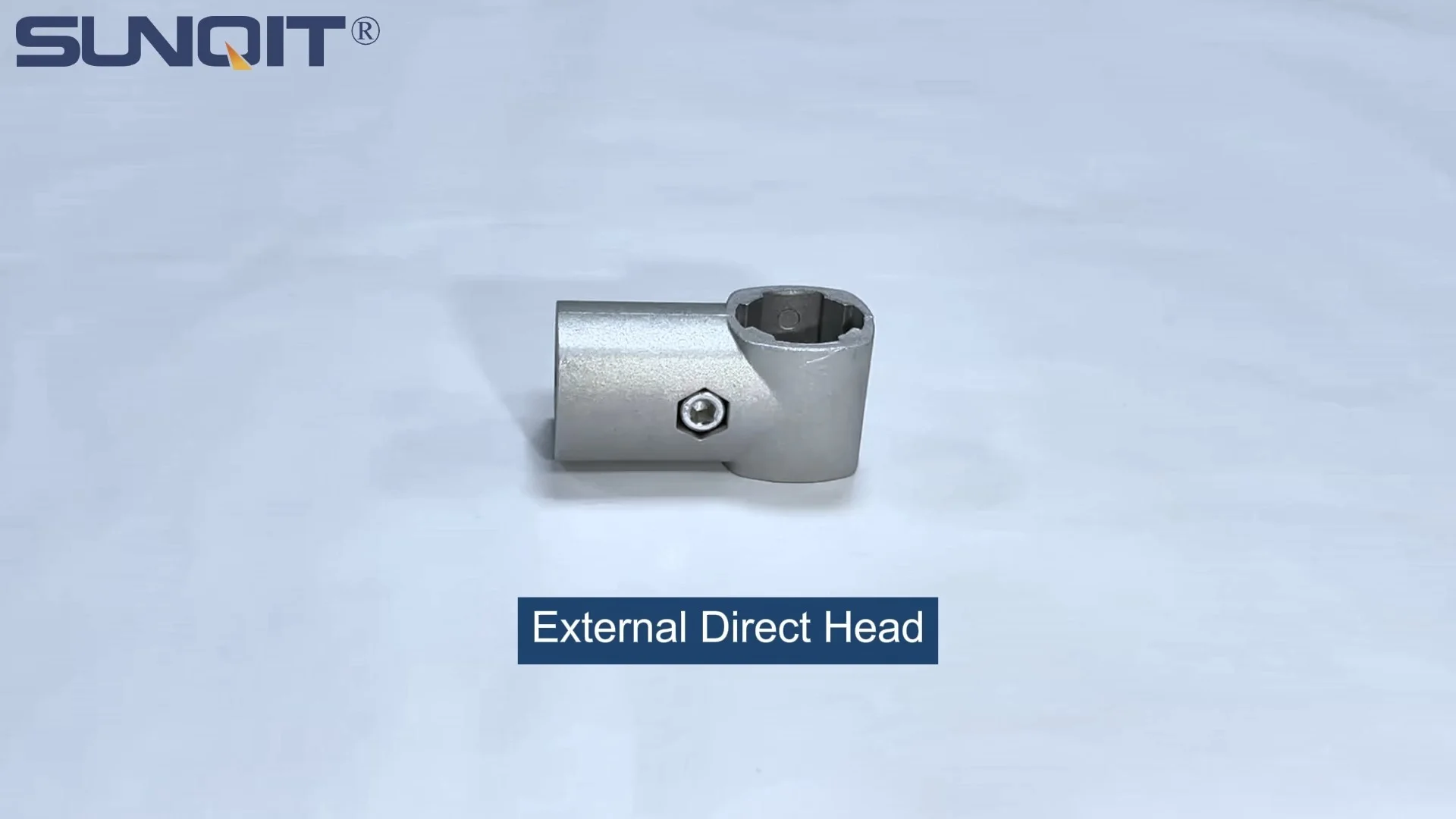
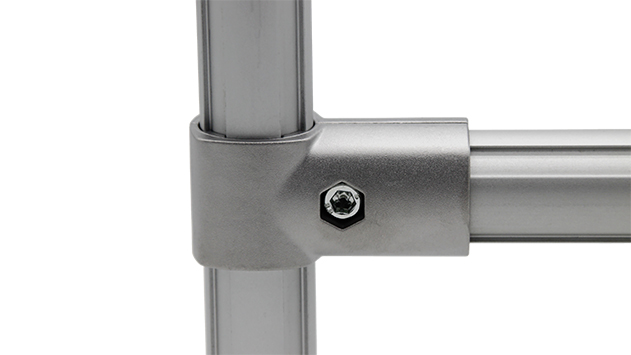
Aluminum 2 way pipe joint for 28mm aluminum pipe connection in 2 direction.
In today's manufacturing landscape, the pressure to do more with less has never been higher. We're not just talking about cutting costs—though that's always a priority—but about doing right by the planet, too. Sustainability isn't a buzzword anymore; it's a business imperative. And if you've spent any time on a factory floor, you know one of the biggest culprits of waste is outdated, rigid material handling systems. That's where lean systems and innovative components like two way aluminum pipe joints come in. They're not just tools—they're game-changers for creating reusable, flexible, and eco-friendly workspaces. Let's dive into how these unassuming joints are reshaping the way we build, adapt, and sustain material handling systems.
Lean Systems 101: Why Reusability Matters Now More Than Ever
First, let's get on the same page about lean systems. At their core, lean principles are all about eliminating waste—whether that's time, materials, or space. But here's the thing: traditional material handling setups often create waste without us even realizing it. Think about it: that heavy steel workbench bolted to the floor that only works for one product line. Or those wooden flow racks that warp after a year and end up in the landfill. These "one-and-done" systems are the opposite of lean. They lock you into a single workflow, make it hard to scale, and generate mountains of waste when your needs change.
Now, imagine a system that grows with you. A system where you can take apart a workbench at the end of a project and rebuild it into a turnover trolley the next week. That's the promise of reusable material handling—and it's exactly what lean systems demand. Reusability cuts down on raw material use, reduces disposal costs, and keeps your operation agile. And at the heart of this reusability? Components that are designed to be taken apart, reconfigured, and used again. Enter: two way aluminum pipe joints.
Meet the Unsung Hero: Two Way Aluminum Pipe Joints
Let's talk about these joints—they're small, but they pack a punch. Two way aluminum pipe joints are the connective tissue of modular material handling systems. Made from lightweight, corrosion-resistant aluminum alloy, they're designed to link aluminum pipes together at (you guessed it) two angles, creating sturdy, customizable structures. Unlike traditional welded joints or heavy steel clamps, these little connectors are tool-friendly (often requiring just a hex key or even hand-tightening) and built for disassembly. That means when your production line shifts, you don't have to buy new equipment—you just reconfigure what you already have.
What makes them so special? Let's break it down. First, their durability. Aluminum might seem "lightweight," but these joints are engineered to handle the daily grind of factory life—think heavy bins sliding over roller tracks, workbenches supporting tools and components, and trolleys being wheeled across concrete floors. They won't rust, warp, or degrade like plastic or wood, so they stick around for years. Second, their versatility. Pair them with basic aluminum tubes, and you can build just about anything: workbenches with adjustable heights, flow racks with variable shelf depths, even mobile carts with caster wheels. And because they're modular, you're not limited by prefab sizes—if you need a workbench that's 6 feet long today and 8 feet tomorrow, just add another pipe and joint.
Here's a real example: A small electronics manufacturer I worked with recently was stuck with a set of fixed wooden workbenches. When they landed a new client with larger circuit boards, the benches were suddenly too short, and the team was wasting 20 minutes a day just moving materials around. We swapped out the wood for aluminum pipes and two way joints. Now, they can adjust the bench length in 10 minutes flat, and when the project ends, those pipes and joints will become a material rack for their next job. No waste, no waiting for custom orders—just flexibility.
The Triple Win: Sustainability, Cost, and Flexibility
Okay, so two way aluminum pipe joints are cool—but do they actually move the needle on sustainability? Absolutely. Let's talk numbers. Traditional steel material handling systems often end up in landfills after 5–7 years because they're too heavy to repurpose and too corroded to resell. Aluminum-based systems, on the other hand, have a lifespan of 15–20 years, and when they finally do retire, the aluminum is 100% recyclable. That's a huge reduction in waste. Plus, since you're reusing components instead of buying new ones, you're cutting down on the raw materials needed to make new equipment—think fewer trees cut down for wood, less iron mined for steel, and lower carbon emissions from manufacturing and shipping.
Then there's the cost factor. It's true: Aluminum systems have a higher upfront cost than wood or basic steel. But let's do the math. If a wooden workbench costs $200 and lasts 3 years, and an aluminum pipe workbench with two way joints costs $400 but lasts 15 years and can be reconfigured 10 times over, which is the better deal? The aluminum one, hands down. Over time, you're saving on replacement costs, disposal fees, and downtime from waiting for new equipment. And because you're not throwing away old systems, you're also avoiding the hidden costs of waste management—like hauling fees and landfill taxes, which add up fast.
Flexibility might be the biggest win of all. In manufacturing, change is constant. A new product line, a shift in demand, or even a safety regulation update can turn your workflow upside down. With traditional systems, adapting means delays and expenses. With aluminum pipe joints, it's a afternoon project. Need to add a shelf to your flow rack? Grab a pipe, two joints, and you're done. Want to turn a static workbench into a mobile cart? Swap out the leveling feet for caster wheels. That kind of agility keeps you competitive, especially in fast-moving industries like automotive or consumer goods.

Building Your System: Aluminum Pipes, Accessories, and More
Two way aluminum pipe joints are stars, but they don't work alone. To build a truly reusable material handling system, you need a supporting cast of aluminum pipes and accessories. Let's start with the basics: aluminum pipes. These come in various diameters and wall thicknesses, but the most common are the "basic aluminum tube" (often 28mm or 40mm) which pairs perfectly with two way joints. They're lightweight, strong, and, like the joints, recyclable. Some even have T-slots, which let you attach accessories like tool holders, label clips, or aluminum profile rubber strips (those handy little guards that prevent scratches on components or fingers).
Then there are the accessories—the little things that make your system functional. Aluminum profile end caps, for example, snap onto the ends of pipes to cover sharp edges (safety first!). Gusset alp brackets add extra stability to corners, ensuring your workbench doesn't wobble under heavy loads. Caster wheels (swivel, lockable, or rigid) turn static structures into mobile ones—imagine a flow rack that can be wheeled right to the assembly line instead of workers walking back and forth. And let's not forget roller tracks. When paired with two way joints and aluminum guide rails, roller tracks turn a simple shelf into a gravity-fed flow rack, letting materials glide smoothly from one workstation to the next. It's these combinations—joints + pipes + accessories—that make the system so powerful.
Here's how it all comes together: Let's say you need a material rack for storing small parts. Start with four vertical aluminum pipes as legs. Use two way joints to connect horizontal pipes at the top, middle, and bottom, creating a frame. Add horizontal crossbars with roller tracks (using aluminum guide rails and roller track placon mount connectors) to create shelves. Attach caster wheels to the bottom legs, and suddenly you've got a mobile flow rack that can be positioned anywhere on the factory floor. Need to adjust the shelf height later? Loosen the joints, slide the crossbars up or down, and retighten. It's that simple.
Another must-have accessory: aluminum honeycomb panels. These lightweight, strong panels are perfect for workbench tops or shelf surfaces. They're durable enough to handle tools and components but lightweight enough that adding them to your structure doesn't compromise mobility. Plus, they're easy to clean—just wipe them down at the end of the shift. Pair a honeycomb panel with a frame built from two way joints and aluminum pipes, and you've got a workbench that's both sturdy and sustainable.

Traditional vs. Aluminum Pipe-Based Systems: A Quick Comparison
Still on the fence? Let's put traditional material handling systems head-to-head with aluminum pipe-based ones. The table below breaks down the key differences in sustainability, cost, and flexibility:
| Aspect | Traditional Systems (Wood/Steel) | Aluminum Pipe-Based Systems |
|---|---|---|
| Sustainability | High waste: Often single-use; wood warps, steel rusts, leading to frequent replacement and landfill disposal. | Low waste: Reusable, recyclable aluminum components; minimal replacement needed over 15–20 year lifespan. |
| Initial Cost | Lower upfront ($100–$300 for basic workbenches/racks). | Higher upfront ($300–$600 for equivalent modular systems). |
| Long-Term Cost | Higher: Frequent replacement (every 3–5 years) + disposal fees. | Lower: One-time purchase + minimal maintenance; reconfigurable for life. |
| Flexibility | Rigid: Fixed sizes and shapes; cannot be reconfigured without cutting/welding. | Highly flexible: Tool-free disassembly and reconfiguration; adapts to changing needs. |
| Lifespan | 3–7 years (wood rots, steel corrodes, joints loosen). | 15–20+ years (aluminum resists corrosion; joints maintain integrity). |
Overcoming Myths: Why Aluminum Isn't "Too Flimsy"
I've heard the pushback: "Aluminum? Isn't that too weak for heavy-duty work?" Let's set the record straight. Modern aluminum alloys (like the ones used in these pipes and joints) are surprisingly strong. They're not meant to support tons of weight, of course—but for most material handling tasks (think bins of components, tools, or finished products under 500 lbs), they're more than up to the job. In fact, aluminum's strength-to-weight ratio often outperforms steel in these mid-weight applications. That means you get a system that's strong enough to work hard but light enough to move around when needed.
Another myth: "Modular systems are complicated to build." I get it—"modular" sounds like it requires an engineering degree. But the beauty of two way aluminum pipe joints is their simplicity. Most systems are designed with "click-and-go" logic. The joints have clear markings for pipe insertion, and tightening them is as easy as turning a hex key a few times. Many suppliers even provide free design templates or online tools to help you plan your setup. I've seen factory floor workers with no prior experience assemble a basic workbench in under an hour. It's like adult Legos—intuitive and satisfying.
The Future of Material Handling: Sustainable, Flexible, and Ready to Adapt
As manufacturers worldwide lean into sustainability goals (think net-zero targets, circular economy pledges), the demand for reusable material handling systems will only grow. And two way aluminum pipe joints are at the forefront of that shift. They're not just a trend—they're a fundamental rethinking of how we build our workspaces. In the next decade, I expect to see even more innovation: smarter joints with built-in sensors to track usage and maintenance needs, integration with IoT tools to optimize workflow, and even more eco-friendly aluminum alloys made from recycled materials.
But here's the best part: you don't have to wait for the future to start. Whether you're a small workshop or a large production facility, you can start small. replace one wooden workbench with an aluminum pipe-based one. Build a single flow rack with two way joints and see how it transforms your material flow. Chances are, you'll wonder how you ever worked without it. Because at the end of the day, sustainability and efficiency aren't just good for the planet—they're good for your bottom line, your team's productivity, and your ability to stay ahead in a competitive market.
Wrapping Up: Your Sustainable Lean Journey Starts Here
Sustainable lean solutions aren't about overhauling your entire operation overnight. They're about making intentional choices that reduce waste, boost flexibility, and build resilience. Two way aluminum pipe joints are a perfect example of that—small, accessible tools that deliver big results. They turn "throwaway" systems into "keep-and-reuse" assets, aligning your material handling with both lean principles and sustainability goals.
So, what's next? Take a walk around your factory floor. Look at your current workbenches, racks, and trolleys. Which ones are fixed, worn out, or limiting your workflow? Those are your starting points. Swap one out for an aluminum pipe-based system, and watch how quickly it pays off—in less waste, less hassle, and more adaptability. The planet (and your profit margin) will thank you.