- Company Articles
- Products and Technology
- Technology Sharing
- Sustainable Lean Systems: Reusability of Three Way Lean Pipe Joint

Sustainable Lean Systems: Reusability of Three Way Lean Pipe Joint
Related Product
Three Way Lean Pipe Joint
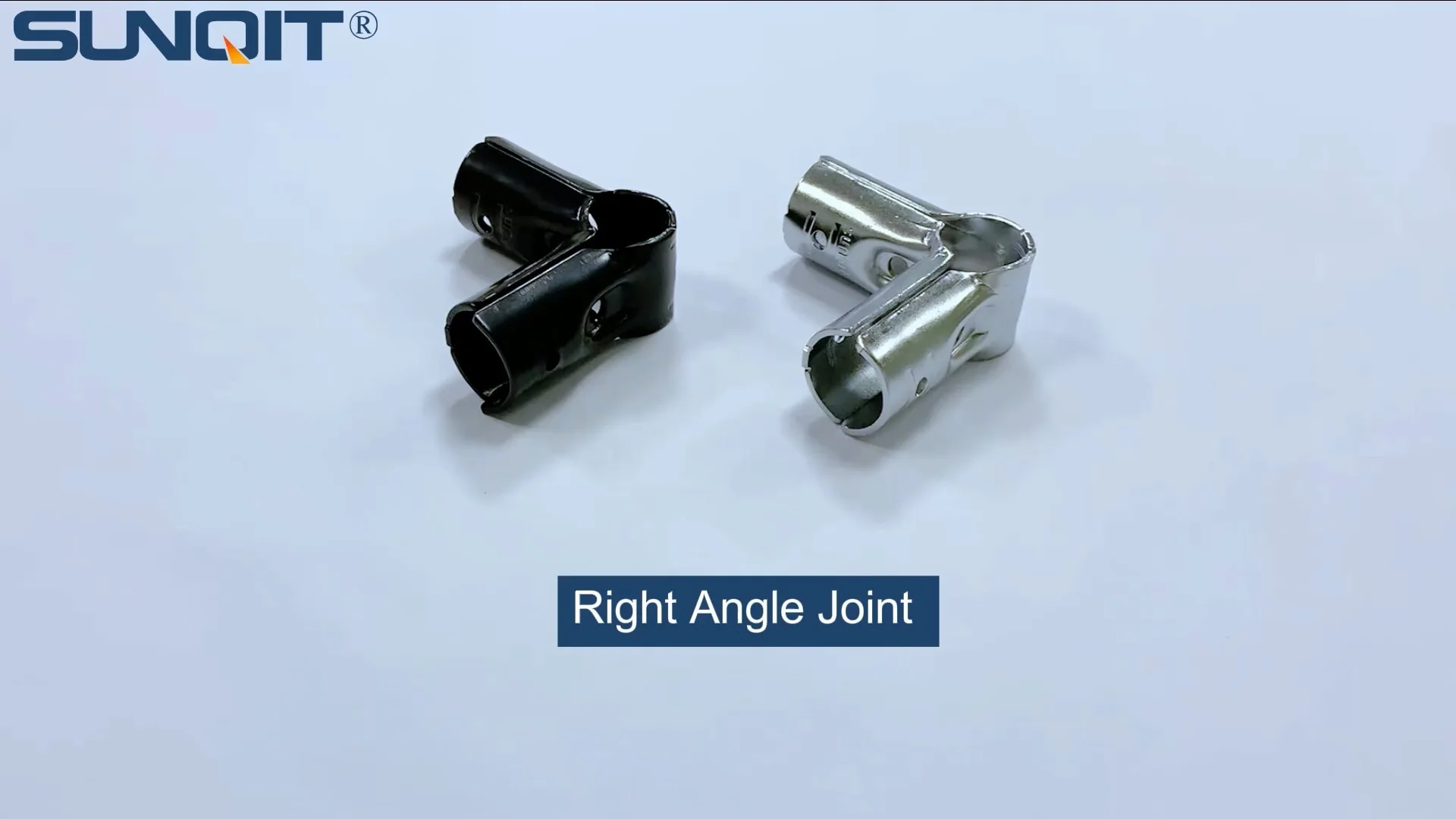
Three way lean pipe joint for 3 pcs 28MM lean pipe connection in straight angle, which used widely in workbench, flow rack, hand trolley frame connection.
Walk into any modern manufacturing facility, and you'll likely notice a quiet revolution unfolding. It's not just about faster production lines or smarter robots—it's about sustainability woven into the very fabric of operations. In an era where "reduce, reuse, recycle" has moved from a catchy slogan to a business imperative, lean systems have found a powerful ally in modular, reusable components. Among these unsung heroes? The three way lean pipe joint. This small, unassuming piece of hardware is quietly transforming how factories operate, cutting waste, slashing costs, and proving that efficiency and environmental responsibility can go hand in hand.
Lean manufacturing has always been about eliminating waste—"muda," as the Toyota Production System calls it. But today's lean isn't just about time or motion waste; it's about material waste, too. Every discarded pipe, every broken joint, every scrapped workbench adds up—for the planet and the bottom line. That's where the three way lean pipe joint comes in. Designed for flexibility, durability, and above all, reusability, it's a cornerstone of sustainable lean systems. Let's dive into why this humble component matters, how it works, and the impact it's having on factories worldwide.
What Is a Three Way Lean Pipe Joint?
At first glance, a three way lean pipe joint might look like little more than a metal connector. But its simplicity is its strength. Picture this: a cylindrical or hexagonal core with three threaded or snap-fit ports, each designed to secure a lean pipe (often aluminum, stainless steel, or coated steel) at 90-degree angles. Unlike traditional welded or glued joints, which lock pipes into fixed positions, these joints are detachable . Twist them, snap them, or unscrew them, and you can reconfigure your entire setup in minutes—no power tools, no welding torches, no leftover scrap.
Materials matter here. Most three way joints are made from aluminum or high-grade plastic, chosen for their durability and resistance to corrosion. Aluminum, in particular, is a standout: lightweight, strong, and infinitely recyclable. It can withstand the daily wear and tear of a factory floor—bumps from forklifts, spills, temperature fluctuations—without degrading. That durability is key to reusability: a well-made aluminum three way joint can last for years, moving from a workbench to a flow rack to a conveyor system and back again.
But why "three way"? Because it connects three pipes at once, creating branching structures. Need a T-shape for a corner shelf? A three way joint. Want to split a main flow rack into two smaller ones? Three way joint. It's the Swiss Army knife of lean system building—versatile enough to handle simple and complex configurations alike. And when paired with other components like aluminum profiles, roller tracks, or casters, it becomes the backbone of a truly adaptable workspace.
Reusability: The Hidden Superpower
Let's talk about waste. In traditional manufacturing setups, when a production line needs to change—say, to accommodate a new product size or a seasonal demand spike—old structures often get torn down. Welded pipes are cut, glued joints are pried apart, and most of the materials end up in landfills. According to a 2023 report by the Manufacturing Sustainability Council, the average factory discards 12% of its material handling equipment annually due to reconfiguration needs. That's not just bad for the environment; it's bad for business. New materials cost money, disposal fees add up, and downtime during reconfiguration eats into productivity.
The three way lean pipe joint flips this script. Because it's detachable, there's no need to destroy the old setup to build a new one. Take a workbench, for example. Suppose a electronics manufacturer used three way joints to build a bench for assembling smartphones. Six months later, they need to shift to tablets, which require a wider workspace. Instead of scrapping the old bench, they can simply unscrew the three way joints, remove the crossbars, add longer pipes, and reattach the joints—all in an hour. The joints themselves? They're as good as new, ready to be reused again when the next product comes along.
This reusability translates to tangible savings. Let's break it down with a simple example. A mid-sized factory might spend $5,000 annually on new pipe joints for reconfigurations using traditional fixed joints. With reusable three way joints, that number drops to $500—mostly for occasional replacements due to extreme wear. Over five years, that's $22,500 saved. And that's not counting the cost of disposing of old materials (which averages $200–$500 per ton) or the labor hours spent on demolition and. It's a no-brainer for cost-conscious managers—and a win for sustainability, too.

Environmental Impact: Less Waste, Lower Carbon Footprint
Sustainability isn't just about cost—it's about the planet. Every time we reuse a three way joint, we're reducing the demand for new raw materials. Let's put this in perspective: producing one ton of aluminum requires 17,000 kWh of energy and emits 12 tons of CO2. Recycling aluminum cuts that energy use by 95% and CO2 emissions by 90%. But reusing aluminum? That's even better. A single three way joint reused five times avoids the need to mine, smelt, and manufacture five new joints—saving energy, reducing emissions, and keeping waste out of landfills.
To visualize this, let's look at a comparison between traditional fixed joints and reusable three way lean pipe joints. The table below breaks down the environmental impact of a typical factory reconfiguration (e.g., rebuilding a flow rack) using both methods:
| Metric | Traditional Fixed Joints | Reusable Three Way Lean Pipe Joints | Reduction with Reusability |
|---|---|---|---|
| Joints Discarded per Reconfiguration | 50 joints | 0 joints (100% reused) | 100% |
| Aluminum Waste (kg) | 15 kg | 0 kg | 100% |
| CO2 Emissions (kg) | 180 kg (from manufacturing new joints) | 5 kg (minimal energy for cleaning/reassembling) | 97% |
| Energy Use (kWh) | 255 kWh (for new joints) | 8 kWh (for reconfiguration labor) | 97% |
These numbers aren't just theoretical. A 2024 case study from a automotive parts manufacturer in Michigan found that switching to reusable three way joints reduced their annual aluminum waste by 2.3 tons and cut their carbon footprint by 27 metric tons—equivalent to taking six cars off the road for a year. "We used to have a dumpster full of old pipes and joints every quarter," said the plant manager. "Now, that dumpster is half-empty, and we're buying 70% fewer new components. It's not just good for the planet—it's good for morale. The team loves that we're not wasting materials anymore."

The Three Way Joint: A Pillar of Modern Lean Systems
Lean systems thrive on adaptability. The ability to pivot quickly—whether for a new product, a process improvement, or a shift in demand—is what separates successful factories from stagnant ones. The three way lean pipe joint isn't just a tool for sustainability; it's a tool for lean agility . Let's take a real-world example: a medical device manufacturer that produces surgical tools. Their production lines need to be sanitized daily, and they frequently introduce new tool designs.
Before switching to reusable joints, their workbenches were fixed wooden structures. When a new tool required a longer assembly area, they'd have to build a whole new bench, leaving the old one to collect dust. Now, they use aluminum pipes and three way joints. Each workbench is modular: add a pipe here, remove a section there, and it's ready for the new tool. The joints? They're moved from the old bench to the new one, no waste, no delay. "We used to spend two days reconfiguring a line," said their operations director. "Now it takes two hours. And we haven't bought a new workbench in three years—we just keep reusing the parts."
This agility also supports continuous improvement, a core lean principle. Kaizen events—short, focused workshops to solve problems—often require quick changes to workflows. With three way joints, teams can prototype new layouts in minutes. For example, if a team notices that parts are piling up at a conveyor station, they can use three way joints to add a side flow rack on the spot, redirecting the parts and reducing bottlenecks. No waiting for maintenance, no ordering new materials—just quick, effective action.

Working in Harmony: Three Way Joints and Other Lean Components
A three way joint rarely works alone. It's part of an ecosystem of lean components—aluminum profiles, roller tracks, casters, workbenches—that together create a seamless, sustainable system. Let's take a flow rack, for example. A typical flow rack uses aluminum pipes for the frame, roller tracks for moving parts, and three way joints to connect the vertical supports to the horizontal shelves. If the factory needs to adjust the rack's height to accommodate taller bins, they can simply loosen the three way joints, slide the pipes up, and retighten—no need to replace the entire rack.
Aluminum profiles are another key partner. These extruded aluminum beams have T-slots that let you attach joints, shelves, or tools without drilling. Pair a three way joint with an aluminum profile, and you've got a structure that's both strong and flexible. For instance, a workbench built with aluminum profiles and three way joints can have its top replaced (e.g., from wood to ESD-safe material) or its legs extended, all while reusing the joints. It's like building with Legos for adults—endless combinations, zero waste.
Even small components matter. Casters, for example, let you turn a static workbench into a mobile trolley. When the trolley is no longer needed, remove the casters, reuse the joints to build a stationary material rack, and you're good to go. Roller tracks, too, can be reconfigured using three way joints—adjust the angle, add a curve, or split a track into two, all with the same set of parts. The beauty of this system is that every component is designed to work together and be reused independently.
The Future of Sustainable Lean: Innovation in Reusability
As factories embrace sustainability, the demand for reusable components like the three way lean pipe joint is growing. Suppliers are responding with innovations: joints made from recycled aluminum, snap-fit designs that require no tools, and even smart joints with RFID tags to track reusability (e.g., "This joint has been reused 12 times—inspect before next use"). These advances are making reusability easier, more efficient, and more data-driven.
Circular economy models are also emerging. Some lean pipe suppliers now offer "joint libraries"—factories can rent joints, return them when not needed, and borrow new ones for reconfigurations. This "pay-per-use" model reduces upfront costs and ensures joints are constantly reused across multiple facilities. It's a win-win: suppliers maximize asset utilization, and factories minimize waste.
Looking ahead, we'll likely see even more integration between reusability and digital tools. Imagine a factory's digital twin (a virtual replica of the production line) that suggests the best way to reuse three way joints for a new layout, calculating waste savings and carbon reductions in real time. Or AI-powered inventory systems that track every joint's location and reuse history, ensuring no part is forgotten or wasted. The future of sustainable lean isn't just about physical components—it's about using technology to make reusability smarter, too.
Why the Three Way Lean Pipe Joint Matters
In the grand scheme of manufacturing, the three way lean pipe joint might seem small. But small changes add up. Every reused joint is a step toward a more sustainable future—one where waste is minimized, resources are, and efficiency and environmental responsibility go hand in hand. It's a reminder that sustainability doesn't have to be complicated or expensive; sometimes, it's as simple as choosing components designed to be used again and again.
For factory managers, the message is clear: investing in reusable three way lean pipe joints isn't just good for the planet—it's good for business. Lower costs, faster reconfigurations, happier teams (who love working with flexible tools), and a stronger reputation as a sustainable operator. In a world where consumers and investors increasingly demand eco-friendly practices, that's a competitive edge.
So the next time you walk through a factory, take a closer look at those metal connectors holding the pipes together. That three way joint? It's not just a piece of hardware. It's a symbol of how lean manufacturing is evolving—toward a future where we build smarter, waste less, and leave a lighter footprint on the planet. And that's a future worth building.