
Sustainable Manufacturing: Aluminum Workbench A's Recyclable Advantage
In the bustling world of manufacturing, where every second and every resource counts, there's a quiet revolution happening. It's not just about making products faster or cheaper anymore—though those still matter. Today, the most forward-thinking factories and workshops are asking a bigger question: How can we make things without breaking the planet? Sustainable manufacturing isn't a buzzword; it's a promise to future generations that progress doesn't have to come at the cost of our environment. And at the heart of this promise lies a surprisingly simple tool: the workbench. But not just any workbench—meet Aluminum Workbench A, a piece of equipment designed with one goal in mind: to prove that productivity and sustainability can go hand in hand, starting with the very surfaces where innovation happens.
The Sustainability Imperative: Why Manufacturing Can't Afford to Ignore It
Let's start with the numbers, because they tell a clear story. The manufacturing sector accounts for nearly 20% of global carbon emissions, and a significant portion of that comes from the tools and infrastructure we use daily. Traditional workbenches, often made from solid wood, steel, or plastic composites, have a hidden cost: their lifecycle. A wooden bench might last 5-7 years before warping or cracking; a steel one could rust if not properly maintained; and plastic? It's rarely recyclable, ending up in landfills where it persists for centuries. When these benches reach the end of their useful life, they're often hauled away, adding to the 92 million tons of waste generated by U.S. manufacturers alone each year. That's a lot of waste for something as basic as a workspace.
But here's the good news: change is possible. As regulations tighten and consumers demand greener products, manufacturers are rethinking every part of their process—including the workbench. And that's where aluminum steps in. Lightweight, durable, and infinitely recyclable, aluminum isn't just a material; it's a sustainability superpower. And Aluminum Workbench A? It's the embodiment of that power, built from the ground up to minimize environmental impact without skimping on the functionality workers rely on.
Why Aluminum is a Game-Changer for Sustainable Production
Before we dive into the specifics of Aluminum Workbench A, let's talk about why aluminum is such a big deal for sustainability. Unlike wood, which requires cutting down trees, or steel, which demands energy-intensive mining and smelting, aluminum has a secret weapon: its recycling rate. Did you know that 75% of all aluminum ever produced is still in use today? That's because recycling aluminum uses just 5% of the energy required to produce new aluminum from raw bauxite ore. Let that sink in: for every ton of aluminum recycled, we save 95% of the energy that would have been used to make it from scratch. That's not just good for the planet—it's good for the bottom line, too. Lower energy use means lower costs, and in manufacturing, every dollar saved is a dollar that can be reinvested in innovation.
But aluminum isn't just recyclable; it's also incredibly durable. A well-made aluminum workbench can last decades, even in harsh factory environments with heavy use. Unlike wood, it doesn't warp with humidity or rot with exposure to liquids. Unlike steel, it resists corrosion without the need for toxic coatings. And because it's lightweight, it's easier to move and reconfigure, reducing the need for heavy machinery (and the emissions that come with it) when rearranging workspaces. For manufacturers embracing lean principles—where efficiency and waste reduction are key—aluminum's flexibility is a game-changer. It adapts to your needs, so you don't have to replace it every time your production line changes.
Aluminum Workbench A: Designed for the Planet, Built for the Worker
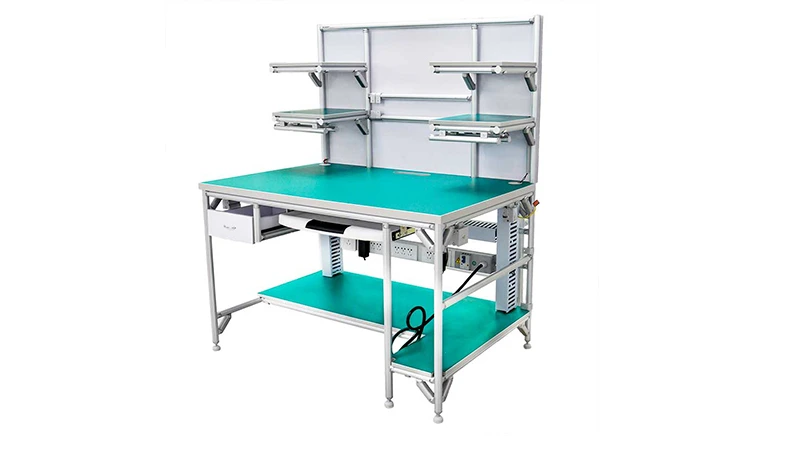
Now, let's get up close with Aluminum Workbench A. At first glance, it might look like any other sturdy workbench, but a closer inspection reveals the thoughtfulness behind its design. The core of this bench is aluminum extrusion profile —a material created by pushing heated aluminum through a die to form specific shapes, like the rails and supports that make up the bench's frame. Extrusion is a low-waste process: it uses only the exact amount of aluminum needed, and any scrap from production is immediately recycled. Compare that to cutting solid steel or wood, where up to 30% of the material can end up as waste.
But what really sets Aluminum Workbench A apart is its commitment to recyclability. Every component, from the frame to the accessories, is designed to be disassembled and recycled. There are no hidden fasteners or adhesives that would complicate recycling—just simple, reusable bolts and connectors. Even the work surface, a smooth aluminum panel, can be melted down and turned into a new extrusion profile, a soda can, or even another workbench, without losing any of its strength or quality. This is the circular economy in action: a product that's born from recycled materials and can be reborn again and again.
Let's talk about the details, because they matter. Aluminum Workbench A (Single Deck—Without Caster, as its full name goes) is built with aluminum profile that's 6061-T6 grade, a high-strength alloy commonly used in aerospace and automotive applications. That means it can support up to 500 pounds of weight without bending, making it tough enough for assembly lines, electronics testing, or heavy machinery repair. The deck is a single sheet of aluminum, sandblasted for a non-slip surface, so tools and parts stay put during use. And because it's aluminum, cleaning is a breeze—no need for harsh chemicals; a quick wipe with soap and water is all it takes. For workers who spend 8+ hours a day at their bench, these small details add up to a better, safer, more efficient workspace.
But sustainability isn't just about the materials—it's about longevity. Aluminum Workbench A is built to outlast its traditional counterparts by a factor of 3 or more. Think about it: a wooden bench might need replacing every 5 years; Aluminum Workbench A can easily last 15-20 years with minimal maintenance. That means fewer replacements, less waste, and lower long-term costs. For a small manufacturer with 10 workbenches, that's avoiding 3-4 replacements over two decades—translating to hundreds of pounds of waste kept out of landfills.
Beyond the Bench: How Aluminum Workbench A Supports Lean Systems
At this point, you might be thinking, "Okay, it's sustainable, but does it actually help me run a better factory?" The answer is a resounding yes—and that's where lean system principles come into play. Lean manufacturing is all about eliminating waste: waste of time, waste of materials, waste of space. Aluminum Workbench A is a lean dream come true, and here's why.
First, flexibility. Traditional workbenches are often fixed in place, built to a specific size and shape that's hard to modify. If your production line changes—say, you start assembling a larger product—you might need to buy a whole new bench. Aluminum Workbench A, thanks to its modular aluminum profile accessories , adapts on the fly. Need a shelf? Add an aluminum bracket. Want to attach a tool holder? Screw in a clamp. Moving the bench to a new location? Since it's lightweight (about 40% lighter than a steel bench of the same size), two workers can lift it without a forklift, saving time and energy. This flexibility means you're not wasting money on equipment you'll outgrow, and you're not wasting space on benches that can't keep up with your needs.
Second, waste reduction. Lean systems thrive on minimizing inventory and excess materials, and Aluminum Workbench A supports that by keeping workspaces organized. The smooth aluminum surface is easy to keep clean, reducing the risk of misplaced tools or damaged parts. And because it's durable, you're not constantly replacing worn-out benches, which means less downtime for installation and fewer disruptions to your workflow. One electronics manufacturer in Michigan reported that after switching to Aluminum Workbench A, they reduced bench-related downtime by 60%—time that's now spent building products, not replacing furniture.
Third, energy efficiency. Lighter benches mean less energy used in transportation and installation. A steel bench might require a pallet jack or forklift to move; Aluminum Workbench A can be carried by hand. Over time, those small energy savings add up. Plus, because aluminum reflects heat, workspaces with aluminum benches stay slightly cooler, reducing the load on air conditioning systems during hot summer months. It's a small detail, but in a large factory, those savings can be significant.
The Lifecycle Advantage: From Production to Recycling
To truly understand Aluminum Workbench A's impact, let's walk through its entire lifecycle—from raw material to recycling bin (and beyond). It starts with recycled aluminum. The extrusion profile used in the bench is made from 80% post-consumer recycled aluminum, sourced from old windows, doors, and even beverage cans. That means before it's even a workbench, it's already saved energy and reduced emissions.
Next, manufacturing. The extrusion process for the aluminum profile is energy-efficient, and any scrap generated during production is immediately recycled on-site. The bench is assembled using mechanical fasteners (no glue, no welds), which means every part can be easily taken apart later. Once it's built, it ships to the customer—lighter than a steel bench, so fewer trucks on the road and lower transportation emissions.
Then, it's time to work. For the next 15-20 years, Aluminum Workbench A serves as a reliable workspace, supporting assembly, testing, and innovation. When parts wear out (like a loose bolt or a scratched surface), they're easy to replace with aluminum profile accessories that are just as recyclable as the original components. No need to replace the entire bench—just swap out the part, and it's good as new.
Finally, the end of its lifecycle. When the bench is no longer needed (maybe the factory upgrades to a new layout, or the company expands), it's disassembled. The aluminum parts are sorted, cleaned, and sent to a recycling facility, where they're melted down and turned into new extrusion profiles. Those profiles might become another workbench, a bike frame, or a window frame—ready to start the cycle all over again. There's no waste, no landfill, just a continuous loop of use and reuse.
Comparing Workbenches: The Numbers Behind the Sustainability
Still not convinced that Aluminum Workbench A is worth the switch? Let's put it head-to-head with traditional workbench materials in a side-by-side comparison. The table below breaks down key factors like recyclability, durability, and environmental impact to show why aluminum is the clear choice for sustainable manufacturing.
| Material | Recyclability Rate | Typical Lifespan | Energy Use (Production) | Maintenance Needs | End-of-Life Disposal |
|---|---|---|---|---|---|
| Solid Wood | Biodegradable, but not recyclable into new wood products (10-15%) | 5-7 years | High (logging, transportation, processing) | Regular sealing; prone to warping/rot | Landfill or incineration (releases CO2) |
| Steel | 70-80% recyclable (loses quality after multiple recycles) | 10-12 years (with rust protection) | Very high (mining, smelting, refining) | Regular painting; rust prevention | Recyclable, but energy-intensive to process |
| Plastic Composite | Less than 5% (most are mixed materials) | 8-10 years (prone to cracking, discoloration) | High (fossil fuel extraction, chemical processing) | Minimal, but scratches/color fading common | Landfill (persists for centuries) |
| Aluminum Workbench A | 95%+ recyclable (infinite recycling without quality loss) | 15-20+ years | Low (80% recycled content; 95% energy savings vs. new aluminum) | None (resists corrosion, no painting needed) | 100% recyclable; melted down for new products |
The difference is clear: Aluminum Workbench A outperforms traditional materials in every sustainability category, while matching or exceeding them in durability and functionality. It's not just a greener choice—it's a smarter one.
Real-World Impact: How Manufacturers Are Winning with Aluminum Workbench A
Numbers tell a story, but real people tell it better. Let's look at two hypothetical (but realistic) examples of manufacturers that switched to Aluminum Workbench A and saw tangible benefits—both for their sustainability goals and their bottom line.
Case Study 1: A Small Automotive Parts Supplier in Ohio
This family-owned business had 12 steel workbenches that were 10 years old. Rust was starting to appear, and several had become wobbly, posing a safety risk. The owner, Tom, was hesitant to invest in new benches—until he ran the numbers. Replacing 12 steel benches would cost $6,000 upfront, and they'd need replacement again in 8 years. Instead, he opted for Aluminum Workbench A, which cost $7,200 (a 20% higher upfront cost). But here's the kicker: the aluminum benches are projected to last 20 years, so over that time, the total cost would be $7,200 vs. $15,000 for steel (replacing every 8 years). Plus, when the aluminum benches are eventually recycled, the scrap value could offset 10-15% of the original cost. Tom also estimates saving $500/year on energy costs due to easier mobility and reduced AC use. "It was a no-brainer once I saw the lifecycle cost," he says. "And my workers love them—they're lighter, easier to clean, and the non-slip surface has cut down on dropped parts."
Case Study 2: A Medical Device Manufacturer in Minnesota
This company had a sustainability goal: to be carbon-neutral by 2030. One of their first steps was to audit their workspace tools, including 20 workbenches made from particleboard and plastic laminate. These benches were hard to clean (a problem in a medical manufacturing setting) and impossible to recycle. They switched to Aluminum Workbench A, which offered two key benefits: easy sterilization (aluminum's non-porous surface resists bacteria) and recyclability. The company estimates that over 20 years, the switch will reduce their carbon footprint by 12 tons (from avoided steel production and transportation emissions) and save $12,000 in replacement costs. "Sustainability isn't just about big gestures," says their sustainability director, Lisa. "It's about the small, everyday choices—like the bench you work at. Aluminum Workbench A proved that we could make a difference without sacrificing quality."
The Future of Sustainable Workspaces: More Than Just a Bench
Aluminum Workbench A is more than just a workbench—it's a statement. It says that sustainability isn't an afterthought; it's built into the tools we use every day. As manufacturers continue to prioritize green practices, we'll likely see more innovations like this: products designed for the circular economy, where waste is eliminated, and resources are kept in use for as long as possible.
But the impact of Aluminum Workbench A goes beyond its own lifecycle. It's part of a larger movement toward lean system thinking, where every aspect of production is optimized for efficiency and sustainability. When workbenches are durable, flexible, and recyclable, they support a workplace that wastes less, adapts faster, and cares more about the planet. And that's the real power of this bench: it's not just changing how we work—it's changing how we think about work.
So, what's next? For manufacturers ready to take the leap, Aluminum Workbench A is just the beginning. Look for suppliers who prioritize recycled materials, modular designs, and take-back programs for end-of-life recycling. Ask questions about the lifecycle of the products you buy, and don't be afraid to pay a little more upfront for something that will save money (and the planet) in the long run. After all, sustainability isn't a cost—it's an investment.
Conclusion: Building a Better Future, One Workbench at a Time
In the end, Aluminum Workbench A is a reminder that sustainability in manufacturing doesn't have to be complicated. It starts with the basics: the surfaces we work on, the tools we use, and the choices we make every day. By choosing materials like aluminum—recyclable, durable, and energy-efficient—we're not just building better products; we're building a better future.
So, the next time you walk into a factory or workshop, take a look at the workbenches. Are they part of the problem, or part of the solution? With Aluminum Workbench A, the answer is clear: it's not just a place to work—it's a step toward a more sustainable world. And that's a legacy worth building.