- Company Articles
- Products and Technology
- Product knowledge
- Sustainable Manufacturing: Four Way Straight Lean Pipe Joint's Role in Waste Reduction

Sustainable Manufacturing: Four Way Straight Lean Pipe Joint's Role in Waste Reduction
Related Product
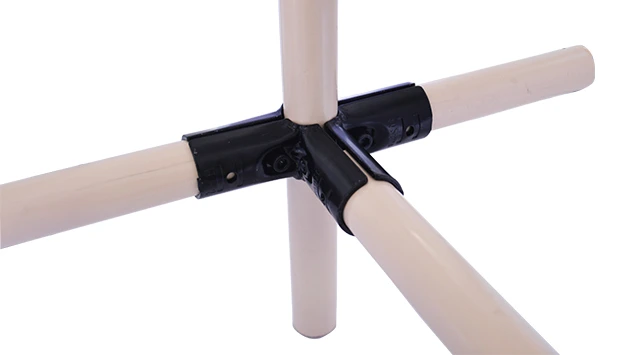
Four Way Straight Lean Pipe Joint
Four way lean pipe joint for 4 pcs 28MM lean pipe connection in straight angle, which used widely in workbench, flow rack, hand trolley frame connection.
In today's fast-paced manufacturing landscape, sustainability isn't just a buzzword—it's a critical business imperative. As factories worldwide grapple with rising costs, stricter environmental regulations, and growing consumer demand for eco-friendly practices, the pressure to minimize waste has never been greater. From excess materials cluttering work floors to inefficient workflows that drain time and energy, waste creeps into every corner of production, eating into profits and harming the planet. But what if the solution to this challenge lies not in overhauls or expensive tech, but in the very bones of manufacturing infrastructure? Enter the lean system—a philosophy built on the idea of "doing more with less"—and its unsung hero: the four way straight lean pipe joint. This unassuming component, often overlooked in the grand scheme of production lines, plays a pivotal role in transforming rigid, wasteful setups into flexible, sustainable ecosystems. Let's dive into how this small but mighty joint, paired with lean pipe accessories and aluminum profile, is redefining waste reduction in modern manufacturing.
Understanding Lean Systems: Beyond Buzzwords
Before we zoom in on the four way straight lean pipe joint, it's essential to grasp what a "lean system" truly entails. At its core, lean manufacturing is about eliminating waste in all forms—whether that's wasted time, materials, space, or effort—to create more value for customers. Developed from Toyota's legendary production system, lean principles have spread across industries, from automotive to electronics, because they deliver tangible results: lower costs, faster production, and happier teams. But lean isn't just a set of rules; it's a mindset that starts with the physical tools and structures workers interact with every day.
Traditional manufacturing setups often rely on fixed, custom-built equipment: think heavy steel workbenches bolted to the floor, inflexible conveyor belts, or material racks that can't be adjusted without welding or specialized tools. When production needs change—say, a new product line is introduced or demand spikes—these rigid structures become liabilities. Companies end up either over-investing in new equipment (creating wasteful inventory) or struggling to adapt, leading to bottlenecks, delays, and frustrated employees.
Lean systems, by contrast, are built on modularity. They use lightweight, interchangeable components that can be easily reconfigured, repurposed, and reused. This is where lean pipe systems shine. Made from durable materials like steel (often coated in plastic for protection) or aluminum, lean pipes (also called "lean tubes") are combined with joints, connectors, and accessories to build everything from workbenches and flow racks to assembly lines and turnover trolleys. And at the heart of this modularity? Joints that allow pipes to connect quickly and securely in multiple directions—none more versatile than the four way straight lean pipe joint.
The Four Way Straight Lean Pipe Joint: A Closer Look
Imagine (oops, scratch that— Consider ) a simple, yet ingenious, connector that lets you attach four lean pipes in a straight line or at right angles, all from a single point. That's the four way straight lean pipe joint. Typically made from die-cast metal (like zinc alloy) or high-strength plastic, these joints feature threaded holes or clamping mechanisms that grip pipes tightly, eliminating the need for welding, drilling, or adhesives. Most designs include levers or bolts that can be tightened by hand or with a basic tool, making assembly and disassembly a breeze—even for workers without specialized training.
What makes this joint so special? Its versatility. Unlike two-way or three-way joints, which limit connections to two or three directions, the four way joint opens up a world of possibilities. Need a workbench with shelves on both sides? Connect horizontal pipes to the joint's side ports. Want to build a multi-tiered material rack? Use vertical pipes from the top and bottom ports. Need to add a crossbar for stability? The fourth port has you covered. This flexibility means that a single joint can replace multiple custom brackets or welded connections, reducing the number of parts needed and simplifying inventory management.
Take, for example, a manufacturer producing small electronics. Their assembly line requires workstations with varying setups: some workers need tool holders on the left, others on the right; some need extra shelving for components, others need space for testing equipment. With traditional fixed workbenches, the company would have to order custom setups for each station, leading to high costs and long lead times. But with four way straight lean pipe joints, they can build a base workbench frame and then add or remove components as needed. A worker needing a tool holder? Screw a short pipe into the joint's side port and attach the holder. A station needing more shelving? Add vertical pipes from the top ports and connect horizontal pipes for shelves. When the product line changes in six months? Disassemble the joints, reconfigure the pipes, and the workstations are ready for the new task—no waste, no waiting, no extra costs.

Waste Reduction in Action: How the Four Way Joint Delivers
Now, let's get to the heart of the matter: how does this small joint translate to big waste reduction? Let's break it down by the seven types of waste (or "muda") identified in lean manufacturing, and see how the four way straight lean pipe joint, paired with lean pipe accessories and aluminum profile, tackles each one.
1. Overproduction: Building Only What You Need
Overproduction—making more than demand requires—is often called the "mother of all wastes" because it leads to excess inventory, storage costs, and obsolescence. Traditional fixed equipment contributes to overproduction by forcing companies to build for peak demand, even if that demand is temporary. A custom steel workbench, for instance, can't be easily downsized if production volumes drop, so companies often build extra "just in case," leading to unused equipment collecting dust in warehouses.
The four way joint solves this by enabling "right-sized" production setups. Since lean pipe structures are modular, you can build exactly what you need, when you need it. Need five workstations for a new product launch? Assemble them using joints and pipes from your existing inventory. If demand falls and you only need three? Disassemble the extra two, return the pipes and joints to storage, and reuse them later. No more over-investing in fixed equipment that becomes obsolete. This "build-as-you-go" approach aligns perfectly with lean's "pull" system, where production is driven by actual demand, not forecasts.
2. Inventory Waste: Less Parts, More Efficiency
Inventory waste includes excess raw materials, parts, or finished goods sitting idle. In traditional setups, manufacturers must stock a wide range of custom brackets, connectors, and specialized tools to maintain fixed equipment. A single workbench might require 10 different types of brackets, each with a minimum order quantity of 50—leading to shelves full of rarely used parts that take up space and tie up capital.
Lean pipe systems, centered on the four way joint, slash inventory waste by standardizing components. Instead of 10 custom brackets, you need just a few types of joints (four way, three way, two way) and pipes. Since the four way joint can replace multiple specialized brackets, you reduce the number of unique parts in stock. For example, a material rack that once needed L-shaped brackets, T-brackets, and corner braces can now be built using four way joints, three way joints, and straight pipes. This not only simplifies inventory management but also reduces the risk of parts becoming obsolete when designs change. A lean pipe supplier typically offers a standardized range of joints and accessories, making it easy to reorder and ensuring compatibility across all setups.
3. Motion Waste: Ergonomics and Efficiency
Motion waste refers to unnecessary movement by workers—reaching, bending, walking—to access tools, materials, or equipment. This not only slows down production but also increases the risk of injuries. Traditional fixed workstations often force workers into awkward positions: a shelf might be too high, a tool rack too far, or a conveyor belt at the wrong height.
The four way joint empowers teams to design ergonomic workspaces tailored to individual needs. Want to lower a shelf by 6 inches? Loosen the joint, adjust the pipe height, and retighten. Need to move a tool holder 12 inches to the left? Disconnect the pipe from the joint, reposition, and reconnect. This level of customization ensures that workers can keep frequently used items within easy reach, reducing stretching and walking. For example, a study by the Lean Enterprise Institute found that a electronics manufacturer reduced worker motion by 35% after reconfiguring workstations with lean pipe systems and four way joints. The result? Faster assembly times, fewer errors, and a 20% drop in workplace injuries.
4. Transportation Waste: Streamlining Material Flow
Transportation waste is the unnecessary movement of materials between locations—forklifts carrying parts from storage to the production line, workers pushing heavy carts back and forth. This wastes time, energy, and increases the risk of damage to materials.
Lean pipe systems with four way joints help minimize transportation by enabling "point-of-use" storage. By building mobile material racks or flow racks (using casters from lean pipe accessories), teams can bring materials directly to the assembly line. For example, a flow rack built with four way joints can be positioned next to a workstation, allowing parts to slide directly into the worker's hands via roller tracks. When the rack is empty, it can be wheeled back to storage, refilled, and returned—eliminating the need for forklift trips. The joint's flexibility allows the flow rack to be customized with multiple levels (using vertical pipes from the joint's top ports) to separate different parts, ensuring easy access and reducing picking time.

Traditional vs. Lean Pipe Setups: A Waste Comparison
| Waste Type | Traditional Fixed Setup | Lean Pipe Setup with Four Way Joint |
|---|---|---|
| Overproduction | Custom equipment ordered for peak demand; excess capacity sits idle. | Modular setups built to current needs; reconfigured as demand changes. |
| Inventory | 10+ specialized brackets/tools per setup; high risk of obsolescence. | Standardized joints (4-way, 3-way) and pipes; 70% fewer unique parts. |
| Motion | Fixed positions force reaching, bending, walking; slow, error-prone work. | Ergonomic, adjustable setups; tools/materials within easy reach. |
| Transportation | Materials moved via forklifts/carts between distant storage and lines. | Mobile flow racks/workstations; materials delivered directly to point of use. |
| Defects | Welded/bonded connections prone to loosening; repairs require specialized labor. | Secure, adjustable joints; quick repairs by on-site teams; fewer defects. |
Case Study: A Furniture Manufacturer's Lean Transformation
To put these benefits into perspective, let's look at a real-world example: a mid-sized furniture manufacturer producing office chairs. Prior to adopting lean pipe systems, the company struggled with several waste issues: their assembly line used fixed steel workbenches that couldn't be adjusted for different chair models, leading to overproduction of custom workstations; inventory of specialized brackets and tools was bloated, with over 50 unique parts; and workers spent hours each day walking to retrieve materials from a central storage area, leading to motion and transportation waste.
The turning point came when they partnered with a lean pipe supplier to rebuild their assembly line using aluminum profile (chosen for its lightweight and durability), lean pipe accessories, and—you guessed it—four way straight lean pipe joints. Here's what happened:
- Workstation Flexibility: The company replaced fixed workbenches with modular lean pipe workstations. Using four way joints, they built adjustable frames that could be modified for different chair models. For example, a workstation assembling armchairs needed extra support for larger frames, so they added vertical pipes from the four way joints to create reinforced corners. When switching to task chairs, they removed the extra pipes and reconfigured the joints to create a slimmer frame. Setup time for new models dropped from 2 weeks to 2 days.
- Inventory Reduction: By standardizing on four way joints, three way joints, and a few pipe sizes, the company reduced its inventory of brackets and connectors from 50+ types to just 8. This freed up 30% of storage space and cut inventory costs by $45,000 annually.
- Material Flow Improvements: They built mobile flow racks using four way joints and roller tracks (from lean pipe accessories). These racks were positioned alongside the assembly line, holding chair components (seats, legs, armrests) at waist height. Workers no longer had to walk to storage—materials slid directly to them via the roller tracks. Transportation waste dropped by 40%, and assembly time per chair decreased by 15 minutes.
- Sustainability Gains: Since the lean pipe system is reusable, the company avoided disposing of old steel workbenches (saving on waste removal costs) and reduced the need for new steel production (lowering their carbon footprint). The aluminum profile used in the workstations is 100% recyclable, further enhancing their sustainability credentials.
After six months, the manufacturer reported a 25% reduction in overall waste, a 15% increase in production output, and a 30% improvement in employee satisfaction. All this, in large part, thanks to the humble four way straight lean pipe joint.
Aluminum Profile: Complementing the Four Way Joint for Sustainability
While lean pipes (often steel with plastic coating) are a staple of lean systems, aluminum profile has emerged as a game-changer for sustainability. Aluminum is lightweight, corrosion-resistant, and infinitely recyclable—properties that make it ideal for eco-conscious manufacturers. When paired with four way straight lean pipe joints, aluminum profile enhances the system's durability and environmental benefits.
Aluminum profile (also called aluminum extrusion profile) is made by forcing molten aluminum through a die to create uniform shapes with built-in channels (T-slots) for easy connection. These T-slots work seamlessly with lean pipe accessories like brackets, connectors, and the four way joint, allowing for even more flexibility. For example, a workbench built with aluminum profile and four way joints can support heavier loads than a plastic-coated steel setup, making it suitable for automotive or heavy machinery manufacturing. And since aluminum is lighter, reconfiguring the workbench requires less effort, reducing worker fatigue.
From a sustainability standpoint, aluminum's recyclability is unmatched. When a lean pipe system reaches the end of its life (though with modularity, this is rare), the aluminum profile can be melted down and reused without losing quality. This contrasts with steel, which can be recycled but often loses strength after multiple cycles. A lean pipe supplier offering aluminum profile options helps manufacturers align with circular economy goals, reducing reliance on virgin materials and minimizing waste.
Take, for instance, a food packaging plant that needs to maintain strict hygiene standards. Steel lean pipes, even with plastic coatings, can harbor bacteria in scratches or crevices. Aluminum profile, however, is non-porous and easy to clean, making it ideal for food-grade environments. By using aluminum profile and four way joints, the plant built sanitizable workbenches and material racks that could be quickly disassembled for deep cleaning, reducing the risk of contamination and improving compliance with health regulations.
The Role of Lean Pipe Suppliers in Driving Sustainability
Behind every successful lean transformation is a reliable lean pipe supplier. These partners don't just sell parts—they provide expertise, support, and sustainable solutions that align with manufacturers' goals. A forward-thinking supplier will offer not just four way straight lean pipe joints and aluminum profile, but also guidance on system design, waste reduction strategies, and material selection.
For example, a supplier might recommend using recycled aluminum for profile or offering take-back programs for old lean pipe systems, ensuring that components are reused or recycled instead of ending up in landfills. They might also provide training for workers on how to reconfigure joints and pipes, empowering teams to make on-the-fly adjustments without relying on external contractors. This not only speeds up improvement but also fosters a culture of continuous improvement—another key lean principle.
When choosing a lean pipe supplier, look for one that prioritizes sustainability in their own operations: Do they use energy-efficient manufacturing processes? Do they source materials from recycled or responsibly managed sources? Do they offer eco-friendly packaging for their products? These factors may seem small, but they add up to a more sustainable supply chain—one that supports your company's green goals.
The Future: Lean Systems in the Age of Smart Manufacturing
As manufacturing evolves with Industry 4.0 technologies—IoT sensors, automation, and data analytics—lean systems built around components like the four way straight lean pipe joint are poised to play an even bigger role. Imagine (again, consider ) modular workstations equipped with sensors that track production metrics, connected to a central system that identifies bottlenecks in real time. When a bottleneck is detected, the system could alert workers to reconfigure the workstation using four way joints and extra pipes—all while production continues. This "smart lean" approach combines the flexibility of modular systems with the data-driven insights of Industry 4.0, leading to even greater waste reduction and efficiency.
Aluminum profile will also play a key role in this future, as its conductivity makes it ideal for integrating electronics and sensors. For example, aluminum profile workbenches could house built-in power strips or data ports, eliminating the need for messy cords and improving safety. And as 3D printing technology advances, we may even see custom lean pipe accessories—like specialized four way joint adapters—printed on-site, further reducing lead times and waste.
Conclusion: Small Joint, Big Impact
Sustainable manufacturing isn't about grand gestures—it's about the small, intentional choices that add up to big change. The four way straight lean pipe joint, though humble in appearance, is one of those choices. By enabling flexible, modular, and reusable production systems, this unassuming component helps manufacturers slash waste, reduce costs, and build more sustainable operations. Paired with aluminum profile, lean pipe accessories, and a trusted lean pipe supplier, it becomes a cornerstone of lean transformation.
As we look to the future, the message is clear: sustainability and efficiency go hand in hand. By investing in tools that eliminate waste—whether it's a four way joint, a modular workstation, or a reusable flow rack—manufacturers aren't just helping the planet; they're building stronger, more resilient businesses. So the next time you walk through a production line, take a closer look at the structures holding it all together. Chances are, you'll spot a four way straight lean pipe joint—quietly driving waste reduction, one connection at a time.