- Company Articles
- Products and Technology
- Product knowledge
- Sustainable Manufacturing: How Single Side Aluminum Pipe Supports Reusability

Sustainable Manufacturing: How Single Side Aluminum Pipe Supports Reusability
Related Product
Single Side Aluminum Pipe
The single-sided plane can be installed with a back-mounted material box, and can also be used as a sidewall or partition.
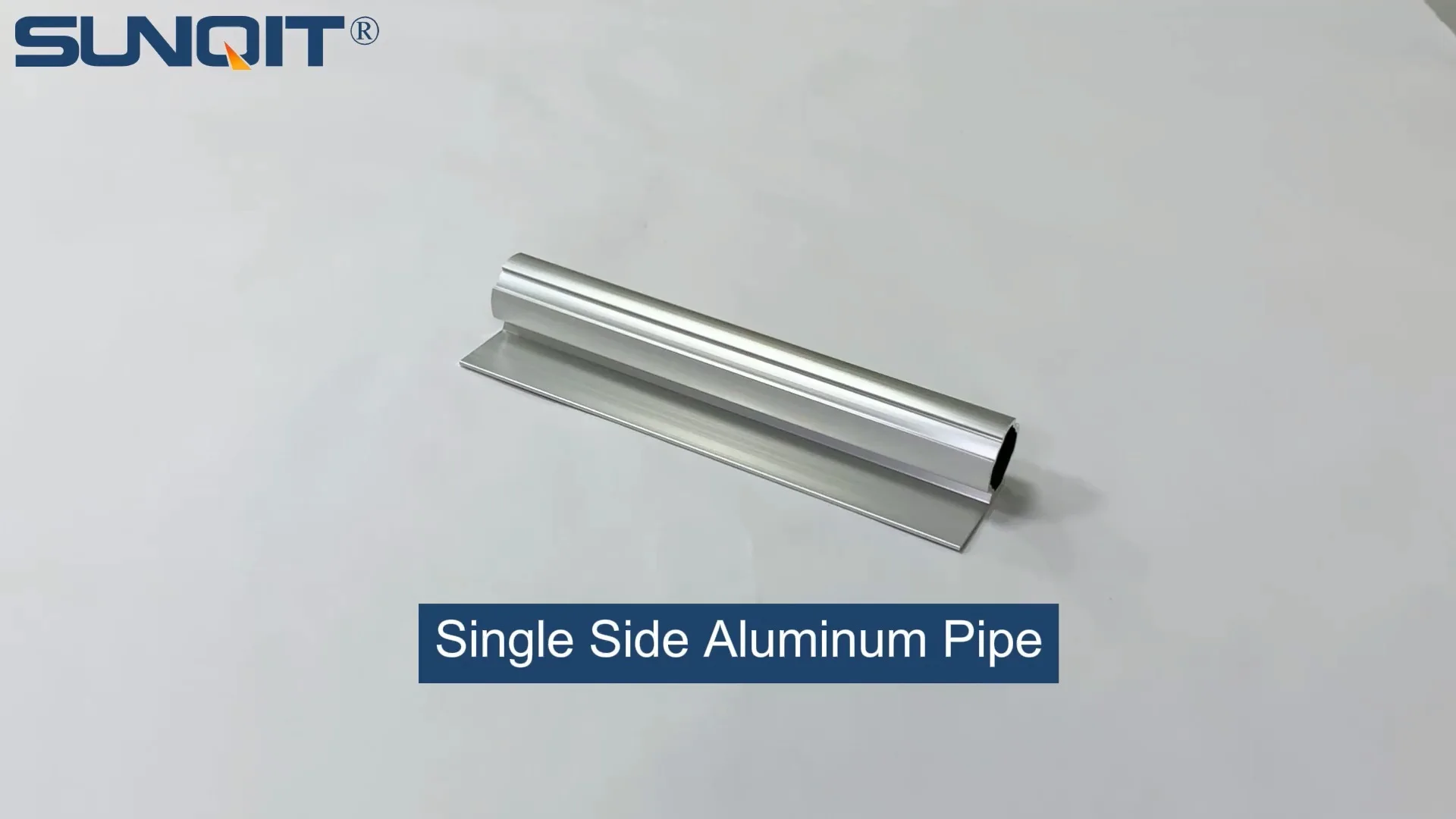
In today's fast-paced manufacturing world, the pressure to do more with less—less waste, less energy, less cost—has never been higher. For plant managers, sustainability isn't just a buzzword; it's a daily challenge. You've seen it: production lines that become obsolete overnight, workbenches that can't adapt to new product sizes, and material racks that end up in landfills because they're too rigid to repurpose. What if there was a solution that didn't just solve today's problems but grew with tomorrow's needs? Enter single side aluminum pipe —a humble yet revolutionary component that's quietly transforming how factories approach sustainability, one reconfigurable workstation at a time.
The Problem with "One-and-Done" Manufacturing Systems
Let's start with a scenario many manufacturing leaders know all too well. Imagine a mid-sized electronics plant that invested in steel workbenches five years ago. Back then, their flagship product was a bulky desktop computer. Today, they're churning out slim laptops and smart devices—products half the size, with twice the component complexity. Those steel workbenches? They're still sturdy, but they're too tall, too wide, and impossible to adjust. The team has resorted to stacking crates on the floor for extra storage and jury-rigging plywood shelves to fit smaller parts. Not only is this inefficient, but it's also dangerous. And when the next product launch hits? Those workbenches will likely end up in a scrapyard, replaced by a new set of fixed, one-size-fits-all solutions. That's not sustainability—that's waste.
Traditional manufacturing systems, often built with welded steel or heavy plastic, are designed for permanence. They're built to last "forever," but in reality, "forever" in manufacturing is rarely longer than a product lifecycle. By the time a factory updates its processes, those rigid systems become liabilities. They consume resources to produce, take up space when unused, and contribute to the 11 million tons of manufacturing waste generated annually in the U.S. alone. This is where the principles of lean manufacturing collide with sustainability: lean teaches us to eliminate waste, but how do we eliminate waste when our tools themselves are wasteful?
What Is Single Side Aluminum Pipe, Anyway?
At first glance, single side aluminum pipe might not look like a game-changer. It's a sleek, lightweight tube, usually silver or anodized in neutral tones, with a unique single-sided T-slot running along its length. But that T-slot is where the magic happens. Unlike traditional steel pipes or even standard aluminum tubes, this design lets you attach brackets, shelves, and accessories with minimal effort—no welding, no drilling, just a simple clamp or bolt. It's part of a broader family of aluminum extrusion profile products, which are created by forcing molten aluminum through a custom die to form precise, consistent shapes. The result? A material that's strong enough to support heavy loads (we're talking hundreds of pounds) but light enough for a single worker to carry and install.
But what makes the "single side" design special? Think of it as the ultimate multitasker. In tight spaces—like assembly lines where every inch counts—a single-sided slot means you can mount accessories (think tool holders, label dispensers, or even small monitors) without adding bulk to both sides of the pipe. It's a small detail, but in a factory where floor space is gold, small details add up. And because it's aluminum, it resists corrosion, won't rust, and holds up to the daily wear and tear of manufacturing—oils, coolants, and the occasional bump from a forklift.

Reusability: The Heart of Sustainable Manufacturing
Sustainability in manufacturing often boils down to one key metric: reusability. Can a system be repurposed, or is it destined for the scrap heap after its first use? Single side aluminum pipe excels here, and it's not by accident. Let's break down why:
1. Modularity: Build, Break, Rebuild—Repeat
Remember those steel workbenches we talked about earlier? To modify one, you'd need a cutting torch, a welder, and maybe a few hours (or days) of downtime. With single side aluminum pipe, reconfiguration is more like playing with industrial-grade Legos. Let's say your team needs to shrink a workstation from 6 feet wide to 4 feet to make room for a new conveyor. You don't need to buy a new bench—just loosen the joints, remove the excess pipes, and reattach the shelves. The components are standardized, so a pipe from a retired material rack can find new life as part of a turnover trolley next month. This isn't just convenient; it's a waste-reduction powerhouse. A 2023 study by the Manufacturing Sustainability Council found that factories using modular aluminum systems reduced waste by 37% compared to those with fixed steel setups.
2. Durability That Outlasts Product Cycles
Aluminum is tough. Really tough. Unlike plastic, it won't crack under UV exposure or chemical spills. Unlike steel, it won't rust when exposed to moisture. In fact, aluminum's natural oxide layer acts as a built-in shield, keeping it looking and performing like new for decades. We've visited factories where single side aluminum pipe systems installed in the early 2000s are still in use—reconfigured dozens of times, yes, but never replaced. Compare that to plastic pipes, which degrade over time, or wooden racks, which warp and splinter. When a system lasts longer, you buy less, dispose less, and reduce your carbon footprint with every year it stays in service.
3. Recyclability: Closing the Loop
Even the most durable systems eventually reach the end of their useful life. But here's the kicker: aluminum is 100% recyclable, and it can be melted down and reused without losing a single bit of quality. That means when a single side aluminum pipe finally retires, it doesn't end up in a landfill—it becomes raw material for a new pipe, a car part, or even a bicycle frame. The energy required to recycle aluminum is just 5% of what's needed to produce it from bauxite ore, making it one of the most eco-friendly materials on the planet. For manufacturers tracking their circular economy goals, that's a huge win.

Single Side Aluminum Pipe and Lean Systems: A Match Made in Efficiency Heaven
Sustainability and efficiency go hand in hand, and nowhere is that more true than in lean manufacturing. Lean system principles—eliminating waste, optimizing flow, empowering teams—align perfectly with the flexibility of single side aluminum pipe. Let's take a closer look at how they work together:
Adapting to 5S: From Clutter to Order (and Back Again)
5S—Sort, Set in Order, Shine, Standardize, Sustain—is the backbone of lean. But "Set in Order" can feel like a moving target when your tools and materials change weekly. With single side aluminum pipe, you can design workstations that evolve with your 5S goals. Need more storage for new tools? Add a shelf using aluminum pipe accessories like slide-on brackets. Want to reduce motion waste? Attach a caster wheel to the base and turn a stationary rack into a mobile trolley. Employees love it because it puts them in control—no waiting for maintenance to drill holes or weld additions. When workers can adjust their space to fit their process, compliance with 5S standards skyrockets, and so does morale.
Just-in-Time (JIT) Production: No More Overbuilding
JIT manufacturing thrives on agility—producing only what's needed, when it's needed. But agility suffers when your material handling systems can't keep up. Single side aluminum pipe solves this by letting you scale up or down on demand. For example, a food packaging plant we worked with uses aluminum flow racks to move ingredients to the production line. During peak seasons, they add extra roller tracks (using those handy T-slots) to double capacity. In slow months, they strip the racks down to a smaller footprint, freeing up floor space for other tasks. No more overbuilding fixed racks that sit empty half the year—just the right amount of infrastructure, exactly when you need it.
Case Study: How a Automotive Supplier Cut Waste by 42% with Aluminum Extrusion Profile
When a Tier 1 automotive supplier in Michigan faced pressure to reduce waste from its parent company, plant manager Sarah Chen knew she needed a radical change. Their old system relied on wooden pallets and steel racks that were either too heavy to move or too flimsy to reuse. "We were spending $15,000 a year on new pallets alone, and half of our steel workbenches were collecting dust because they couldn't handle our new electric vehicle components," she recalls.
Sarah's team replaced 80% of their fixed systems with single side aluminum pipe and aluminum extrusion profile workstations. The results were staggering: Within six months, they'd cut waste by 42%, eliminated $12,000 in annual pallet costs, and reduced production line changeover time from 8 hours to just 2. "The best part? When we launched our new battery module line, we didn't buy a single new workstation," Sarah says. "We just reconfigured the aluminum pipes from our old engine component line. It was like giving our factory a new lease on life."

Beyond the Pipe: The Role of Aluminum Pipe Accessories
A single side aluminum pipe is only as good as the accessories that bring it to life. Think of the pipe as the backbone; aluminum pipe accessories are the muscles and joints that let it move, adapt, and perform. From simple clamps to sophisticated roller tracks, these add-ons turn a basic tube into a fully functional system. Let's explore a few game-changers:
Rotary Joints: Because Flexibility Matters
Ever tried to adjust a steel shelf at a 45-degree angle? Good luck. With aluminum rotary joints, it's as easy as loosening a lever. These small, but mighty connectors let pipes pivot, swivel, and lock into place at any angle. In a warehouse picking area, for example, a material rack with rotary joints can tilt to bring bins closer to workers, reducing bending and lifting. In assembly, they let workbenches fold down when not in use, freeing up floor space. It's the kind of flexibility that turns "we can't" into "we can—easily."
Casters and Wheels: Mobility Without Compromise
Heavy steel trolleys are a thing of the past. Aluminum pipe systems paired with high-quality casters glide across factory floors with minimal effort. Need to move a rack of parts from Line A to Line B? Two workers can do it in minutes, no forklift required. And because the casters lock securely, you don't sacrifice stability for mobility. A medical device manufacturer we worked with uses these mobile racks to transport sensitive components between cleanrooms—no more risking damage by loading parts onto trucks or dollies.
Roller Tracks: Smooth Flow, Happy Workers
Material flow is the lifeblood of manufacturing, and nothing kills flow like a stuck part. Aluminum roller tracks, with their precision-engineered wheels, ensure parts glide from station to station with zero friction. Whether you're moving circuit boards or heavy engine blocks, these tracks reduce manual handling, cut down on errors, and keep production lines humming. And because they're compatible with single side aluminum pipe, you can customize the length, angle, and height to fit your exact needs—no more one-size-fits-all conveyors that create bottlenecks.
Single Side Aluminum Pipe vs. the Alternatives: A Clear Winner for Sustainability
Still not convinced that single side aluminum pipe is the right choice for your factory? Let's compare it to the most common alternatives:
| Feature | Single Side Aluminum Pipe | Steel Pipe | Plastic Pipe | Wooden Racks |
|---|---|---|---|---|
| Reusability | High (unlimited reconfigurations) | Low (welded joints make modification hard) | Medium (limited load capacity; degrades over time) | Very Low (prone to warping, splintering) |
| Recyclability | 100% recyclable; low energy to reuse | Recyclable but high energy cost | Limited (often not recyclable curbside) | Biodegradable but low reuse value |
| Weight | Light (easy to handle manually) | Heavy (requires equipment to move) | Light but flexible (poor load support) | Medium (bulky, hard to stack) |
| Longevity | 20+ years | 15-20 years (prone to rust) | 3-5 years (degrades in sunlight/chemicals) | 1-3 years (weather and pest damage) |
| Total Cost of Ownership | Low (high upfront, minimal replacement) | High (low upfront, high maintenance/replacement) | Medium (low upfront, frequent replacement) | High (low upfront, constant replacement) |
The data speaks for itself: single side aluminum pipe outperforms alternatives in nearly every category that matters for sustainability. It's an investment that pays dividends not just in reduced waste, but in long-term efficiency and adaptability.
The Future of Sustainable Manufacturing: Where Aluminum Extrusion Profile Meets Innovation
As manufacturers embrace the circular economy—designing products and systems with reuse and recycling in mind—single side aluminum pipe is poised to play an even bigger role. Innovations like lightweight aluminum alloys (stronger than ever, but 15% lighter) and smart T-slot sensors (which track usage and predict maintenance needs) are on the horizon. Imagine a factory where your material racks send alerts when they're underused, prompting you to reconfigure them before they become waste. Or aluminum pipes embedded with RFID tags that make asset tracking as simple as scanning a barcode. The possibilities are endless, and they all point to one truth: sustainability and productivity don't have to compete—they can thrive together.
Conclusion: Building a Factory That Grows with You
Sustainable manufacturing isn't about perfection; it's about progress. It's about choosing systems that don't just meet today's needs but adapt to tomorrow's challenges. Single side aluminum pipe , paired with aluminum extrusion profile and aluminum pipe accessories , is more than a tool—it's a mindset. It's the recognition that the most sustainable factory isn't the one with the fanciest technology, but the one that can evolve, reuse, and thrive without leaving a trail of waste in its wake.
So, the next time you walk through your factory, take a look at those rigid, outdated systems. Ask yourself: Are they holding you back, or are they growing with you? With single side aluminum pipe, the answer can be the latter. It's not just about building better workbenches or racks—it's about building a better future for your factory, your team, and the planet.