- Company Articles
- Products and Technology
- Product knowledge
- Sustainable Manufacturing: Lean Pipe Clamp B Chrome for Circular Economy Goals

Sustainable Manufacturing: Lean Pipe Clamp B Chrome for Circular Economy Goals
Related Product
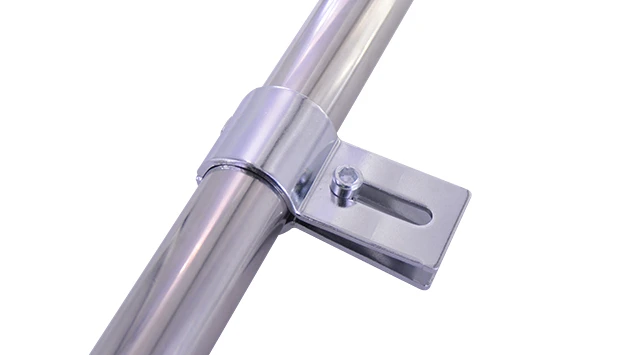
Lean Pipe Clamp B Chrome
Lean pipe clamp is used for turnover trolley, workbench, flowrack adjust the frame or fix some accessory.
In the bustling world of manufacturing, where every second and every resource counts, a quiet revolution is taking place. It's not just about making things faster or cheaper anymore—though those still matter. Today, the most forward-thinking facilities are asking a bigger question: How can we make things better ? Better for the planet, better for their teams, and better for the bottom line, all at once. At the heart of this revolution lies the circular economy—a model that replaces the traditional "take-make-waste" cycle with one of "reduce, reuse, recycle." And if you dig into the tools making this possible, you'll find a surprising hero: components like the lean pipe clamp B chrome, aluminum lean pipe, and smartly designed flow racks. These aren't just pieces of metal and plastic; they're the building blocks of a more sustainable future.
The Shift to Sustainable Manufacturing: Why Circular Economy Matters
Let's start with the basics. For decades, manufacturing has run on a linear model: extract raw materials, turn them into products, use those products, then throw them away. But as global resources shrink and environmental concerns grow, this approach is no longer viable. According to the Ellen MacArthur Foundation, the circular economy could generate $4.5 trillion in economic benefits by 2030 by reducing waste and unlocking new efficiencies. For manufacturers, this isn't just a "green" trend—it's a business imperative. Customers demand sustainability, regulators enforce stricter standards, and employees want to work for companies that align with their values.
Enter lean manufacturing. Lean principles, born from the Toyota Production System, focus on eliminating waste ("muda") in all forms: overproduction, excess inventory, unnecessary motion, and more. But in recent years, lean has evolved beyond efficiency to embrace sustainability. Today's lean system isn't just about cutting costs—it's about designing systems that use resources wisely, last longer, and can be repurposed. And that's where components like lean pipe clamp B chrome and aluminum lean pipe come into play. They're not just tools for organization; they're enablers of circularity.
Understanding Lean Systems: More Than Just Efficiency
A lean system is often misunderstood as just "getting rid of waste." But it's deeper than that. It's about creating a workplace where every action adds value, every resource is used intentionally, and every process is designed to adapt. Think of it as a well-choreographed dance: materials flow smoothly, workers move with purpose, and nothing is left to chance. At the core of this dance are modular, flexible components that can be reconfigured as needs change—no need to tear down and rebuild from scratch when a product line shifts or demand spikes.
Traditional manufacturing setups often rely on fixed, custom-built equipment. A conveyor belt here, a workbench there—all bolted down and designed for one specific task. When the company launches a new product, those structures become obsolete, ending up in landfills. That's the opposite of circular. A modern lean system, by contrast, uses components like lean pipe clamp B chrome, aluminum lean pipe, and flow racks that can be disassembled, rearranged, and reused. It's like building with Lego blocks instead of concrete: endless possibilities, minimal waste.
The Unsung Hero: Lean Pipe Clamp B Chrome
If lean systems are the dance, then lean pipe clamp B chrome is the choreographer. These small but mighty connectors are what hold the entire setup together—literally. Made from high-quality steel with a chrome plating, they're designed to fasten lean pipes (whether aluminum, steel, or stainless) into sturdy, adjustable structures. But why does this matter for sustainability?
Let's start with durability. Chrome plating isn't just for shine; it's a protective barrier. It resists corrosion, scratches, and wear, even in busy manufacturing environments where spills, dust, and constant movement are the norm. A well-made lean pipe clamp B chrome can last for years, maybe even decades, without needing replacement. Compare that to plastic clamps, which can crack under pressure, or uncoated steel clamps that rust and weaken over time. When components last longer, you buy fewer of them—reducing the demand for raw materials and cutting down on waste from disposal.
Then there's flexibility. These clamps are designed to rotate and adjust, allowing workers to tweak the height of a workbench, the angle of a flow rack, or the layout of a conveyor system in minutes. No need for welding, drilling, or special tools. If a production line needs to shrink, expand, or change direction, you simply loosen the clamps, reposition the pipes, and tighten them back up. This adaptability means the same set of clamps and pipes can be repurposed for multiple projects over time. A workbench today might become a turnover trolley tomorrow, and a material rack next month. That's the circular economy in action: extending the lifespan of products through reuse.
And let's not forget recyclability. When the day finally comes that a lean pipe clamp B chrome has served its purpose (which, let's be honest, might be long after the current generation of workers retires), it's 100% recyclable. Steel is one of the most recycled materials on the planet, with a recycling rate of over 80% in many countries. The chrome plating, while durable, doesn't hinder recycling—scrap yards can process it along with the steel, turning old clamps into new ones. No plastic waste, no toxic byproducts—just a closed loop.
Aluminum Lean Pipe: Lightweight Strength for Greener Setups
Pair a lean pipe clamp B chrome with aluminum lean pipe, and you've got a match made in sustainability heaven. Aluminum is a game-changer in manufacturing for several reasons, starting with its weight. It's about 30% lighter than steel, which means structures built with aluminum lean pipe are easier to move, adjust, and reconfigure. Less physical strain on workers translates to fewer injuries and higher morale—but that's a human benefit. For the planet, lighter materials mean lower energy costs during transportation (both from supplier to factory and within the factory itself) and less wear on equipment like forklifts, which in turn reduces maintenance needs.
But aluminum's real superpower is recyclability. Unlike steel, which loses some strength when recycled, aluminum can be melted down and reused indefinitely without compromising quality. In fact, recycling aluminum uses just 5% of the energy required to produce new aluminum from bauxite ore. That's a massive reduction in carbon footprint. Many aluminum lean pipe suppliers now offer products made from recycled aluminum, closing the loop even further. When a factory decides to rearrange its layout, the old aluminum pipes can be sent back to the supplier, melted down, and turned into new pipes—no waste, no new mining.
Aluminum lean pipe is also resistant to corrosion, thanks to its natural oxide layer. Even without additional coatings, it holds up well in humid or damp environments, making it ideal for industries like food processing or pharmaceuticals where cleanliness is critical. This longevity means fewer replacements, which ties back to the circular economy's "reduce" principle.
Flow Racks: Streamlining Material Flow, Minimizing Waste
Now, let's zoom out to a bigger component: the flow rack. If lean pipe clamp B chrome and aluminum lean pipe are the building blocks, flow racks are the finished structures that keep materials moving. Designed with inclined roller tracks, they use gravity to feed parts and components to workers exactly when they need them—no more searching, no more overstocking, no more waiting.
How does this support sustainability? Let's start with inventory waste. Traditional warehouses often stockpile materials "just in case," leading to excess inventory that can become obsolete, damaged, or expired. Flow racks, by contrast, use a "first in, first out" (FIFO) system. Materials are loaded from the back (higher end) and roll forward as they're needed, ensuring older stock gets used first. This cuts down on waste from expired or outdated parts, a huge issue in industries like electronics where components can become obsolete in months.
Then there's motion waste. Workers spend less time walking to retrieve materials and more time assembling products. Less movement means less energy used (both human and mechanical) and fewer accidents. But the sustainability benefits go deeper. Modern flow racks are built using aluminum lean pipe, lean pipe clamp B chrome, and recyclable roller tracks (often made from plastic or aluminum). When the rack needs to be reconfigured—say, to accommodate larger boxes or a different product line—the components can be taken apart and reassembled. No need to buy a whole new rack; just adjust the pipes, swap out the roller tracks, and you're good to go.
Even the roller tracks themselves are designed for sustainability. Many are made from high-density polyethylene (HDPE), a recyclable plastic that's durable and easy to clean. Some manufacturers offer ESD (electrostatic discharge) versions with conductive materials, which are critical for electronics manufacturing (more on ESD workstations next). The key is that every part of the flow rack is modular and replaceable. If a roller breaks, you swap it out instead of replacing the entire rack.
ESD Workstations: Protecting Components and the Planet
For industries like electronics, aerospace, or medical device manufacturing, ESD workstations are non-negotiable. Electrostatic discharge can fry sensitive components, leading to costly defects and rework. But ESD workstations aren't just about protecting products—they can also be designed with sustainability in mind.
A modern ESD workstation typically features an aluminum frame (built with aluminum lean pipe and lean pipe clamp B chrome), a conductive work surface, and grounding components to dissipate static. The aluminum frame, as we've discussed, is recyclable and durable. The work surface, often made from recycled composite materials or sustainable wood with conductive coatings, can be replaced individually if worn, rather than replacing the entire workstation.
Ergonomics is another sustainability angle here. A well-designed ESD workstation adjusts to the worker, reducing strain on the neck, back, and wrists. This lowers the risk of injuries, which means fewer absences, lower turnover, and less need to train new employees (a hidden resource cost). Happy, healthy workers are more productive and more likely to stay with the company, reducing the environmental impact of hiring and training new staff.
Modularity is key here, too. ESD workstations can be outfitted with accessories like tool holders, monitor arms, or storage bins—all built from the same aluminum lean pipe and clamps. When a worker's needs change, you add or remove components instead of buying a new workstation. This adaptability extends the workstation's lifespan, aligning with the "reuse" principle of the circular economy.
Traditional vs. Sustainable Lean Components: A Comparison
| Component | Material | Durability | Recyclability | Waste Reduction | Cost Over Time |
|---|---|---|---|---|---|
| Traditional Steel Pipe | Uncoated carbon steel | Low (prone to rust, bending) | Medium (recyclable but loses quality) | High (frequent replacements, fixed design) | High (repeated purchases, disposal costs) |
| Lean Pipe Clamp B Chrome | Chrome-plated steel | High (corrosion-resistant, wear-resistant) | High (100% recyclable steel) | Low (long lifespan, reusable in reconfigurations) | Low (one-time purchase, minimal replacements) |
| Aluminum Lean Pipe | Recycled aluminum | High (corrosion-resistant, lightweight) | Very High (infinite recyclability, low energy to recycle) | Very Low (durable, reconfigurable, recyclable) | Low (long lifespan, energy savings in transport) |
| Traditional Wood Flow Rack | Plywood or particleboard | Low (prone to warping, water damage) | Low (often treated with chemicals, hard to recycle) | High (fixed design, short lifespan, hard to repair) | High (frequent replacements, disposal fees) |
| Modern Flow Rack | Aluminum frame, HDPE rollers | High (rust-resistant, modular components) | High (aluminum and plastic recyclable) | Low (reconfigurable, replaceable parts, FIFO reduces inventory waste) | Low (long lifespan, reduced inventory costs) |
| Basic Workstation | Fixed wood or steel | Medium (fixed height, no adjustability) | Low (hard to disassemble, mixed materials) | High (obsolete when needs change, no reuse) | High (replaced entirely when outdated) |
| ESD Workstation | Aluminum frame, recycled work surface | High (adjustable, modular, ESD protection) | High (aluminum recyclable, surface replaceable) | Low (ergonomic design reduces turnover, modularity extends lifespan) | Low (one-time purchase, adapts to changing needs) |
The Role of Suppliers in Driving Circular Economy
None of this works in isolation. For manufacturers to truly embrace circularity, they need partners—suppliers who share their commitment to sustainability. A lean pipe supplier that prioritizes recycled materials, minimal packaging, and take-back programs can make a huge difference in a company's environmental impact.
Consider packaging, for example. Traditional suppliers often ship components in single-use cardboard boxes with plastic bubble wrap. A sustainable lean pipe supplier might use reusable crates, recycled cardboard, or biodegradable padding. Some even offer to pick up old or damaged components for recycling, closing the loop on waste.
Ethical sourcing is another factor. Aluminum lean pipe made from recycled materials is better than virgin aluminum, but where does that recycled aluminum come from? A responsible supplier will trace its materials to ensure they're sourced from ethical, low-impact facilities. Similarly, lean pipe clamp B chrome should be made from recycled steel whenever possible, reducing the need for mining and processing new ore.
Training and support also matter. A good supplier doesn't just sell components—they help manufacturers design sustainable setups. They might offer workshops on how to maximize reusability, or provide tools to calculate the carbon footprint of a lean system vs. a traditional setup. This collaboration ensures that manufacturers get the most out of their investment, both environmentally and financially.
Real-World Impact: Case Studies in Sustainable Manufacturing
Let's look at a real example. A mid-sized electronics manufacturer in the Midwest was struggling with high waste costs and frequent rework due to static damage. They decided to overhaul their production line using aluminum lean pipe, lean pipe clamp B chrome, flow racks, and ESD workstations. Here's what happened:
First, they replaced all fixed steel workbenches with adjustable ESD workstations built from aluminum lean pipe. Workers could now adjust the height to their comfort, reducing neck and back strain. Absenteeism dropped by 15% in the first six months. The modular design meant they could add tool holders and storage bins as needed, eliminating the need for separate shelving units that had cluttered the floor.
Next, they installed flow racks along the assembly line, using HDPE roller tracks and aluminum frames. Inventory levels dropped by 30% because materials flowed exactly when needed, reducing overstock and obsolescence. Defects from static damage plummeted, cutting rework costs by $50,000 in the first year.
When the company launched a new product line six months later, they didn't need to buy new equipment. They simply rearranged the aluminum lean pipe and flow racks using their existing lean pipe clamp B chrome. The entire reconfiguration took two days instead of two weeks, saving downtime and labor costs.
Over three years, the manufacturer estimates they reduced their carbon footprint by 25% and saved over $200,000 in waste disposal, inventory, and equipment costs. That's the power of circular economy thinking—driven by components like lean pipe clamp B chrome and aluminum lean pipe.
The Future of Sustainable Manufacturing
As technology advances, the possibilities for sustainable manufacturing will only grow. Imagine smart lean systems where sensors on flow racks track inventory in real time, automatically reordering materials when stock runs low—eliminating overstock entirely. Or aluminum lean pipe embedded with RFID tags, making it easier to track and reuse components across multiple facilities. Even lean pipe clamp B chrome could evolve, with biodegradable lubricants for smoother adjustment or 3D-printed designs that use less material.
Regulations will also play a role. Governments around the world are cracking down on waste and carbon emissions, with laws like the EU's Circular Economy Action Plan mandating higher recycling rates and stricter product design standards. Manufacturers that adopt sustainable practices now will be ahead of the curve, avoiding penalties and winning over eco-conscious customers.
Conclusion: Building a Greener Tomorrow, One Clamp at a Time
Sustainable manufacturing isn't a distant dream—it's happening now, and it's happening at the ground level. It's in the lean pipe clamp B chrome that holds a workbench together for 10 years instead of 1. It's in the aluminum lean pipe that gets melted down and turned into a new flow rack instead of rusting in a landfill. It's in the flow rack that reduces inventory waste and the ESD workstation that keeps workers healthy and productive.
The circular economy isn't about sacrificing efficiency for sustainability; it's about realizing they're one and the same. When you design systems to last, adapt, and recycle, you save money, reduce waste, and create a better workplace. It's a win-win-win.
So the next time you walk through a manufacturing plant, take a closer look at those unassuming pipes and clamps. They might not look like much, but they're building the future—one sustainable step at a time.