- Company Articles
- Products and Technology
- Product knowledge
- Sustainable Manufacturing: Recyclability of Aluminum Honeycomb Panels

Sustainable Manufacturing: Recyclability of Aluminum Honeycomb Panels
Related Product
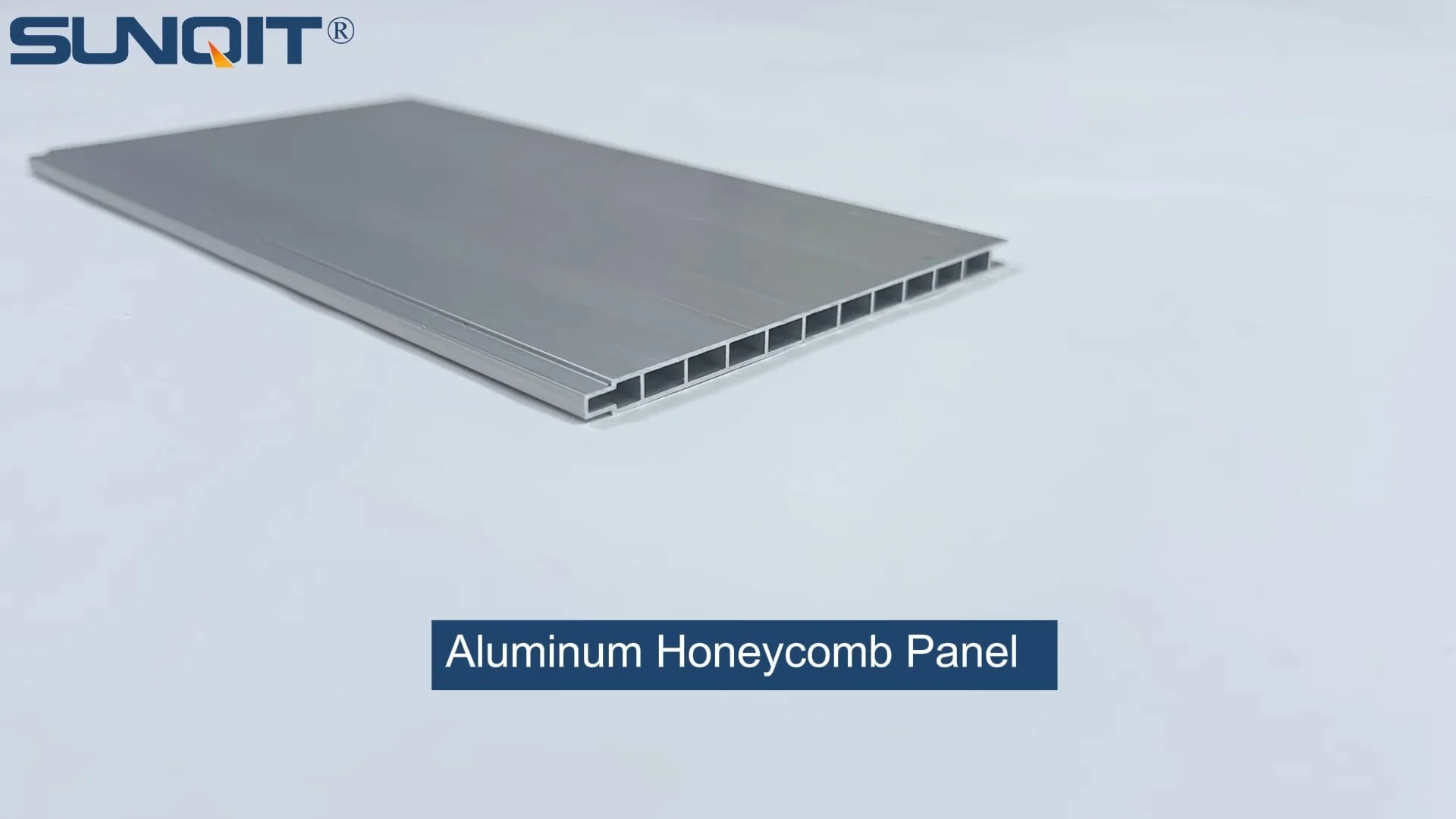
Aluminum Honeycomb Panel
Aluminum honeycomb panel used as table top, side wall, it is connected one pcs by one pcs from the side slot to make a full pieces.This panel width 105mm, 55mm, 35mm are optional for slection.
In today's manufacturing landscape, the word "sustainability" has shifted from a buzzword to a business imperative. As companies strive to reduce their carbon footprint, cut waste, and meet increasingly strict environmental regulations, the materials they choose play a pivotal role. Among the unsung heroes of this movement are aluminum honeycomb panels—lightweight, durable, and surprisingly eco-friendly. But what makes them stand out in the quest for sustainable manufacturing? Let's dive into their story, focusing on their remarkable recyclability and how they align with the principles of forward-thinking production systems.
Aluminum: The Gold Standard for Recyclability
Before we explore aluminum honeycomb panels specifically, it's worth celebrating the material that makes them possible: aluminum. Unlike plastics or even some metals, aluminum is infinitely recyclable. That means a soda can recycled today could become part of a manufacturing workbench tomorrow, then a car part next year, and so on—without losing an ounce of its strength or quality. This is a game-changer for sustainability, as recycling aluminum uses just 5% of the energy required to produce it from raw bauxite ore. To put that in perspective: recycling one ton of aluminum saves 9 tons of CO2 emissions and 14,000 kWh of energy—enough to power a home for over a year.
This inherent recyclability is why aluminum has become a cornerstone of the circular economy. Manufacturers no longer see end-of-life products as waste but as valuable resources. And when you shape aluminum into a honeycomb structure, you unlock even more potential—combining its eco-friendly credentials with unbeatable performance.
Aluminum Honeycomb Panels: Strength Meets Sustainability
Imagine a material that's light enough to be lifted by one person yet strong enough to support heavy machinery. That's the magic of aluminum honeycomb panels. Their structure is deceptively simple: two thin aluminum skins bonded to a honeycomb-shaped core, usually made of aluminum or recycled paper. This design creates a material that's 70% lighter than solid aluminum but just as rigid, making it ideal for everything from workbenches and material racks to aerospace components and wall partitions.
But what truly sets aluminum honeycomb panels apart is their lifecycle. Let's break it down: from production to disposal, these panels are engineered with sustainability in mind. The outer skins, often made from aluminum extrusion profile, start as recycled aluminum in many cases. The honeycomb core, if aluminum-based, is also fully recyclable. Even the adhesives used to bond the layers are increasingly eco-friendly, with manufacturers shifting to water-based or heat-activated formulas that don't hinder recycling.
How Are They Recycled?
Recycling aluminum honeycomb panels is surprisingly straightforward. When a panel reaches the end of its life—say, a workbench that's been used for a decade in a factory—the process begins with collection. Unlike composite materials that mix plastics and metals (which are notoriously hard to recycle), aluminum honeycomb panels are mostly aluminum. This means they can be easily sorted at recycling facilities, often by magnets or visual inspection.
Next, the panels are shredded into small pieces. The honeycomb structure, while lightweight, shreds just as easily as solid aluminum, ensuring no part is left behind. These shreds are then melted down in a furnace at around 660°C—far lower than the temperature needed for virgin aluminum production. During melting, any remaining adhesives or coatings burn off as harmless byproducts, leaving pure aluminum alloy. This molten aluminum is then cast into ingots, which are sent to mills to be rolled, extruded, or shaped into new products. In many cases, these ingots become aluminum extrusion profile once again, closing the loop perfectly.

Aligning with Lean System Principles
Sustainability and efficiency often go hand in hand, and aluminum honeycomb panels are a prime example of this synergy. In lean manufacturing—a system focused on minimizing waste and maximizing value—every component must earn its place. Aluminum honeycomb panels do just that. Their lightweight nature reduces energy use during transportation and installation; a single worker can move a honeycomb workbench without heavy machinery, cutting down on labor and equipment costs. Their durability means they last longer than alternatives like particleboard or plastic, reducing the need for frequent replacements (and thus, less waste).
But the lean connection runs deeper. Lean systems emphasize "kaizen," or continuous improvement, and aluminum honeycomb panels support this by being highly customizable. Need a workbench with adjustable height? Attach it to aluminum profile accessories like brackets or casters. Want a material rack that fits odd-sized parts? The panels can be cut and shaped on-site with basic tools. This flexibility means manufacturers can adapt their setups without scrapping entire systems—another win for waste reduction.
Perhaps most importantly, lean systems aim to create value for customers while respecting the planet. By choosing recyclable materials like aluminum honeycomb panels, companies signal to clients that they care about more than just profits. It's a selling point that resonates in today's market, where 60% of consumers say they're willing to pay more for sustainable products.
| Material | Recyclability Rate | Energy Savings vs. Virgin Production | Weight (vs. Solid Aluminum) | Typical Manufacturing Use |
|---|---|---|---|---|
| Aluminum Honeycomb Panels | 95%+ | 95% | 70% lighter | Workbenches, Material Racks, Partition Walls |
| Solid Steel | 85% | 74% | Heavier (100% of solid weight) | Structural Frames, Heavy Machinery |
| Plastic Composite Panels | <30% | N/A (often downcycled) | 50% lighter than steel | Packaging, Temporary Shelving |
| Plywood | Biodegradable (not infinitely recyclable) | N/A | Similar to honeycomb aluminum | Crates, Low-Load Workbenches |

Real-World Impact: Case Studies in Sustainability
Numbers and stats tell part of the story, but real-world examples bring it to life. Take a mid-sized electronics manufacturer in Michigan, for instance. Three years ago, they replaced all their particleboard workbenches with aluminum honeycomb panels. The results? Their annual waste from damaged workbenches dropped by 80%, and when they needed to reconfigure their production line, they recycled the old panels instead of sending them to a landfill. The recycled aluminum was turned into new aluminum profile, which they used to build custom tool racks. Today, their sustainability report highlights this switch as a key step toward their carbon neutrality goal.
Another example comes from the automotive industry. A major carmaker now uses aluminum honeycomb panels in their assembly line material racks. The panels are lightweight enough to be moved by hand, reducing the need for forklifts and cutting energy use by 15%. When the racks reach the end of their life, they're sent back to the supplier, who recycles them into new panels. It's a closed-loop system that saves the company $200,000 annually in waste disposal and material costs.
Challenges and Innovations in Recycling
Of course, no material is perfect. One challenge with aluminum honeycomb panels is the adhesive used to bond the skins to the core. Traditional adhesives, while strong, can leave residues during recycling that require extra processing. But the industry is evolving fast. Today, many manufacturers use heat-resistant adhesives that burn off cleanly during melting, or water-based formulas that dissolve in recycling baths. Some are even experimenting with mechanical bonding—using interlocking tabs instead of glue—to eliminate adhesives entirely.
Another hurdle is awareness. Many small manufacturers still don't realize that aluminum honeycomb panels are recyclable. To address this, suppliers are launching "take-back" programs, where they collect old panels, recycle them, and offer discounts on new orders. It's a win-win: suppliers secure a steady stream of recycled aluminum, and customers save money while reducing waste.
The Future: Lighter, Stronger, More Sustainable
As technology advances, aluminum honeycomb panels are only getting better. Researchers are developing cores made from 100% recycled aluminum, further reducing the material's carbon footprint. Others are experimenting with nano-coatings that make the panels scratch-resistant or fire-retardant, expanding their use cases. And with the rise of 3D printing, custom honeycomb patterns are becoming possible, optimizing strength and weight for specific applications—like a workbench designed to hold exactly 500kg, no more, no less.
Perhaps the most exciting trend is the integration of aluminum honeycomb panels with smart manufacturing. Imagine a workbench that uses sensors embedded in the panels to track usage—alerting managers when it's time for maintenance, or when it's more cost-effective to recycle and replace. It's a future where sustainability and efficiency are seamlessly woven into the fabric of production.
Conclusion: Building a Greener Tomorrow, One Panel at a Time
In the end, aluminum honeycomb panels are more than just a material—they're a symbol of how manufacturing can evolve. They prove that sustainability doesn't require sacrificing strength, durability, or cost-effectiveness. Instead, it's about reimagining what's possible: a workbench that supports a team's productivity today, then becomes part of tomorrow's innovation. A material rack that holds critical parts, then feeds the recycling stream to create new solutions.
For manufacturers, the message is clear: choosing sustainable materials like aluminum honeycomb panels isn't just good for the planet—it's good for business. It reduces costs, improves efficiency, and appeals to eco-conscious customers. And for the rest of us, it's a reminder that every product we use has a story—and that story can be one of renewal, not waste.
So the next time you walk through a factory, take a closer look at the workbenches and racks around you. If they're made of aluminum honeycomb panels, you're seeing sustainability in action—proof that with the right materials, we can build a future where manufacturing and the environment thrive together.