- Company Articles
- Products and Technology
- Product knowledge
- Sustainable Manufacturing: Reusable Free Flow Chain Conveyor Systems

Sustainable Manufacturing: Reusable Free Flow Chain Conveyor Systems
Related Product
Free Flow Chain Conveyor
The free flow conveyor system uses a free flow chain that can increase the speed of the tooling board that supports the products. This can improve the efficiency and quality of the production process, as well as reduce the wear and tear of the system.
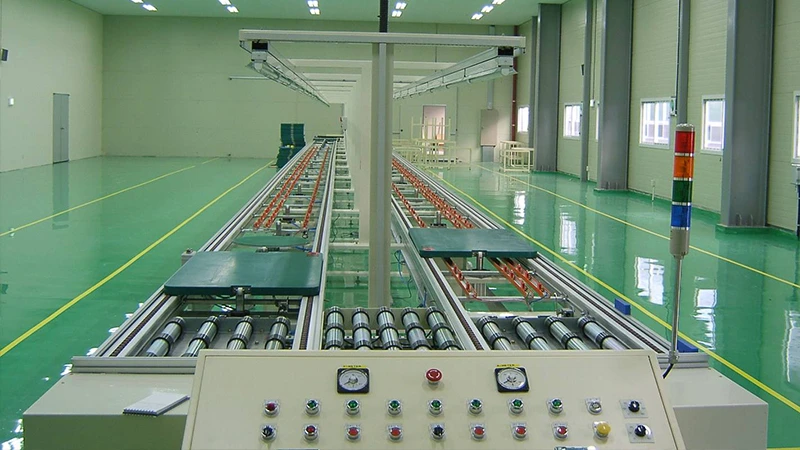
How modular, eco-friendly conveyor solutions are reshaping the future of production lines
The Sustainability Wake-Up Call in Modern Manufacturing
Walk into any manufacturing plant today, and you'll likely hear the same buzzwords: "green," "circular," "low-waste." These aren't just trends—they're survival strategies. With stricter environmental regulations, growing consumer demand for eco-conscious products, and the rising cost of raw materials, manufacturers are under unprecedented pressure to rethink how they operate. But here's the thing: sustainability in manufacturing isn't just about swapping plastic for recycled packaging or installing solar panels (though those help). It's about reimagining the very infrastructure that keeps production lines moving—starting with the systems that transport materials from point A to point B.
Traditional conveyor systems, often made of fixed steel frames and one-size-fits-all designs, have long been a silent culprit of waste. When a factory updates its product line, scales production, or shifts workflows, these rigid systems become obsolete. They're heavy, hard to modify, and when retired, most end up in landfills. The numbers tell the story: according to the U.S. Environmental Protection Agency, manufacturing accounts for 25% of global waste, with a significant chunk coming from discarded production equipment. That's where reusable conveyor systems step in—and none are making waves quite like free flow chain conveyors.
What Are Free Flow Chain Conveyor Systems, Anyway?
Let's break it down. A free flow chain conveyor is exactly what it sounds like: a system designed to move materials (think: parts, components, or finished goods) smoothly across a production line with minimal friction. But what sets it apart from clunky, traditional conveyors is its modularity. Instead of being welded or bolted into a permanent structure, it's built from interchangeable parts—like aluminum profiles, roller tracks, and lightweight joints—that can be assembled, disassembled, and reconfigured in hours, not weeks.
Imagine a set of building blocks for grown-ups. You start with basic aluminum tubes (the "bones"), add roller tracks (the "muscles" that let items glide), and secure them with simple connectors. Need to extend the line by 10 feet? Add more tubes and tracks. Shift the direction from straight to curved? Swap out a straight joint for a swivel one. When the product line retires, take it apart and reuse the components for a new project. No waste, no hassle, no need to buy entirely new equipment. That's the "free flow" promise: flexibility that aligns with how modern factories actually work—agile, adaptive, and ever-changing.
The Secret Sauce: Aluminum Profiles and Sustainable Design
At the heart of any reusable free flow chain system is one material: aluminum. If steel is the stubborn elder of manufacturing materials, aluminum is the adaptable upstart—and it's a sustainability rockstar. Here's why:
First, aluminum is 100% recyclable. Unlike plastic, which degrades when recycled, aluminum can be melted down and reshaped infinitely without losing quality. In fact, recycling aluminum uses just 5% of the energy needed to mine and refine new aluminum. For manufacturers, that's a double win: lower carbon footprints and reduced reliance on virgin materials.
Second, it's lightweight but strong. A typical aluminum profile weighs 30% less than steel, making it easier to handle during assembly and reconfiguration. No need for heavy machinery or specialized teams—even a small crew can rearrange a conveyor line with basic tools. This cuts down on labor costs and installation time, which is a boon for factories operating on tight schedules.
Third, it's corrosion-resistant. Unlike steel, which rusts and weakens over time, aluminum holds up in harsh factory environments—think: humidity, oils, or chemicals. That means your conveyor components last longer, reducing the need for frequent replacements. And when they do reach the end of their lifespan? They're worth something as scrap, not just landfill fodder.
But aluminum profiles don't work alone. They rely on a ecosystem of accessories—joints, brackets, and guides—that make the system truly modular. Take internal rotary aluminum joints, for example. These simple connectors let you pivot tubes at 30°, 45°, or 90° angles without welding. Or plastic roller track guide rails, which come in bright yellow or neutral grey to match your factory's layout and keep items sliding smoothly. Even the smallest parts, like caster wheels and swivel roller balls, are designed to be swapped out individually. If a wheel wears down, you don't replace the entire track—just the wheel. It's sustainability at the component level.
Why Lean Systems Love Free Flow Conveyors
You've probably heard of "lean manufacturing"—the philosophy that focuses on eliminating waste (time, materials, effort) to boost efficiency. Well, free flow chain conveyors are like lean's soulmate. Here's how they align:
First, they cut down on "motion waste." In traditional setups, workers often walk back and forth to retrieve parts because the conveyor line doesn't reach their station. With a reconfigurable free flow system, you can design the line to snake around workbenches, bringing materials directly to where they're needed. Less walking, more working—it's a small change that adds up to hours of saved labor each week.
Second, they support "just-in-time" production. Lean thrives on producing only what's needed, when it's needed. Free flow conveyors make this easier by letting you adjust the speed and flow of materials in real time. Need to slow down to prevent bottlenecks? Swap out a high-speed roller track for a gentler one. Ramping up for a rush order? Add an extra parallel track to double capacity. No more overstocking parts or letting workers sit idle.
Third, they reduce "inventory waste." Storing excess parts eats up floor space and capital. Free flow systems often integrate with material racks—like the aptly named "Material Rack B (3 row and 3 floor)" from many suppliers—to keep components organized and accessible. When parts flow directly from the rack to the conveyor to the assembly line, you keep only what you need on hand. It's lean, mean, and green.
Real-World Impact: How Factories Are Saving Big (and the Planet)
Let's get concrete. Take a mid-sized electronics manufacturer in Ohio that recently switched to a free flow chain system. Before, they used a fixed steel conveyor for their smartphone assembly line. When they launched a new model with a smaller battery, the old conveyor was too wide—parts kept sliding off, causing delays and damaged components. Their options? Spend $75,000 on a custom steel conveyor or $30,000 on a reusable aluminum system. They chose the latter.
Three years later, they've reconfigured that same system four times—for a tablet line, a smartwatch line, and two phone upgrades. The initial investment paid for itself in under two years, and they've saved an estimated 12 tons of steel waste by avoiding replacements. Their carbon footprint dropped by 15% too, thanks to aluminum's recyclability and lower transportation costs (remember, it's lighter!).
Or consider a automotive parts supplier in Germany. They used to rely on plastic roller tracks that cracked under heavy loads, requiring full track replacements every 18 months. Now, they use aluminum roller tracks with steel wheels—stronger, more durable, and when a wheel wears out, they just pop on a new one. Maintenance costs are down 40%, and they've cut plastic waste by over 800 pounds annually.
These aren't anomalies. A 2024 study by the Manufacturing Sustainability Council found that factories using modular conveyor systems report 30% lower long-term costs and 25% less waste compared to those with fixed systems. The numbers speak for themselves: sustainability and profitability don't have to be enemies.
Traditional vs. Reusable: A Head-to-Head Comparison
Still on the fence? Let's stack traditional steel conveyors against reusable free flow chain systems. The table below breaks down the key differences:
| Feature | Traditional Steel Conveyors | Reusable Free Flow Chain Conveyors |
|---|---|---|
| Material | Heavy steel, often coated in non-recyclable paint | Recyclable aluminum, plastic, and stainless steel components |
| Initial Cost | Lower upfront (avg. $20–$30 per linear foot) | Higher upfront (avg. $35–$50 per linear foot) |
| Reconfigurability | Minimal—requires cutting/welding; often cheaper to replace than modify | High—modular components can be rearranged in hours with basic tools |
| Lifespan | 5–7 years (fixed design becomes obsolete as processes change) | 15+ years (components can be reused across multiple projects) |
| Waste on Disposal | High—most steel is scrapped, but coating/paint ends up in landfills | Low—95% of components are recyclable or reusable |
| Maintenance | High—prone to rust; requires regular painting and part replacements | Low—aluminum resists corrosion; individual parts (wheels, joints) are easy to swap |
| Carbon Footprint | Higher—steel production and transportation emit more CO2 | Lower—aluminum recycling cuts energy use; lighter weight reduces shipping emissions |
The takeaway? Traditional conveyors might seem cheaper at first, but they're a "pay now, pay later" deal. Reusable systems require a bigger initial investment, but they save money (and the planet) over time. It's the difference between renting a car for a day and buying a car you can drive for years—with the added bonus of being able to rebuild it into a truck, a van, or a sedan whenever you need.
Beyond the Conveyor: Building a Fully Reusable Factory Ecosystem
Free flow chain conveyors are just the start. The best suppliers don't stop at tracks and tubes—they offer a full suite of reusable tools to build a sustainable factory. Take workbenches, for example. A standard "Workbench E (single deck-without caster)" might not sound exciting, but when it's made from aluminum profiles and adjustable shelves, it can grow with your team. Add a second deck when you need more space, or swap out the top for an ESD (electrostatic discharge) surface if you start assembling sensitive electronics. No need to buy a new bench—just upgrade the parts.
Then there are turnover trolleys and racks. Instead of using wooden pallets that splinter and get tossed, these trolleys use aluminum frames and plastic roller tracks to move heavy loads safely. When a project ends, fold them up or reconfigure them to carry different items. Even small parts, like caster wheels and swivel roller balls, are designed for longevity. A "Stainless Steel Swivel Roller Ball 1 Inch" might cost a few dollars more than a plastic alternative, but it'll outlast three plastic balls—and when it finally wears down, it's 100% recyclable.
The goal? A factory where nothing goes to waste. A conveyor track from a 2023 smartphone line becomes part of a 2025 appliance line. A workbench from a defunct project gets a new top and moves to the shipping department. It's circular manufacturing in action—and it's only possible when every component is built to be reused.
The Role of Suppliers in the Reusable Revolution
Of course, none of this works without reliable suppliers. The best lean pipe suppliers and aluminum profile manufacturers don't just sell parts—they partner with factories to design systems that grow with them. They offer free consultations to map out your current and future needs, so you don't overbuy or under-equip. They stock replacement parts (like "Plastic Roller Track Guide Rail Yellow" or "Aluminum Guide Rail A") so you're never stuck waiting for a shipment. And they stand behind their products, offering warranties that cover not just defects, but wear and tear—because they know their components are built to last.
Look for suppliers who prioritize sustainability in their own operations, too. Do they use renewable energy in their factories? Do they recycle packaging? It's a small detail, but it signals that they're committed to the same values you are.
The Future: Smart, Sustainable, and Even More Flexible
So, where do free flow chain conveyors go from here? The future looks bright—and even more innovative. Here are three trends to watch:
1. IoT Integration: Imagine a conveyor system that "talks" to your factory software. Sensors in roller tracks could detect jams in real time, sending alerts to your team before a small issue becomes a big delay. Smart caster wheels might track how often they're used, letting you schedule maintenance proactively. It's sustainability meets efficiency—less downtime, fewer breakdowns, and longer component life.
2. 3D-Printed Components: While aluminum profiles will remain the backbone, 3D printing could revolutionize custom parts. Need a unique joint for a tight space? Print it in recycled plastic or stainless steel on-site. It reduces lead times and lets factories tweak designs without ordering bulk parts—cutting waste even further.
3. Biodegradable Plastics: Some suppliers are already testing plant-based plastics for non-load-bearing parts like guide rails and end caps. These would compost naturally at the end of their lifespan, eliminating even the small amount of waste from traditional plastics.
But perhaps the biggest trend is cultural. As more factories adopt reusable systems, a new mindset is taking hold: "buy once, use forever." It's not just about equipment—it's about seeing every component as an investment, not an expense. And that's a shift that will reshape manufacturing for decades to come.
Ready to Make the Switch? Here's How to Start
Convinced that a free flow chain conveyor system is right for your factory? Here's a step-by-step guide to getting started:
1. Audit Your Current Setup: Map out your existing conveyor lines, workbenches, and material racks. Note pain points: Is the line too rigid? Are parts breaking frequently? How often do you reconfigure your layout?
2. Set Goals: What do you want to achieve? Reduce waste by 50%? Cut retooling time from weeks to days? Lower maintenance costs? Having clear goals will help you choose the right components.
3. Partner with a Reputable Supplier: Look for a supplier with experience in your industry (automotive, electronics, food processing—they all have unique needs). Ask for case studies and references from factories similar to yours.
4. Start Small: You don't need to overhaul your entire factory at once. Begin with a high-waste area—like a line that changes frequently—and expand from there. It's a low-risk way to test the system and train your team.
5. Train Your Team: Modular systems are easy to use, but your workers will need to learn the basics: how to assemble joints, replace roller tracks, and reconfigure the line. Most suppliers offer free training sessions—take advantage of them!
6. Measure Results: After six months, compare metrics like waste, downtime, and maintenance costs to your pre-switch numbers. You'll likely be surprised by how much you've saved—and inspired to keep expanding.
Final Thoughts: Sustainability Isn't a Choice—It's the Future
At the end of the day, reusable free flow chain conveyor systems are more than just a smart investment—they're a statement. They say that your factory cares about more than profits; it cares about the planet, its workers, and future generations. In a world where consumers, regulators, and even investors are demanding sustainability, that's not just good for the environment—it's good for business.
So, let's build factories that adapt, grow, and reuse. Factories where a conveyor track isn't just a tool, but a legacy. Factories where "waste" is a four-letter word. With free flow chain conveyors leading the way, that future is closer than you think.