Sustainable Manufacturing: Reusable Three Way Aluminum Pipe Joints
Related Product
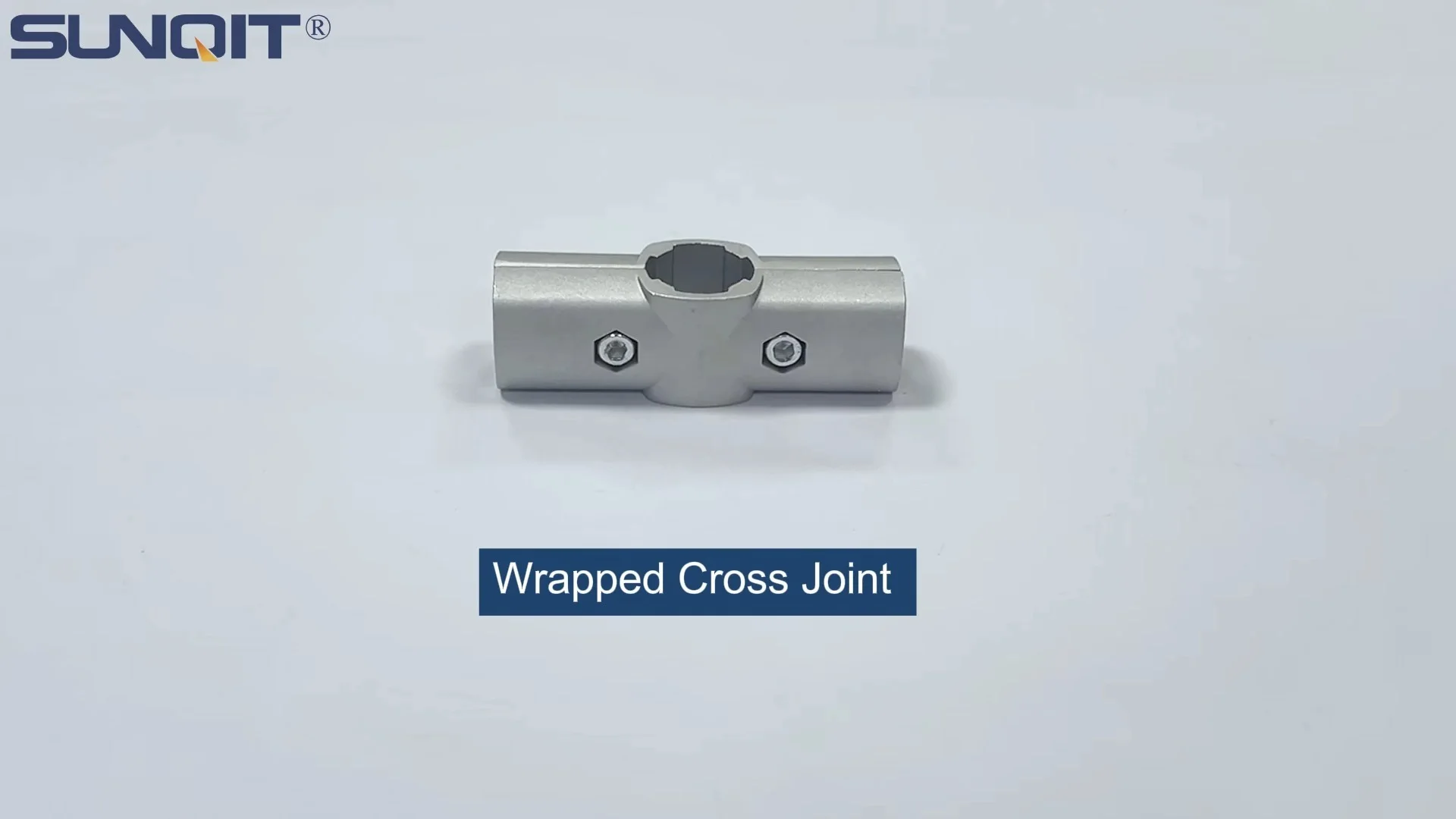
Three Way Aluminum Pipe Joint
Aluminum 3 way pipe joint for 28mm aluminum pipe connection in 3 direction.
Three Way Aluminum Pipe Joint

How modular aluminum components are reshaping efficiency, waste reduction, and long-term value in production lines

The Urgency of Sustainability in Modern Manufacturing

In today's industrial landscape, "sustainability" is no longer a buzzword—it's a business imperative. With global pressure to reduce carbon footprints, minimize waste, and optimize resource use, manufacturers are rethinking every aspect of their operations, from energy consumption to material selection. The traditional model of "take-make-dispose" is giving way to a circular approach, where efficiency and reusability take center stage. At the heart of this shift lies the demand for flexible, durable, and eco-friendly solutions that align with lean system principles—solutions that don't just boost productivity but also honor environmental responsibility.

One area where this transformation is particularly visible is in the design of factory floor infrastructure: workbenches, flow racks, conveyors, and material handling systems. For decades, manufacturers relied on rigid, fixed structures made from welded steel or plastic, which often ended up in landfills when production lines changed or facilities expanded. But today, a new generation of modular components is emerging, and leading the charge are aluminum-based systems—specifically, reusable three way aluminum pipe joints and their accompanying aluminum profile accessories. These unassuming connectors are quietly revolutionizing how factories are built, adapted, and sustained.
Lean Systems and the Case for Modular Materials

Lean manufacturing, a philosophy centered on eliminating waste ("muda") and maximizing value, has become the gold standard for efficient production. At its core, lean demands flexibility: the ability to adapt quickly to changing customer needs, product designs, or production volumes. Yet, traditional fixed infrastructure directly contradicts this principle. A welded steel workbench, for example, can't be easily reconfigured if a new machine is added or a workflow is redesigned. This rigidity leads to wasted time, space, and materials—exactly what lean aims to eliminate.

Enter modular systems built around aluminum profiles and pipe joints. Aluminum, by nature, is a lean material: it's lightweight yet strong, corrosion-resistant, and infinitely recyclable. When paired with intelligent connectors like three way aluminum pipe joints, it becomes a building block for adaptable, waste-free infrastructure. These joints allow manufacturers to assemble, disassemble, and reassemble structures with minimal effort, turning static workspaces into dynamic environments that evolve with the business. It's lean thinking made tangible.

Did you know? According to the Aluminum Association, recycling aluminum saves 95% of the energy required to produce new aluminum from raw materials. For manufacturers, this means choosing aluminum components isn't just good for the planet—it's a cost-saver in the long run, especially when those components are designed to be reused repeatedly.

Three Way Aluminum Pipe Joints: The Unsung Heroes of Modularity

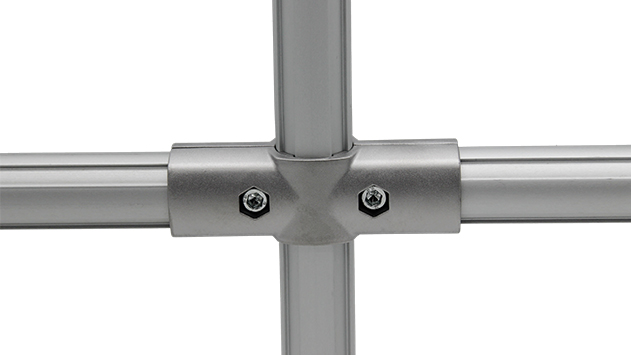
So, what exactly are three way aluminum pipe joints, and why do they matter? At their simplest, these are precision-engineered connectors designed to join three aluminum pipes or profiles at various angles (typically 90°, 45°, or 135°) without welding, drilling, or adhesives. Made from high-grade aluminum alloy, they feature internal locking mechanisms or set screws that secure pipes firmly in place while allowing for quick disassembly. Think of them as the "Lego bricks" of industrial infrastructure—small, simple, and infinitely versatile.

But their true power lies in reusability. Unlike traditional steel joints, which are permanently fixed once welded, three way aluminum pipe joints can be loosened, removed, and reused in entirely new configurations. A workbench today can become a flow rack tomorrow, and a conveyor system next month—all with the same set of joints and pipes. This flexibility drastically reduces the need for new materials, cutting down on waste and lowering procurement costs over time.

Take, for example, a manufacturer producing electronic components. Their production line might require a specialized ESD workstation (electrostatic discharge workstation) to protect sensitive parts. Using three way aluminum pipe joints, they can assemble the workstation with aluminum profiles, add ESD-safe surfaces, and integrate roller tracks for material flow. Six months later, if they switch to a new product line that requires a larger workspace, they can disassemble the ESD workstation, reuse the joints and pipes to build a longer workbench, and only purchase a few additional aluminum profile accessories to complete the new setup. No waste, no delays, no unnecessary spending.

Key Benefits of Reusable Aluminum Joints in Sustainable Manufacturing

Beyond reusability, three way aluminum pipe joints offer a host of advantages that make them indispensable in sustainable manufacturing. Let's break down the most impactful ones:

1. Material Efficiency and Waste Reduction

Traditional manufacturing setups often result in "dead stock"—unused or obsolete components that end up in landfills. With aluminum joints, this problem is virtually eliminated. Since joints and pipes can be repurposed, manufacturers keep materials in circulation longer, reducing the need for new production. Even when a component finally reaches the end of its life, aluminum is 100% recyclable, with no loss in quality. This closes the loop on the material lifecycle, aligning with circular economy goals.

2. Energy and Cost Savings

Aluminum is lighter than steel, which means structures built with aluminum joints require less energy to transport and install. Additionally, the absence of welding or cutting reduces on-site energy use and labor costs. Over time, the ability to reuse components translates to significant savings on material procurement. A study by the Lean Enterprise Institute found that manufacturers using modular aluminum systems reduced their infrastructure costs by 30% over five years compared to those using fixed steel structures.

3. Durability and Longevity

Aluminum's natural resistance to corrosion and rust ensures that three way pipe joints withstand the harsh conditions of factory floors—exposure to oils, coolants, and humidity—without degrading. Unlike plastic joints, which can crack or warp over time, aluminum joints maintain their structural integrity for decades, even with repeated assembly and disassembly. This longevity means fewer replacements and less waste in the long term.

4. Compatibility with Lean Tools and Systems

Three way aluminum pipe joints seamlessly integrate with other lean manufacturing tools, such as flow racks (like material rack B with 3 rows and 3 floors), roller tracks, and turnover trolleys. For instance, a lean pipe supplier might offer a complete ecosystem of aluminum profile accessories—casters, roller track connectors, end supports—that work with the joints to create customized solutions. This compatibility ensures that manufacturers can build exactly what they need without overcomplicating the process.

Traditional vs. Aluminum: A Clear Comparison

Feature Traditional Steel/Welded Joints Three Way Aluminum Pipe Joints
Reusability Permanently fixed; cannot be reused once welded Fully reusable; can be disassembled and repurposed indefinitely
Installation Time Hours (requires welding, drilling, or specialized tools) Minutes (hand-tightened set screws or quick-locking mechanisms)
Weight Heavy (increases transport and installation costs) Lightweight (30-50% lighter than steel, reducing energy use)
Corrosion Resistance Prone to rust; requires painting or coating Naturally corrosion-resistant; no additional treatments needed
Environmental Impact High (welding emits fumes; wasteful when replaced) Low (no emissions during assembly; 100% recyclable materials)
Long-Term Cost High (frequent replacements and waste disposal fees) Low (one-time purchase with infinite reuse; minimal waste costs)

Real-World Applications: From Workbenches to Whole Factories

The versatility of three way aluminum pipe joints means they're used across virtually every manufacturing sector, from automotive to pharmaceuticals. Let's explore a few common applications where they shine:

1. Aluminum Workbenches and ESD Workstations

Workbenches are the backbone of any production line, and aluminum workbenches built with three way joints offer unmatched adaptability. Whether it's a single-deck workbench without casters (Workbench E) or a heavy-duty station with tool rails and storage, joints allow for easy height adjustments, accessory additions (like LED lights or bins), and even mobility when paired with casters. For electronics manufacturers, ESD workstations benefit from aluminum's conductive properties, which can be grounded to prevent static damage—all without sacrificing reusability.

2. Flow Racks and Material Handling

Flow racks (like Material Rack B, a 3-row, 3-floor design) rely on gravity and roller tracks to move materials smoothly from receiving to production. Three way aluminum pipe joints make it easy to adjust rack height, add or remove shelves, or change the angle of roller tracks to optimize flow. When product sizes change, the same rack can be reconfigured with new roller track guide rails (yellow or grey plastic, or aluminum Guide Rail A/B) and roller track placon mounts—no need for a brand-new rack.

3. Turnover Trolleys and Mobile Carts

Turnover trolleys are essential for moving materials across the factory floor, and aluminum joints make them both durable and lightweight. By combining joints with aluminum pipes, casters, and roller track accessories, manufacturers can build trolleys that are easy to push, resistant to dents, and simple to repair. If a trolley is no longer needed, its components can be repurposed into a stationary material rack or workbench extension.

Choosing the Right Partner: The Role of a Trusted Lean Pipe Supplier

To fully leverage the benefits of three way aluminum pipe joints, manufacturers need more than just quality components—they need a partner who understands their unique challenges. A reliable lean pipe supplier should offer not just joints and aluminum profiles but a complete solution: technical support for custom designs, a wide range of compatible accessories (from roller track placon mounts to caster wheels), and guidance on sustainability best practices.

When evaluating suppliers, look for those who prioritize material quality (e.g., high-grade aluminum alloys), offer testing data on joint strength and durability, and have a track record of working with manufacturers in your industry. A supplier that understands lean principles can also help optimize your designs for maximum efficiency, ensuring that your aluminum-based systems deliver both productivity and sustainability gains.

The Future of Sustainable Manufacturing: Building for Tomorrow

As manufacturers continue to embrace sustainability and lean principles, the demand for modular aluminum systems will only grow. Innovations in joint design—like internal rotary aluminum joints that allow for 360° rotation—or advanced aluminum extrusion profiles with integrated T-slots are making these systems even more versatile. Meanwhile, the rise of smart factories is creating opportunities for aluminum infrastructure to work with IoT sensors and automation, further enhancing efficiency.

But perhaps the most exciting trend is the shift toward circular supply chains. Imagine a future where a lean pipe supplier not only sells you three way aluminum pipe joints but also takes back your old components, recycles them, and gives you credit toward new ones. This closed-loop model would eliminate waste entirely, turning manufacturing into a truly sustainable process.

At the end of the day, three way aluminum pipe joints are more than just connectors—they're symbols of a manufacturing industry that's finally putting sustainability at the forefront. By choosing reusable, efficient, and eco-friendly materials, manufacturers aren't just building better products; they're building a better future.

Conclusion: Small Joints, Big Impact

Sustainable manufacturing isn't about grand gestures—it's about the small, intentional choices that add up over time. Three way aluminum pipe joints may seem like humble components, but their ability to enable reusability, flexibility, and waste reduction makes them a cornerstone of modern, responsible manufacturing. Whether you're assembling an ESD workstation, a flow rack, or an entire production line, these joints prove that sustainability and productivity don't have to be trade-offs.

So, the next time you walk through a factory floor, take a closer look at the workbenches and racks. Chances are, if they're lightweight, sleek, and surprisingly adaptable, they're built with aluminum joints. And behind those joints? A commitment to building smarter, not just harder—a commitment that will shape the future of manufacturing for decades to come.


Get In Touch with us

Hey there! Your message matters! It'll go straight into our CRM system. Expect a one-on-one reply from our CS within 7×24 hours. We value your feedback. Fill in the box and share your thoughts!