- Company Articles
- Products and Technology
- Solution
- Sustainable Manufacturing: Strengthen Lean Management with Reusable Aluminum Systems

Sustainable Manufacturing: Strengthen Lean Management with Reusable Aluminum Systems
Related Product
Strengthen Lean Management
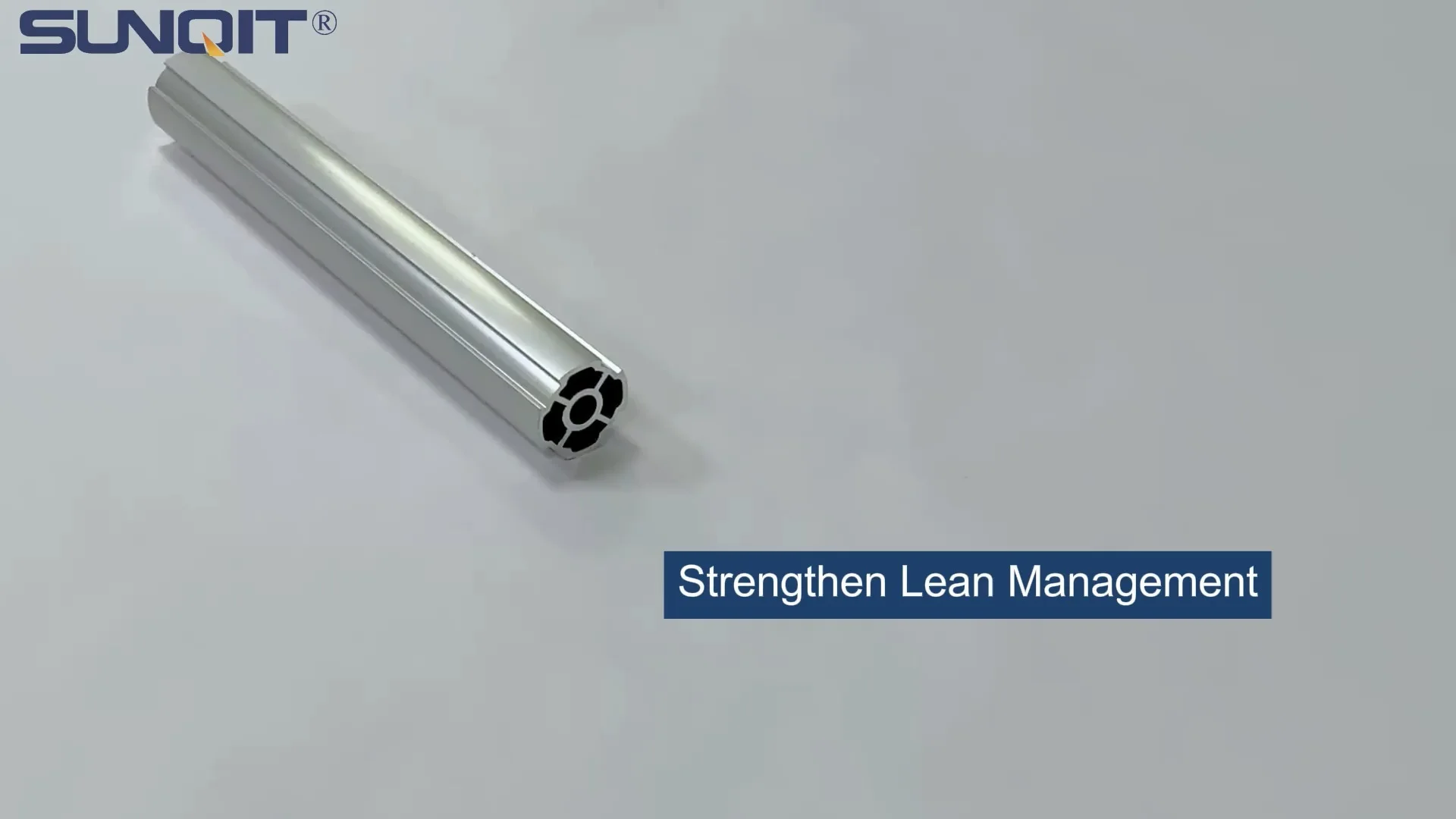
This product is called reinforced aluminum tube, and its bending strength is about twice that of the basic aluminum tube. The end face can process m1o threaded holes, install foot cups and other accessories, or convert internal and external screws in
In today's fast-paced industrial landscape, manufacturers face a dual challenge: meeting the ever-growing demand for efficiency while reducing their environmental footprint. The push for sustainability isn't just a trend—it's a business imperative, driven by climate goals, consumer expectations, and regulatory pressures. At the same time, lean management remains a cornerstone of operational excellence, focusing on eliminating waste, optimizing workflows, and continuous improvement. What if there was a way to merge these two priorities? Enter reusable aluminum systems—a game-changing solution that bridges lean efficiency and sustainable manufacturing.
Lean Management and Sustainability: A Natural Partnership
Lean management, born from the Toyota Production System, is rooted in five core principles: value, value stream, flow, pull, and perfection. At its heart is the elimination of "muda" (waste), which includes overproduction, excess inventory, unnecessary motion, and defects. Sustainability, similarly, aims to minimize resource consumption and waste generation. The overlap is clear: a lean operation that cuts waste is inherently more sustainable, and a sustainable operation often relies on lean principles to reduce inefficiencies.
Yet, traditional manufacturing setups often undermine this synergy. Fixed steel workbenches, welded conveyor systems, and rigid material racks are designed for permanence, not adaptability. When production lines need reconfiguring—whether for a new product, higher demand, or process improvements—these structures become liabilities. Retooling often means cutting, welding, or replacing entire systems, generating metal waste, consuming energy, and halting production for days (or weeks). This isn't just inefficient; it's unsustainable .
The Problem with "One-and-Done" Manufacturing Setups
Consider a typical scenario: A electronics manufacturer decides to launch a new smartphone model. Its existing production line, built with fixed steel workbenches and a welded conveyor, isn't optimized for the new device's smaller components. To adapt, the team must either: (1) invest in entirely new infrastructure, leaving the old setup to collect dust (or end up in a landfill), or (2) spend weeks cutting and rewelding the existing system, generating metal shavings, emissions, and downtime. Both options are costly, wasteful, and at odds with lean and sustainability goals.
Worse, rigid systems often lead to process waste . A workbench that's too tall forces operators into awkward postures, slowing down assembly. A conveyor that can't be adjusted for smaller batches leads to overproduction, as teams rush to fill the line to "keep it running." Over time, these inefficiencies add up—wasting labor, energy, and materials.

Reusable Aluminum Systems: The Lean-Sustainable Solution
Reusable aluminum systems—built from modular aluminum extrusion profiles , connectors, and accessories—offer a better way. These systems are designed for flexibility: they can be assembled, disassembled, and reconfigured repeatedly without cutting, welding, or specialized tools. Think of them as industrial-grade building blocks: aluminum profile rails (with T-slots for easy attachment), joints, casters, and panels that snap together to form workbenches, flow racks, conveyors, and more. When production needs change, you simply take them apart and rebuild—no waste, no downtime, no new materials.
But their benefits go beyond adaptability. Aluminum itself is a sustainability powerhouse: it's 100% recyclable, with recycled aluminum requiring just 5% of the energy needed to produce primary aluminum. Unlike steel, it resists corrosion, ensuring a long lifespan (decades, in many cases). And because these systems are modular, they reduce the need for "spare" infrastructure—one set of components can be repurposed across multiple production lines, cutting down on material consumption.
Key Benefits for Lean and Sustainable Operations
Let's break down how reusable aluminum systems strengthen lean management while boosting sustainability:
- Eliminate Waste from Retooling: No more cutting or welding—reconfigure in hours, not weeks. A study by the Aluminum Extruders Council found that manufacturers using modular aluminum systems reduced retooling waste by up to 70% compared to traditional setups.
- Optimize Workflow Flexibility: Aluminum pipe accessories like casters, adjustable joints, and sliding panels let teams tweak workbenches and flow racks on the fly. For example, adding a caster to a material rack turns it into a mobile trolley, reducing operator motion (a key lean waste) and eliminating the need for multiple fixed racks.
- Reduce Material Consumption: Modular components are built to last and reused repeatedly. A single aluminum profile can serve as part of a workbench today, a conveyor guard tomorrow, and a material rack next quarter—no need to buy new materials for each project.
- Lower Energy Use: Lightweight aluminum requires less energy to transport and assemble than steel. Plus, its corrosion resistance means less frequent replacement, reducing the energy footprint of manufacturing new systems.
| Feature | Traditional Steel/Welded Systems | Reusable Aluminum Systems |
|---|---|---|
| Flexibility | Rigid; requires cutting/welding to reconfigure | Modular; reconfigurable in hours with basic tools |
| Waste Generation | High (metal scraps, discarded components during retooling) | Low (components reused; minimal waste) |
| Energy Footprint | High (steel production, welding, transportation of heavy parts) | Low (recycled aluminum, lightweight design, minimal retooling energy) |
| Long-Term Cost | High (frequent replacement, downtime during retooling) | Low (reusable components, reduced downtime, lower material costs) |
| Sustainability | Poor (non-recyclable in practice; short lifespan for reconfigurable needs) | Excellent (100% recyclable aluminum; designed for reuse) |

Beyond the Bench: Real-World Impact of Aluminum Systems
To see the difference, look no further than a mid-sized automotive parts manufacturer in Michigan. Facing pressure to reduce waste and meet a 2030 carbon neutrality goal, the company replaced its fixed steel workbenches and welded flow racks with a modular aluminum system. The results were striking:
- Retooling Time: Reduced from 5 days to 8 hours when switching between brake pad and rotor production lines.
- Material Waste: Cut by 65% in the first year (no more discarded steel frames).
- Energy Use: Lowered by 18% due to lighter aluminum components (less energy to transport and assemble) and reduced downtime.
- Employee Satisfaction: Improved, as operators could adjust their workbench heights and tool placement to reduce fatigue—boosting productivity by 12%.
This isn't an isolated case. From aerospace to consumer goods, manufacturers are discovering that reusable aluminum systems aren't just "green"—they're smart business. By aligning lean efficiency with sustainability, these systems create a competitive edge in an increasingly eco-conscious market.

Building a Lean-Sustainable Future: Getting Started with Aluminum Systems
Adopting reusable aluminum systems doesn't require a complete overhaul. Start small: replace a single rigid workbench with a modular aluminum model. Add adjustable flow racks to a material handling area. Over time, expand to conveyors, assembly lines, and even entire production cells. The key is to prioritize adaptability —design systems that can grow, shrink, or change shape as your needs evolve.
When selecting components, focus on quality. Look for aluminum extrusion profiles with standardized T-slots (compatible with most accessories), durable anodized finishes (resistant to scratches and corrosion), and certified recycled content. Work with suppliers who offer design support—many will help you map workflows and optimize layouts to maximize both lean efficiency and sustainability.
Conclusion: Lean, Sustainable, and Ready for What's Next
Sustainable manufacturing isn't about sacrificing efficiency for the planet—it's about reimagining efficiency as sustainability. Reusable aluminum systems embody this, offering the flexibility lean operations need and the recyclability sustainability demands. They turn "one-and-done" infrastructure into "build, rebuild, and reuse" assets, reducing waste, cutting costs, and future-proofing production lines.
In a world where change is the only constant, manufacturers can't afford rigid systems. They need solutions that adapt, evolve, and grow—without leaving a trail of waste in their wake. Reusable aluminum systems aren't just a tool for today's challenges; they're a foundation for tomorrow's success. Lean, sustainable, and built to last—this is the future of manufacturing.