- Company Articles
- Products and Technology
- Solution
- Sustainable Production: Environmental Benefits of Two Way Lean Pipe Joint

Sustainable Production: Environmental Benefits of Two Way Lean Pipe Joint
Related Product
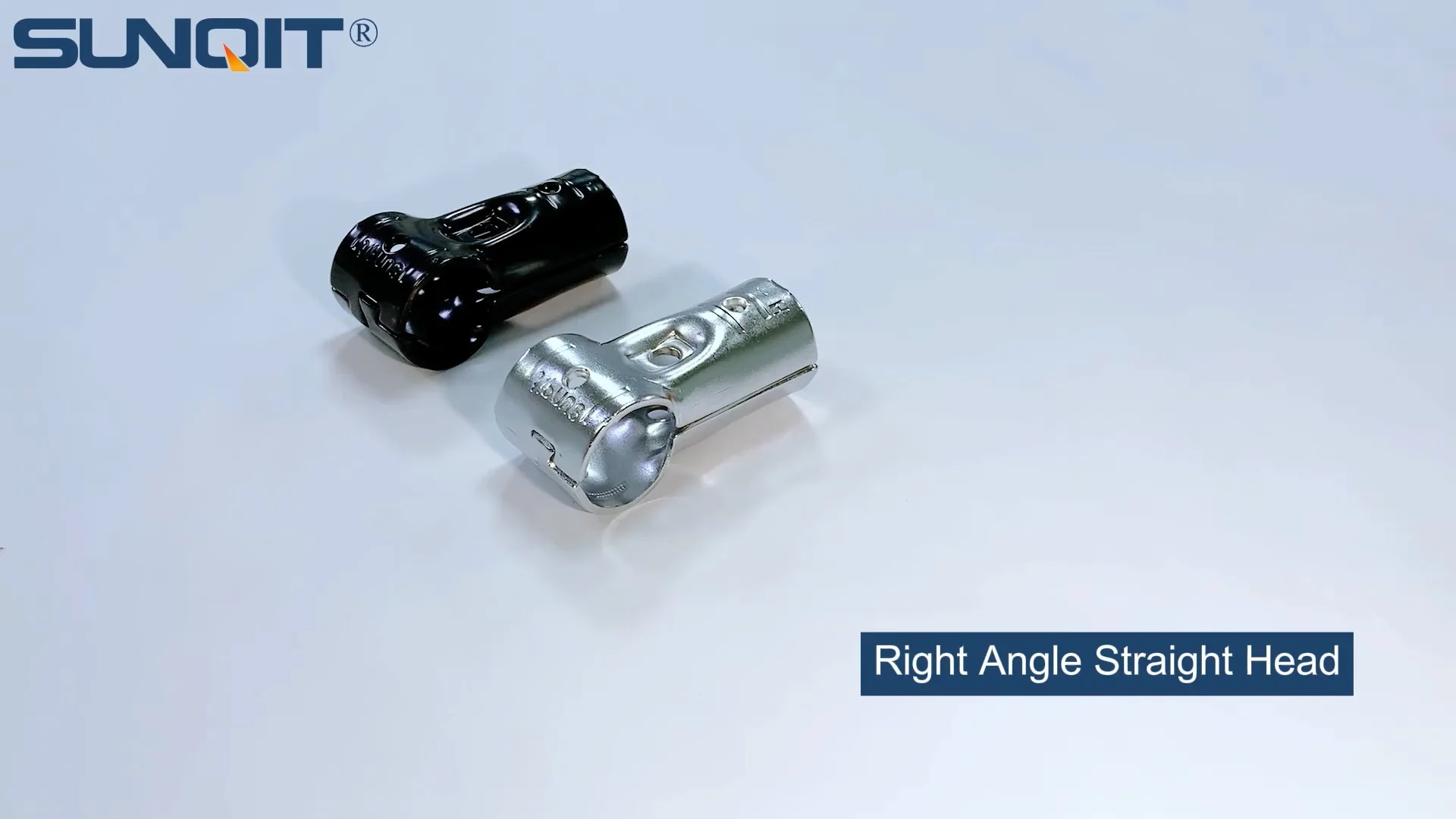
Two Way Lean Pipe Joint
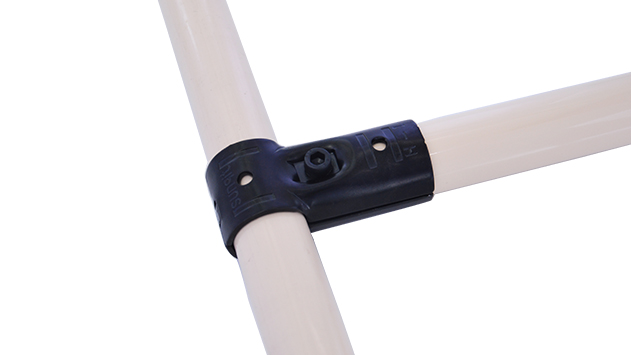
Two way lean pipe joint for 2 pcs 28MM lean pipe connection in straight angle, which used widely in workbench, flow rack, hand trolley frame connection.
In an era where sustainability is no longer a buzzword but a critical business imperative, manufacturers worldwide are reimagining every aspect of their operations to reduce environmental impact. From energy consumption to waste management, the pressure to align production processes with eco-friendly practices has never been greater. At the heart of this transformation lies the adoption of lean manufacturing principles, which prioritize efficiency, waste reduction, and continuous improvement. Within this framework, components often play outsized roles—and few are as quietly impactful as the two way lean pipe joint. This unassuming piece of hardware, a staple in lean system setups, is quietly revolutionizing how factories approach sustainability, offering a blueprint for greener, more adaptable production lines. In this article, we'll explore how the two way lean pipe joint, alongside complementary elements like aluminum profiles and modular workstations, is driving sustainable production forward, one connection at a time.
The Sustainability Crisis in Traditional Manufacturing
To appreciate the environmental benefits of the two way lean pipe joint, it's first necessary to understand the sustainability challenges plaguing traditional manufacturing setups. For decades, production lines were designed with a "set it and forget it" mindset: rigid, heavy, and built to last decades without modification. While this approach prioritized durability, it came at a steep environmental cost. Fixed structures, often made from solid steel or welded iron, required massive amounts of raw material to produce. The energy-intensive manufacturing processes for these materials—think smelting steel or casting iron—released significant carbon emissions. Worse, when production needs changed (a common occurrence in fast-paced industries like electronics or automotive), these fixed setups became obsolete. Instead of adapting, factories would often dismantle and discard entire systems, sending tons of non-recyclable waste to landfills. Even minor adjustments required custom fabrication, leading to excess material waste and prolonged downtime.
Consider the example of a traditional assembly line workstation. Built with welded steel frames, it might weigh hundreds of pounds and require specialized tools to modify. If a factory needed to reconfigure the line to accommodate a new product, the old workstation would likely be scrapped. The steel frame, now bent or damaged from welding, couldn't be easily repurposed, and the process of manufacturing a replacement would repeat the cycle of high material use and emissions. Multiply this by hundreds of workstations across a factory, and the environmental toll becomes staggering. Add in the inefficiencies of poorly designed material flow—leading to excess energy use from forklifts traveling longer distances, or workers wasting time retrieving tools—and it's clear: traditional manufacturing is ripe for a sustainability overhaul.
Lean Systems: A Framework for Sustainable Manufacturing
Enter lean systems. Born from the Toyota Production System in the mid-20th century, lean manufacturing is centered on the elimination of waste ("muda") in all forms—including environmental waste. At its core, lean is about doing more with less: less time, less material, less energy, and less waste. But lean isn't just a philosophy; it's a practical approach enabled by modular, flexible components. Unlike traditional fixed setups, lean systems are built using interchangeable parts that can be easily assembled, disassembled, and reconfigured. This modularity is the key to their sustainability. Instead of discarding an entire workstation when needs change, manufacturers can simply rearrange the components. Need a taller shelf? Swap out a few pipes. Require a wider workspace? Add an extension using the same joints and tubes. This adaptability drastically reduces the need for new materials, cutting down on both production emissions and landfill waste.
At the heart of these lean systems are components like lean pipes (also called "lean tubes"), joints, and accessories. These lightweight, durable materials—often made from aluminum or steel with a plastic coating—are designed to be easy to connect and reconfigure. And among these components, the two way lean pipe joint stands out as a workhorse. As the name suggests, this joint allows two lean pipes to connect at various angles, forming the backbone of structures like workstations, flow racks, and material carts. Its simplicity is its strength: no welding, no specialized tools, just a simple twist or clamp to secure. This ease of use makes reconfiguration quick and accessible, even for workers without technical training. But beyond convenience, the two way lean pipe joint is a sustainability champion, offering a host of environmental benefits that traditional fixed joints simply can't match.
The Two Way Lean Pipe Joint: Small Component, Big Impact
Let's start with the basics: what exactly is a two way lean pipe joint? In essence, it's a connector designed to join two lean pipes (typically 28mm or 30mm in diameter) at angles ranging from 90 degrees to 180 degrees, depending on the joint type. Made from materials like die-cast aluminum or high-strength plastic, these joints are lightweight yet surprisingly strong. They feature a clamping mechanism—often a bolt or lever—that tightens around the pipes, creating a secure connection without welding. This design is intentional: it allows for quick assembly and disassembly, making it easy to reconfigure structures as needed. But how does this translate to environmental benefits? Let's break it down.

Environmental Benefits of the Two Way Lean Pipe Joint
1. Reduced Material Consumption
Traditional fixed joints, like welded steel brackets, are over-engineered for durability. They're heavy, thick, and use far more material than necessary for most applications. The two way lean pipe joint, by contrast, is designed for efficiency. Its lightweight aluminum or plastic construction uses minimal material while still providing ample strength for industrial use. For example, a standard aluminum two way joint weighs just 150-200 grams, compared to a welded steel bracket that might weigh 500 grams or more. Multiply this by hundreds of joints in a single factory, and the material savings add up. Less material means less energy used in production (aluminum production, while still energy-intensive, requires 95% less energy when recycled compared to primary production) and fewer raw resources extracted from the earth.
But the material savings don't stop there. The modular nature of lean systems means that components like pipes and joints can be reused across multiple projects. A two way joint removed from an old workstation can be used to build a new flow rack, or a material cart, or a shelving unit. This "circular" use of components drastically reduces the need to manufacture new parts, cutting down on material demand and associated emissions.
2. Energy Savings in Production and Transport
The production of lean components, including two way lean pipe joints, is far less energy-intensive than traditional alternatives. Aluminum, a common material for these joints, is lighter than steel, and its production (especially when using recycled aluminum) generates fewer emissions. For instance, recycling aluminum saves 95% of the energy required to produce new aluminum from bauxite ore. Many lean component manufacturers prioritize recycled aluminum in their joints, further lowering the carbon footprint. Additionally, the lightweight nature of lean systems reduces transportation emissions. A truckload of lean pipes and joints can carry far more components than a truckload of heavy steel brackets, meaning fewer trips and less fuel consumption to transport materials to factories.
3. Longevity and Reduced Waste
Two way lean pipe joints are built to last. Their simple, mechanical design—no complex electronics or fragile parts—means they can withstand years of use in industrial environments. Unlike welded joints, which can weaken over time due to metal fatigue or corrosion, these joints can be easily tightened or replaced if they wear out. And when a joint does reach the end of its life, its aluminum or plastic construction is fully recyclable. Compare this to traditional welded steel joints, which often end up in landfills because they're damaged or contaminated during use. The longevity of lean components means fewer replacements, less waste, and a lower overall environmental impact.
4. Adaptability = Less Obsolescence
Perhaps the most significant environmental benefit of the two way lean pipe joint is its role in making production systems adaptable. In traditional manufacturing, obsolescence is a major source of waste. A workstation that's no longer needed becomes trash. With lean systems, that same workstation can be reborn. By loosening the two way joints, workers can disassemble the structure, rearrange the pipes, and reassemble it into something new—a material cart, a shelving unit, or a different workstation. This adaptability extends the lifespan of components indefinitely. A study by the Lean Enterprise Institute found that factories using lean modular systems reduced their equipment replacement rates by up to 60%, leading to a corresponding drop in material waste and emissions from manufacturing new equipment.
Take the example of a consumer electronics manufacturer that produces smartphones. When a new model is released, the assembly line needs to be reconfigured to accommodate new components or tools. With a lean system built using two way lean pipe joints, the factory can reconfigure the line in hours, not days. Workers might disassemble old workstations and use the pipes and joints to build new ones tailored to the new model. No need for custom fabrication, no need to discard heavy steel frames—just reimagine and rebuild. This not only saves time and money but also drastically reduces waste.
Traditional vs. Lean: A Sustainability Comparison
| Aspect | Traditional Manufacturing Setup | Lean System with Two Way Lean Pipe Joints |
|---|---|---|
| Material Use | High: Heavy steel frames, welded joints, over-engineered components. | Low: Lightweight aluminum/plastic joints, minimal material per component. |
| Energy for Production | High: Energy-intensive steel smelting, welding, and casting. | Low: Recycled aluminum use, minimal processing for modular components. |
| Adaptability | Low: Fixed structures, require full replacement when needs change. | High: Reconfigurable via two way joints; components reused across projects. |
| Waste Generation | High: Obsolete systems sent to landfills; custom fabrication leads to excess waste. | Low: Minimal waste from reconfiguration; recyclable materials at end-of-life. |
| Carbon Footprint | High: Emissions from material production, transportation, and waste disposal. | Low: Reduced material/energy use, fewer replacements, lower transport emissions. |

Complementary Components: Aluminum Profiles and Beyond
While the two way lean pipe joint is a star player in sustainable lean systems, it rarely works alone. Complementary components like aluminum profiles further enhance environmental benefits. Aluminum profiles—extruded aluminum beams with T-slot grooves—are used in conjunction with lean pipes to create sturdy, lightweight structures. Like two way lean pipe joints, aluminum profiles are modular: they can be cut to length, connected with brackets, and fitted with accessories like shelves or tool holders. Their extruded design uses minimal material while providing excellent strength-to-weight ratios. Aluminum is also highly recyclable, with nearly 75% of all aluminum ever produced still in use today (thanks to its infinite recyclability without quality loss). When combined with two way lean pipe joints, aluminum profiles create systems that are even more adaptable and sustainable.
Consider an esd workstation—a specialized workstation designed to prevent electrostatic discharge, critical in electronics manufacturing. Traditional esd workstations often use fixed steel frames with esd-safe laminates. While functional, they're heavy and hard to modify. A lean esd workstation, by contrast, might use aluminum profiles for the frame and two way lean pipe joints for added flexibility. The aluminum profiles provide a sturdy base, while the joints allow for easy addition of shelves, tool holders, or cable management systems. If the workstation needs to be adjusted for a taller worker, or to accommodate a new esd mat, the joints can be loosened, the height adjusted, and the workstation secured again. No waste, no new materials—just adaptation. This not only reduces environmental impact but also improves worker ergonomics, a win-win.
Another key component is the flow rack, a material handling system used to transport goods along a production line via gravity. Traditional flow racks might use steel rollers and welded frames, but lean flow racks often incorporate two way lean pipe joints and aluminum roller tracks. The modular design allows for easy adjustment of roller spacing or rack height, ensuring optimal material flow. When production needs change, the flow rack can be reconfigured to handle different sized parts, eliminating the need for a new rack. This adaptability, enabled by components like the two way joint, reduces waste and energy use across the supply chain.
Real-World Impact: Case Studies in Sustainability
To put these benefits into perspective, let's look at real-world examples of factories that have adopted lean systems with two way lean pipe joints and seen measurable environmental improvements. A leading automotive parts manufacturer in Germany, for instance, replaced its traditional steel assembly line workstations with lean systems built using aluminum profiles and two way lean pipe joints. The results were striking: material waste from workstation replacements dropped by 72%, and the factory reduced its carbon emissions by 18% in the first year alone. Workers reported spending less time waiting for workstation modifications, and the ability to reconfigure lines quickly helped the factory adapt to shifting customer demands, boosting productivity by 25%.
In Asia, a consumer electronics plant producing smartwatches implemented lean flow racks with two way lean pipe joints and aluminum roller tracks. Prior to the switch, the factory used fixed steel racks that required forklifts to restock, leading to high energy use and frequent material damage. The new flow racks, with their gravity-fed design and modular construction, reduced forklift use by 40%, cutting energy consumption. When the factory introduced a new watch model, the flow racks were reconfigured in a single day using the same pipes and joints, avoiding the need to purchase new racks. Waste from packaging and damaged parts also dropped by 30%, as the smoother material flow reduced jostling and breakage.
These case studies highlight a crucial point: sustainability and profitability often go hand in hand with lean systems. Reduced material costs, lower energy bills, and faster adaptation to market changes all contribute to a healthier bottom line, while also reducing environmental impact. The two way lean pipe joint, though small, is a linchpin in this equation—enabling the modularity that makes these benefits possible.
The Future of Sustainable Manufacturing: Beyond the Joint
As manufacturers continue to prioritize sustainability, the role of components like the two way lean pipe joint will only grow. Innovations in material science are making these components even more eco-friendly. For example, some manufacturers now produce joints using recycled plastic or bio-based materials, further reducing their carbon footprint. Advances in 3D printing may one day allow factories to print custom joints on-site, eliminating transportation emissions and reducing waste from excess inventory. Additionally, the rise of the circular economy—where products are designed for reuse and recycling—will push lean systems to new heights. Imagine a factory where every pipe, joint, and profile is tracked via RFID tags, making it easy to disassemble and reuse components across the supply chain. When a component reaches the end of its life, it can be recycled into new joints or profiles, creating a closed-loop system with zero waste.
Aluminum profiles, too, are evolving. New extrusion techniques allow for even lighter, stronger profiles with optimized T-slot designs, reducing material use without sacrificing durability. Some manufacturers are experimenting with aluminum alloys that require less energy to produce, or incorporating recycled content into their profiles. Combined with two way lean pipe joints, these advancements will make lean systems even more sustainable.
Perhaps most importantly, the cultural shift toward sustainability in manufacturing is driving demand for these solutions. Consumers are increasingly choosing brands with strong environmental credentials, and regulators are imposing stricter emissions and waste regulations. Factories that adopt lean systems with components like two way lean pipe joints aren't just doing the right thing for the planet—they're future-proofing their businesses. As one sustainability manager at a Fortune 500 manufacturing company put it: "Lean isn't just about efficiency anymore. It's about survival. The factories that thrive in the next decade will be the ones that can produce more with less, adapt quickly, and minimize their environmental impact. Components like the two way lean pipe joint are the building blocks of that future."
Conclusion: Small Components, Big Change
Sustainable production isn't about grand gestures alone—it's about the cumulative impact of small, intentional choices. The two way lean pipe joint, a humble component in the vast machinery of manufacturing, exemplifies this. By prioritizing modularity, lightweight design, and recyclability, it helps factories reduce material use, cut emissions, and minimize waste. When combined with other lean components like aluminum profiles, esd workstations, and flow racks, it forms the backbone of a sustainable manufacturing system that's adaptable, efficient, and kind to the planet.
As we look to the future, the message is clear: sustainability and productivity are not mutually exclusive. In fact, they're deeply intertwined. The two way lean pipe joint and the lean system it enables prove that by reimagining how we build and adapt our production lines, we can create factories that are both profitable and planet-friendly. So the next time you walk through a manufacturing plant, take a closer look at those unassuming joints connecting pipes and profiles. They might just be the quiet heroes of the sustainability revolution.