- Company Articles
- Products and Technology
- Solution
- Sustainable Solutions: Reusable End Support for Roller Track Placon Mount with Stop in Lean Lines

Sustainable Solutions: Reusable End Support for Roller Track Placon Mount with Stop in Lean Lines
Related Product
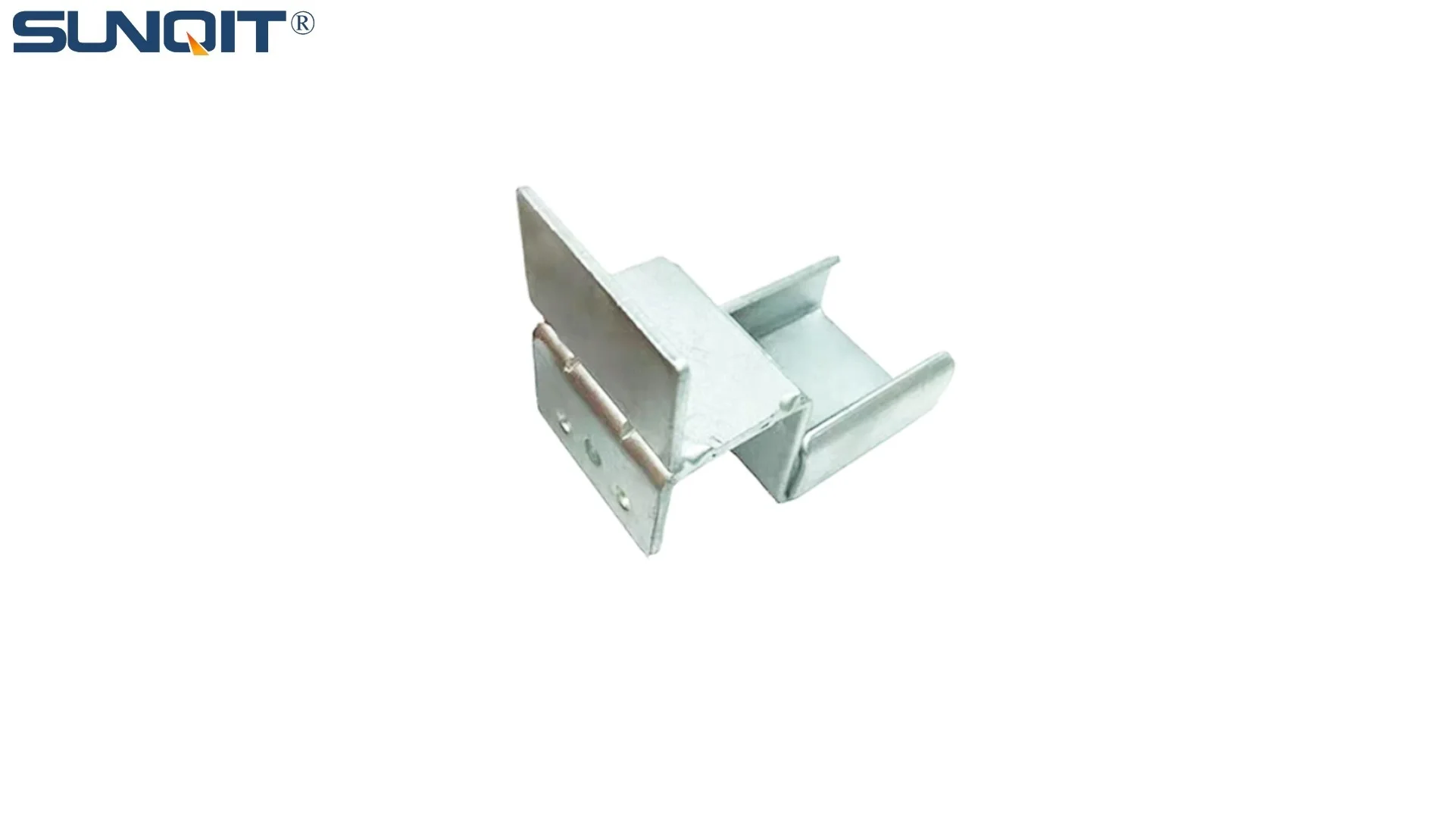
End Support for Roller Track Placon Mount with Stop
Roller track placon mount work as a connector for roller track and pipe or aluminum profile in rack syetem, it is a necessary parts in rack system which widely used in industrial plant and logistic,warehouse storage.
In today's fast-paced manufacturing world, efficiency and sustainability aren't just buzzwords—they're the backbone of a successful operation. Every factory manager, production supervisor, or logistics coordinator knows the struggle: balancing speed with cost, innovation with reliability, and growth with environmental responsibility. This is where lean production steps in, and at its core lies a simple yet powerful idea: build systems that adapt, reuse, and improve—so you never stop moving forward .
The Pain of "One-and-Done" Manufacturing
Let's talk about a scenario many in manufacturing are all too familiar with. Imagine you've just invested in a new production line for your 3C assembly workshop. The equipment is rigid, bolted down, and built for a specific product. Six months later, a new model launches, and suddenly that line is obsolete. You tear it down, throw away the old parts, and start from scratch. Not only does this waste time and money, but it also piles up scrap—bad for the planet, and bad for your bottom line.
Or consider your warehouse. Your flow racks and conveyors are fixed in place, making it impossible to rearrange when order volumes spike or product sizes change. Workers end up manually moving goods, slowing down operations and increasing the risk of errors. Sound familiar? These are the challenges that inspired the development of lean systems—solutions designed to grow with you, not against you.
Lean Isn't Just a Concept—It's in the Details
At the heart of lean production is the belief that flexibility drives efficiency . And flexibility starts with the smallest components—like the end support for roller track placon mount with stop. You might be thinking, "A support bracket? How can that make a difference?" Let's break it down.
Think of your roller track as the highway for your materials. The end support is like the guardrail that keeps everything on track—literally. But not all guardrails are created equal. Traditional fixed supports are welded or glued in place. They do the job… until they don't. When you need to adjust the track height, extend a conveyor, or repurpose a flow rack, those fixed supports become roadblocks. You either spend hours cutting and rewelding, or you replace them entirely. Enter the reusable end support for roller track placon mount with stop —a small part with a big mission.
Made from high-grade aluminum (because durability matters), this end support isn't just strong—it's smart. Its modular design lets you attach it to any aluminum profile or roller track with simple, tool-free connectors. Need to raise the track by 5cm? Loosen a few bolts, adjust, and tighten. Switching from a 3-row flow rack to a 4-row setup? Swap out the support, add a new placon mount, and you're good to go. No welding, no cutting, no waste. It's the definition of "install once, reuse forever."

Why Reusability Matters—For Your Team and Your Budget
Let's get practical. What does a reusable end support mean for your daily operations? Let's look at the numbers:
| Traditional Fixed Supports | Reusable End Support (Our Solution) |
|---|---|
| Installation time: 2-3 hours (welding, drilling) | Installation time: 15-20 minutes (tool-free assembly) |
| Reusability: 0% (once removed, they're damaged) | Reusability: 95%+ (easily repurposed across lines/racks) |
| Cost per adjustment: $200+ (new parts + labor) | Cost per adjustment: $0 (just reconfigure) |
| Environmental impact: High waste (scrap metal, chemicals from welding) | Environmental impact: Near-zero waste (aluminum is 100% recyclable) |
For a mid-sized manufacturing plant, those numbers add up fast. A single production line adjustment with traditional supports could cost thousands in parts and downtime. With reusable components? You're saving not just money, but the frustration of your team—because nothing kills morale like watching hard-earned investments go to waste.

Beyond the Bracket: How It Fits Into Your Lean Ecosystem
The end support for roller track placon mount with stop isn't a standalone product—it's part of a larger lean system. Think of it as a puzzle piece that connects with your flow racks, conveyors, and workbenches to create a seamless, adaptable workflow. Let's see how it plays with other key components:
- Flow Racks & Conveyors : Whether you're moving circuit boards in a 3C assembly line or medical devices in a cleanroom, roller tracks are the lifeline. Our end support ensures materials glide smoothly, stop precisely, and stay aligned—even when you reconfigure the track layout for new products.
- Lean Pipe Workbenches : Pair the support with a Workbench E (single deck, no casters) or an ESD workstation, and you've got a setup that adapts to operator height, tool placement, and task changes. No more building a new bench every time your process updates.
- Custom Lean Solutions : For industries like automotive or, where every millimeter counts, our team designs systems around reusability. Need a conveyor that can extend from 10m to 15m during peak seasons? The end support, combined with aluminum lean pipe and internal rotary joints, makes it possible—without replacing the entire line.
Real Impact: A 3C Manufacturer's Success Story
Let's take a look at how this works in the real world. A leading 3C assembly client in Shenzhen was struggling with frequent product launches. Their old production line used fixed steel supports for roller tracks, and each new phone model required a complete teardown. After switching to our reusable end supports and aluminum roller tracks, here's what happened:
- Line reconfiguration time dropped from 2 days to 4 hours.
- Material waste from old supports decreased by 80%.
- Workers reported a 30% reduction in fatigue, thanks to smoother, more ergonomic workflows.
"We used to dread product updates," said their production manager. "Now? We look forward to them. The system adjusts so quickly, we can test new layouts in a morning and be production-ready by afternoon."

Why Aluminum? Because Sustainability Starts With Materials
You might wonder why we focus on aluminum for components like the end support. The answer is simple: aluminum is the ultimate lean material . It's lightweight but strong, corrosion-resistant, and 100% recyclable. Unlike steel, it doesn't rust, so it lasts longer in harsh factory environments. And because it's malleable, we can design components that snap together without welding—saving time and reducing waste.
Take our basic aluminum tube and internal rotary aluminum joints, for example. They form the skeleton of our lean pipe systems, and they're designed to be taken apart and rebuilt endlessly. A tube used in a material rack today can be a workbench leg tomorrow, and a conveyor frame next month. That's the power of sustainable design—it turns "one-time use" into "lifetime value."
Why Choose Us as Your Lean Partner?
At the end of the day, anyone can sell a bracket. But we sell solutions . As a dedicated lean pipe supplier, we don't just provide parts—we listen to your challenges, understand your goals, and build systems that grow with you. Here's what sets us apart:
- Obsession with Reusability : Every product, from the end support to the conveyor, is engineered to be taken apart, repurposed, and improved. We hate waste as much as you do.
- Industry-Specific Expertise : Whether you're in 3C assembly,, or, our team has hands-on experience solving your unique problems. We don't just sell to you—we collaborate with you.
- Quality That Lasts : Our aluminum profiles, roller tracks, and joints undergo rigorous testing to handle the wear and tear of daily manufacturing. We stand behind our products because we use them too.
The Future of Manufacturing Is Lean—And It Starts Now
Sustainability isn't about grand gestures—it's about the small, intentional choices that add up. The reusable end support for roller track placon mount with stop might seem like a tiny part of your operation, but it's a symbol of a bigger shift: manufacturing that works with you, not against you.
So, whether you're building a new line, upgrading an old one, or just looking to cut waste and boost efficiency, remember this: the best systems aren't built to last forever—they're built to evolve forever . And we're here to help you evolve.