- Company Articles
- Products and Technology
- Solution
- Sustainable Solutions: Reusable Roller Track Placon Mount Connectors

Sustainable Solutions: Reusable Roller Track Placon Mount Connectors
Related Product
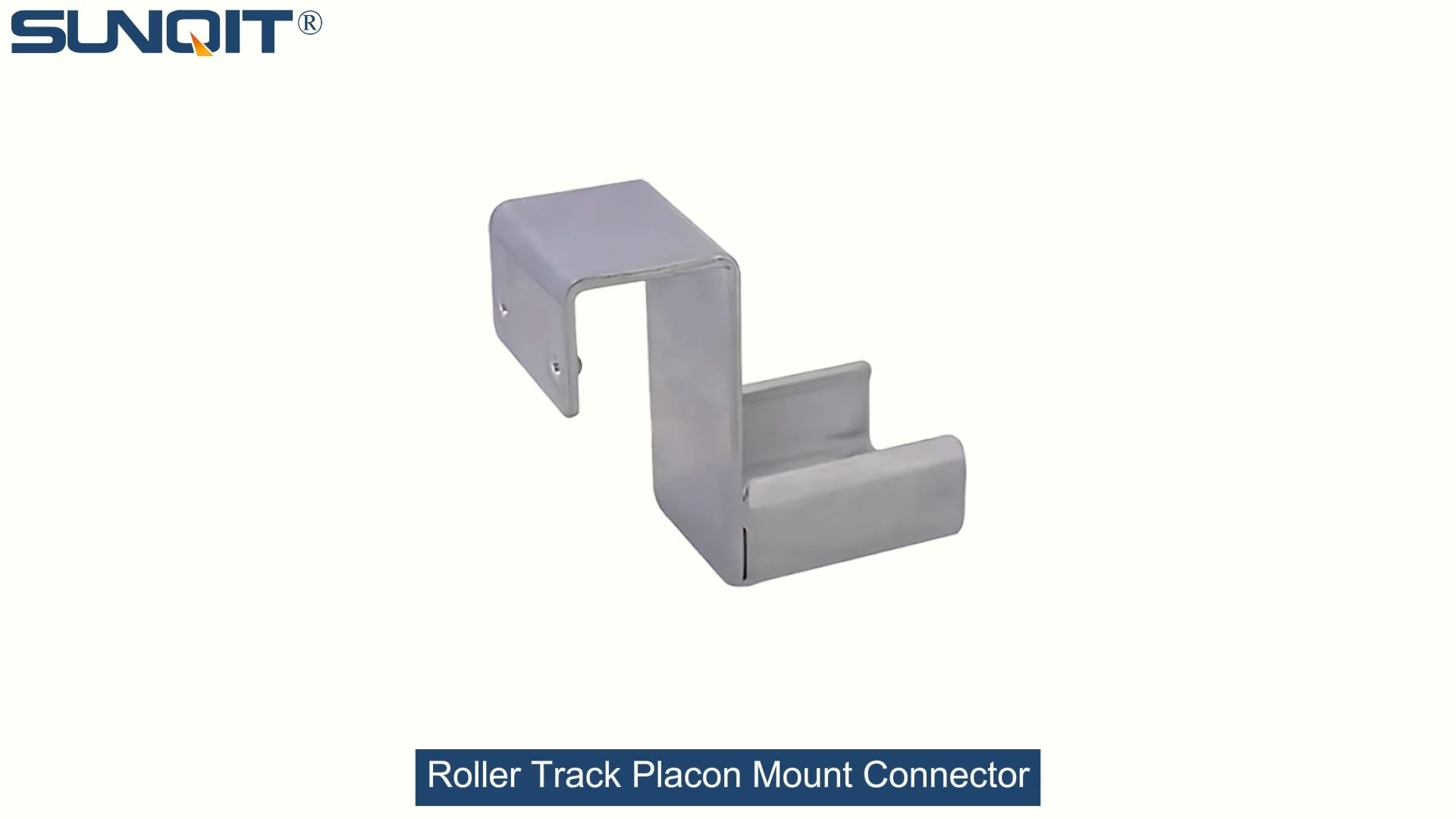
Roller Track Placon Mount Connector
Roller track placon mount work as a connector for roller track and pipe or aluminum profile in rack syetem, it is a necessary parts in rack system which widely used in industrial plant and logistic,warehouse storage.
Building Flexible, Eco-Friendly Manufacturing Systems with Aluminum Lean Pipes
The Hidden Cost of "One-Time Use" Manufacturing Equipment
In today's fast-paced manufacturing landscape, where product cycles shrink and customization demands grow, the industry faces a silent crisis: equipment waste. Walk through any factory, and you'll likely find corners stacked with rusting steel racks, outdated conveyor tracks, and rigid workbenches—all rendered obsolete by a single production line adjustment. These aren't just piles of metal; they're lost investments, wasted resources, and missed opportunities for operational efficiency.
Traditional manufacturing setups often trap businesses in a cycle of "use and discard." A conveyor system built for a specific smartphone model becomes useless when the next generation launches. A warehouse rack designed for bulk storage sits idle when inventory needs shift to smaller, faster-moving parts. The cost? According to industry reports, manufacturers lose up to 15% of their annual equipment budget to underutilized or disposable systems—funds that could instead fuel innovation, workforce development, or sustainability initiatives.
But what if there was a way to break this cycle? What if your production equipment could adapt as quickly as your business needs, without sacrificing durability or performance? This is where reusable roller track placon mount connectors and aluminum lean pipe systems come into play—not just as tools, but as foundational elements of a sustainable manufacturing future.
What Are Reusable Roller Track Placon Mount Connectors?
At first glance, a roller track connector might seem like a small component in the grand scheme of manufacturing equipment. But in reality, it's the unsung hero of flexible production systems. Our roller track placon mount connectors are engineered to transform how factories build, adjust, and repurpose their material handling setups—starting with the very way components join together.
Unlike welded steel joints or glued plastic fasteners that crack under repeated disassembly, these connectors are precision-crafted from high-grade aluminum alloy, designed for endless reuse . Imagine a connector that locks securely in place with a simple twist, yet releases just as easily when you need to reconfigure your roller track. No welding torches, no power tools, no permanent damage to the tracks or pipes. This isn't just convenience—it's a paradigm shift in how manufacturing systems are built.
Paired with our lightweight aluminum lean pipes (available in 1.2mm to 2.0mm wall thicknesses), these connectors form the backbone of modular systems that adapt to your needs. Whether you're assembling a flow rack for warehouse picking, a conveyor line for assembly, or a custom workstation for 3C electronics, the same base components can be disassembled, reconfigured, and redeployed elsewhere—saving you from buying new equipment for every project.
Key Features of Our Roller Track Placon Mount Connectors:
- Material Intelligence: Made from 6063 aluminum alloy, offering the perfect balance of strength (supports up to 50kg per linear meter) and lightweight flexibility.
- Tool-Free Assembly: Internal rotary joints allow 360° rotation during setup, with a secure locking mechanism that requires only hand-tightening.
- Weather and Corrosion Resistance: Anodized surface treatment prevents rust, making them suitable for both indoor workshops and semi-outdoor warehouses.
- Compatibility: Works seamlessly with standard aluminum profiles (2020, 3030, 4040 series), roller tracks (40mm, 85mm), and ESD workbench components.

Sustainability by Design: How Reusability Drives Green Manufacturing
Sustainability in manufacturing isn't just about recycling scrap metal or using energy-efficient lighting (though those matter). It's about rethinking the entire lifecycle of your equipment. Our aluminum lean pipe systems and roller track connectors embody this principle, turning "sustainability" from a buzzword into tangible, bottom-line benefits.
1. Material Efficiency: Aluminum's Environmental Edge
Aluminum is the most recycled industrial metal on the planet, with a recycling rate exceeding 95%—and it retains 90% of its original strength after recycling. Compare that to traditional steel, which loses structural integrity after just 2-3 recycling cycles, or plastic, which degrades irreversibly. When you invest in aluminum lean pipes, you're not just buying equipment—you're investing in a material that can be repurposed for decades, reducing your reliance on virgin resources.
2. The "Zero Waste" Assembly Model
Traditional manufacturing setups generate waste at every stage: cutting steel pipes to fixed lengths, welding joints that can't be undone, drilling holes that limit future adjustments. Our modular system eliminates this. With pre-cut aluminum pipes (available in standard and custom lengths) and universal connectors, there's no need for on-site cutting or welding. What does that mean for your operation? A typical 50-meter roller track installation produces less than 1kg of waste—compared to 15-20kg with welded steel systems.
3. Long-Term Cost Savings Through Reusability
Let's crunch the numbers. A standard steel conveyor system costs approximately $25 per linear meter, but once installed, it's fixed. If your production line needs to shift 6 months later, you'll pay another $25/m for a new system. Our aluminum roller track system costs slightly more upfront ($30/m), but can be reused up to 12 times (based on 10+ years of client data). Over a decade, that's a total cost of $2.5/m per use—vs. $25/m for single-use steel. The math speaks for itself: sustainability isn't just good for the planet; it's good for your profit margin.
| Sustainability Metric | Traditional Steel Systems | Aluminum Lean Pipe Systems |
|---|---|---|
| Material Recycling Rate | 65-70% | 95%+ |
| Reusable Cycles | 1 (fixed installation) | 10+ (with proper maintenance) |
| Installation Waste Generated | 15-20kg per 50m track | <1kg per 50m track |
| Energy Required for Production | High (steel mining, smelting) | 30% less (recycled aluminum) |
| Carbon Footprint (per kg) | 2.5kg CO₂e | 0.7kg CO₂e (recycled aluminum) |

From Factory Floor to Warehouse: Real-World Applications
Our reusable roller track connectors and aluminum lean pipes aren't just theoretical—they're transforming operations across industries. Let's dive into how businesses like yours are leveraging these systems to build more sustainable, flexible manufacturing environments.
Case Study 1: 3C Electronics Assembly Line (Shenzhen, China)
A leading smartphone manufacturer faced a challenge: their production lines needed to switch between 5 different models monthly, each requiring unique workbench heights and conveyor layouts. Previously, they replaced 30% of their steel workbenches and tracks every quarter, costing $120,000 annually in new equipment. After switching to our aluminum lean pipe system (including Workbench E and Material Rack B), they now reconfigure existing components in 4 hours per line change—with zero new equipment purchases. Result: $90,000 saved in the first year, and a 65% reduction in workshop waste.
Case Study 2: Medical Device Warehouse (Suzhou, China)
A medical equipment distributor needed to comply with strict FDA regulations for product traceability, which required frequent rack reorganizations. Their old steel shelving units took 2 days to disassemble and rebuild, disrupting operations. Our roller track placon mount connectors and aluminum flow racks (3-row, 3-floor Material Rack B) cut reconfiguration time to 4 hours. The system's ESD-safe components also eliminated static damage to sensitive medical parts, reducing product loss by 18%.
Case Study 3: Automotive Parts Supplier (Guangzhou, China)
An auto parts manufacturer struggled with seasonal demand spikes, needing to scale production by 40% during peak periods. Traditional fixed conveyor systems couldn't handle the variable load. Our modular aluminum roller track (40 Steel Roller Track with yellow wheels) allowed them to add temporary conveyor lines in 1 day, then disassemble and store the tracks when demand dipped. This flexibility reduced their peak season labor costs by 25% and eliminated the need for a $500,000 expansion of their permanent conveyor system.

Why Aluminum Lean Pipes Are the Foundation of Sustainable Systems
At the heart of our reusable roller track systems lies a simple yet powerful material: aluminum. But not just any aluminum—our basic aluminum tubes and internal rotary joints are engineered specifically for the rigors of manufacturing, while prioritizing sustainability. Here's why aluminum is the ideal choice for eco-conscious manufacturers:
1. Lightweight = Lower Energy Consumption
Aluminum is 60% lighter than steel, which means less fuel consumption during transportation (our shipping partners report 35% lower carbon emissions per order compared to steel systems). On the factory floor, lighter components reduce worker fatigue during assembly—cutting down on workplace injuries and improving productivity.
2. Resistance to Corrosion = Longer Lifespan
Unlike steel, which rusts without constant painting or coating, our anodized aluminum pipes form a natural oxide layer that resists corrosion. This means they stand up to the oil, moisture, and chemicals common in manufacturing environments—extending their usable life to 10+ years, even with heavy daily use.
3. Compatibility = Endless Adaptability
Our aluminum lean pipe system isn't a closed ecosystem. It works with standard T-slot aluminum profiles, ESD workbench components, and even third-party roller tracks. This compatibility means you're not locked into a single supplier—you can expand or modify your system using existing parts, further reducing waste.
4. ESD Safety = Protection for Sensitive Industries
For sectors like electronics and medical device manufacturing, static electricity is a constant threat. Our ESD workbenches and aluminum guide rails (Aluminum Guide Rail A and B) are designed to dissipate static charges, protecting components worth thousands of dollars—while still maintaining the same reusability as our standard systems.
Beyond Connectors: Custom Lean Solutions for Your Industry
While our roller track placon mount connectors are a cornerstone of flexible manufacturing, true sustainability comes from systems designed around your unique needs. That's why we don't just sell parts—we partner with you to create custom lean solutions that grow with your business.
Our Process: From Consultation to Implementation
- Needs Assessment: Our team visits your facility to map workflows, identify pain points, and understand future goals (e.g., "We need to scale production by 50% in 2 years" or "We aim for zero waste to landfill by 2026").
- Design & Prototyping: Using 3D modeling, we create a virtual layout of your modular system, then build a small-scale prototype for testing. For example, a 3C manufacturer might test a Workbench E with custom tool holders before full deployment.
- Installation & Training: Our engineers install the system and train your team to reconfigure it independently—empowering your staff to adapt quickly to changing needs.
- Follow-Up & Optimization: We check in quarterly to assess performance and suggest improvements, ensuring your system continues to deliver value for years.
Industries We Serve
Our solutions are tailored to the unique demands of:
- 3C Electronics: ESD-safe workstations, flexible assembly lines, and anti-static roller tracks for circuit boards and smartphones.
- Automotive: Heavy-duty material racks, ergonomic workbenches, and conveyor systems that handle large components with precision.
- Medical Devices: Cleanroom-compatible aluminum systems (easy to sanitize) and traceable component storage solutions.
- Warehousing & Logistics: Flow racks, turnover trolleys, and adjustable shelving that maximize space and minimize handling time.
Ready to Build a Manufacturing System That Grows With You?
The future of manufacturing isn't about buying more equipment—it's about buying smarter, more adaptable equipment. Our reusable roller track placon mount connectors and aluminum lean pipe systems let you do just that: reduce waste, cut costs, and stay agile in a changing market.
Join the 200+ manufacturers already saving money and reducing their environmental footprint with our lean solutions. Contact us today for a free consultation, and let's build something sustainable—together.
Get Your Custom Lean SolutionFAQs: Everything You Need to Know About Reusable Roller Track Systems
Q: How strong are aluminum lean pipes compared to steel?
A: Our 2.0mm wall aluminum pipes support up to 150kg per linear meter—more than enough for most manufacturing applications. For heavy-duty needs (e.g., automotive parts), we offer reinforced aluminum profiles with steel core inserts.
Q: Can I reuse connectors after years of use?
A: Yes! Our aluminum connectors are designed for 10+ years of repeated assembly/disassembly. We also offer replacement gaskets and locking pins for extended lifespan.
Q: What if I need a custom length or color?
A: We provide custom cutting (up to 6m lengths) and anodization in 12 colors, including industry-specific shades (e.g., medical white, ESD blue).
Q: How long does it take to install a basic roller track system?
A: A 10-meter track with 5 placon mount connectors can be assembled by 2 workers in 2 hours—no special tools required.