- Company Articles
- Products and Technology
- Product knowledge
- Swivel Roller Balls 1 Inch Stainless Steel: Integration with Flexible Production Cells

Swivel Roller Balls 1 Inch Stainless Steel: Integration with Flexible Production Cells
Related Product
Swivel Roller Balls 1 Inch
Swivel roller ball casters are convenient and flexible to roll,high-speed and stable operation, used for rotating and changing the direction of the conveyor.Ball transfer unit is made of high quality carbon steel, anti-corrosion and wear resistance.
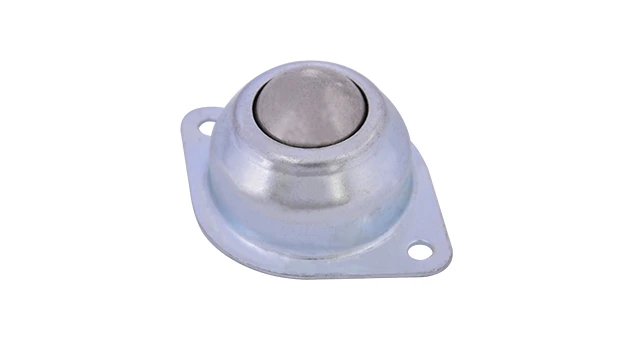
In today's fast-paced manufacturing world, the ability to adapt quickly to changing demands isn't just a bonus—it's a necessity. Whether you're producing smartphones, medical devices, or automotive parts, flexible production cells have become the backbone of efficient, responsive operations. But what makes these cells truly "flexible"? Often, it's the small, unsung components that tie everything together. One such component is the 1 inch stainless steel swivel roller ball —a deceptively simple part that plays a critical role in keeping materials moving, workflows flowing, and lean principles alive on the factory floor. Let's dive into how this unassuming tool integrates with flexible production cells and why it's become a go-to choice for manufacturers worldwide.
What Makes 1 Inch Stainless Steel Swivel Roller Balls Stand Out?
Before we talk about integration, let's get to know the star of the show: the 1 inch stainless steel swivel roller ball. At first glance, it might look like just a small metal sphere, but its design and material make it a powerhouse in production environments. Here's why it's a cut above the rest:
- Stainless Steel Durability: Unlike plastic or coated alternatives, stainless steel resists rust, corrosion, and wear—perfect for busy factories where moisture, oils, or chemicals might be present. This means less replacement downtime and longer service life, which aligns perfectly with lean manufacturing's focus on reducing waste.
- 1 Inch Size for Versatility: While 0.5 inch roller balls have their place in lightweight applications, the 1 inch variant strikes a balance between load capacity and precision. It can handle heavier materials (think metal components or bulk parts) without sacrificing the smooth, 360-degree rotation that makes swivel balls so useful.
- Smooth, Low-Friction Movement: The ball's polished surface and precision engineering ensure that even heavy items glide across it with minimal effort. This reduces the physical strain on workers and speeds up material transfer—two key factors in boosting overall productivity.
- Easy Installation & Adaptability: These roller balls are designed to fit standard mounting systems, making them easy to retrofits into existing production setups. Whether you're upgrading a workbench, a flow rack, or a conveyor, they slot in without requiring major overhauls.
| Roller Ball Type | Size | Material | Best For |
|---|---|---|---|
| Swivel Roller Balls | 1 Inch | Stainless Steel | Heavy-duty material transfer, high-traffic areas |
| Swivel Roller Balls | 0.5 Inch | Plastic/Nylon | Lightweight parts, low-load assembly lines |
| Fixed Roller Balls | 1 Inch | Steel | One-directional movement, non-swivel needs |
Integrating with Flexible Production Cells: Where It All Comes Together
Flexible production cells are all about modularity, adaptability, and seamless workflow. They bring together workbenches, flow racks, conveyors, and other tools into a cohesive system that can switch between products or processes with minimal disruption. The 1 inch stainless steel swivel roller ball fits into this ecosystem like a missing puzzle piece—here's how:
1. Flow Racks: Keeping Materials Moving Without the Fuss
Flow racks (or gravity-fed racks) are a staple in lean manufacturing, designed to move materials from the back to the front using gravity. But without the right roller balls, this "flow" can turn into a trickle—with items getting stuck or jamming. That's where 1 inch stainless steel swivel roller balls shine. When installed in flow rack lanes, they ensure that even bulky items (like automotive parts or large 3C components) slide smoothly to the picking edge. This not only speeds up order fulfillment but also reduces the risk of damage to materials, as there's no rough handling or forced movement.
For example, in a consumer electronics factory, imagine a flow rack storing smartphone casings. With 1 inch roller balls, each casing glides forward as the one in front is taken, so workers never have to reach deep into the rack or strain to pull items out. It's a small change, but it adds up to hours saved over a shift—and happier, more productive teams.
2. Conveyors: Bridging Gaps in the Production Line
Conveyors are the highways of the factory, moving parts between stations. But not all conveyors are created equal—especially when dealing with irregularly shaped items or varying loads. Swivel roller balls are often used in conjunction with belt or roller conveyors to create "transfer points" where materials need to change direction or move onto a workbench. The 1 inch size is ideal here because it can handle the weight of parts as they transition from the conveyor to the next stage, ensuring a smooth handoff without jams or delays.
Take a medical device assembly line, for instance. Delicate instruments might need to move from a main conveyor onto a specialized ESD workbench for final testing. By installing 1 inch stainless steel swivel roller balls at the conveyor's end, the instruments slide gently onto the workbench, reducing the risk of damage from sudden stops or drops. It's a simple integration that aligns with the precision required in medical manufacturing.
3. Workbenches: Turning Static Stations into Dynamic Hubs
Workbenches are where the magic happens—assembly, testing, packaging. But a static workbench can slow things down if materials have to be lifted or dragged across the surface. Adding 1 inch swivel roller balls to the bench top (or into designated material trays) transforms it into a dynamic workspace. Workers can slide heavy assemblies across the bench with one hand, freeing up the other to focus on precision tasks. This is especially useful in automotive or mechanical manufacturing, where parts like engine components or gearboxes are too heavy to move manually.
What's more, because these roller balls are compatible with lean pipe systems (another key component of flexible cells), workbenches can be customized on the fly. Need to rearrange the layout for a new product? Simply adjust the roller ball positions or add more to create a new material flow path. It's flexibility in action—exactly what lean solutions are all about.
4. Lean Systems: Supporting the "Continuous Improvement" Mindset
At the heart of any flexible production cell is the lean philosophy: eliminate waste, optimize flow, and continuously improve. 1 inch stainless steel swivel roller balls support this mindset in multiple ways. First, their durability means they don't need frequent replacement, reducing waste from discarded parts. Second, their adaptability lets manufacturers experiment with new layouts or processes without investing in entirely new equipment. And third, by streamlining material movement, they cut down on "waiting time"—one of the seven wastes in lean—keeping production flowing smoothly.
For example, a 3C assembly plant might start with roller balls in their flow racks, then later add them to workbenches as they realize the benefits. Over time, they could even integrate them into turnover trolleys, making it easier to move batches of finished products to packaging. It's a scalable solution that grows with the business, which is why it's a favorite among lean solution providers.

Real-World Impact: A Case Study in 3C Manufacturing
To see how this integration works in practice, let's look at a hypothetical (but realistic) case study of a 3C (computers, communications, consumer electronics) manufacturer. This company produces smartwatches, and they were struggling with bottlenecks in their assembly line—specifically, the time it took to move watch cases from the flow rack to the assembly workbench.
Before integrating 1 inch stainless steel swivel roller balls, workers had to lift each case (which, while small, added up over hundreds of units per shift) from the flow rack and place it on the bench. This led to fatigue and slower assembly times. The company decided to upgrade two key areas:
- Flow Rack Retrofit: They replaced the existing plastic roller balls in their flow racks with 1 inch stainless steel versions. Overnight, the cases began sliding to the front of the rack more smoothly, and workers could simply pull them forward instead of lifting.
- Workbench Integration: They added a strip of swivel roller balls along the edge of each assembly workbench, connecting it to the flow rack. Now, workers could slide the watch cases directly from the rack onto the bench—no lifting required.
The results? Within a week, assembly time per unit dropped by 12%, and worker-reported fatigue decreased significantly. Over three months, the company saw a 9% increase in daily output and a 20% reduction in material damage (since cases were no longer dropped or mishandled). It's a classic example of how a small component can drive big improvements when integrated thoughtfully into a flexible production cell.

Why Manufacturers Can't Afford to Overlook This Component
By now, it's clear that 1 inch stainless steel swivel roller balls are more than just "parts"—they're enablers of smarter, more efficient manufacturing. Here's a quick recap of why they're worth considering for your flexible production cell:
- Boost Productivity: Smooth material flow reduces bottlenecks and keeps production on track.
- Reduce Waste: Durable stainless steel means less frequent replacements, aligning with lean goals.
- Improve Worker Safety: Less lifting and straining lowers the risk of injuries and fatigue.
- Enhance Flexibility: Easy to install and adapt to new processes or product lines.
- Support Lean Systems: Fits seamlessly into existing lean setups, from flow racks to workbenches.
Looking Ahead: The Future of Flexible Production and Swivel Roller Balls
As manufacturing continues to evolve—with trends like Industry 4.0 and mass customization driving demand for even more flexible systems—the role of components like 1 inch stainless steel swivel roller balls will only grow. We might see innovations like sensor-equipped balls that track material flow in real time, or even smarter mounting systems that integrate with digital production management tools. But for now, the core value remains the same: enabling smooth, efficient, and adaptable manufacturing.
Whether you're a small workshop or a large-scale manufacturer, the question isn't whether you need flexible production cells—it's how to make them work harder for you. And with 1 inch stainless steel swivel roller balls, the answer is clear: start small, integrate smart, and watch your operations transform.
Final Thoughts: Small Parts, Big Results
In the grand scheme of manufacturing, 1 inch stainless steel swivel roller balls might seem. But as we've explored, they're a critical link in the chain of flexible production cells—connecting flow racks, conveyors, workbenches, and workers into a unified, efficient system. They embody the lean principle that great results come from optimizing every detail, no matter how small.
So, if you're looking to boost efficiency, reduce waste, or simply make your production line more adaptable, don't overlook the power of these little metal spheres. Integrate them into your flow racks, your workbenches, your conveyors—and see how the smallest changes can lead to the biggest wins. After all, in manufacturing, it's often the parts you don't notice that make the most difference.