- Company Articles
- Products and Technology
- Product knowledge
- Swivel Roller Balls 1 Inch Stainless Steel: Use in Computer Peripheral Assembly Workstations

Swivel Roller Balls 1 Inch Stainless Steel: Use in Computer Peripheral Assembly Workstations
Related Product
Swivel Roller Balls 1 Inch
Swivel roller ball casters are convenient and flexible to roll,high-speed and stable operation, used for rotating and changing the direction of the conveyor.Ball transfer unit is made of high quality carbon steel, anti-corrosion and wear resistance.
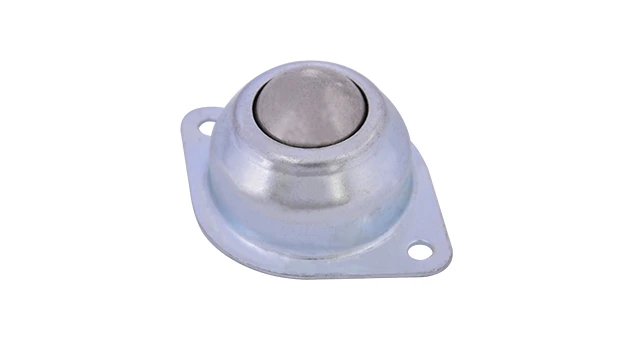
How these small but mighty components are transforming efficiency, precision, and worker experience in modern electronics manufacturing
The Unsung Hero of Assembly Lines
Walk into any computer peripheral assembly workshop today, and you'll be met with a symphony of precision: the soft click of keyboard keys being tested, the hum of circuit boards being soldered, the steady glide of components moving from station to station. In this world where milliseconds matter and defect rates are measured in fractions of a percent, every tool—no matter how small—carries enormous weight. That's where 1 inch stainless steel swivel roller balls come into play.
These unassuming spherical components, often no larger than a ping-pong ball, are quietly revolutionizing how workstations operate. They're not the flashy robots or high-tech sensors that grab headlines, but ask any line supervisor what keeps their production on track, and you'll likely hear about these "little helpers." Let's dive into why they've become indispensable in assembling everything from wireless mice to high-end printers.
What Makes 1 Inch Stainless Steel Swivel Roller Balls Special?
Not all roller balls are created equal. The 1 inch stainless steel variant stands out for reasons that directly address the unique challenges of computer peripheral manufacturing:
- Stainless Steel Construction: In workshops where coolants, cleaning agents, and humidity are part of daily life, rust and corrosion are constant threats. Stainless steel resists both, ensuring these components last for years—even in heavy-use environments. Unlike plastic alternatives that crack under pressure or coated steel that chips over time, stainless steel maintains its integrity, reducing replacement costs.
- 1-Inch Diameter Sweet Spot: At 25.4mm, these balls balance strength and versatility. They're large enough to support heavier items like printer chassis (which can weigh 3-5kg) without sinking or deforming, yet compact enough to fit into tight workstation corners where space is at a premium—critical when assembling small peripherals like wireless earbuds or mini keyboards.
- Zero-Friction Rotation: Precision-sealed bearings inside each ball allow 360-degree rotation with no resistance. This means a worker can slide a 2kg keyboard frame across a workstation with one hand, rather than gripping and lifting—reducing fatigue and speeding up task completion.
- Non-Marring Surface: The smooth, polished finish of stainless steel ensures delicate components—like the glossy plastic of a premium mouse or the matte aluminum trim of a scanner—glide without scratches. In an industry where aesthetics matter as much as functionality, this detail prevents costly rework.
| Feature | 1 Inch Stainless Steel | 0.5 Inch Plastic | Coated Steel (1 Inch) |
|---|---|---|---|
| Typical Load Capacity | Up to 80kg per unit | Up to 15kg per unit | Up to 60kg per unit (coating wears) |
| Service Life in Heavy Use | 5-7 years | 1-2 years | 2-3 years (coating failure) |
| Suitable for ESD Environments | Yes (with conductive variants) | No (insulating) | Yes (until coating cracks) |
| Resistance to Chemicals/Oils | Excellent | Poor (swells/degrades) | Fair (coating vulnerable) |

In the Trenches: Real-World Applications
To understand their impact, let's step onto the floor of a hypothetical (but realistic) computer peripheral plant. Meet "Workstation 7," where operators assemble wireless keyboards. The station is built around a lean pipe workbench (lean pipe workbench)—a modular table constructed with aluminum pipes and joints, designed for easy reconfiguration. The surface is dotted with 1 inch stainless steel swivel roller balls, strategically placed to support the keyboard's plastic top case, circuit board, and keycap tray.
Morning Shift: Assembling Keyboard Top Cases
At 9:00 AM, Operator Li starts her shift by placing a stack of polycarbonate top cases (each weighing ~1.2kg) onto the left side of the workbench. Without roller balls, she'd have to lift each case, carry it 2 feet to the assembly area, and set it down carefully to avoid scratching. With the roller balls, a gentle push sends the case gliding across the bench. "It's like sliding a book across a table," she says. "I used to get tired hands by lunchtime; now I barely notice the movement."
After aligning the case, Li adds the circuit board. The roller balls allow her to (fine-tune) the position with millimetric precision—critical for ensuring the board's screw holes line up with the case. "Before, if I misaligned, I'd have to lift and reposition, which took 10-15 seconds per unit," she explains. "Now? Maybe 2 seconds. Multiply that by 500 units a day, and you're talking real time savings."
Beyond the Workbench: Flow Racks and Material Handling
Swivel roller balls aren't limited to work surfaces. They're also transforming flow racks (flow rack)—the gravity-fed shelving units that keep components within arm's reach. In traditional flow racks, plastic rollers often jam when faced with unevenly weighted items, like a printer's metal base versus its plastic cover. Stainless steel swivel balls adapt instantly: their 360-degree rotation ensures even weight distribution, so a stack of 20 mouse bodies rolls smoothly, no tilting or sticking.
"We used to have operators climbing on shelves to free jammed components," says Wang Tao, the plant's production manager. "Since installing roller ball-equipped flow racks last quarter, those incidents dropped to zero. And because the components move so easily, pick times are down by 18%."
Conveyor Transfers: Bridging the Gaps
Conveyors (conveyor) are the arteries of assembly lines, moving partially assembled products between stations. But where conveyors end—say, at a quality inspection station—bottlenecks often form. Workers must manually lift products off the line, inspect them, and place them back on. At Workstation 12 (printer assembly), this used to cause 10-15 minute delays per shift.
The solution? A transfer table fitted with 1 inch swivel roller balls between the main conveyor and the inspection station. Now, when a printer chassis reaches the end of the line, it glides onto the transfer table, where Inspector Zhang can rotate it 360 degrees (thanks to the roller balls) to check for cosmetic defects. "I used to strain my back lifting 4kg printers," Zhang says. "Now I just spin it like a dinner plate. The table does the work."

Synergy with Lean Solutions
The true power of these roller balls lies in how they complement broader lean manufacturing strategies (lean solution). Lean isn't just about cutting costs—it's about creating systems that adapt, improve, and empower workers. Here's how roller balls fit into that vision:
Adaptable to Changing Needs
When the plant launches a new wireless mouse model with a larger battery compartment, they don't need a new workstation. A few extra roller balls added to the existing lean pipe workbench provide the extra support needed for the heavier component.
Reduced Waste (Muda)
Motion waste—unnecessary lifting, carrying, and reaching—is a lean enemy. Roller balls eliminate it by turning static surfaces into dynamic ones. The plant estimates this has cut motion waste by 32% in key workstations.
ESD Workstation Compatibility
For sensitive electronics like Bluetooth modules, ESD workstations (esd workstation) are non-negotiable. Conductive stainless steel roller balls integrate seamlessly, grounding static charges as components glide—adding protection without sacrificing efficiency.
"Lean is about making small improvements that add up," says Wang Tao. "Swivel roller balls are a perfect example. They're not a revolution, but a evolution—one that makes our workers' jobs easier and our processes smoother. And when your team is happier and your lines are more efficient, the bottom line follows."
The Numbers Speak for Themselves
After six months of using 1 inch stainless steel swivel roller balls across 20 key workstations, the plant tracked these results:
- Productivity: 22% increase in units assembled per shift (from 480 to 585 units for keyboard production)
- Defect Rate: 17% reduction in cosmetic defects (scratches, dents) and 9% reduction in assembly errors (misaligned components)
- Worker Satisfaction: 41% higher scores in monthly engagement surveys, with comments like "My hands don't ache anymore" and "I feel more in control of my work"
- ROI: Estimated payback period of 3.2 months, driven by labor savings and reduced rework costs
"We expected efficiency gains, but the defect reduction surprised us," admits Quality Manager Chen. "When components glide smoothly, workers are less likely to rush or apply excessive force—both common causes of errors. It's a ripple effect: better tools lead to calmer workers, who build better products."
Why This Matters for Your Workshop
Computer peripheral manufacturing is a competitive industry. Margins are tight, customer expectations are high, and innovation never stops. In this environment, every advantage counts—and 1 inch stainless steel swivel roller balls offer advantages that go beyond the assembly line:
They're a testament to how investing in small, worker-centric tools can drive big results. They're proof that lean manufacturing isn't just about "cutting fat"—it's about adding value, one smooth glide at a time.
So the next time you pick up your wireless mouse or type on your keyboard, take a moment to appreciate the unseen technology that helped create it. Behind every precise, reliable peripheral is a workstation where the right tools—like 1 inch stainless steel swivel roller balls—make all the difference.