- Company Articles
- Products and Technology
- Product knowledge
- Swivel Stem Caster Wheel Bearings: Ball vs Roller Bearings Comparison

Swivel Stem Caster Wheel Bearings: Ball vs Roller Bearings Comparison
Related Product
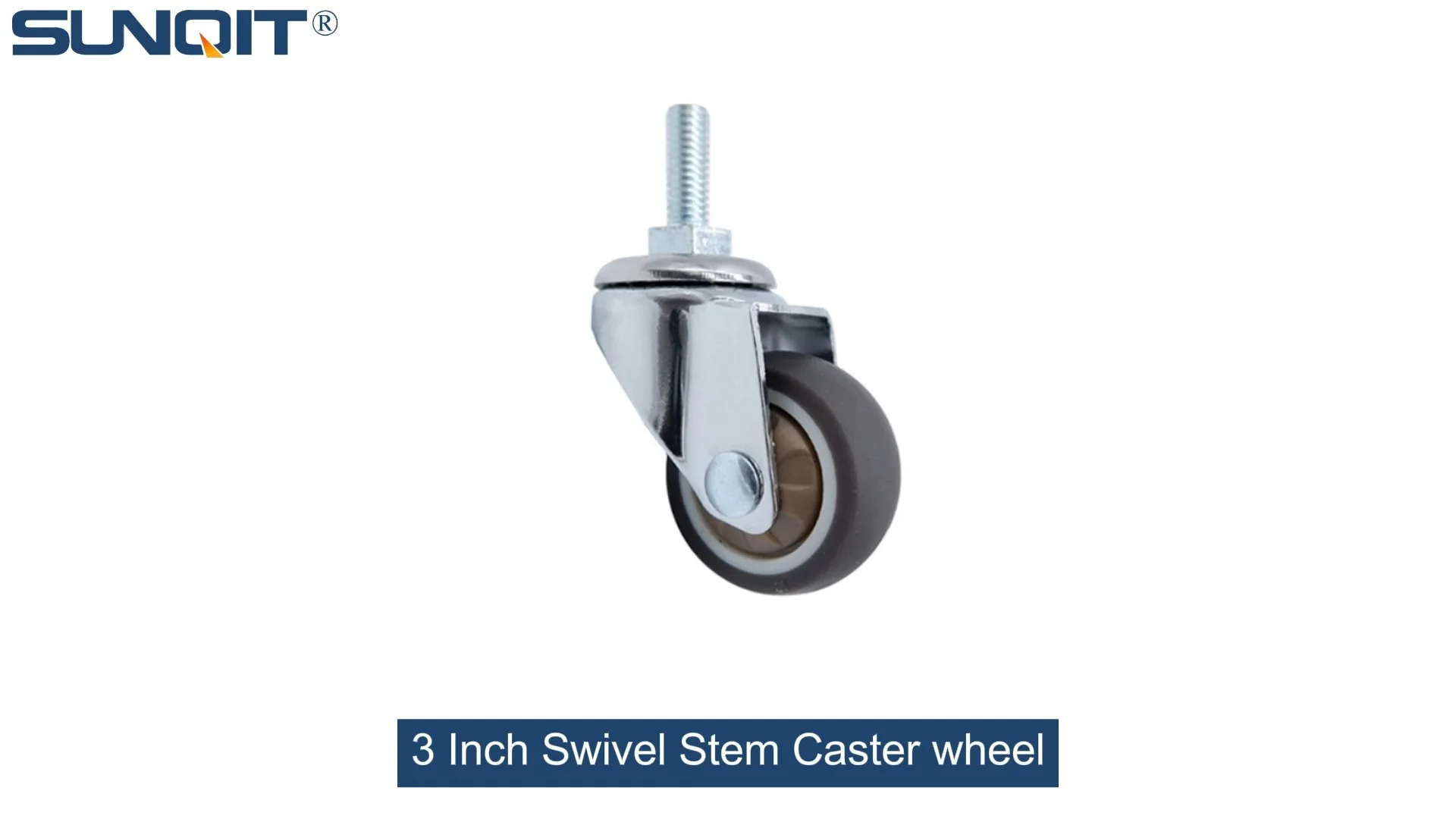
Swivel Stem Caster wheel
360 Degree Swivel Stem Caster. Threaded-post mount design, castors diameter 3 inch.Each swivel caster wheels loading 70KGS. Heavy enough and widely suit for carts, chairs, cabinet, flow rack, workbench, turnover rolley.
Walk into any warehouse, factory, or even a busy office, and you'll spot them—quietly doing the heavy lifting, literally. Swivel stem caster wheels are the unsung heroes of mobility, making it possible to move everything from office chairs to massive industrial workbenches with a gentle push. But here's the thing: not all caster wheels are created equal. The secret to their performance? The bearings inside. Today, we're diving deep into two of the most common types of bearings found in swivel stem caster wheels: ball bearings and roller bearings. Whether you're outfitting a lean pipe workbench in a manufacturing plant or choosing casters for a hospital cart, understanding the difference between these bearings can save you time, money, and a lot of frustration down the line. Let's break it down.
What Are Swivel Stem Caster Wheels, Anyway?
Before we get into bearings, let's make sure we're all on the same page about swivel stem caster wheels. These aren't your average fixed casters that only roll forward and backward. Swivel stem casters have a stem (a metal rod or bolt) that attaches to the bottom of a piece of equipment, and a swivel head that allows the wheel to rotate 360 degrees. That means you can maneuver the equipment in any direction—perfect for tight spaces or when you need to reposition something quickly.
You'll find these casters everywhere. Think about that lean pipe workbench in your local factory—the one that gets shifted from one assembly line to another as production needs change. Chances are, it's sitting on swivel stem caster wheels. Or the mobile shelving unit in a warehouse, the food service cart in a restaurant, even the tool chest in your garage. Their versatility makes them a staple in countless industries, which is why choosing the right bearing for the job is so critical.
The Role of Bearings in Swivel Stem Caster Wheels
Let's get technical for a second, but don't worry—I'll keep it simple. Bearings are the tiny components inside the caster wheel that reduce friction between the wheel and the axle. Without them, moving a loaded cart would feel like dragging a boulder through sand. Bearings let the wheel spin smoothly, even when carrying heavy weights, and they also help distribute the load evenly, preventing premature wear and tear on the wheel and axle.
When it comes to swivel stem caster wheels, the bearing isn't just about smooth rolling—it also affects how easily the wheel swivels. A good bearing ensures that the swivel head moves freely, so you can turn the caster without fighting against resistance. Over time, poor-quality bearings can seize up, making the caster hard to maneuver or even causing it to lock up entirely. That's why, when you're shopping for caster wheels and accessories, the bearing type should be at the top of your checklist.

Ball Bearings: The Lightweight Workhorses
How Do Ball Bearings Work?
Ball bearings are exactly what they sound like: small, spherical metal balls (usually steel or ceramic) that sit between two rings called "races." The inner race attaches to the axle, and the outer race is part of the wheel. As the wheel spins, the balls roll between the races, reducing friction by minimizing the contact area between moving parts. It's a simple design, but it's been refined over decades to be incredibly efficient.
In swivel stem caster wheels, ball bearings are often sealed or shielded to keep out dirt, dust, and moisture—common enemies of moving parts. Sealed ball bearings have a rubber or metal seal that completely encloses the balls, while shielded bearings have a metal plate that covers the gap but allows some lubricant to escape (and some debris to enter, unfortunately). For most light to medium-duty applications, sealed ball bearings are the way to go—they require less maintenance and last longer in dirty environments.
Pros of Ball Bearings in Swivel Stem Caster Wheels
- Low Friction, High Speed: The spherical shape of the balls means they roll with minimal resistance. This makes ball bearing casters incredibly smooth to move, even at higher speeds. If you've ever pushed an office chair across a floor and noticed how effortlessly it glides, you can thank ball bearings.
- Great for Light to Medium Loads: While they can't handle the heaviest weights, ball bearings are perfect for applications where the load is consistent and not overly burdensome. Think of a retail display cart stocked with clothing or a light-duty lean pipe workbench holding small tools.
- Quiet Operation: Because there's less contact area between the balls and races, ball bearings tend to be quieter than roller bearings. This is a big plus in environments like offices, hospitals, or libraries where noise levels matter.
- Cost-Effective: Ball bearings are simpler to manufacture than roller bearings, which makes them more affordable. If you're on a budget and don't need heavy-duty performance, ball bearing casters are a smart choice.
Cons of Ball Bearings in Swivel Stem Caster Wheels
- Limited Load Capacity: The small contact area that makes ball bearings low-friction also means they can't distribute weight as evenly as roller bearings. If you overload a ball bearing caster, the balls can deform or crack, leading to premature failure.
- Vulnerable to Shock Loads: Sudden impacts—like dropping a heavy box onto a cart—can damage ball bearings. The balls may chip or the races may crack, which will make the caster feel rough or seize up.
- Not Ideal for Misalignment: If the axle or wheel is slightly bent (a common issue in rough industrial settings), ball bearings don't handle misalignment well. The balls can bind or wear unevenly, reducing their lifespan.
Best Applications for Ball Bearings
Ball bearings shine in applications where speed, smoothness, and quiet operation are priorities, and the load is light to medium. Here are a few examples:
- Office Furniture: Office chairs, mobile file cabinets, and printer stands all use ball bearing casters for easy maneuvering on smooth floors.
- Medical Equipment: Hospital carts, IV stands, and patient beds rely on ball bearings for quiet, smooth movement—critical in a healthcare setting where noise can disturb patients.
- Retail Displays: Mobile clothing racks, shoe display carts, and checkout counters use ball bearings to make rearranging the store quick and easy.
- Light-Duty Lean Pipe Workbenches: In manufacturing facilities where the workbench holds small parts or tools, ball bearing casters provide enough mobility without the need for heavy-duty support.

Roller Bearings: The Heavy-Duty Champions
How Do Roller Bearings Work?
Roller bearings swap out the spherical balls for cylindrical, tapered, or needle-shaped rollers. Instead of point contact (like ball bearings), roller bearings have line contact with the races, which spreads the load over a larger area. This simple change makes them far more capable of handling heavy weights.
There are a few types of roller bearings used in swivel stem caster wheels:
- Cylindrical Rollers: Straight, tube-like rollers that handle radial loads (weight from the side) well.
- Tapered Rollers: Cone-shaped rollers that can handle both radial and axial loads (weight from the front/back), making them ideal for heavy-duty swivel casters where the load might shift.
- Needle Rollers: Long, thin rollers that fit into tight spaces. They have a high load capacity for their size but are less common in casters due to their sensitivity to misalignment.
Like ball bearings, roller bearings are often sealed to protect against debris, but they tend to require more lubrication to keep the rollers moving smoothly. In industrial settings, you might also find roller bearings with metal cages that keep the rollers evenly spaced, preventing them from rubbing against each other and causing friction.
Pros of Roller Bearings in Swivel Stem Caster Wheels
- High Load Capacity: This is where roller bearings really shine. The line contact between the rollers and races allows them to support much heavier weights than ball bearings. A single roller bearing caster can often handle 2-3 times the load of a ball bearing caster of the same size.
- Shock Resistance: Roller bearings are tough. They can absorb sudden impacts—like a loaded cart hitting a curb or a pallet being dropped onto a workbench—without deforming or cracking.
- Better at Handling Misalignment: Unlike ball bearings, roller bearings (especially cylindrical ones) can tolerate slight misalignment between the axle and wheel. The rollers adjust to the angle, reducing uneven wear.
- Longer Lifespan in Heavy-Duty Use: Because they distribute load more evenly and are more durable, roller bearings tend to last longer than ball bearings in industrial settings where casters are used daily under heavy loads.
Cons of Roller Bearings in Swivel Stem Caster Wheels
- Higher Friction: The larger contact area that gives roller bearings their load capacity also creates more friction. This means they're not as smooth or fast as ball bearings—you'll need more force to get a roller bearing caster moving, especially when it's loaded.
- Noisier Operation: The rollers can vibrate or hum as they move, making roller bearing casters louder than their ball bearing counterparts. This might not matter in a noisy factory, but it's a drawback in quiet environments.
- More Maintenance: Roller bearings require regular lubrication to keep the rollers moving freely. If they dry out, the rollers can seize up or wear unevenly. They're also more prone to collecting debris in the races, which can cause grinding.
- Heavier and Bulkier: Roller bearings are larger and heavier than ball bearings, which can make the caster wheel itself bigger and harder to fit into tight spaces. They also add extra weight to the equipment, which might be a problem if you're trying to keep things lightweight.
Best Applications for Roller Bearings
Roller bearings are the go-to choice for heavy-duty, industrial applications where load capacity and durability are non-negotiable. Here are some common uses:
- Warehouse Carts and Pallet Jacks: These carry hundreds (or thousands) of pounds of inventory, so roller bearings are a must to handle the weight without failing.
- Industrial Workbenches and Material Racks: Heavy-duty lean pipe workbenches loaded with tools, machinery, or raw materials rely on roller bearings to stay mobile and safe.
- Construction Equipment: Mobile scaffolding, tool carts, and concrete mixers use roller bearings to handle rough terrain and heavy loads.
- Manufacturing Lines: Assembly line carts that transport car parts, appliances, or other large goods need the durability of roller bearings to keep up with constant use.

Ball vs Roller Bearings: A Side-by-Side Comparison
| Feature | Ball Bearings | Roller Bearings |
|---|---|---|
| Design | Spherical balls between two races | Cylindrical, tapered, or needle rollers between two races |
| Contact Area | Point contact (small area) | Line contact (large area) |
| Load Capacity | Light to medium (typically up to 500 lbs per caster) | Medium to heavy (often 1,000+ lbs per caster) |
| Friction Level | Low (smooth, easy to push) | Higher (requires more force to move) |
| Speed Performance | Good for high speeds (e.g., office chairs, medical carts) | Better for low speeds (e.g., industrial carts, workbenches) |
| Noise Level | Quiet (minimal vibration) | Noisier (rollers can hum or vibrate) |
| Shock Resistance | Poor (prone to damage from impacts) | Excellent (handles heavy shocks and drops) |
| Misalignment Tolerance | Low (binds or wears unevenly if misaligned) | High (adjusts to slight axle/wheel misalignment) |
| Maintenance Needs | Low (sealed bearings need little upkeep) | High (requires regular lubrication and cleaning) |
| Cost | More affordable | More expensive (but worth it for heavy loads) |
| Ideal Applications | Office furniture, medical carts, retail displays, light lean pipe workbenches | Warehouse carts, industrial workbenches, construction equipment, heavy material racks |
How to Choose: Key Factors to Consider
Now that you know the ins and outs of ball and roller bearings, how do you decide which is right for your swivel stem caster wheels? Here are the critical factors to weigh:
1. Load Capacity
Start with the basics: how much weight will the caster need to support? Calculate the total weight of the equipment plus the maximum load it will carry, then divide by the number of casters (usually 4). This gives you the load per caster. If it's under 500 lbs, ball bearings should work. If it's over 500 lbs, or if you anticipate occasional overloading, go with roller bearings.
For example, a lean pipe workbench that holds tools and small parts might weigh 200 lbs empty and 300 lbs loaded, totaling 500 lbs. With 4 casters, that's 125 lbs per caster—well within ball bearing range. But a workbench loaded with heavy machinery (1,500 lbs total) would need 375 lbs per caster, requiring roller bearings.
2. Environment
Where will the caster be used? If it's a clean, dry environment like an office or hospital, ball bearings are fine. But if it's a dusty warehouse, a wet factory, or a construction site with debris, you'll need to think about sealing. Sealed ball bearings can handle light dust and moisture, but for heavy debris or extreme conditions, roller bearings with robust seals (or even stainless steel components) might be better.
Noise is another environmental factor. In a quiet lab or library, ball bearings' low noise is a must. In a noisy factory, roller bearings' hum won't be noticeable.
3. Maneuverability Needs
How often will the caster be moved, and how much force can the operator exert? If you need to move the equipment frequently (like a hospital cart that's constantly in use), ball bearings' low friction will make the job easier. If it's moved rarely (like a stationary workbench that's repositioned once a month), the extra effort to push roller bearings won't matter.
Swivel ability is also key. A good bearing ensures the caster swivels smoothly, so if you need tight turns (e.g., in a crowded warehouse aisle), look for ball or tapered roller bearings that allow easy rotation.
4. Budget and Maintenance Resources
Ball bearings are cheaper upfront, but they might need to be replaced sooner in heavy use. Roller bearings cost more initially, but they last longer and handle abuse better—so they might be more cost-effective in the long run for industrial applications.
Maintenance is another cost factor. If you have a team that can regularly lubricate and clean bearings, roller bearings are manageable. If maintenance is an afterthought, sealed ball bearings are the safer bet—they'll keep rolling with minimal care.
Caster Accessories: Beyond the Bearing
While the bearing is critical, don't overlook other caster accessories that can enhance performance. Wheel material (rubber, polyurethane, steel) affects grip and floor protection. Locks (brake casters) keep equipment stationary when needed. Swivel locks prevent the caster from turning, making straight-line movement easier. Even small accessories like axle caps or dust covers can extend bearing life by keeping out debris.
When shopping for swivel stem caster wheels, look for suppliers that offer a range of accessories. This way, you can customize the caster to your exact needs—whether you need a brake for safety, a soft rubber wheel to protect hardwood floors, or a sealed bearing for dusty conditions.
Maintenance Tips to Extend Bearing Life
No matter which bearing type you choose, proper maintenance will keep your swivel stem caster wheels rolling smoothly for years. Here's what to do:
- Clean Regularly: Wipe down the wheels and bearings with a rag to remove dirt and debris. For sealed bearings, a quick wipe is enough. For roller bearings, you may need to remove the seal (if possible) and clean the races with a brush.
- Lubricate as Needed: Sealed ball bearings come pre-lubricated and usually don't need more for years. Roller bearings (and shielded ball bearings) need lubrication every 3-6 months, depending on use. Use a high-quality grease or oil recommended by the manufacturer.
- Inspect for Wear: Check for signs of damage: cracked wheels, loose axles, or bearings that feel rough when spun. If a bearing is noisy, sticky, or wobbly, replace it immediately—waiting will only cause more damage to the caster or equipment.
- Tighten Loose Parts: Over time, nuts and bolts can loosen. Tighten them regularly to prevent the caster from wobbling, which can stress the bearing.
Final Thoughts: Choosing the Right Bearing for Your Swivel Stem Caster Wheel
At the end of the day, the choice between ball and roller bearings comes down to your specific needs. Ball bearings are the lightweight, smooth, and affordable option for light to medium loads in clean, quiet environments. Roller bearings are the heavy-duty workhorses, built to handle massive weights, rough conditions, and constant abuse.
Remember, the best caster wheel is one that you never have to think about. It should roll smoothly, support the load, and last for years with minimal maintenance. By understanding the difference between ball and roller bearings, and by considering factors like load, environment, and maneuverability, you can choose a swivel stem caster wheel that keeps your operations moving—literally and figuratively.
So, whether you're outfitting a lean pipe workbench in a small workshop or a fleet of industrial carts in a warehouse, take the time to check the bearing type. Your back (and your budget) will thank you.