- Company Articles
- Products and Technology
- Product knowledge
- Swivel Stem Caster Wheel Sizes: Choosing the Right Diameter for Your Equipment

Swivel Stem Caster Wheel Sizes: Choosing the Right Diameter for Your Equipment
Related Product
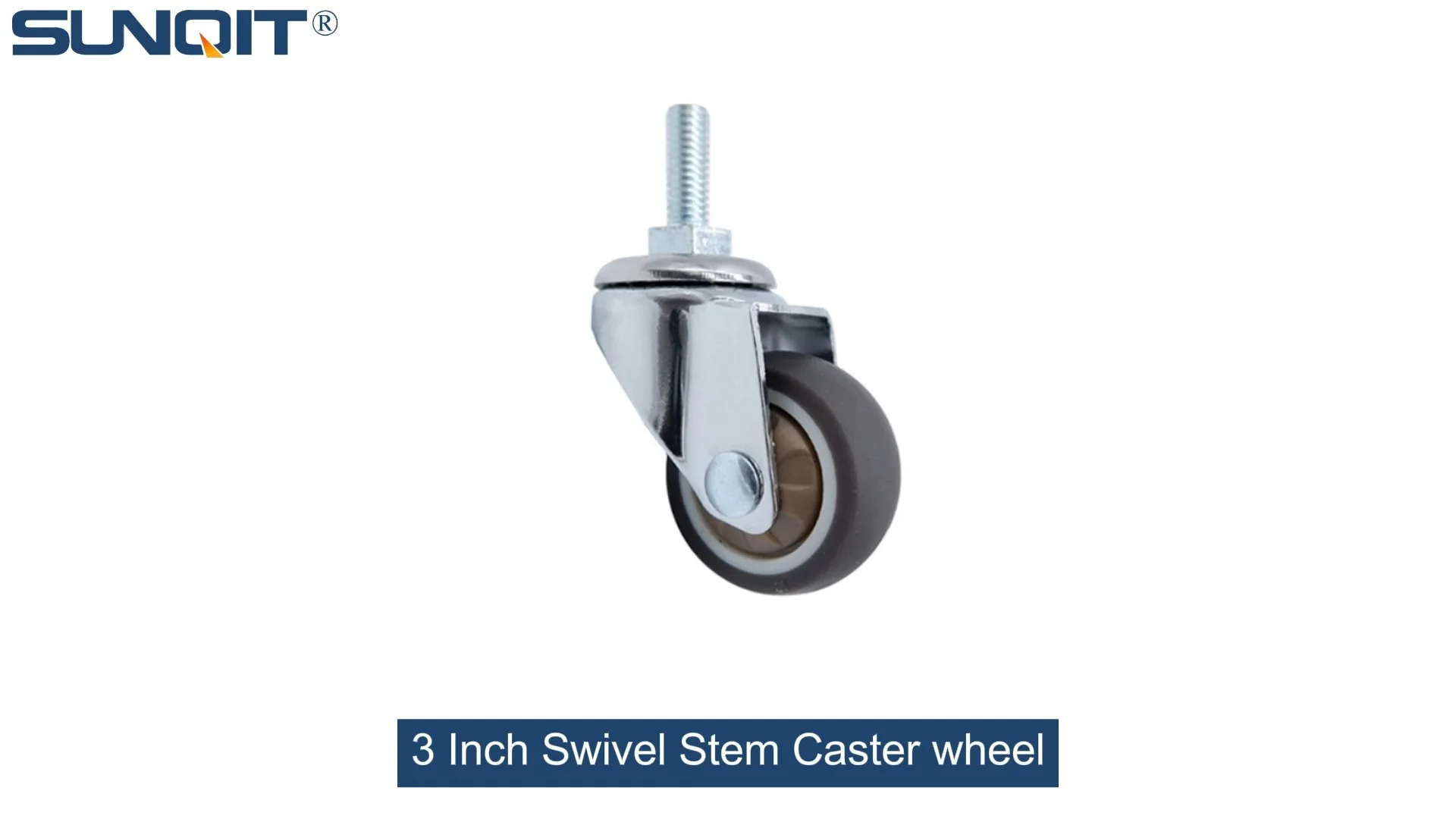
Swivel Stem Caster wheel
360 Degree Swivel Stem Caster. Threaded-post mount design, castors diameter 3 inch.Each swivel caster wheels loading 70KGS. Heavy enough and widely suit for carts, chairs, cabinet, flow rack, workbench, turnover rolley.
In the world of industrial and commercial equipment, there's a silent workhorse that often goes unnoticed but plays a critical role in daily operations: the caster wheel. From the workbench in your garage to the heavy-duty turnover trolley and rack in a warehouse, these small but mighty components are what make mobility possible. Among the various types of caster wheels, swivel stem casters stand out for their versatility—they allow 360-degree rotation, making even large equipment easy to maneuver with minimal effort. But here's the thing: not all swivel stem casters are created equal, and one of the most important decisions you'll make when selecting them is choosing the right wheel diameter. Get this wrong, and you could end up with equipment that's hard to push, unstable, or even unsafe. Get it right, and you'll unlock smooth movement, improved efficiency, and longer-lasting performance. Let's dive into why diameter matters and how to pick the perfect size for your needs.
Understanding Swivel Stem Caster Wheels: More Than Just a Wheel
Before we talk diameters, let's make sure we're on the same page about what a swivel stem caster wheel actually is. At its core, it's a wheel mounted on a swivel head, which is attached to a stem that secures the caster to the equipment. The "stem" part is key here—it's the metal rod that inserts into a hole or bracket on your cart, workbench, or rack, holding the caster firmly in place. The swivel head allows the wheel to rotate freely, so you can turn corners, navigate tight spaces, and reposition equipment without lifting. Many models also come with a brake, like the swivel stem caster wheel with brake , which locks the wheel in place to prevent unwanted movement—essential for safety when loading/unloading or when the equipment needs to stay stationary.
But the wheel itself is where the magic happens. It's not just a rubber or plastic disc; its size, material, and design directly impact how well the caster performs. While material (like rubber, polyurethane, or steel) affects grip and durability, diameter is all about functionality. Think of it this way: a tiny wheel on a heavy cart would sink into cracks, struggle over uneven floors, and wear out quickly. A giant wheel on a lightweight workbench might make it wobbly or too tall to use comfortably. Diameter is the sweet spot that balances load capacity, maneuverability, and surface compatibility.
Key Factors That Make Diameter Critical
Why does diameter matter so much? Let's break it down into five key factors that will directly affect your day-to-day use:
1. Load Capacity: How Much Weight Can It Handle?
First and foremost, the diameter of the caster wheel determines how much weight it can support. This is because larger wheels distribute weight over a wider area, reducing the pressure on both the wheel and the surface it's rolling on. For example, a 2-inch wheel might handle 100-200 pounds, while a 6-inch wheel could support 800-1,200 pounds or more. If you're using a turnover trolley and rack to move heavy boxes or machinery, skimping on diameter could lead to wheels deforming, stems bending, or even the equipment collapsing. Always check the manufacturer's load rating for the diameter you're considering—and remember to account for the total weight of the equipment plus its maximum load (e.g., a workbench with tools, or a trolley stacked with inventory).
2. Surface Type: Smooth Floors vs. Rough Terrain
The surface you're rolling on is another major player. If your equipment lives in a warehouse with polished concrete floors, a smaller diameter might work just fine. But if you're navigating gravel, asphalt, or floors with cracks and debris, a larger wheel is a must. Larger wheels "roll over" obstacles more easily—think of a mountain bike tire vs. a road bike tire. A 5-inch wheel will glide over a small rock or threshold, while a 2-inch wheel might get stuck or jerk the equipment. Even indoor surfaces matter: uneven tile, grout lines, or industrial carpets can slow down small wheels, making them harder to push. If your workspace has mixed surfaces, aim for a diameter that balances smoothness and maneuverability.
3. Maneuverability: Tight Spaces vs. Open Areas
Smaller wheels are generally more maneuverable in tight spaces. If you're working in a cramped workshop where your workbench needs to squeeze between shelves, or a delivery truck with limited cargo space, a 2-3 inch diameter might be better. The smaller the wheel, the tighter the turning radius, so you can pivot and adjust without worrying about the caster getting caught. On the flip side, larger wheels excel in open areas. In a warehouse with wide aisles, a 6-8 inch wheel on a turnover trolley will let you push heavier loads with less effort, covering more ground quickly. It's all about matching the diameter to the space you have.
4. Speed and Effort: How Hard Do You Want to Push?
Ever tried pushing a heavy cart with tiny wheels? It's exhausting. Larger wheels reduce rolling resistance—the force needed to get the wheel moving and keep it rolling. This is because a larger wheel has a longer contact patch with the floor, and its momentum helps it maintain speed. For example, a 5-inch wheel will require less effort to push than a 3-inch wheel carrying the same load. This isn't just about comfort; it's about efficiency. If your team is moving equipment all day, reducing the effort needed can cut down on fatigue and boost productivity. Conversely, if speed isn't a priority (e.g., a workbench that only moves occasionally), a smaller diameter might be acceptable.
5. Equipment Height: Keeping Things at a Usable Level
Let's not forget about the height of your equipment. Adding casters raises the base of whatever you're attaching them to, and larger diameters mean more height. If you're putting casters on a workbench, for example, you don't want it to end up so tall that it's uncomfortable to use. A 2-inch caster might add just enough height to make the workbench mobile without affecting ergonomics, while a 6-inch caster could make it too high for most users. Measure the ideal height of your equipment first, then subtract the caster diameter to ensure it stays usable.

Common Swivel Stem Caster Wheel Diameters: Sizes and Their Sweet Spots
Swivel stem casters come in a range of diameters, from as small as 1.5 inches to as large as 12 inches or more. But for most industrial, commercial, and DIY applications, you'll likely encounter sizes between 2 inches and 8 inches. Let's break down the most common diameters, their typical uses, and what to watch for with each.
| Diameter (Inches) | Typical Load Capacity (Per Caster) | Best For Surfaces | Ideal Applications |
|---|---|---|---|
| 2-3 inches | 100-300 lbs | Smooth, flat floors (tile, hardwood, polished concrete) | Lightweight workbenches, small tool carts, medical equipment, office chairs |
| 4-5 inches | 300-800 lbs | Smooth to slightly uneven floors (concrete, low-pile carpet) | Turnover trolleys, medium-duty racks, warehouse carts, vending machines |
| 6-8 inches | 800-2,000+ lbs | Uneven floors, gravel, asphalt, or rough concrete | Heavy machinery, large storage racks, industrial carts, loading dock equipment |
2-3 Inches: Small but Mighty for Light Loads
At the smaller end of the spectrum, these casters are all about precision and space-saving. They're lightweight, affordable, and perfect for equipment that doesn't need to carry heavy loads but still needs to be mobile. Think of a home workshop workbench with a 2-inch swivel stem caster—you might only move it once a month to clean behind it, and it's light enough that even a small wheel works. They're also great for medical carts, office chairs, or small tool cabinets where tight turns are a must. Just note: they struggle on rough surfaces, so stick to smooth floors, and don't overload them—excess weight will make them hard to push and prone to damage.
4-5 Inches: The Versatile Middle Ground
If there's a "golden zone" for swivel stem casters, it's 4-5 inches. These diameters strike a balance between load capacity and maneuverability, making them the go-to for most warehouses, retail stores, and commercial settings. A 5-inch caster can handle 500-800 pounds per wheel, so a cart with four of them can easily carry 2,000+ pounds—perfect for a turnover trolley and rack loaded with boxes, parts, or inventory. They roll smoothly over slightly uneven concrete, low-pile carpet, and even small cracks, so you won't get stuck mid-move. Plus, they don't add too much height, so they're still usable on workbenches or carts that need to fit under tables or shelves. If you're unsure where to start, 4-5 inches is a safe bet for most general-purpose applications.
6-8 Inches: Heavy-Duty Power for Big Jobs
When you're dealing with serious weight or rough terrain, it's time to go big. 6-8 inch swivel stem casters are built for heavy machinery, large storage racks, and equipment that needs to move over gravel, asphalt, or cracked concrete. A 8-inch steel wheel, for example, can support over 1,500 pounds per caster, making it ideal for industrial carts transporting metal parts or pallets. The larger diameter means they roll over obstacles with ease—no more stopping to kick a rock out of the way. They also reduce rolling resistance, so even heavy loads feel lighter to push. The tradeoff? They're bulkier, so they need more clearance, and they're less maneuverable in tight spaces. Save these for open areas where heavy lifting is the priority.

Beyond Diameter: Don't Forget the Extras
While diameter is critical, it's not the only thing to consider. You'll also want to think about caster accessories that can enhance performance. For example, bearings—sealed ball bearings reduce friction, making the wheel spin more smoothly, which is especially important for larger diameters. Wheel material matters too: polyurethane is great for indoor use (quiet, non-marking), rubber offers better grip on wet floors, and steel is tough for outdoor or industrial settings. And let's not overlook the stem itself—make sure it's the right length and diameter to fit your equipment's mounting hole. A stem that's too short will wobble; too long might stick out and get caught on things.
Another thing to keep in mind is the total number of casters. Most equipment uses four casters, but for extra stability (especially with larger diameters), you might use six or eight. The load capacity per caster adds up, so if you have a 2,000-pound cart with four 5-inch casters, each caster only needs to handle 500 pounds—well within the 5-inch range. Always calculate the total load (equipment + cargo) and divide by the number of casters to ensure you're not exceeding individual capacities.

Troubleshooting: Signs You Picked the Wrong Diameter
What if you already have casters and they're not working as expected? Here are some red flags that your diameter might be off:
- Hard to push: If you're straining to move the equipment, the diameter might be too small (or the wheel material is wrong for the surface).
- Wobbly or unstable: A diameter that's too large for the equipment's base can make it tip over, especially when turning.
- Wheel damage: Cracks, flat spots, or uneven wear often mean the diameter is too small for the load or surface.
- Getting stuck: If the caster frequently catches on cracks or debris, you need a larger diameter to roll over obstacles.
If any of these sound familiar, it might be time to swap out your casters for a better-fitting diameter. It's a small change that can make a huge difference in daily operations.
Final Thoughts: Matching Diameter to Your Needs
Choosing the right swivel stem caster wheel diameter isn't rocket science, but it does require a bit of planning. Start by answering these questions: How much weight will the equipment carry? What surface will it roll on? How much space do I have to maneuver? And how often will it move? Once you have those answers, refer to the common diameters we covered—2-3 inches for light, smooth applications; 4-5 inches for versatile, medium-duty jobs; and 6-8 inches for heavy loads and rough terrain. Don't forget to factor in caster accessories like bearings and brakes to optimize performance, and always check the load capacity per caster to avoid overloading.
At the end of the day, the right diameter will make your equipment feel like an extension of your workflow—smooth, effortless, and reliable. Whether you're outfitting a simple workbench or a fleet of turnover trolleys, taking the time to get the diameter right will pay off in efficiency, safety, and longevity. So next time you're shopping for casters, don't just grab the first ones you see—think about the diameter, and choose wisely.