- Company Articles
- Products and Technology
- Product knowledge
- Swivel Stem Caster Wheel Tread Patterns: Grip & Traction on Different Floors

Swivel Stem Caster Wheel Tread Patterns: Grip & Traction on Different Floors
Related Product
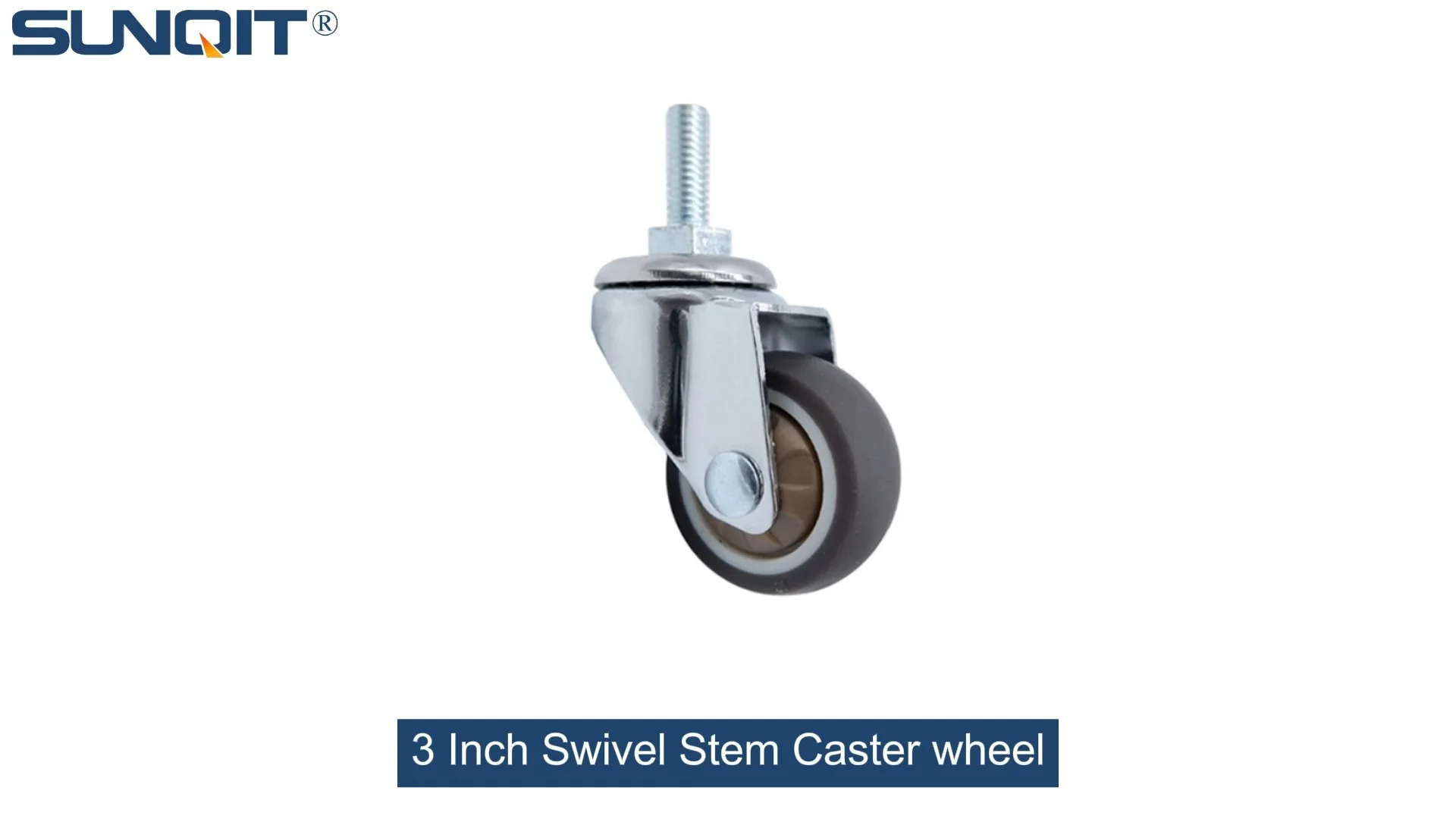
Swivel Stem Caster wheel
360 Degree Swivel Stem Caster. Threaded-post mount design, castors diameter 3 inch.Each swivel caster wheels loading 70KGS. Heavy enough and widely suit for carts, chairs, cabinet, flow rack, workbench, turnover rolley.
Picture this: You're in a busy warehouse, rushing to move a loaded trolley from the storage area to the assembly line. The clock is ticking, and every second counts. But as you push, the trolley wobbles, the wheels slip on the concrete, and you end up expending twice the effort just to keep it moving straight. Frustrating, right? Or maybe you've struggled to maneuver a workbench across a polished tile floor in your workshop, only to have it slide unexpectedly when you hit a slight bump. What if we told you the solution might be simpler than you think? It all comes down to one small but mighty detail: the tread pattern on your swivel stem caster wheels.
Swivel stem caster wheels are the unsung heroes of countless workplaces, from factories and hospitals to garages and offices. They're the reason we can move heavy equipment with ease, rearrange workspaces in minutes, and keep operations running smoothly. But not all caster wheels are created equal—and the tread pattern, that textured design on the wheel's surface, is often the difference between a smooth roll and a frustrating struggle. In this article, we'll dive deep into how tread patterns impact grip and traction on different floor types, why choosing the right one matters, and how to pair your wheels with accessories like brakes and adjustable leveling feet to create the ultimate mobile setup.
Understanding Tread Patterns: More Than Just Texture
At first glance, a caster wheel's tread might seem like a simple design choice—maybe something added for looks. But in reality, it's a carefully engineered feature that directly affects how the wheel interacts with the floor. Tread patterns are designed to do three key things: maximize grip (so the wheel doesn't slip), minimize floor damage (no scratches or scuffs), and reduce rolling resistance (so you don't waste energy pushing). Let's break down the basics.
Tread patterns come in a variety of shapes and depths, from smooth and sleek to rugged and knobby. The most common types include:
- Smooth Treads: Flat, with minimal texture. Ideal for hard, smooth floors where precision movement is key.
- Herringbone Treads: V-shaped grooves that crisscross the wheel. Great for channeling away debris and improving traction on wet or uneven surfaces.
- Knobby Treads: Raised, irregular lugs (like off-road tires). Designed for rough or soft surfaces, where digging into the floor for grip is necessary.
- Diamond Treads: Interlocking diamond shapes that balance grip and smoothness. A versatile option for mixed-floor environments.
- Ribbed Treads: Parallel lines or grooves that run along the wheel's circumference. Excellent for straight-line stability on carpet or concrete.
But here's the catch: What works on one floor type might fail miserably on another. A knobby tread that grips like a champ on gravel could tear up a hardwood floor, while a smooth tread that glides on tile might slip dangerously on wet concrete. That's why matching the tread pattern to your specific floor is critical—and it starts with understanding the surfaces you're working with.
Tread Patterns vs. Floor Types: A Matchmaking Guide
Let's take a tour of the most common floor types and explore which tread patterns work best for each. We'll also throw in real-world examples to show you how the right (or wrong) choice can impact your daily workflow.
1. Concrete Floors: The Workhorse of Industrial Spaces
Concrete is everywhere in factories, warehouses, and loading docks—and for good reason. It's durable, easy to clean, and can handle heavy loads. But it's also porous, prone to dust, and often uneven, with cracks or minor bumps. On concrete, traction is king—you don't want your trolley sliding when you hit a dusty patch or a wet spill from a cleaning crew.
The best tread patterns here are herringbone and ribbed designs. Herringbone grooves act like tiny channels, pushing dust, water, and debris out from under the wheel as it rolls. This prevents the wheel from "hydroplaning" on wet spots or getting stuck on loose particles. Ribbed treads, with their parallel grooves, provide stability for straight-line movement, making them ideal for long-haul pushes across large warehouses. For example, a rubber herringbone tread on a swivel stem caster wheel with brake would be perfect for a heavy-duty material cart—grip when moving, and a secure lock when loading/unloading.
2. Hardwood & Tile Floors: Beauty Meets Function
Hardwood and tile floors are prized for their sleek, professional look—think hospital corridors, high-end retail stores, or home workshops. But they're also delicate. A rough tread can scratch the surface, while a slippery one can lead to dangerous slides. So what's the solution?
Smooth or lightly textured treads are the way to go here. Urethane wheels with a smooth finish are a top pick: they're soft enough to cushion the floor (no scratches!) but still offer enough grip to prevent slipping. For example, a workbench with smooth urethane caster wheels can glide across a polished tile floor without leaving a mark, and when paired with a swivel stem caster wheel with brake, you can lock it in place to avoid accidental movement while you work. Avoid knobby or deep-grooved treads here—they'll catch on grout lines or wood grain, causing drag and potential damage.
3. Carpeted Floors: The Hidden Challenge
Carpet might seem "softer" than concrete or tile, but it's actually one of the trickiest floors for caster wheels. Pile height, density, and texture can all affect how a wheel performs. A low-pile office carpet is very different from a thick, shaggy rug in a home setting, and your tread pattern needs to adapt.
For low-pile carpets (common in offices or retail spaces), semi-rough treads with shallow grooves work best. They grip the carpet fibers without getting stuck, reducing rolling resistance. For high-pile or plush carpets, knobby treads are better—their raised lugs dig into the carpet, preventing the wheel from sinking or "bogging down." Imagine trying to push a file cabinet across a shaggy rug with smooth wheels: it would feel like pushing through mud. Swap those for knobby plastic treads, and suddenly, it's a breeze. Pro tip: Pair these with caster accessories like ball bearings to reduce friction even further—smoother rolls, less effort.
4. Carpeted Floors: The Hidden Challenge
Carpet might seem "softer" than concrete or tile, but it's actually one of the trickiest floors for caster wheels. Pile height, density, and texture can all affect how a wheel performs. A low-pile office carpet is very different from a thick, shaggy rug in a home setting, and your tread pattern needs to adapt.
For low-pile carpets (common in offices or retail spaces), semi-rough treads with shallow grooves work best. They grip the carpet fibers without getting stuck, reducing rolling resistance. For high-pile or plush carpets, knobby treads are better—their raised lugs dig into the carpet, preventing the wheel from sinking or "bogging down." Imagine trying to push a file cabinet across a shaggy rug with smooth wheels: it would feel like pushing through mud. Swap those for knobby plastic treads, and suddenly, it's a breeze. Pro tip: Pair these with caster accessories like ball bearings to reduce friction even further—smoother rolls, less effort.
5. Industrial & Rough Floors: Ruggedness Required
Some floors are just plain tough: asphalt loading docks, gravel yards, or factory floors with oil stains and debris. On these surfaces, a wimpy tread won't cut it. You need something that can handle the chaos without losing grip.
Deep, aggressive treads —think knobby or diamond patterns—are designed for these environments. Rubber or polyurethane with deep grooves can bite into rough surfaces, channel away oil or water, and resist punctures from sharp debris. For example, a stainless steel pipe series cart with diamond-tread rubber wheels would sail over gravel or potholed concrete, while a plastic knobby tread could handle light debris on an asphalt lot. These treads are all about durability and traction, even when the going gets rough.

Tread Materials: The Other Half of the Equation
Tread pattern is important, but it doesn't work alone. The material of the wheel itself—rubber, urethane, plastic, or metal—plays a huge role in how the tread performs. Let's compare the most common materials and their best-use scenarios:
| Tread Material | Best Tread Pattern | Top Floor Types | Grip Level | Floor Protection | Common Applications |
|---|---|---|---|---|---|
| Urethane | Smooth/Lightly Textured | Hardwood, Tile, Concrete | High | Excellent (soft, no scratches) | Workbenches, Medical Carts |
| Rubber | Herringbone/Ribbed | Concrete, Asphalt, Carpet | Very High | Good (cushioned, minimal scuffs) | Warehouse Trolleys, Material Racks |
| Plastic | Knobby | Carpet, Rough Floors | Medium | Fair (harder, may scratch delicate floors) | Light-Duty Carts, Home Use |
| Rubber (Industrial Grade) | Diamond/Knobby | Gravel, Oil-Stained Concrete | Very High | Fair (tough, but may scuff soft floors) | Heavy Machinery, Outdoor Carts |
As you can see, urethane is the MVP for delicate floors, rubber rules for grip on concrete, and plastic is a budget-friendly option for light use. The key is to match both material and pattern to your floor type—skip this step, and you'll end up with wheels that underperform (or worse, damage your space).

Beyond Treads: Accessories That Elevate Performance
Even the best tread pattern and material can fall short without the right accessories. Let's talk about two must-haves for any caster setup: brakes and adjustable leveling feet.
Swivel Stem Caster Wheel with Brake: Safety First
Traction is great for moving, but what about when you need to stop? A swivel stem caster wheel with brake is a game-changer for safety and stability. These brakes lock the wheel in place, preventing accidental rolling when loading/unloading, working at a workbench, or parked on an incline. For example, imagine a busy assembly line: a material cart with herringbone rubber treads moves smoothly across concrete, but when it reaches the station, the brake flips down, locking the wheels. No more sliding, no more accidents—just secure, worry-free work.
Brakes come in a few styles: foot-operated (most common, easy to use), hand-operated (for tight spaces), and total-lock (locks both swivel and wheel rotation for maximum stability). For heavy loads or uneven floors, a total-lock brake is ideal—it keeps the wheel from swiveling or rolling, even on a slope.
Adjustable Leveling Feet: Stability When You Need It
Sometimes, you don't want your caster wheels to roll at all—you want them to stay put, even on uneven floors. That's where adjustable leveling feet come in. These handy accessories attach to the base of your equipment (like a workbench or cart) and can be extended to lift the caster wheels off the ground, stabilizing the setup. When you need to move, simply retract the feet, and the wheels take over.
For example, a workbench with both swivel stem caster wheels and adjustable leveling feet is the ultimate multitasker: roll it to a new spot, extend the feet to level it on a bumpy garage floor, and get to work. No wobbling, no slipping—just a solid, steady surface. They're especially useful in workshops or labs where precision is key, or in older buildings with uneven concrete floors.

Choosing the Right Tread: A Step-by-Step Guide
Now that you know the basics, how do you actually choose the right tread pattern for your needs? Follow these steps:
- Assess Your Floor: What type of floor do you have? Is it smooth (tile) or rough (concrete)? Delicate (hardwood) or tough (asphalt)? Note any challenges like debris, moisture, or unevenness.
- Consider Your Load: How much weight will the wheels need to carry? Heavier loads require more grip (rubber herringbone) and durable materials (urethane/rubber).
- Think About Movement: Do you need to move in straight lines (ribbed treads) or swivel and turn (smooth/lightly textured)? Will you need to stop frequently (swivel stem caster wheel with brake)?
- Check Floor Protection: Do you need to avoid scratches? Opt for urethane or rubber with smooth treads. If floor damage isn't a concern, plastic or metal may work.
- Pair with Accessories: Add brakes for safety, adjustable leveling feet for stability, and quality caster accessories (like ball bearings) for smoother rolling.
Common Mistakes to Avoid
Even with the best intentions, it's easy to choose the wrong tread pattern. Here are a few pitfalls to steer clear of:
- Ignoring Floor Type: Using a knobby plastic tread on hardwood floors is a recipe for scratches. Always match the tread to the floor.
- Overlooking Weight Capacity: A smooth urethane tread might grip well, but if it's not rated for your load, it will wear down fast (or even crack).
- Forgetting Brakes: Even the grippiest tread can slip on a slope. A swivel stem caster wheel with brake adds an extra layer of safety.
- Neglecting Maintenance: Treads can wear down over time, reducing grip. Inspect wheels regularly and replace them when the tread is worn smooth.
Final Thoughts: Small Treads, Big Impact
Swivel stem caster wheels might seem like a minor detail, but their tread patterns play a huge role in how we work, move, and stay safe. Whether you're pushing a trolley across a warehouse, gliding a workbench across a workshop, or maneuvering a cart through a hospital, the right tread pattern can turn frustration into efficiency. Pair that with smart accessories like brakes and adjustable leveling feet, and you've got a setup that's not just mobile—but intelligent .
So the next time you're shopping for caster wheels, don't just look at the size or material. Take a close look at the tread. Ask yourself: What floor will this wheel roll on? How much weight will it carry? Do I need to lock it in place? The answers will guide you to the perfect tread pattern—and a world of smoother, safer, and more efficient movement.