- Company Articles
- Products and Technology
- Product knowledge
- Swivel Stem Caster Wheel with Brake: Choosing Between Threaded & Smooth Stems

Swivel Stem Caster Wheel with Brake: Choosing Between Threaded & Smooth Stems
Related Product
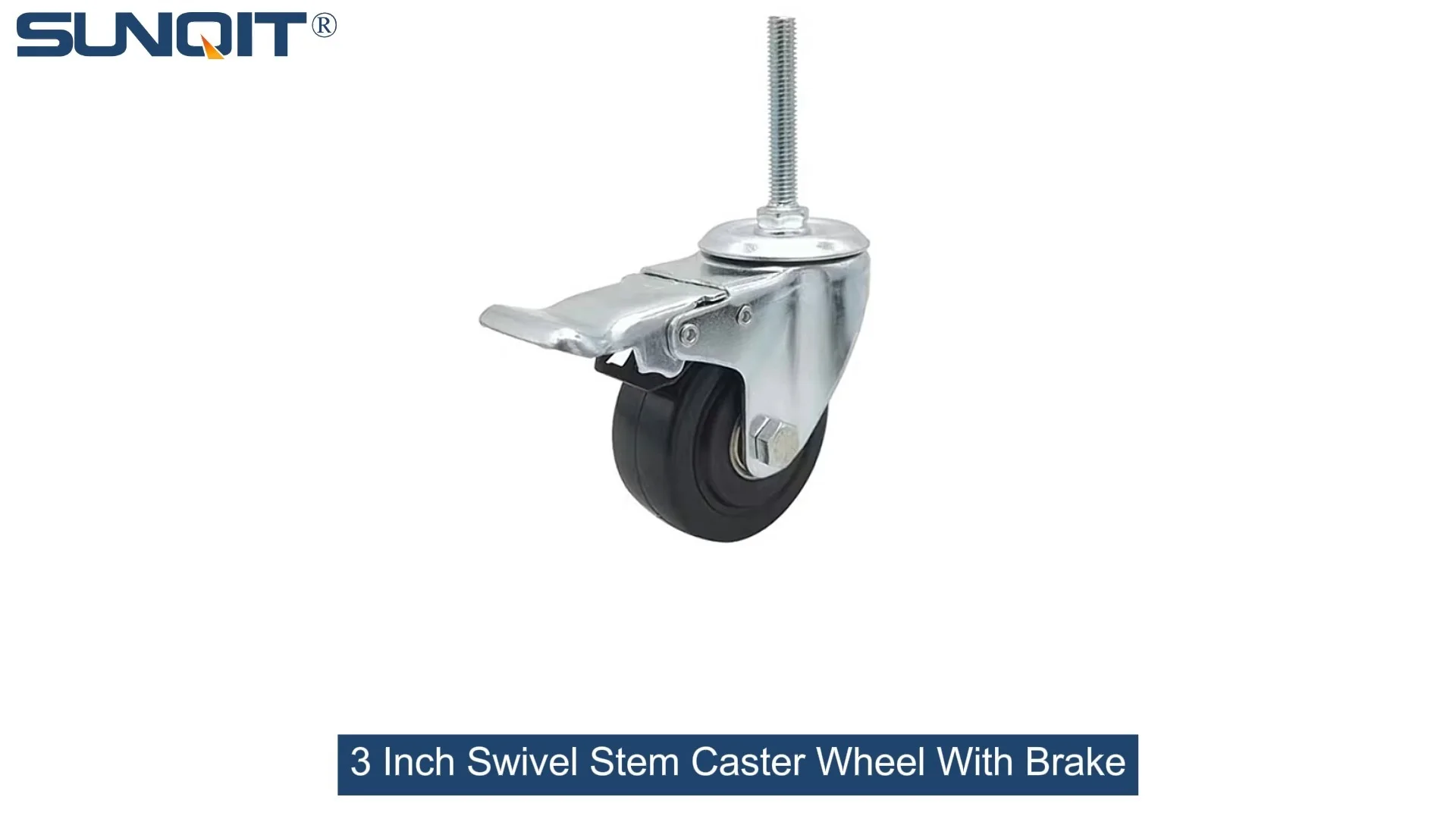
Swivel Stem Caster Wheel with Brake
360 Degree Swivel Stem Caster with brake. Threaded-post mount design, castors diameter 3 inch.Each swivel caster wheels loading 70KGS. Heavy enough and widely suit for carts, chairs, cabinet, flow rack, workbench, turnover rolley.
If you've ever pushed a heavy cart across a warehouse floor, adjusted a workbench to reach a tight corner, or struggled to keep a mobile shelf from rolling away mid-task, you know the quiet frustration of poorly chosen caster wheels. Those small, often overlooked components under your equipment can make or break productivity, safety, and even your daily workflow. Today, we're zeroing in on a workhorse of the caster world: the swivel stem caster wheel with brake . More specifically, we'll tackle a decision that trips up even seasoned facility managers and DIY enthusiasts alike: choosing between threaded stems and smooth stems. By the end, you'll know exactly which stem type fits your project, whether you're outfitting a workbench in your garage or upgrading material handling equipment in a manufacturing plant.
First Things First: What Makes a Swivel Stem Caster Wheel with Brake So Essential?
Before diving into stems, let's ground ourselves in why these casters matter. A caster wheel is more than just a wheel on a stick—it's a system designed to balance mobility, stability, and control. Swivel stems allow the wheel to rotate 360 degrees, making tight turns and maneuvering in confined spaces a breeze. The brake? That's your safety net. Whether it's a total-lock brake (which freezes both the wheel and swivel motion) or a directional lock (which keeps the wheel straight but still rolls), that little lever or pedal prevents accidental movement when you need stability most—like when loading a cart, using a workbench , or parked on an incline.
But here's the kicker: even the best brake mechanism won't perform if the stem—the part that attaches the caster to your equipment—is mismatched to your needs. Threaded and smooth stems are the two primary options, and while they might look similar at first glance, their differences can lead to wobbly carts, stripped threads, or even equipment failure if chosen incorrectly. Let's break them down.
Threaded Stem Casters: The Reliable Workhorse
What Is a Threaded Stem?
Imagine a bolt with a wheel on the bottom—that's essentially a threaded stem caster. The stem itself is a metal rod with ridges (threads) that screw into a corresponding threaded hole or nut on your equipment. This design creates a mechanical bond that's tough to beat for stability and adjustability. You've probably seen these on heavy-duty carts, industrial shelving, or even some workbench models where load capacity and vibration resistance are non-negotiable.
How Threaded Stems Work (And Why They Stick)
The magic of threaded stems lies in their connection. When you screw the stem into a threaded hole, the threads interlock like gears, distributing weight evenly across the connection point. This makes them ideal for applications where the caster might experience jarring movements—think forklift traffic, uneven concrete floors, or heavy loads shifting during transport. Unlike smooth stems (which we'll get to next), threaded stems don't rely on friction or external collars to stay in place; the threads do the work, creating a bond that resists loosening over time.
Adjustability is another superpower here. Need to level a workbench with uneven legs? Screw the threaded stem in a little more on the low side. Want to raise a cart to match the height of a conveyor belt? Unscrew it slightly. This fine-tuning is a game-changer in settings where precision matters, like assembly lines or labs.
Pros of Threaded Stems
- Exceptional Stability: Threads create a tight, secure connection that's resistant to vibration and shock. Perfect for heavy loads (we're talking 500+ pounds per caster in some cases).
- Height Adjustability: Screw the stem in or out to tweak height by fractions of an inch—no need for shims or extra caster accessories .
- Durability: Threads are less likely to loosen under repeated use, making them a long-term investment for high-traffic areas.
- Versatility in Materials: Threaded stems work with metal, wood, or plastic equipment, as long as the base has a threaded insert or can be tapped to add threads (more on that later).
Cons of Threaded Stems
No design is perfect, and threaded stems have their quirks:
- Installation Time: Screwing each caster into place takes more time than pushing in a smooth stem, especially if you're working with multiple casters or tight spaces.
- Thread Compatibility Issues: Not all threads are created equal. A 1/2-inch diameter stem with 13 threads per inch (TPI) won't fit a hole tapped for 1/2-inch 20 TPI. Mixing sizes leads to stripped threads or loose connections—frustrating, to say the least.
- Limited to Threaded Surfaces: If your equipment doesn't have a pre-threaded hole, you'll need to tap it (drill threads) or use a threaded insert. This adds steps and may not be feasible for fragile materials like thin plastic.
Best Applications for Threaded Stems
Threaded stems shine in scenarios where stability and load capacity are top priorities. Think:
- Industrial Workbenches & Heavy Machinery: A workbench loaded with tools, welding equipment, or inventory needs a stem that won't budge. Threaded stems here prevent wobbling during use.
- Material Handling Carts: Carts hauling metal parts, automotive components, or bulk materials (500+ pounds) rely on threaded stems to handle rough rides and sudden stops.
- Outdoor or Uneven Surfaces: If your equipment lives on gravel, cracked concrete, or inclines, the threaded stem's secure connection resists shifting better than smooth alternatives.

Smooth Stem Casters: The Quick-Change Artist
What Is a Smooth Stem?
If threaded stems are the bolt, smooth stems are the peg. These stems are unthreaded, straight metal rods that slide into a hole or sleeve on your equipment. To keep them in place, you'll typically use caster accessories like stem collars, set screws, or tension clamps. You've probably encountered these on lightweight carts, office chairs, or medical equipment—applications where speed of installation and low profile are key.
How Smooth Stems Work (And When They Shine)
Smooth stems prioritize simplicity. Slide the stem into a pre-drilled hole (no threading required), then secure it with a collar or set screw that tightens against the stem, creating friction. This design makes installation a one-and-done process: align the stem, push, clamp, and you're done. It's why they're a favorite for assembly lines where equipment needs frequent reconfiguration, or for rental gear that's taken apart and reassembled regularly.
Their low-profile design is another advantage. Smooth stems are often shorter and slimmer than threaded stems, making them ideal for equipment where ground clearance is limited—like under-shelf storage carts or mobile display units that need to slide under tables.
Pros of Smooth Stems
- Lightning-Fast Installation: No screwing, no tapping—just slide and clamp. Perfect for projects where time is tight or you're swapping casters frequently.
- Works with Unthreaded Holes: As long as there's a hole (or you can drill one) that matches the stem diameter, you're good to go. No need for specialized tools or threaded inserts.
- Cost-Effective: Smooth stems are often cheaper to manufacture than threaded ones, making them a budget-friendly choice for lightweight applications.
- Low Maintenance: No threads to strip or clean—just wipe down the stem and check the collar tightness occasionally.
Cons of Smooth Stems
Smooth stems have limitations, especially under stress:
- Less Secure Under Heavy Loads: Friction and collars can fail under extreme weight or vibration. A sudden jolt might loosen the set screw, leading to a wobbly caster.
- No Height Adjustment: Once installed, the stem length is fixed. If you need to level equipment, you'll need adjustable leveling feet or shims—adding complexity.
- Dependence on Accessories: Lose the stem collar or strip a set screw, and the caster becomes useless. You'll need to keep caster accessories on hand for replacements.
- Limited to Light-to-Medium Loads: Most smooth stems top out around 300 pounds per caster, making them risky for heavy industrial use.
Best Applications for Smooth Stems
Smooth stems are all about speed and simplicity . They're ideal for:
- Lightweight Carts & Shelving: Think office supply carts, library book trucks, or retail display shelves loaded with clothing or small electronics.
- Medical & Lab Equipment: Mobile carts for medications, lab samples, or portable ultrasound machines need quick setup and easy cleaning—smooth stems deliver both.
- DIY Projects: If you're building a rolling plant stand or a movable kitchen island, smooth stems save time and require minimal tools (just a drill and wrench for the collar).

Threaded vs. Smooth Stems: A Side-by-Side Comparison
| Feature | Threaded Stem Casters | Smooth Stem Casters |
|---|---|---|
| Installation | Requires screwing into a threaded hole; slower but secure. | Slides into unthreaded hole; secured with collars/set screws; fast. |
| Load Capacity | High (300–1,000+ lbs per caster). | Medium-Low (100–300 lbs per caster). |
| Adjustability | Height-adjustable via threading. | Not adjustable; fixed height. |
| Best For | Heavy machinery, industrial workbenches, rough surfaces. | Light carts, medical equipment, quick-change setups. |
| Accessories Needed | Threaded inserts (if no pre-threaded hole). | Stem collars, set screws, wrenches. |
| Long-Term Durability | Excellent; threads resist loosening. | Good for light use; may loosen under stress. |

5 Key Factors to Choose the Right Stem Type
Now that you understand the basics, let's walk through the decision-making process. Ask yourself these questions before buying:
1. What's the Total Load on Each Caster?
Start with the numbers. Calculate the total weight of your equipment plus its typical load, then divide by the number of casters. For example, a 1,200-pound workbench with 4 casters needs each caster to handle 300 pounds. If your math lands above 300 pounds per caster, threaded stems are the safer bet. For lighter loads (under 200 pounds), smooth stems will work fine.
2. How Often Will You Move the Equipment?
Frequent movement means more vibration and wear. A cart that's rolled across a warehouse 50 times a day will stress a smooth stem's collar over time, leading to loosening. Threaded stems, with their interlocking threads, hold up better to constant motion. For equipment that stays put most of the time (like a workbench you only move monthly), smooth stems might be sufficient.
3. What's the Installation Surface Made Of?
Metal or thick wood? You can tap threads for a threaded stem. Thin plastic or particleboard? A smooth stem with a wide collar is less likely to crack the material. If you're unsure, test with a scrap piece: drill a hole for a smooth stem, or try tapping a small threaded hole to see if the material holds.
4. Do You Need Height Adjustability?
If your floor is uneven or you need to align equipment with other surfaces (like a conveyor belt), threaded stems' adjustability is non-negotiable. Smooth stems + adjustable leveling feet can work, but that adds cost and complexity. Save yourself the hassle and go threaded if leveling is critical.
5. How Much Time Do You Have for Installation?
If you're setting up a fleet of carts in a single day, smooth stems will get the job done faster. For a one-off project (like building your dream workbench ), the extra time to install threaded stems is worth the long-term stability.
Caster Accessories: The Unsung Heroes of Stem Performance
No caster is an island— caster accessories can bridge gaps between stem types and solve common problems. For threaded stems, thread-locking fluid (like Loctite) prevents loosening under vibration. For smooth stems, heavy-duty stem collars with locking set screws add security. And if you're torn between the two, consider stem adapters: these let you use a threaded stem caster in an unthreaded hole by acting as a sleeve with internal threads and external smooth sides. It's not a perfect solution, but it's a handy workaround for mixed-equipment setups.
Don't forget adjustable leveling feet , either. Even with threaded stems, some floors are so uneven that a little extra height adjustment is needed. Pairing casters with leveling feet (which can be retracted when moving) gives you the best of both worlds: mobility and rock-solid stability when parked.
Real-World Scenario: Which Stem Would We Choose?
Let's put this into practice with a common project: building a garage workbench that doubles as a tool storage cart. The workbench will hold 800 pounds (tools, parts, a vice) and needs to roll over concrete (sometimes cracked) to the garage door for loading/unloading. Here's the breakdown:
- Load per caster: 800 lbs ÷ 4 casters = 200 lbs each. Threaded stems can handle this, but smooth stems might too— but the concrete surface adds vibration.
- Mobility: Rolled 2–3 times a week, so moderate vibration.
- Surface: The workbench's frame is 2x4 steel, which can be tapped for threads.
- Adjustability: The garage floor slopes slightly, so height adjustment is needed to keep the workbench level.
Verdict: Threaded stems. The load is manageable, but the slope and concrete surface make adjustability and vibration resistance critical. We'd opt for 3/8-inch threaded stems with total-lock brakes, paired with a few adjustable leveling feet for extra stability when parked.
Final Thoughts: It's All About Balance
Choosing between threaded and smooth stems for your swivel stem caster wheel with brake isn't about picking "the best"—it's about picking what's best for your project. Threaded stems offer unbeatable stability and adjustability for heavy, high-use equipment. Smooth stems save time and money for lightweight, quick-change setups. And when in doubt, mix and match: use threaded stems on the heavy end of a cart and smooth stems on the lighter side, or pair smooth stems with caster accessories like reinforced collars to boost performance.
At the end of the day, the right stem will make your equipment feel like an extension of your workflow—quiet, reliable, and ready to go when you are. So grab your measuring tape, calculate that load, and choose with confidence. Your back (and your productivity) will thank you.