- Company Articles
- Products and Technology
- Product knowledge
- Swivel Stem Caster Wheel with Brake: Corrosion Resistance for Wet Industrial Areas

Swivel Stem Caster Wheel with Brake: Corrosion Resistance for Wet Industrial Areas
Related Product
Swivel Stem Caster Wheel with Brake
360 Degree Swivel Stem Caster with brake. Threaded-post mount design, castors diameter 3 inch.Each swivel caster wheels loading 70KGS. Heavy enough and widely suit for carts, chairs, cabinet, flow rack, workbench, turnover rolley.
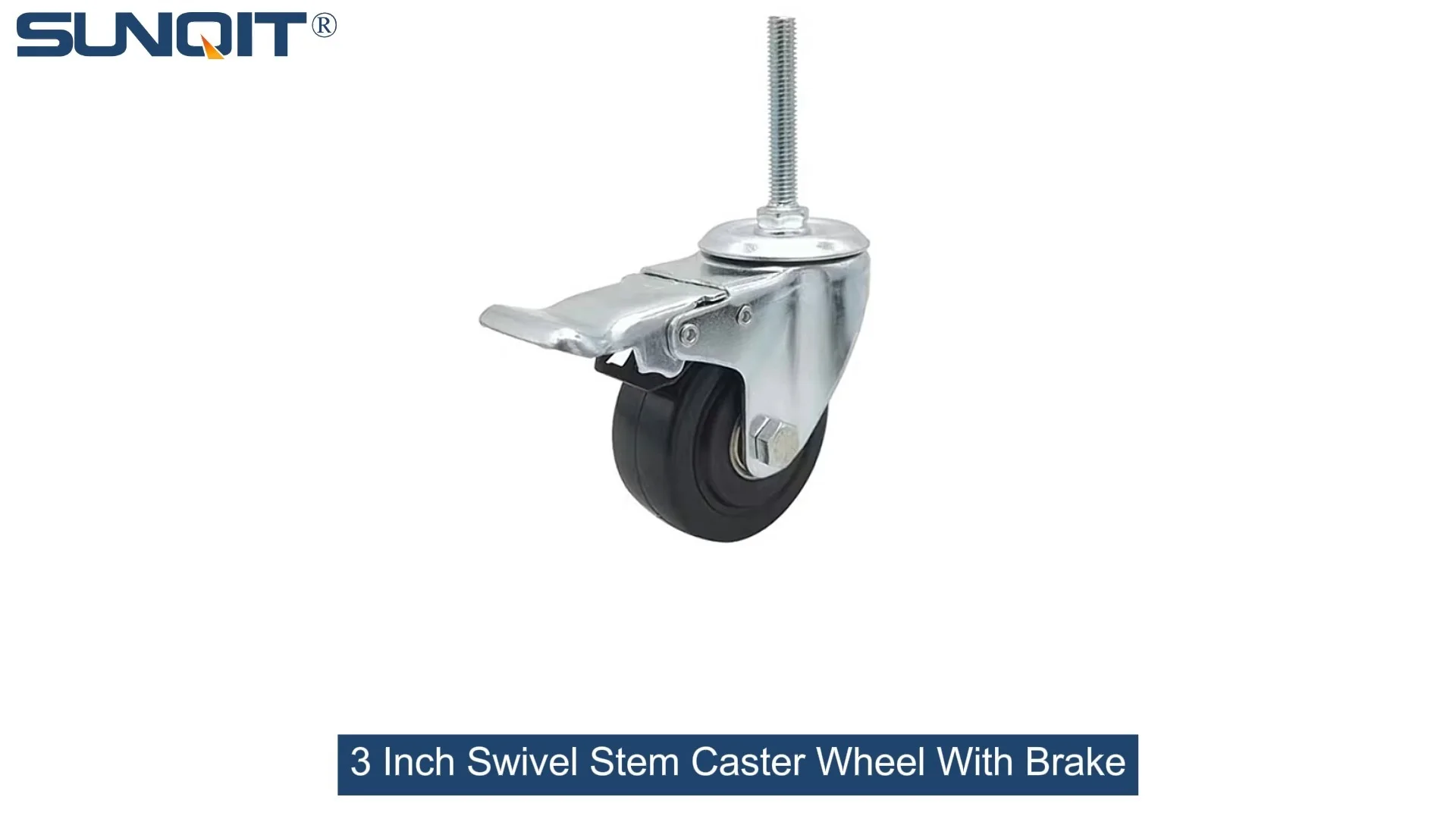
Walk into any industrial facility—whether it's a bustling food processing plant, a busy automotive workshop, or a chemical manufacturing unit—and you'll notice a common challenge: movement. Equipment, tools, and workbenches need to glide smoothly across floors to keep operations running. But in wet environments, this simple task becomes a daily battle. Water, chemicals, and constant moisture turn floors into slippery hazards, and ordinary wheels? They rust, seize up, or worse, fail to hold position when safety matters most. This is where the swivel stem caster wheel with brake steps in—not just as a wheel, but as a silent guardian of efficiency and safety in the wettest corners of industry.
The Hidden Cost of Wet Floors: Why Regular Casters Fall Short
In industries where water is part of the process—think meatpacking plants hosing down surfaces, breweries cleaning tanks, or car washes prepping vehicles—equipment mobility isn't a luxury; it's a necessity. A workbench might need to shift from a washing station to an assembly line. A material cart could carry chemicals from a mixing area to packaging. But here's the problem: standard casters aren't built for this. Most are made with mild steel frames and basic rubber wheels, which start showing signs of wear within weeks. Rust creeps into the joints, making swiveling stiff. The wheels themselves crack or lose traction when exposed to water and cleaning agents. And when the brake mechanism rusts? Suddenly, that "stable" workbench becomes a runaway hazard, sliding across a wet floor with a worker still loading materials.
The cost of this failure goes beyond replacing wheels. Downtime while equipment is stuck. Worker injuries from slips and falls. Damaged products when carts tip. Over time, these "small" issues add up to big losses. For managers, the question isn't just "How do we move things?" but "How do we move them safely, reliably, and without constant maintenance—even when the floor is soaked?"
Meet the Swivel Stem Caster Wheel with Brake: More Than Just a Wheel
At first glance, a swivel stem caster wheel with brake might look like any other caster. It has a wheel, a stem that mounts to equipment, and a brake lever. But look closer, and you'll see why it's a game-changer for wet environments. Let's break it down: the "swivel" means it can rotate 360 degrees, making tight turns easy—critical in crowded facilities. The "stem" design allows for secure mounting to everything from metal workbenches to plastic carts, ensuring it won't loosen over time. And the "brake"? It's not just a simple lock; it's a dual-action mechanism that locks both the wheel and the swivel, keeping the equipment firmly in place even on uneven or wet floors.
But what truly sets this caster apart is its focus on corrosion resistance. While standard casters treat rust as an afterthought, this one is engineered from the ground up to thrive where moisture is constant. It's the difference between a wheel that lasts 6 months and one that keeps rolling strong for years—even in the harshest conditions.

Corrosion Resistance: The Core of Its Strength
Corrosion is the enemy of any industrial component, and casters are no exception. When metal meets water and oxygen, rust forms, eating away at the structure until parts seize or break. For the swivel stem caster wheel with brake, the solution starts with material choice: stainless steel. Not just any stainless steel, but high-grade alloys like 304 or 316—known for their ability to resist rust and chemical damage. This is the same tough material used in stainless steel pipe series, which are trusted in everything from medical equipment to marine applications for their durability in wet, corrosive settings.
Let's compare: a standard caster with a mild steel frame might start showing rust after a week of daily water exposure. Its joints get sticky, and the swivel action becomes a struggle. The wheel, often made of basic rubber, cracks when exposed to cleaning chemicals. Now, swap in a stainless steel caster. The frame stays shiny, the swivel joint moves smoothly, and the wheel retains its grip. Why? Because stainless steel contains chromium, which forms a thin, invisible layer of chromium oxide when exposed to air. This layer acts as a shield, preventing further oxidation—even when the caster is submerged in water or splashed with acids.
But the protection doesn't stop at the frame. The wheel itself is often made of polyurethane or rubber compounds infused with additives that resist water, oil, and chemicals. These materials don't swell or degrade when wet, ensuring the wheel maintains its shape and traction. Even the bearings inside the wheel are sealed to keep out moisture and debris, preventing that annoying "squeak" and ensuring smooth rotation for years.

The Brake Mechanism: Safety When You Need It Most
In wet environments, a caster that rolls smoothly is important—but one that stops when you need it to is life-saving. The brake on a swivel stem caster wheel with brake isn't an afterthought; it's designed to work flawlessly, even when wet. Let's say you're pushing a loaded workbench across a food processing floor that's just been hosed down. You reach the assembly line, hit the brake pedal with your foot, and— click —the caster locks. No sliding, no wobbling. The workbench stays put while you unload heavy ingredients. How does it do that?
Most high-quality models use a "total lock" brake. When engaged, it presses a pad against the wheel to stop rolling, while a separate mechanism locks the swivel raceway, preventing the caster from turning. This dual lock is crucial on wet floors, where even a slight swivel could cause the equipment to shift. The brake pedal is large and easy to operate, even with work boots, and it's designed to resist corrosion too—often made of the same stainless steel as the frame, so it won't rust or stick when stepped on repeatedly.
Consider a scenario without this brake: a worker tries to stop a cart on a wet floor, but the standard brake only locks the wheel, not the swivel. The cart swivels sideways, tipping and spilling its contents. With the total lock brake? The cart stays square and stable, protecting both the worker and the product. It's a small feature, but it turns a potential accident into a routine, safe task.

Caster Accessories: The Little Parts That Make a Big Difference
A caster is only as good as its parts, and the swivel stem caster wheel with brake shines here too—thanks to thoughtful caster accessories that enhance performance and longevity. These aren't just "extras"; they're essential for keeping the caster working in wet environments. Let's start with the stem itself: many models come with adjustable stems, allowing you to fine-tune the height of the equipment. This is key when floors are uneven, ensuring the load stays balanced and the casters wear evenly.
Then there are the bearing covers. These small, often rubber or plastic caps fit over the wheel bearings, keeping water, dirt, and chemicals from seeping in. Without them, moisture would corrode the bearings, leading to rough rolling and eventual failure. Another must-have accessory? Grease fittings. These allow you to lubricate the swivel joint and wheel bearings without disassembling the caster. Using a water-resistant lubricant (like silicone-based grease) ensures the moving parts stay smooth, even when exposed to moisture.
For extreme environments, some suppliers offer optional stainless steel washers and nuts to replace standard hardware, eliminating any weak points where rust could start. There are even floor locks—casters with an extra brake pad that presses directly against the floor for added stability on steep inclines or extra-heavy loads. These accessories don't just extend the life of the caster; they make it adaptable to almost any wet industrial setting.
Applications: Where This Caster Shines Brightest
The swivel stem caster wheel with brake isn't a one-trick pony. Its corrosion resistance and safety features make it indispensable in a range of wet industries. Let's take a look at where it's making the biggest impact:
Food and Beverage Processing
In meatpacking, dairy, or brewery facilities, floors are constantly washed down with hot water and sanitizers. Workbenches, ingredient carts, and cleaning equipment need to move between stations, but they must also stay put during processing. Stainless steel casters resist the harsh chemicals in sanitizers, and the brake ensures carts don't slide while workers handle food—critical for meeting safety regulations and preventing contamination.
Chemical Manufacturing
Chemical plants deal with acids, solvents, and caustic solutions that would eat through standard casters in days. The stainless steel frame and chemical-resistant wheels of these casters stand up to spills, while the brake keeps carts stable when loading/unloading drums of materials—reducing the risk of leaks and worker exposure.
Automotive and Car Washes
Car washes and auto repair shops are flooded with water, soap, and oil. Lifts, tool carts, and detailing stations need casters that can handle both water and grease. The swivel stem caster's sealed bearings keep out oil and dirt, and the brake prevents carts from rolling while mechanics work under vehicles.
Medical and Laboratory Settings
Hospitals, clinics, and labs often have wet floors from cleaning or specimen spills. Mobile workbenches, instrument carts, and medical equipment require casters that are easy to sanitize and won't rust. Stainless steel is non-porous, so it doesn't harbor bacteria, making these casters ideal for sterile environments.
How Does It Compare? A Look at Caster Types
Not all casters are created equal, especially in wet conditions. To see why the swivel stem caster wheel with brake stands out, let's compare it to common alternatives:
| Caster Type | Frame Material | Brake Type | Corrosion Resistance (1-5) | Best For |
|---|---|---|---|---|
| Standard Swivel Caster | Mild steel | Wheel-only lock (if any) | 1/5 – Rusts quickly in moisture | Dry, indoor environments (offices, retail) |
| Galvanized Steel Caster | Zinc-coated steel | Basic foot brake | 3/5 – Resists light moisture, but zinc wears off | Outdoor use with occasional rain (gardening, construction) |
| Swivel Stem Caster with Brake (Stainless Steel) | 304/316 Stainless Steel | Dual-action (wheel + swivel lock) | 5/5 – Impervious to rust, chemicals, and constant moisture | Wet industrial environments (food processing, chemical plants, medical labs) |
The table tells the story: while galvanized casters offer some protection, they can't match the stainless steel model's long-term resistance to constant moisture and chemicals. And when it comes to safety, the dual-lock brake makes all the difference in preventing accidents on wet floors.
Maintenance Tips: Keeping Your Casters Rolling Strong
Even the most durable caster needs a little care to stay in top shape—especially in wet environments. Here's how to extend the life of your swivel stem caster wheels with brake:
- Clean Regularly: Wipe down the caster with a damp cloth to remove dirt, grime, and chemicals. For tough buildup, use mild soap and water—avoid harsh abrasives that could scratch the stainless steel.
- Lubricate Smartly: Every 3-6 months (or more often in heavy use), apply a water-resistant lubricant to the swivel joint and wheel bearings. Silicone-based lubricants work best, as they repel water and won't attract dirt.
- Check the Brake: Test the brake regularly to ensure it engages fully. If it feels loose or slow, tighten the adjustment nut (if equipped) or replace worn brake pads. A sticky brake is a safety risk—don't ignore it.
- Inspect Caster Accessories: Check for loose nuts, worn bearings, or damaged seals. replace any caster accessories like bearing covers or washers that show signs of wear—they're cheap to replace and prevent bigger issues later.
- Don't Overload: Stick to the caster's weight capacity. Overloading strains the stem, wheel, and brake, leading to premature failure—even in stainless steel models.
The Bottom Line: Investing in Reliability
At the end of the day, choosing a swivel stem caster wheel with brake for wet industrial areas isn't just about buying a wheel. It's about investing in reliability. It's about reducing downtime, preventing injuries, and avoiding the hidden costs of constant replacements. For managers, it's a decision that pays off in smoother operations and happier, safer workers. For workers, it's the difference between struggling with stuck equipment and focusing on the job at hand.
So the next time you're in a wet industrial facility, take a look at the casters under the workbenches and carts. If they're rusty, squeaky, or failing to brake, it might be time for an upgrade. The swivel stem caster wheel with brake isn't just built to survive wet floors—it's built to thrive on them, turning a daily headache into a silent success story.