- Company Articles
- Products and Technology
- Product knowledge
- Swivel Stem Caster Wheel with Brake: Cost Analysis vs Long-Term Durability

Swivel Stem Caster Wheel with Brake: Cost Analysis vs Long-Term Durability
Related Product
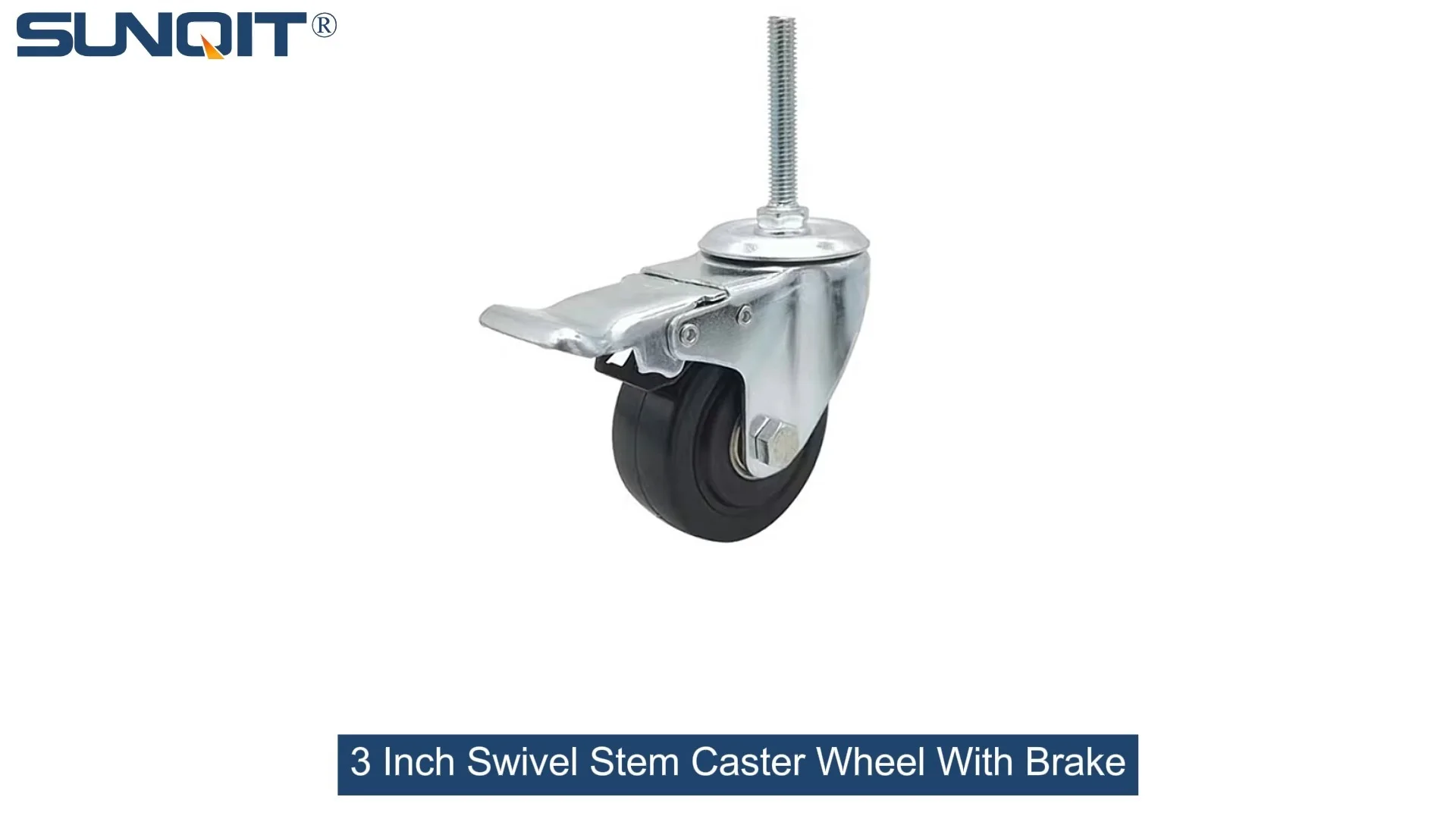
Swivel Stem Caster Wheel with Brake
360 Degree Swivel Stem Caster with brake. Threaded-post mount design, castors diameter 3 inch.Each swivel caster wheels loading 70KGS. Heavy enough and widely suit for carts, chairs, cabinet, flow rack, workbench, turnover rolley.
Introduction: The Unsung Hero of Workplace Mobility
Walk through any manufacturing plant, warehouse, or even a busy office, and you'll likely encounter a silent workhorse that keeps operations moving: the caster wheel. These small but mighty components are the reason heavy workbenches glide smoothly, turnover trolleys transport materials without strain, and assembly lines maintain their relentless pace. Among the many types of caster wheels, the swivel stem caster wheel with brake stands out for its unique blend of mobility, control, and safety. It's the kind of tool that, when chosen wisely, fades into the background—quietly supporting productivity. But when chosen poorly? It becomes a constant source of frustration: wheels that lock up, brakes that fail, and carts that wobble instead of rolling.
For businesses, especially those operating within lean system frameworks, the choice between a budget-friendly caster and a higher-quality option isn't just about upfront cost. It's a decision that ripples through daily operations, affecting everything from employee efficiency to long-term maintenance budgets. In this article, we'll dive deep into the world of swivel stem caster wheels with brakes, breaking down their cost structures, examining what drives long-term durability, and helping you determine whether splurging on quality today will save you money (and headaches) tomorrow.
What Is a Swivel Stem Caster Wheel with Brake, Anyway?
Before we jump into costs and durability, let's make sure we're all on the same page about what a swivel stem caster wheel with brake actually is. At its core, it's a caster wheel designed with two key features: a swivel mechanism and a brake. The "stem" refers to the vertical rod that attaches the caster to the equipment—think of it as the "leg" that connects the wheel to a workbench, cart, or rack. The "swivel" allows the wheel to rotate 360 degrees, making it easy to maneuver tight corners or change direction with minimal effort. And the "brake"? That's the safety net, letting you lock the wheel in place to prevent unwanted movement, whether you're loading materials onto a workbench or parked on an incline.
These casters aren't one-size-fits-all. They come in various materials, wheel sizes, and brake types, each tailored to specific needs. For example, a lightweight plastic caster might work for a small office cart, but a heavy-duty stainless steel version would be better suited for a metal turnover trolley and rack in a warehouse. The brake mechanism can also vary: some have a "total lock" that freezes both the wheel and swivel, while others only lock the wheel direction, allowing the swivel to still move. Understanding these differences is key to evaluating both cost and durability.

Cost Analysis: What Drives the Price Tag?
When shopping for swivel stem caster wheels with brakes, the first thing you'll notice is the wide range of prices. A basic model might cost as little as $10 per caster, while a heavy-duty industrial version could set you back $50 or more. What accounts for this gap? Let's break down the key factors that influence cost.
Material Quality: The Foundation of Cost
The materials used in a caster wheel—from the stem and housing to the wheel itself—have a huge impact on price. Here's a quick breakdown of common materials and their cost implications:
- Plastic: The most budget-friendly option. Plastic wheels are lightweight and corrosion-resistant but struggle with heavy loads or rough surfaces. They're fine for light-duty use (e.g., a small office cart) but prone to cracking under stress.
- Rubber/Polyurethane: Mid-range in cost. These wheels offer better shock absorption and floor protection than plastic, making them popular for workbench applications where noise and floor scratches are concerns. Polyurethane, in particular, balances durability and affordability.
- Steel/Stainless Steel: The premium choice. Steel wheels handle heavy loads (often up to 1,000 lbs per caster) and resist wear and tear in harsh environments, like factories with debris or moisture. Stainless steel adds corrosion resistance, making it ideal for food processing or medical settings—but at a higher cost.
The stem material matters too. A zinc-plated steel stem is cheaper than a stainless steel one, but it's more likely to rust over time, especially in humid conditions. For businesses prioritizing longevity, investing in a stainless steel stem might add $10–$15 per caster upfront but prevent premature replacement.
Brake Mechanism: Safety Comes at a Cost
Not all brakes are created equal, and that's reflected in the price. A basic "side-lock" brake, which requires bending down to engage, is cheaper than a "foot brake" that can be activated with a simple tap of the foot. Foot brakes are more convenient (no bending!) but involve more moving parts, driving up costs. Even within foot brakes, there's variation: a "total lock" brake (which locks both the wheel and swivel) is pricier than a "directional lock" (which only stops the wheel from rolling forward/backward).
Load Capacity: Paying for Strength
Casters are rated by how much weight they can support, and higher load capacities mean higher costs. A caster rated for 200 lbs might cost $15, while one rated for 800 lbs could cost $40. This isn't just about the wheel—it's about the entire assembly: the stem must be thicker, the bearings stronger, and the housing more robust to handle the stress. Overloading a low-capacity caster is a recipe for failure, so it's tempting to "overbuy" capacity. But there's a balance: paying for 1,000 lbs when you only need 500 lbs is a waste of money.
Brand and Supplier Reputation
Like any product, brand name plays a role. Established lean system supplier or industrial equipment brands often charge more, but they typically offer better quality control, warranties, and access to caster accessories (e.g., replacement wheels, brake pads). Generic or off-brand casters might save you money upfront, but they're more likely to cut corners—using cheap bearings, thin steel, or low-grade plastic that degrades quickly.
Hidden Costs: Beyond the Initial Purchase
When calculating cost, don't forget the "hidden" expenses. A budget caster might require frequent replacements (e.g., every 6–12 months), while a higher-quality one could last 5 years or more. Add in the labor cost of swapping out broken casters, the downtime when equipment is out of commission, and the risk of workplace injuries from faulty brakes, and the "cheap" option suddenly looks a lot more expensive.

Long-Term Durability: What Makes a Caster Wheel Last?
Cost is only half the equation. The real question is: will a more expensive caster wheel actually last longer? The answer, in most cases, is yes—but durability depends on more than just price. Let's explore the factors that determine how well a swivel stem caster wheel with brake holds up over time.
Material Resilience: Standing Up to the Elements
Durability starts with materials. Stainless steel and aluminum stems resist rust, making them ideal for damp environments (e.g., food processing plants or outdoor loading docks). Polyurethane wheels are resistant to oil, chemicals, and UV rays, so they won't degrade if exposed to spills or sunlight. In contrast, plastic wheels can crack in extreme temperatures, and uncoated steel stems will rust in humid conditions—both leading to premature failure.
Brake System Longevity: The Weakest Link?
The brake is often the first part of a caster to fail, so it's critical to evaluate its build quality. Look for brakes with metal components (not plastic) and sealed mechanisms to keep out dust and debris. A well-designed brake should maintain its grip even after thousands of activations. Cheaper brakes, however, use plastic levers that snap or springs that lose tension over time, turning a "safety feature" into a liability.
Bearings: The Key to Smooth (and Lasting) Movement
Ever pushed a cart that felt like it was dragging? Chances are, the bearings were to blame. Bearings reduce friction between the wheel and axle, allowing smooth rotation. Budget casters often use "plain bearings" (simple metal sleeves), which wear out quickly under heavy loads. Higher-quality casters use "ball bearings" or "roller bearings," which distribute weight more evenly and last longer. Sealed bearings are even better—they prevent dirt and moisture from getting inside, extending their lifespan.
Maintenance Requirements: A Little Care Goes a Long Way
Even the most durable caster wheel needs some TLC. Industrial-grade casters often come with grease fittings, allowing you to lubricate bearings and keep them running smoothly. Budget casters, by contrast, are often "sealed for life" (no grease fittings)—which sounds convenient until the bearings dry out and seize. Regular maintenance (cleaning, lubricating, tightening loose stems) can add years to a caster's life, but only if the design allows for it.
Environmental Factors: Where You Use It Matters
A caster that thrives in a climate-controlled office might fail miserably in a warehouse with concrete floors and constant vibration. Rough surfaces wear down wheel treads faster, while extreme temperatures (hot or cold) can cause materials to expand, contract, or become brittle. For example, a rubber wheel that works well in a 70°F factory might crack in a freezer or melt near a furnace. When evaluating durability, always consider the specific environment where the caster will be used.

Cost vs. Durability: The Trade-Off Every Buyer Faces
So, should you splurge on a high-cost, high-durability caster or save money with a budget option? The answer depends on your specific needs. Let's look at two real-world scenarios to illustrate the trade-off.
Scenario 1: A Small Workshop with Light-Duty Needs
Imagine a small woodworking shop that uses a single workbench on casters to move tools around. The workbench weighs about 200 lbs, and it's moved maybe once a day on smooth concrete floors. In this case, a mid-range caster ($15–$20 per wheel) with polyurethane wheels and a basic foot brake would likely suffice. The low usage means even a moderately durable caster could last 3–5 years, and the cost savings would be meaningful for a small business.
Scenario 2: A Busy Warehouse with Heavy-Duty Trolleys
Now, consider a large warehouse operating within a lean system , where turnover trolley and rack units are moved constantly—sometimes dozens of times per day—carrying 800 lbs of inventory over rough concrete and even occasional gravel. Here, a budget caster would be a disaster. The constant movement and heavy load would wear out plastic wheels quickly, and a failed brake could lead to a trolley rolling into a rack (or a worker). In this case, investing in a heavy-duty stainless steel caster ($40–$50 per wheel) with sealed bearings and a total-lock brake is a no-brainer. The higher upfront cost would be offset by fewer replacements, less downtime, and reduced injury risk.
The Comparison Table: Cost vs. Durability at a Glance
| Caster Type | Estimated Cost per Caster | Expected Lifespan (Under Heavy Use) | Best For | Key Durability Features |
|---|---|---|---|---|
| Basic Plastic Swivel Stem with Brake | $10–$15 | 6–12 months | Light office carts, small toolboxes | Plastic wheel, basic brake, plain bearings |
| Mid-Range Polyurethane Swivel Stem with Brake | $20–$30 | 2–3 years | Medium workbenches, light warehouse trolleys | Polyurethane wheel, foot brake, ball bearings |
| Heavy-Duty Stainless Steel Swivel Stem with Brake | $40–$60 | 5–7 years | Industrial turnover trolleys, heavy workbenches | Stainless steel stem, total-lock brake, sealed roller bearings |
As the table shows, the cheapest option might save you money today, but it will cost you more in the long run if you're using it heavily. For businesses that rely on caster wheels daily, the heavy-duty option is an investment in reliability.
Key Considerations for Buyers: Beyond Cost and Durability
When choosing a swivel stem caster wheel with brake, cost and durability are critical, but they're not the only factors. Here are a few more things to keep in mind:
Compatibility with Existing Equipment
Not all casters fit all equipment. The stem size (diameter and length) must match the mounting hole on your workbench or trolley. A stem that's too short will wobble; one that's too long will stick out and get caught on things. Always check the manufacturer's specs for stem dimensions before buying.
Access to Replacement Parts
Even the most durable caster might need a new wheel or brake pad eventually. Choosing a caster from a reputable lean system supplier that offers caster accessories (like replacement wheels, stems, or brakes) can save you time and money. Generic casters often have unique parts that are hard to replace, forcing you to buy a whole new caster when just one component fails.
Warranty and Support
A good warranty is a sign that the manufacturer stands behind their product. Look for warranties of at least 1–2 years for mid-range casters and 3–5 years for heavy-duty models. Also, consider the supplier's customer support: will they help you troubleshoot if a caster fails, or are you on your own?
Conclusion: Investing in Reliability Pays Off
The swivel stem caster wheel with brake might seem like a small detail in the grand scheme of business operations, but its impact is anything but minor. It's a tool that bridges mobility and safety, allowing teams to work efficiently without sacrificing control. When evaluating cost vs. durability, the key is to look beyond the upfront price tag and consider the long-term total cost of ownership: replacement frequency, downtime, maintenance, and even safety risks.
For light-duty, low-frequency use, a budget or mid-range caster might be the smart choice. But for businesses that rely on constant mobility—especially those operating within lean system frameworks, where efficiency and reliability are paramount—investing in a high-durability caster is worth every penny. After all, in a world where time is money, the last thing you need is a caster wheel slowing you down.
So, the next time you're shopping for casters, remember: the best caster isn't the cheapest or the most expensive. It's the one that balances cost and durability to meet your unique needs—quietly supporting your operations for years to come.