- Company Articles
- Products and Technology
- Product knowledge
- Swivel Stem Caster Wheel with Brake for Lean Pipe Workbenches: Benefits & Installation

Swivel Stem Caster Wheel with Brake for Lean Pipe Workbenches: Benefits & Installation
Related Product
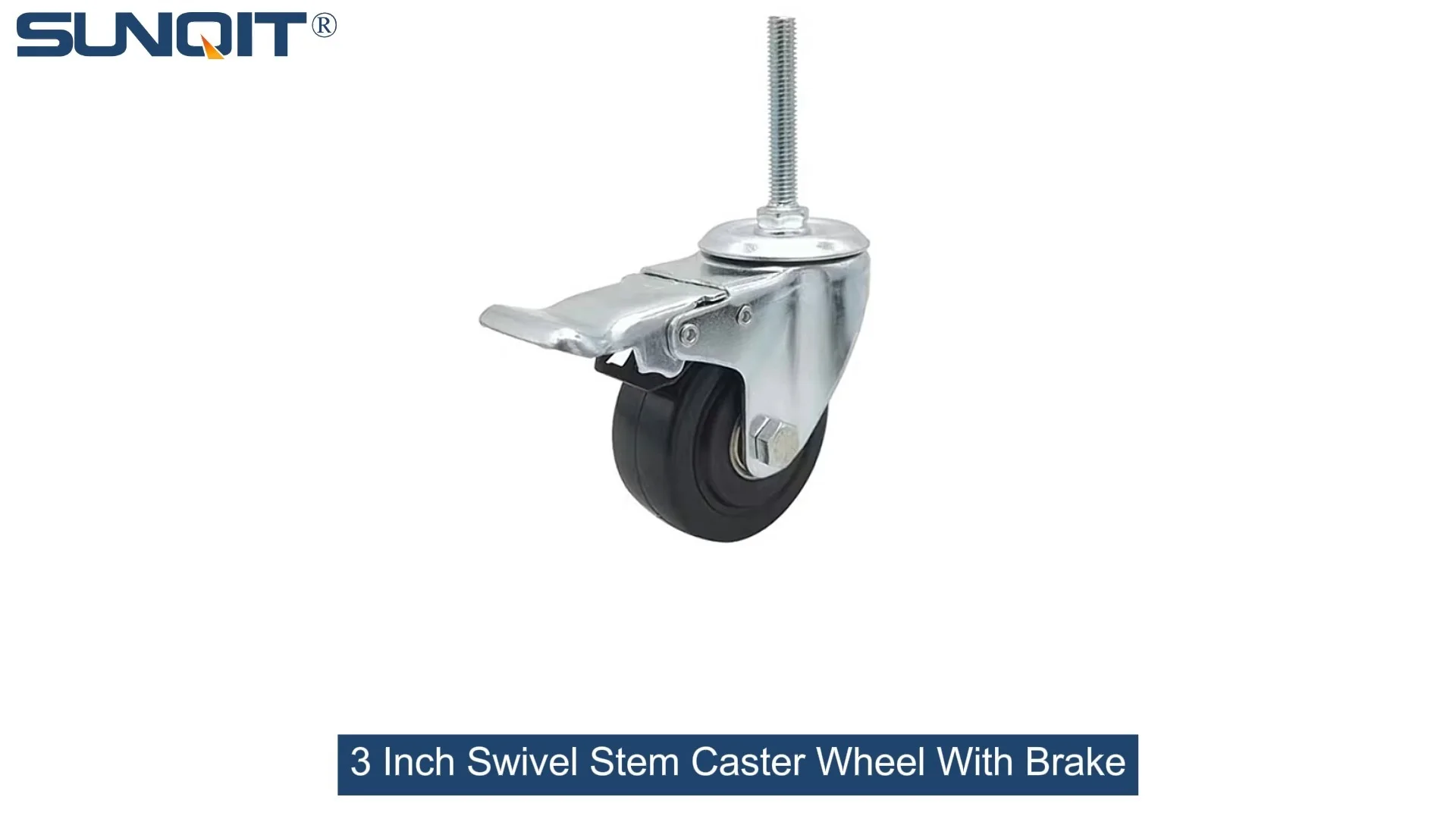
Swivel Stem Caster Wheel with Brake
360 Degree Swivel Stem Caster with brake. Threaded-post mount design, castors diameter 3 inch.Each swivel caster wheels loading 70KGS. Heavy enough and widely suit for carts, chairs, cabinet, flow rack, workbench, turnover rolley.
Walk into any well-run manufacturing or assembly facility today, and you'll notice a quiet hero of productivity: the lean pipe workbench. These modular, flexible workstations are the backbone of lean manufacturing, designed to reduce waste, streamline workflows, and adapt to evolving production needs. But even the most well-designed workbench can fall short if it can't move when you need it to—or stay put when you don't. That's where the swivel stem caster wheel with brake comes in. More than just a "wheel on a stick," this small but mighty component bridges the gap between mobility and stability, turning a static workbench into a dynamic tool that keeps pace with your team's rhythm.
In this article, we'll dive into why swivel stem casters with brakes are a game-changer for lean pipe workbenches. We'll break down their key benefits, walk through how they work, guide you through installation, and even share real-world stories of teams that transformed their productivity by upgrading their casters. Whether you're setting up a new lean system or looking to optimize an existing one, understanding the value of these casters will help you build a workspace that works with your team—not against them.
Why Swivel Stem Casters with Brakes Matter for Lean Pipe Workbenches
Lean manufacturing is all about efficiency: eliminating waste, minimizing downtime, and maximizing value. A lean pipe workbench, with its aluminum or steel pipes and modular joints, excels at adaptability—but without the right mobility solution, it can become a bottleneck. Let's unpack why swivel stem casters with brakes are the perfect match for these workbenches.
1. Mobility Without Compromise: Move Workbenches, Not Just Materials
On a busy production floor, time spent moving materials from point A to B is time not spent assembling, inspecting, or innovating. A lean pipe workbench loaded with tools, parts bins, and equipment can weigh 200 pounds or more—too heavy to push around manually. Rigid casters (fixed in one direction) might help, but they limit maneuverability; try navigating a tight corner with a workbench on rigid wheels, and you'll quickly understand the frustration of "shuffling" the bench back and forth to get it in place.
Swivel stem casters solve this with 360-degree rotation, letting you glide the workbench around obstacles, between stations, or even across the floor with a single person. Need to reconfigure your assembly line for a rush order? No need to unload the bench first—just unlock the brakes, swivel the wheels, and roll. It's like giving your workbench "pivot points" that make tight turns feel effortless, even in crowded spaces.
2. Stability When You Need It: Brakes That Mean Business
Mobility is great, but a workbench that rolls away mid-assembly? Not so much. Imagine a technician carefully aligning a small component on an ESD workstation—one accidental bump, and the bench shifts, throwing off their precision. Or a team member reaching for a heavy tool, only to have the workbench slide, risking injury or damage. This is where the brake feature becomes non-negotiable.
Swivel stem casters with brakes use a simple but effective foot-operated lock: press down on the brake pedal, and the wheel locks in place, preventing movement. Release it, and you're ready to roll again. Unlike cheap casters where the brake feels "mushy" or slips under load, quality models (like those designed for lean pipe systems) lock the wheel and the swivel joint, ensuring the bench stays exactly where you set it—even on slightly uneven floors. This isn't just about convenience; it's about safety and accuracy, two pillars of lean manufacturing.
3. Durability That Keeps Up with Lean Workflows
Lean systems thrive on reliability. A caster that fails mid-shift means downtime: a workbench stuck in the wrong spot, a team waiting for repairs, or a rush to find a replacement. Swivel stem casters built for lean pipe workbenches are engineered to withstand the daily grind. They're typically made with heavy-duty steel stems, reinforced plastic or rubber wheels, and sealed bearings to resist dust, debris, and oil—common foes in manufacturing environments.
Take wheel material, for example: rubber wheels are gentle on concrete or tile floors, reducing noise and preventing scratches, while polyurethane wheels offer extra grip for slippery surfaces. The stem itself is often zinc-plated or coated to resist rust, ensuring it holds tight to the workbench frame even in humid or dusty conditions. When paired with a lean pipe workbench's sturdy aluminum or steel frame, these casters become a long-term investment, not a "replace every 6 months" expense.
4. Compatibility with Lean Pipe's Modular Spirit
One of the best things about lean pipe workbenches is their modularity—you can add shelves, bins, tool holders, or lighting as your needs change. Swivel stem casters with brakes fit right into this ethos. They're designed to attach seamlessly to lean pipe frames, often using standard mounting plates or threaded stems that work with common lean pipe joints. No need for custom drilling or welding; with a few basic tools, you can upgrade an existing workbench in under an hour.
Even better, they play well with other lean accessories. Need to level the workbench on uneven ground? Pair casters with adjustable leveling feet—just lock the brakes, extend the feet to stabilize, and you're good to go. Building a mobile assembly station? Add a turnover trolley or rack alongside, and both will roll in sync, keeping materials within arm's reach. It's this flexibility that makes swivel stem casters a natural extension of the lean pipe system's "build what you need, when you need it" philosophy.
Key Features of a Quality Swivel Stem Caster with Brake
Not all swivel stem casters are created equal. To truly enhance your lean pipe workbench, you need to look for specific features that align with the demands of manufacturing. Let's break down the must-haves and why they matter.
Stem Design: The "Anchor" of Stability
The stem is the unsung hero of the caster—it's the metal rod that connects the wheel assembly to the workbench. For lean pipe workbenches, look for a threaded stem (often 1/2" or 5/8" diameter) that screws into a mounting plate or directly into the workbench frame. This creates a secure, vibration-resistant connection that won't loosen over time, even with frequent movement. Avoid "press-fit" stems, which can pop out under heavy loads—a risk you don't want in a busy shop.
Brake Mechanism: More Than Just a "Lock"
A good brake does two things: locks the wheel and locks the swivel. Cheaper casters might only lock the wheel, leaving the swivel joint free to rotate—meaning the bench could still shift sideways, even with the wheels locked. Look for a "dual-lock" brake that secures both the wheel and the swivel plate. Foot-operated brakes are best here; they're easy to engage with a quick tap of the foot, leaving your hands free to hold the workbench steady.
Wheel Material: Grip, Quiet, and Floor Protection
The wheel material impacts everything from noise levels to floor damage. For most manufacturing settings, rubber or polyurethane wheels are ideal. Rubber offers excellent grip (even on smooth concrete) and absorbs shock, reducing noise when rolling over cracks or uneven spots. Polyurethane is slightly harder, making it better for heavy loads (up to 300 lbs per caster) and resisting oil or chemical spills. Avoid hard plastic wheels—they're noisy, slip easily, and can scratch delicate floors like polished concrete or vinyl.
Load Capacity: Know Your Limits
Always check the caster's load rating—and remember, that's per caster. A typical lean pipe workbench uses 4 casters, so a 200 lbs per caster rating means a total capacity of 800 lbs (though it's smart to stay under 75% of that for safety). If your workbench holds heavy tools, metal parts, or multiple bins, opt for a higher rating (300-500 lbs per caster). Overloading casters leads to premature wear, stuck brakes, or even bent stems—all recipe for downtime.

Step-by-Step Installation Guide: Adding Swivel Stem Casters to Your Lean Pipe Workbench
Installing swivel stem casters with brakes on a lean pipe workbench is a straightforward DIY project—no professional tools or expertise required. Here's how to do it right, in 5 simple steps.
Step 1: Gather Your Tools and Materials
You'll need: the swivel stem casters (4 per workbench), a wrench or socket set (to match the stem's nut size), a drill (if your workbench doesn't have pre-drilled holes), a measuring tape, and a level. If your workbench has adjustable leveling feet, you may need to remove them first (save them—you might want to use them later for extra stability).
Step 2: Prep the Workbench Frame
Flip the workbench upside down (get a helper—lean pipe workbenches are lighter than steel, but still awkward). Locate the mounting points on the frame—these are typically the corners, where the legs meet the horizontal supports. If there are no pre-drilled holes, measure 1-2 inches in from each corner and mark the center point for the stem. Drill a hole slightly smaller than the stem's diameter (e.g., 11/16" for a 5/8" stem) to ensure a tight fit.
Step 3: Attach the Casters
Take one caster and thread the stem through the mounting hole from the top of the frame (inside the workbench) to the bottom. Secure it with the nut provided, using the wrench to tighten until snug—don't over-tighten, as this can strip the threads or warp the frame. Repeat for the remaining three casters, making sure all stems are straight and aligned (crooked casters will cause the bench to wobble).
Step 4: Test Mobility and Brakes
Carefully flip the workbench right-side up (again, use a helper). Give it a gentle push—does it roll smoothly? If it's stiff, check for debris in the wheel bearings or misaligned stems. Now, test the brakes: press down on each brake pedal firmly. The wheels should lock completely; try pushing the bench—if it moves, the brakes need adjustment (tighten the brake mechanism with a screwdriver, following the manufacturer's instructions).
Step 5: Fine-Tune for Stability
Place a level on the workbench surface. If it rocks, you may need to adjust the casters or add adjustable leveling feet (screw them into the frame near the casters, then extend until the bench is stable). For extra security, consider adding a locking pin to the swivel joint (some casters include this) to prevent 360-degree rotation when you need the bench to move in a straight line.
Pro Tip: Match Casters to Your Floor Type
Concrete floors? Go with rubber wheels for noise reduction. Smooth tile or vinyl? Polyurethane wheels offer better grip. Uneven surfaces? Look for casters with larger wheels (3-4 inches diameter) to roll over bumps more easily.

Maintenance: Keeping Your Casters Rolling Smoothly
Like any tool, swivel stem casters with brakes need a little TLC to stay in top shape. Regular maintenance not only extends their lifespan but also ensures they keep supporting your lean workflow—no unexpected breakdowns, no downtime, no frustration. Here's a simple routine to follow.
Weekly Checks: Quick and Easy
Spend 5 minutes each week inspecting your casters. Look for: debris stuck in the wheels (threads, metal shavings, or dirt can jam the bearings), loose stems (tighten the nut if it's wobbly), and brake pedal wear (if the pedal feels "soft," the spring inside might need replacing). Wipe the wheels with a damp cloth to remove grime—this prevents buildup that can cause squeaking or uneven rolling.
Monthly Lubrication: Keep It Moving
Swivel joints and wheel bearings need lubrication to stay smooth. Use a dry lubricant (like silicone spray) or light machine oil (avoid heavy grease, which attracts dust). Spray a small amount into the swivel plate (where the wheel assembly connects to the stem) and onto the wheel axles. Spin the wheels by hand to distribute the lubricant, then wipe away excess—you want a thin, even coat, not a messy buildup.
Quarterly Deep Clean: Dig Into the Details
Every 3 months, remove the casters from the workbench (this is where that helper comes in handy again). Take apart the wheel assembly (if possible) to clean the bearings with a brush and solvent (like mineral spirits). Check for rust on the stem or swivel plate—sand it off gently and apply a thin coat of rust-resistant paint if needed. Reassemble, lubricate, and reattach—your casters will feel like new.
Signs It's Time to replace
Even with care, casters wear out. Watch for these red flags: wheels that won't spin freely (bearings are shot), brakes that won't lock (the mechanism is broken), or stems that bend or crack (a safety hazard). When replacing, stick with the same load rating and stem size—mixing and matching can lead to uneven weight distribution and wobbly workbenches.

Swivel Stem Caster with Brake vs. Other Caster Types: Which Is Right for You?
Not sure if swivel stem casters with brakes are the best fit for your lean pipe workbench? Let's compare them to other common caster types to help you decide.
| Feature | Swivel Stem Caster with Brake | Rigid Caster (Fixed Direction) | Swivel Caster Without Brake | Heavy-Duty Industrial Caster |
|---|---|---|---|---|
| Mobility | 360° swivel + easy rolling; navigates tight spaces | Only rolls forward/backward; hard to maneuver | 360° swivel + easy rolling, but no control | Rolls smoothly, but heavy and less agile |
| Stability | Excellent (brakes lock wheel + swivel) | Good (no swivel), but can tip if moved sideways | Poor (rolls/spins unexpectedly) | Excellent, but overkill for most workbenches |
| Safety | High (prevents accidental movement) | Medium (can't roll away, but hard to reposition) | Low (risk of workbench sliding during use) | High, but heavy and harder to install |
| Ideal For | Lean pipe workbenches, assembly stations, mobile workstations | Heavy, rarely moved equipment (e.g., storage racks) | Light carts that need frequent, quick movement (e.g., tool trolleys) | 500+ lb loads (e.g., machinery, large material bins) |
| Cost | Moderate ($15-$30 per caster) | Low ($8-$15 per caster) | Low-Moderate ($10-$20 per caster) | High ($40-$100+ per caster) |
For lean pipe workbenches, swivel stem casters with brakes strike the perfect balance: affordable, mobile, stable, and safe. They're designed for the "move when needed, stay when working" rhythm of lean manufacturing—no more choosing between flexibility and control.
Real-World Impact: How One Factory Boosted Productivity with Swivel Stem Casters
Let's put this all into perspective with a story from the field. PrecisionWorks, a mid-sized electronics assembly plant in Ohio, was struggling with a classic lean challenge: their production line needed to switch between two product models daily, but their workbenches were slowing them down. "We had a mix of rigid casters and swivel casters without brakes," says Maria Gonzalez, their production manager. "The rigid ones were impossible to move—we'd need two people and 20 minutes to reposition one bench. The swivel ones? They'd roll away while our techs were soldering, leading to mistakes and even a few near-misses with tools falling off."
After researching solutions, Maria's team decided to upgrade all 12 lean pipe workbenches to swivel stem casters with brakes. The results were immediate: "On day one, reconfiguring the line took 45 minutes instead of 2 hours. Our techs love the brakes—no more chasing rolling workbenches. And because the casters roll so smoothly, we can move benches with one person, freeing up others to focus on assembly." Over six months, PrecisionWorks saw a 15% increase in daily output and a 25% drop in errors related to unstable workstations. "It's amazing how such a small change had such a big impact," Maria adds. "These casters didn't just make our workbenches better—they made our whole team more efficient."
Conclusion: Small Part, Big Difference
Lean manufacturing is built on the idea that every detail matters—from the layout of your workspace to the tools you use. The swivel stem caster wheel with brake might seem like a minor component, but it's a detail that amplifies the power of your lean pipe workbench. By blending mobility and stability, it turns a static workstation into a dynamic asset that adapts to your team's needs, reduces waste, and keeps your workflow moving forward.
Whether you're building a new lean system or upgrading an existing one, don't overlook the casters. Choose ones with a sturdy stem, reliable brakes, and durable wheels. Install them carefully, maintain them regularly, and watch as your workbenches transform from "just a table" to productivity partners.
At the end of the day, lean manufacturing is about making work easier, safer, and more efficient for your team. And when your workbench moves when you push it, stays when you lock it, and keeps rolling smoothly day after day? That's lean in action.