- Company Articles
- Products and Technology
- Product knowledge
- Swivel Stem Caster Wheel with Brake for Medical Carts: Compliance with FDA Standards

Swivel Stem Caster Wheel with Brake for Medical Carts: Compliance with FDA Standards
Related Product
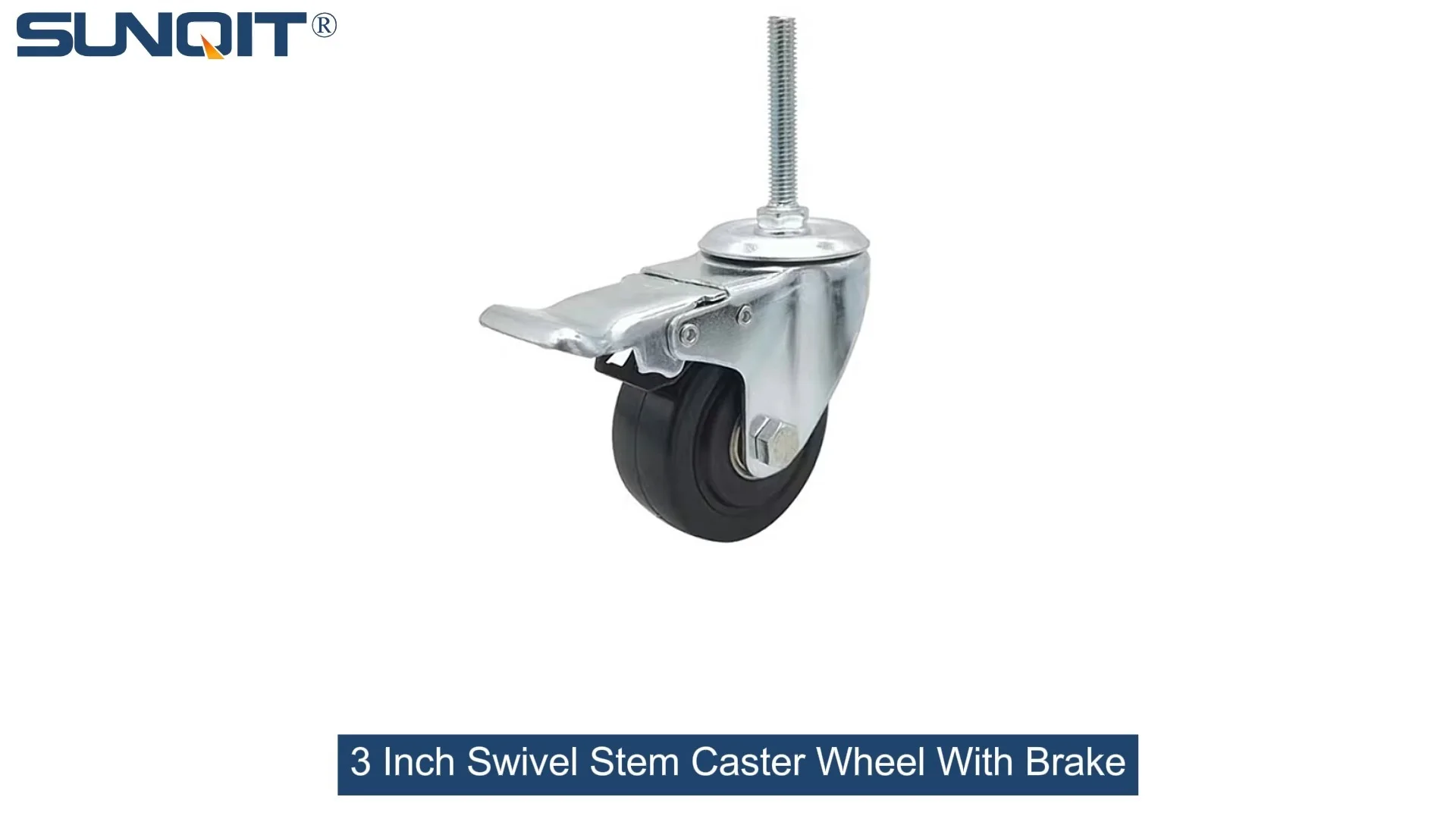
Swivel Stem Caster Wheel with Brake
360 Degree Swivel Stem Caster with brake. Threaded-post mount design, castors diameter 3 inch.Each swivel caster wheels loading 70KGS. Heavy enough and widely suit for carts, chairs, cabinet, flow rack, workbench, turnover rolley.
In the fast-paced world of healthcare, where every second can impact patient outcomes, medical carts stand as silent workhorses. These mobile units carry life-saving medications, sterile instruments, lab samples, and diagnostic equipment—often moving between patient rooms, operating theaters, and laboratories. But what keeps these carts moving smoothly, stopping securely, and meeting the strict safety standards of the industry? The answer lies in a component that's easy to overlook but impossible to replace: the swivel stem caster wheel with brake. More than just a "wheel," it's a critical link in ensuring mobility, stability, and compliance with regulations that protect both patients and healthcare workers. In this article, we'll explore why these casters matter, how they align with FDA standards, and the features that make them indispensable in medical environments.
Why Casters Are the Backbone of Medical Cart Performance
Medical carts aren't just pieces of furniture—they're extensions of a healthcare provider's hands. A cart that's hard to maneuver slows down nurses rushing to respond to a code blue. One that rolls unexpectedly during a procedure risks spills, contamination, or even injury. This is where swivel stem caster wheels with brakes step in, addressing three critical needs in medical settings:
Mobility Without Compromise
Healthcare facilities are dynamic spaces: narrow corridors, tight corners in patient rooms, and crowded nurse stations demand carts that can pivot and glide with precision. Swivel stem casters, designed to rotate 360 degrees, allow carts to navigate even the most constrained spaces. Imagine a phlebotomist pushing a specimen cart through a busy emergency department—with swivel casters, they can easily weave around stretchers and staff without slowing down, ensuring time-sensitive samples reach the lab faster.
Stability When It Counts
Once a cart reaches its destination, stability becomes non-negotiable. A medication cart parked next to a patient's bed must stay put while a nurse prepares an injection. A surgical instrument cart in an OR can't shift during a procedure. The brake mechanism on these casters—typically a foot-operated lever—locks the wheel in place, creating a stable base that resists movement even on slightly inclined floors (common in hospitals with sloped entryways or uneven tile). This isn't just about convenience; it's about preventing accidents that could harm patients or compromise care.
Hygiene and Durability in Harsh Environments
Medical facilities are rigorous about cleanliness. Carts and their components must withstand daily exposure to disinfectants, steam, and frequent wipe-downs. Swivel stem casters with brakes, when built with the right materials, resist corrosion and bacterial growth. Unlike cheap plastic casters that crack or harbor grime in crevices, high-quality options use sealed bearings and smooth surfaces that leave no room for pathogens to hide. This durability also reduces replacement costs, a key consideration for hospitals managing tight budgets.
FDA Standards: What Medical Cart Casters Must Deliver
The U.S. Food and Drug Administration (FDA) doesn't just regulate medications and medical devices—it also sets strict guidelines for the equipment used to handle them. For medical carts and their components, including swivel stem caster wheels with brakes, compliance isn't optional. It's a legal and ethical requirement. Let's break down the FDA's key demands and how these casters rise to the challenge:
| FDA Requirement | Why It Matters | How Swivel Stem Caster Wheels with Brake Comply |
|---|---|---|
| Non-Toxic, Chemically Resistant Materials | Prevents leaching of harmful substances into medications or samples; withstands frequent cleaning with hospital-grade disinfectants. | Casters are often made with medical-grade polyurethane or rubber tires, paired with stainless steel or aluminum frames. These materials resist degradation from bleach, alcohol, and other sanitizers, ensuring no toxic residues. |
| Reliable Brake Performance | Ensures carts stay stationary during use, even under load or on inclines, to prevent spills or injuries. | Brakes are tested to hold 150% of the caster's rated load on slopes up to 5 degrees. The foot pedal is designed for easy engagement, with a clear "locked" position to avoid accidental release. |
| Traceability and Quality Control | Allows hospitals to track manufacturing processes, ensuring consistency and accountability. | Reputable suppliers provide batch codes, material certificates, and test reports for each caster, making it easy to trace components back to their production run. |
| Minimal Particulate Shedding | Reduces contamination risk in sterile environments like ORs or cleanrooms. | Sealed bearings and smooth tire surfaces prevent dust, rubber particles, or metal shavings from flaking off, maintaining air quality standards. |
For healthcare facilities, meeting these standards isn't just about avoiding fines—it's about building trust. When a cart's casters comply with FDA guidelines, staff can focus on patient care instead of worrying about equipment failures or contamination risks.

The Anatomy of a Medical-Grade Swivel Stem Caster Wheel with Brake
Not all caster wheels are created equal. A swivel stem caster designed for a warehouse cart won't cut it in a hospital. Medical-grade options are engineered with specific features to meet the unique demands of healthcare. Let's take a closer look at what sets them apart:
360-Degree Swivel for Unmatched Maneuverability
The swivel head, often mounted on a ball bearing raceway, allows the wheel to rotate freely, making tight turns and sudden direction changes effortless. This is especially critical in environments like ICU units, where carts must navigate around beds, monitors, and IV poles without disrupting patient care.
Heavy-Duty Brake Mechanisms
The brake is the caster's safety net. Most medical-grade casters use a "total lock" system, which locks both the wheel and the swivel head—preventing both rolling and rotation. This dual locking ensures the cart stays precisely where it's placed, even if bumped by a passing gurney. The brake pedal is large and textured for easy operation, even with gloved hands, and audibly "clicks" when engaged, giving staff confidence it's secure.
Load Capacity That Handles Real-World Weight
Medical carts rarely travel light. A typical medication cart might carry 30+ pounds of drugs, syringes, and supplies; a lab cart could hold heavy equipment like centrifuges. Swivel stem casters for medical use are rated for loads ranging from 150 to 500 pounds per wheel, with four-wheel carts often supporting 600+ pounds total. This ensures they won't fail under stress, even during long shifts.
Caster Accessories for Enhanced Performance
Small details make a big difference. Many casters come with caster accessories like dust covers to protect bearings from debris, brake extension levers for easier access, or non-marking tires to prevent scuffs on hospital floors. These additions extend the caster's lifespan and keep healthcare environments looking professional.

Materials That Meet the Moment: Aluminum Profile and Beyond
A caster is only as good as its connection to the cart. That's why medical cart manufacturers often pair swivel stem casters with aluminum profile frames. Aluminum is lightweight yet strong, resistant to corrosion, and easy to sanitize—qualities that align perfectly with healthcare needs. The caster's stem, typically threaded or bolt-on, attaches securely to aluminum profile brackets, creating a rigid connection that won't loosen over time.
Aluminum profile also offers flexibility in cart design. Whether the cart needs a flat workbench surface for preparing treatments or adjustable shelves for storing supplies, the modular nature of aluminum extrusion allows for customization without sacrificing strength. And because aluminum doesn't rust, it maintains its integrity even after years of exposure to moisture and cleaning agents—critical for carts used in sterile environments like operating rooms.
For example, a mobile workbench used in a pharmacy must stay steady while pharmacists count pills or mix compounds. By combining a sturdy aluminum profile frame with swivel stem casters that lock both wheel and swivel, the workbench becomes a stable, mobile station that adapts to the pharmacy's changing needs.

Real-World Stories: How Casters Save Time and Lives
To understand the importance of swivel stem caster wheels with brakes, consider these scenarios from healthcare settings:
In the ER: A trauma cart races toward a patient with severe bleeding. The nurse pushes it down the hall, swiveling around a corner to avoid a paramedic team. At the bedside, she slams on the brakes—both wheels and swivel head lock instantly. As she grabs a hemostat from the cart, it doesn't budge, even as the patient shifts. Those seconds saved by smooth maneuvering and secure braking? They could mean the difference between life and death.
In the Lab: A technician transports a cart of blood samples to the analyzer. The lab floor, recently mopped, is slightly wet. With non-slip tires and a reliable brake, the cart glides without sliding, and when parked, stays put—preventing spills that could ruin samples or expose staff to biohazards.
In Long-Term Care: A dietary cart delivers meals to patients in a skilled nursing facility. The narrow hallways and carpeted floors make movement tricky, but the swivel casters roll smoothly, and the brakes hold firm when parked next to each bed. This reduces strain on staff and ensures hot meals stay intact until served.
In each case, the caster isn't just a component—it's a partner in delivering safe, efficient care.
Choosing a Supplier: More Than Just a Vendor
When selecting swivel stem caster wheels with brakes for medical carts, the supplier matters as much as the product itself. Healthcare facilities need partners who understand FDA regulations, prioritize quality, and can provide the documentation needed for compliance audits. Here's what to look for:
Proven FDA Compliance
Reputable suppliers will have documentation proving their casters meet FDA standards for materials, performance, and traceability. Ask for test reports on brake reliability, chemical resistance, and particulate shedding to ensure alignment with 21 CFR Part 820 (Quality System Regulation).
Customization Options
Not all medical carts are the same. A supplier that offers custom stem lengths, wheel materials (like conductive options for ESD-sensitive environments), or brake configurations can tailor casters to your facility's specific needs—whether you're outfitting a pediatric unit or a research lab.
Responsive Support
When a caster fails, it disrupts workflows. Look for suppliers with fast shipping, knowledgeable customer service, and a clear warranty policy. A partner who can quickly replace a damaged caster or answer technical questions helps keep your carts—and your care—moving forward.
Conclusion: The Caster's Role in Elevating Healthcare Standards
Swivel stem caster wheels with brakes may be small in size, but their impact on healthcare is enormous. They're the reason nurses can move with confidence, technicians can trust their equipment, and patients can feel secure knowing their care isn't compromised by unstable carts. By meeting FDA standards for materials, performance, and safety, these casters don't just check a regulatory box—they embody the commitment to excellence that defines modern healthcare.
So the next time you see a medical cart glide through a hospital hallway, take a moment to appreciate the engineering beneath it. That swivel stem caster wheel with brake? It's more than a wheel. It's a promise—of mobility without risk, stability when it counts, and care that never stops moving forward.