- Company Articles
- Products and Technology
- Product knowledge
- Swivel Stem Caster Wheel with Brake for Medical Supply Carts: Safety First

Swivel Stem Caster Wheel with Brake for Medical Supply Carts: Safety First
Related Product
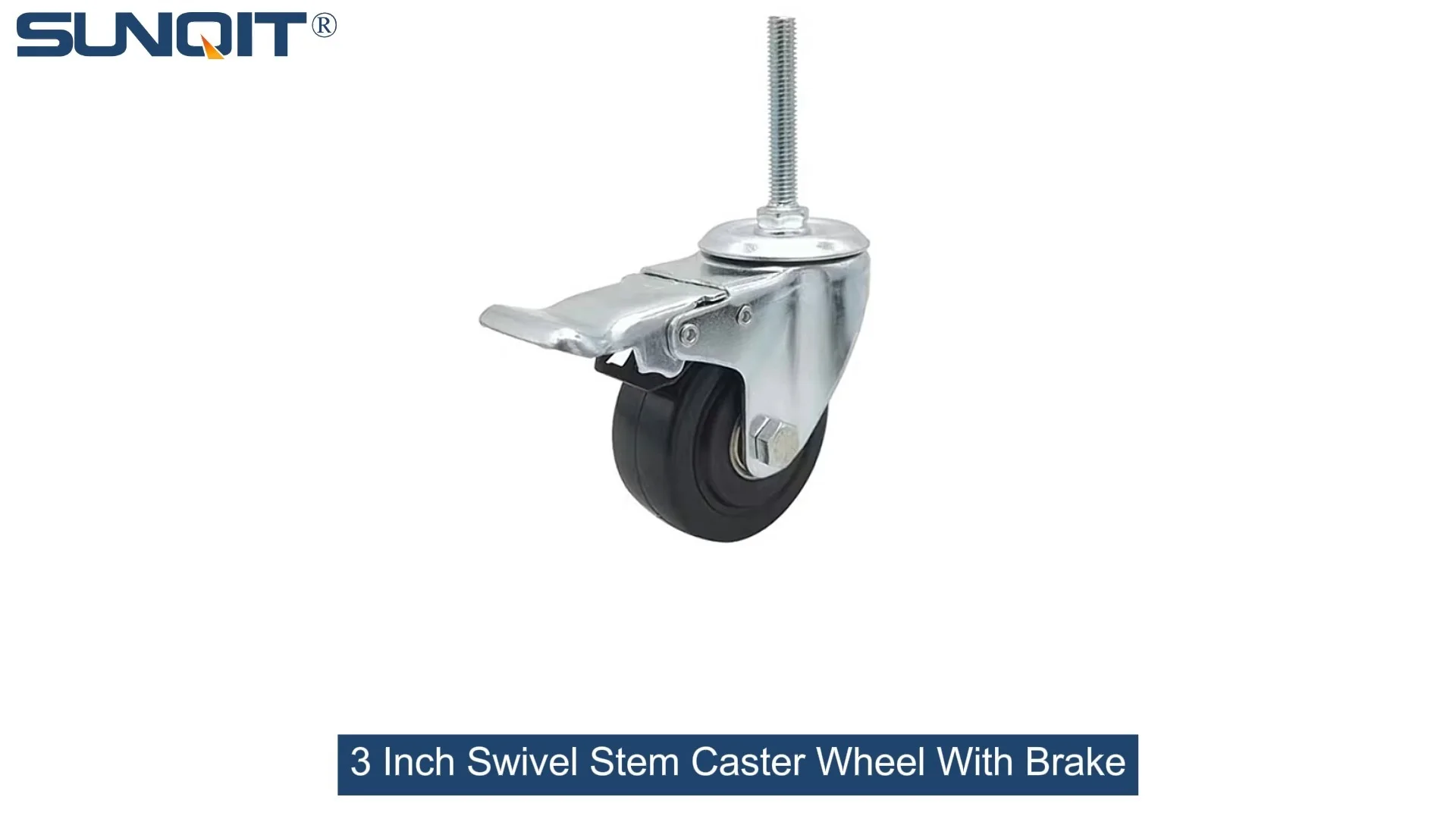
Swivel Stem Caster Wheel with Brake
360 Degree Swivel Stem Caster with brake. Threaded-post mount design, castors diameter 3 inch.Each swivel caster wheels loading 70KGS. Heavy enough and widely suit for carts, chairs, cabinet, flow rack, workbench, turnover rolley.
The Critical Role of Mobility in Modern Healthcare
In the fast-paced world of healthcare, every second counts. From bustling hospital corridors to quiet patient rooms, medical staff rely on equipment that moves as efficiently and safely as they do. Among the most essential tools in this ecosystem are medical supply carts—workhorses that transport everything from life-saving medications and sterile surgical instruments to patient records and diagnostic supplies. Yet, for all their importance, one component often goes unnoticed until it fails: the casters that keep these carts moving. Enter the swivel stem caster wheel with brake —a small but mighty innovation that stands as a cornerstone of safety and reliability in medical environments.
Imagine a busy emergency department at 2 a.m. A nurse rushes to retrieve a crash cart, its wheels gliding smoothly over linoleum floors, only to have it suddenly veer off course when hitting a slight unevenness. Or a pharmacy technician pushing a medication cart, struggling to navigate around a family visiting a patient, when the cart unexpectedly rolls backward because the brake won't engage. These scenarios aren't just inconveniences—they're potential threats to patient care, staff safety, and operational efficiency. That's why choosing the right casters for medical supply carts isn't a matter of preference; it's a commitment to prioritizing safety above all else.
Understanding the Swivel Stem Caster Wheel with Brake
At first glance, a caster might seem like a simple wheel attached to a metal stem. But the swivel stem caster wheel with brake is a feat of engineering tailored to the unique demands of healthcare settings. Let's break down its key components and how they work together to deliver unmatched performance.
Swivel Functionality: Maneuverability in Tight Spaces
Unlike fixed casters, which only roll forward and backward, swivel casters feature a rotating stem that allows 360-degree movement. This design is a game-changer in hospitals, where corridors are narrow, elevators are cramped, and patient rooms often have limited space to maneuver. A medical supply cart equipped with swivel casters can pivot around corners, glide through doorways, and even make tight turns between beds—all without requiring the staff to exert excessive force or risk tipping the cart. For nurses and technicians already juggling multiple tasks, this flexibility reduces physical strain and saves precious time.
The Brake Mechanism: Stability When It Matters Most
The "with brake" aspect of these casters is where safety truly takes center stage. Most medical-grade swivel stem casters feature a foot-operated brake that locks both the wheel and the swivel motion, ensuring the cart stays firmly in place when stationary. This is critical in scenarios like administering medication at a patient's bedside: a nurse can step on the brake with one foot, freeing their hands to handle delicate vials or charts without worrying about the cart rolling away. In operating rooms, where sterility and precision are non-negotiable, a locked cart prevents accidental movement that could disrupt a procedure or contaminate sterile fields.
Materials and Durability: Built for Healthcare's Harsh Environments
Medical environments are unforgiving. Carts are subjected to frequent cleaning with harsh disinfectants, heavy loads (some supply carts carry over 200 pounds of equipment), and constant use across various floor surfaces—from polished tile to carpeted waiting areas. High-quality swivel stem casters are built to withstand these challenges. Wheels are often made of non-marking rubber or polyurethane, which protect floors from scratches and ensure quiet operation (a must in patient recovery areas). The stems and brake components are typically crafted from corrosion-resistant materials like stainless steel or coated aluminum, preventing rust and ensuring smooth operation even after repeated exposure to moisture and chemicals.

Why Medical Supply Carts Demand Specialized Casters
Not all casters are created equal, and medical supply carts have unique needs that set them apart from, say, a warehouse dolly or a office chair. Let's explore why the swivel stem caster wheel with brake is the gold standard for these critical tools.
Protecting Sensitive Supplies
Medical supply carts often transport items that are fragile, temperature-sensitive, or potentially hazardous. Think of a medication cart carrying insulin that must stay cool, or a surgical cart holding sharp instruments like scalpels and forceps. A sudden jolt from a stuck caster or an unexpected roll could damage supplies, compromise their efficacy, or even cause spills that put patients and staff at risk. Swivel stem casters with reliable brakes ensure smooth, controlled movement and stable positioning, safeguarding these vital resources.
Infection Control: A Non-Negotiable Priority
Hospitals are breeding grounds for bacteria and viruses, making infection control a top priority. Traditional casters with crevices or hard-to-reach areas can trap dirt, grime, and pathogens, becoming vectors for cross-contamination. In contrast, high-quality medical casters are designed with seamless surfaces and minimal gaps, allowing for easy cleaning with disinfectant wipes or spray. Some models even feature sealed bearings to prevent moisture and debris from entering the mechanism, ensuring long-term performance in sterile environments.
Staff Safety and Ergonomics
Healthcare workers face high rates of musculoskeletal injuries, often due to manually lifting or moving heavy equipment. A poorly designed caster can exacerbate this risk: a cart that's hard to push or doesn't swivel smoothly forces staff to use awkward postures, leading to back pain, strains, or repetitive stress injuries. Swivel stem casters reduce push/pull forces by up to 30% compared to fixed casters, according to ergonomic studies, making it easier for staff to move carts with minimal effort. The brake mechanism also plays a role here—by securely locking the cart, it eliminates the need for staff to physically hold it in place, reducing fatigue during long shifts.

Comparing Caster Types: Why Swivel Stem with Brake Leads the Pack
To truly appreciate the value of swivel stem caster wheels with brake , it helps to compare them to other common caster types used in non-medical or less demanding settings. The table below highlights key differences and why healthcare environments benefit most from the swivel stem with brake design.
| Caster Type | Maneuverability | Brake Functionality | Ideal Use Case | Safety Rating for Medical Carts |
|---|---|---|---|---|
| Fixed Caster | Limited (only forward/backward) | Often none; some have wheel locks | Heavy, stationary equipment (e.g., filing cabinets) | Low (difficult to maneuver; risk of tipping in tight spaces) |
| Swivel Caster (No Brake) | High (360-degree movement) | None; cart can roll freely when not attended | Light-duty carts in open spaces (e.g., retail stock carts) | Medium (good maneuverability but lacks stability when stationary) |
| Swivel Stem Caster with Brake | High (360-degree movement + tight turning radius) | Locks both wheel and swivel motion; foot-operated for easy access | Medical supply carts, surgical instrument carts, medication carts | High (optimal maneuverability + secure locking; meets healthcare safety standards) |
As the table shows, the swivel stem caster with brake strikes the perfect balance between mobility and stability—two qualities that are non-negotiable in healthcare. Its ability to lock both the wheel and swivel ensures that even on uneven floors or sloped surfaces, the cart remains steady, preventing accidents that could harm patients or staff.

Selecting the Right Swivel Stem Caster Wheel with Brake: Key Considerations
Not all swivel stem casters with brake are suitable for medical supply carts. To ensure you're choosing a product that meets healthcare's rigorous standards, keep these factors in mind:
Load Capacity: Matching the Cart's Needs
Medical supply carts vary widely in weight, from lightweight medication carts (around 50–100 pounds) to heavy-duty instrument carts loaded with surgical tools (up to 300 pounds or more). It's critical to select casters with a load capacity that exceeds the cart's maximum weight, including supplies. A general rule of thumb is to choose casters rated for at least 125% of the expected load to account for sudden shifts or uneven distribution of weight.
Floor Compatibility: Protecting Hospital Surfaces
Hospitals use a range of flooring materials, from hard tile in corridors to soft carpet in patient rooms. The caster wheel material must be compatible with these surfaces to prevent damage. Non-marking rubber wheels are ideal for tile and hardwood, as they won't leave scuffs or scratches. For carpeted areas, larger wheels with a firm tread reduce rolling resistance, making it easier to push the cart without getting stuck.
Brake Type: Ease of Use and Reliability
Two common brake types are available: total lock and wheel-only lock. Total lock brakes (which lock both the wheel and swivel) are preferred for medical carts, as they offer maximum stability. Foot-operated brakes are also more practical than hand brakes, allowing staff to lock/unlock the cart without bending down or using their hands. Look for brakes with a clear "on/off" indicator, such as a color-coded pedal, to prevent accidental unlocking.
Compliance with Medical Standards
Healthcare equipment is subject to strict regulations, and casters are no exception. Choose products that meet standards set by organizations like the FDA (Food and Drug Administration) and ISO (International Organization for Standardization), which ensure materials are non-toxic, easy to clean, and resistant to hospital-grade disinfectants. A reputable lean system supplier will provide documentation of compliance, giving you peace of mind that the casters are safe for use in clinical settings.
Real-World Impact: How Reliable Casters Improve Patient Care
To understand the tangible benefits of swivel stem caster wheels with brake , let's step into the shoes of healthcare professionals who rely on them daily.
Scenario 1: The Medication Cart in a Busy Ward
Nurse Maria is making her rounds on a medical-surgical unit, pushing a medication cart loaded with pills, injections, and IV supplies. It's 8 a.m.—the busiest time of day, with patients being discharged, new admissions arriving, and families crowding the halls. Maria needs to stop at each bedside to verify orders, prepare doses, and administer medications. With swivel stem casters, she navigates around a wheelchair blocking the corridor with a quick pivot. At Mr. Thompson's bed, she taps the brake with her foot, and the cart locks instantly. She prepares his blood pressure medication, confident the cart won't roll away if she turns to adjust his pillow. Later, in the medication room, she unlocks the cart with a simple nudge of her shoe, rolling it smoothly to the next patient. Without reliable casters, Maria might have struggled to maneuver the cart, wasted time unlocking complicated brakes, or worse—risked a spill if the cart moved unexpectedly. Instead, she stays on schedule, reduces her own physical strain, and ensures each patient gets their medication on time.
Scenario 2: The Surgical Instrument Cart in the OR
In the operating room, surgical tech Jamal is preparing for a knee replacement surgery. He's wheeling a cart stacked with sterile instruments, drapes, and implants into the OR. The room is already crowded with the surgical team, anesthesia equipment, and the patient's bed. Jamal uses the swivel casters to glide the cart into position between the bed and the sterile field, then locks the brakes with a firm press of his foot. During the procedure, the cart remains perfectly still, even when a nurse leans against it to grab a tool. After surgery, Jamal unlocks the cart and easily maneuvers it out of the OR, avoiding a collision with the oncoming transport team. The casters' smooth-rolling wheels and secure brake prevent any jostling of the instruments, which could compromise their sterility. In a setting where even a tiny mistake can have life-threatening consequences, the casters' reliability is as critical as the instruments themselves.
Maintenance and Longevity: Keeping Casters in Top Shape
Even the highest-quality swivel stem caster wheels with brake require regular maintenance to ensure they continue performing safely. Here's how healthcare facilities can keep their casters in optimal condition:
Routine Inspections
Assign staff to check casters weekly for signs of wear, such as cracked wheels, loose stems, or sticky brakes. A quick visual inspection and test roll can catch issues early—like a brake that only partially locks—before they lead to accidents. In busy hospitals, creating a checklist for cart maintenance (including caster checks) ensures no step is overlooked.
Cleaning Protocols
Disinfecting casters is just as important as cleaning the cart itself. Use a soft brush to remove debris from the wheel bearings and brake mechanism, then wipe with a hospital-grade disinfectant. Avoid pressure washing or submerging casters in water, as this can damage internal components. For facilities using automated cart washers, ensure the casters are rated for high-pressure cleaning to prevent corrosion.
Replacing Worn Parts
Over time, wheels may wear down, or brake pads may lose their grip. Instead of replacing the entire caster, many manufacturers offer caster accessories like replacement wheels, brake pads, or stems. This not only saves money but also reduces waste—a key consideration for facilities aiming to operate sustainably. A trusted supplier can provide these parts quickly, minimizing downtime for critical carts.
Choosing a Supplier: Partnering for Safety and Quality
The final piece of the puzzle is selecting a supplier who understands the unique needs of healthcare. A lean system supplier with experience in medical equipment brings more than just products—they bring expertise in optimizing workflows, ensuring compliance, and prioritizing safety. When evaluating suppliers, ask about their quality control processes, compliance certifications, and track record in healthcare. Do they offer custom solutions for unique cart designs? Can they provide fast replacements for critical components like casters? A supplier who partners with you to address these needs becomes an extension of your team, helping you maintain the highest standards of patient care.
Conclusion: Safety Starts with the Right Casters
In the world of healthcare, every detail matters. From the precision of a surgical instrument to the reliability of a medication cart, each component plays a role in delivering safe, effective care. The swivel stem caster wheel with brake may be small in size, but its impact is enormous. It transforms a simple cart into a tool that enhances mobility, reduces risk, and supports the hardworking staff who keep our healthcare systems running. By prioritizing high-quality casters, healthcare facilities send a clear message: safety isn't just a goal—it's the foundation of everything they do.
So the next time you see a medical supply cart gliding through a hospital corridor, take a moment to appreciate the casters beneath it. They're not just wheels—they're a promise to patients, staff, and communities that every effort is made to ensure care is delivered with precision, efficiency, and, above all, safety.