- Company Articles
- Products and Technology
- Product knowledge
- Swivel Stem Caster Wheel with Brake: High-Performance Bearings for Smooth Rotation

Swivel Stem Caster Wheel with Brake: High-Performance Bearings for Smooth Rotation
Related Product
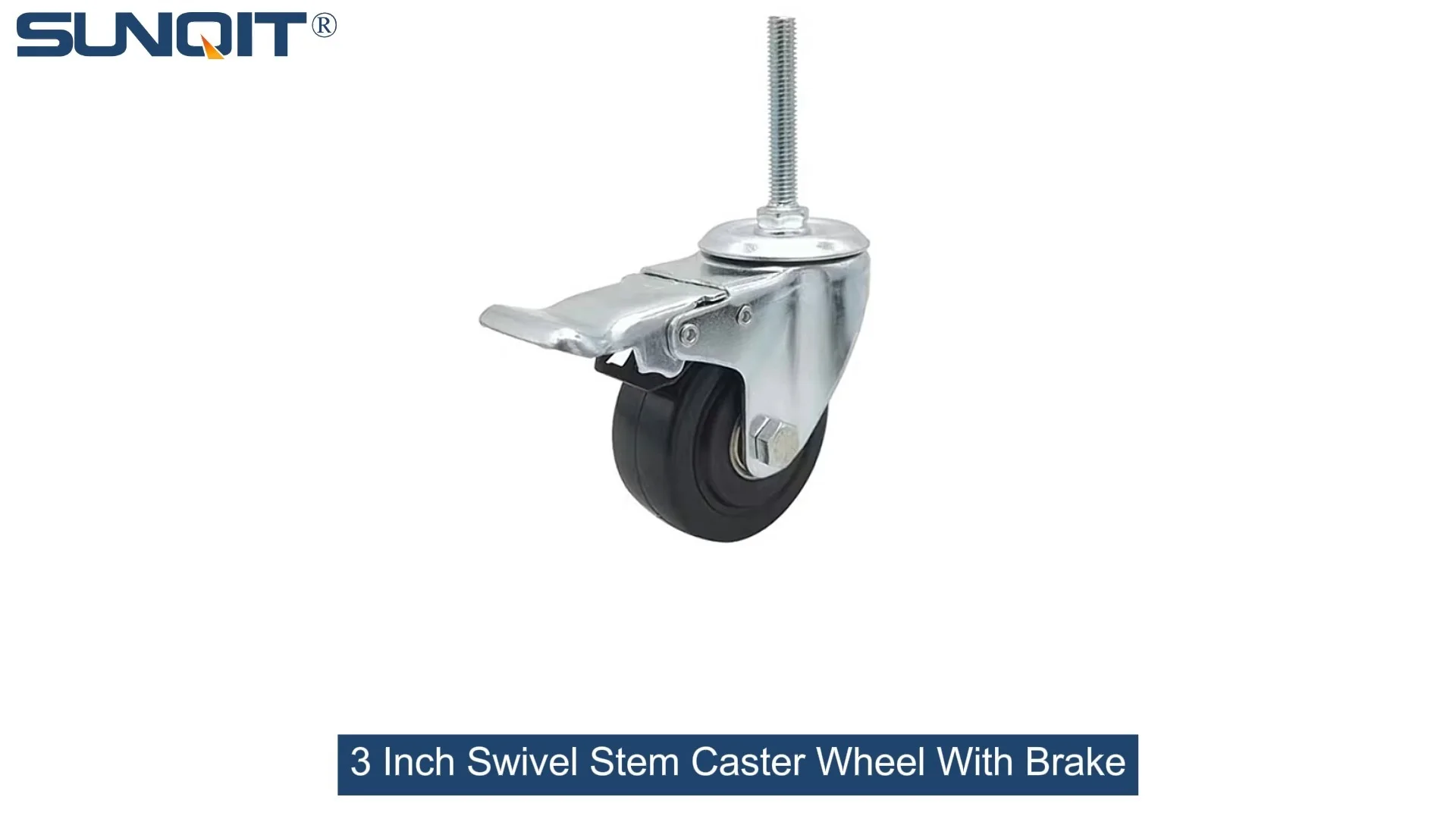
Swivel Stem Caster Wheel with Brake
360 Degree Swivel Stem Caster with brake. Threaded-post mount design, castors diameter 3 inch.Each swivel caster wheels loading 70KGS. Heavy enough and widely suit for carts, chairs, cabinet, flow rack, workbench, turnover rolley.
Walk into any busy workshop, manufacturing plant, or even a well-organized office, and you'll notice something but absolutely critical: the wheels that make everything move. From the workbench holding sensitive electronics to the turnover trolley shuttling parts across the factory floor, mobility is the unsung hero of efficiency. But not all wheels are created equal. Today, we're diving into a component that combines flexibility, safety, and precision: the swivel stem caster wheel with brake. Specifically, we'll explore how its high-performance bearings ensure smooth rotation, why that matters for your workflow, and how it fits into the bigger picture of building a lean system that minimizes waste and maximizes productivity.
What Makes a Swivel Stem Caster Wheel with Brake So Essential?
Let's start with the basics. A swivel stem caster wheel is exactly what it sounds like: a wheel mounted on a stem (a rod or bolt) that attaches to equipment, with a swivel mechanism that lets it rotate 360 degrees. Add a brake, and you've got a tool that doesn't just move—it stays put when you need it to. But why does this matter? Imagine pushing a heavy workbench across the floor only to have it veer off course because the wheels don't rotate smoothly. Or worse, a loaded turnover trolley that rolls away unexpectedly because the brake fails. These scenarios aren't just frustrating; they risk damage to materials, delays in production, and even workplace injuries.
The secret to a reliable swivel stem caster wheel with brake lies in its components, and none are more important than the bearings. Bearings are the tiny but mighty parts that reduce friction between moving surfaces, allowing the wheel to spin freely. High-performance bearings take this a step further: they're designed to handle heavy loads, resist wear and tear, and maintain smooth rotation even after months of constant use. For anyone invested in a lean system—where every second and every movement counts—this isn't just a "nice-to-have"; it's a game-changer.
Breaking Down the Components: What Makes These Casters Tick?
To truly appreciate why high-performance bearings matter, let's break down the anatomy of a swivel stem caster wheel with brake. At first glance, it might look simple, but each part plays a role in ensuring it works seamlessly.
1. The Swivel Stem: The "Backbone" of Attachment
The stem is the part that connects the caster to your equipment—whether it's a workbench, a material rack, or a turnover trolley. Typically threaded or hollow, it screws or bolts into a mounting point, creating a secure link. What makes it "swivel" is the raceway (a circular track) at the top of the caster, which allows the entire wheel assembly to rotate 360 degrees. This rotation is smooth only if the bearings in the raceway are high-quality—otherwise, you'll feel jerks or resistance when turning, which wastes energy and strains the equipment.
2. The Wheel: Where Rubber Meets the Road (or Floor)
The wheel itself comes in various materials—rubber, polyurethane, nylon, or steel—each suited to different floors and loads. For example, rubber wheels are gentle on hardwood or tile, while steel wheels handle rough concrete floors in factories. But even the best wheel material can't compensate for poor bearings. The wheel mounts onto an axle, which is supported by bearings inside the wheel hub. These bearings are the heart of rotation: they reduce friction between the axle and the wheel, letting it spin with minimal effort.
3. The Brake Mechanism: Safety When You Need It
The brake is what turns a "mobile" caster into a "controllable" one. Most swivel stem casters with brakes use a foot-operated lever: press down to lock, lift to release. The brake can lock the wheel (preventing it from rolling) or the swivel (keeping the wheel facing a fixed direction), or both. A well-designed brake should engage smoothly and disengage cleanly—no sticking or squeaking. But here's the thing: even the best brake won't save you if the caster itself doesn't move predictably. That's where the bearings come in again—they ensure the caster moves exactly where you want it to, so the brake locks it in the right spot.
4. High-Performance Bearings: The Unsung Heroes
Let's zoom in on the star of the show: the bearings. Standard bearings might work for light, occasional use, but in a lean system where equipment is moving constantly—think 8-hour shifts, 5 days a week—they wear out fast. High-performance bearings, on the other hand, are engineered for durability and precision. They're often made with hardened steel or stainless steel, with tight tolerances (meaning parts fit together perfectly) and sealed to keep out dust, dirt, and moisture. Some even use ball bearings (small metal balls) or roller bearings (cylindrical rollers) to distribute weight evenly, reducing friction and extending lifespan.
The result? A caster wheel that rolls so smoothly, you can push a fully loaded turnover trolley with one hand. No more struggling to navigate tight corners or fighting against a "sticky" swivel. And because the bearings reduce friction, there's less wear on the wheel and axle, meaning you spend less on replacements and more on keeping your workflow running.
| Feature | Description | Benefit to Your Workflow |
|---|---|---|
| High-Performance Bearings | Sealed, precision-engineered bearings (ball or roller type) with hardened steel construction. | Smooth rotation, reduced friction, and longer lifespan—cuts down on maintenance time. |
| Foot-Operated Brake | Dual-lock design (locks wheel and swivel) with non-slip lever. | Securely holds equipment in place during loading/unloading—prevents accidents and spills. |
| Swivel Stem Design | 360-degree rotation with a threaded stem for easy mounting on workbenches or trolleys. | Maneuver tight spaces effortlessly—ideal for crowded factory floors or small workshops. |
| Durable Wheel Materials | Options include polyurethane (gentle on floors), rubber (shock-absorbent), and steel (heavy-duty). | Protects floors from scratches; handles varying loads (up to 500 lbs per caster). |
| Corrosion-Resistant Finish | Zinc-plated or stainless steel components to resist rust and chemicals. | Suitable for humid or industrial environments—no need for frequent replacements. |

Where Do These Casters Shine? Real-World Applications
Now that we understand how swivel stem caster wheels with brake work, let's talk about where they make the biggest difference. These aren't just "wheels for wheels' sake"—they're tools that integrate into your existing setup to boost efficiency. Here are a few key applications:
Workbenches: Stability Meets Mobility
A workbench is the center of your operation, whether you're assembling electronics, repairing machinery, or packing orders. But what if you need to reposition it to access a nearby tool or collaborate with a teammate? A fixed workbench ties you down, but one equipped with swivel stem caster wheels with brake lets you move it in seconds—then lock it in place for steady work. High-performance bearings ensure the bench glides smoothly, even when loaded with tools or materials, so you don't waste energy wrestling with it.
Turnover Trolley and Rack: Streamlining Material Handling
In a lean system, minimizing waste is key—and nothing wastes time like manually carrying heavy boxes or parts across the floor. Turnover trolleys and racks equipped with these casters turn material handling into a one-person job. Imagine loading a trolley with 200 lbs of components, pushing it to the assembly line with ease (thanks to those high-performance bearings), then stepping on the brake to lock it in place while you unload. No more struggling with stuck wheels or worrying about the trolley rolling away mid-task.
Lean System Integration: Reducing Waste, Boosting Productivity
At its core, a lean system is about creating value by eliminating waste—whether that's time, effort, or resources. Swivel stem caster wheels with brake align perfectly with this philosophy. By making equipment mobile and controllable, they reduce the "motion waste" of workers walking back and forth to retrieve tools or materials. They also minimize "waiting waste" by ensuring materials arrive exactly where they're needed, when they're needed. And because they're durable, they cut down on "inventory waste" (no need to stockpile replacement wheels or caster accessories).

Choosing the Right Caster: What to Look For
Not all swivel stem caster wheels with brake are created equal. To get the most out of your investment, here are a few key factors to consider:
Load Capacity: Don't Skimp on Strength
Start by calculating the total weight your caster will need to support. If you're mounting four casters on a workbench, for example, divide the bench's weight (plus the maximum load it will hold) by four. Then, choose casters with a load capacity that exceeds this number—overloading leads to bearing failure and premature wear. Most high-performance models can handle 200–500 lbs per caster, which is more than enough for most workshop needs.
Floor Type: Protect Your Space
Hard floors (concrete, tile) work best with rubber or polyurethane wheels, which absorb shock and prevent scratches. For carpeted areas or uneven surfaces, larger wheels (4–6 inches) with a wider tread help navigate bumps. If you're in a cleanroom or lab, opt for non-marking wheels to avoid leaving scuffs.
Brake Type: Safety First
Dual-lock brakes (which lock both the wheel and swivel) are best for stability, especially on inclines or when loading heavy items. Single-lock brakes (wheel only) work for lighter loads or flat surfaces. Test the brake lever— it should engage with a firm click and disengage smoothly without sticking.
Environment: Think About Conditions
If your workspace is humid, dusty, or exposed to chemicals, look for casters with sealed bearings and corrosion-resistant finishes (like stainless steel). For high-temperature areas (near ovens or furnaces), heat-resistant wheel materials (like phenolic resin) are a must.

Maintenance Tips: Keep Your Casters Rolling Smoothly
Even the best caster wheels need a little TLC to stay in top shape. Here's how to extend their lifespan:
- Clean regularly: Wipe off dust, dirt, and debris from the wheel and bearings with a damp cloth. For stuck-on grime, use a soft brush—avoid harsh chemicals that can damage seals.
- Lubricate bearings: Every 3–6 months (more often in dusty environments), apply a few drops of lithium-based grease to the bearing seals. This keeps friction low and prevents rust.
- Check brakes: Test the brake lever monthly to ensure it locks and releases smoothly. Tighten loose bolts or replace worn levers promptly— a faulty brake is a safety hazard.
- Inspect wheels: Look for cracks, flat spots, or uneven wear. replace wheels if they're damaged—worn wheels put extra strain on bearings.
Final Thoughts: Small Wheels, Big Impact
Swivel stem caster wheels with brake might not be the most glamorous part of your workspace, but they're foundational to efficiency. By investing in models with high-performance bearings, you're not just buying wheels—you're buying smoother workflows, safer operations, and longer-lasting equipment. Whether you're upgrading a workbench, outfitting a turnover trolley, or building a lean system from scratch, these casters prove that sometimes, the smallest components make the biggest difference.
So the next time you push a cart across the floor or lock a workbench in place, take a moment to appreciate the engineering that makes it all possible. Because when your wheels work well, everything else follows.