- Company Articles
- Products and Technology
- Application Cases
- Swivel Stem Caster Wheel with Brake in Medical Industry: Cleanroom Compatibility

Swivel Stem Caster Wheel with Brake in Medical Industry: Cleanroom Compatibility
Related Product
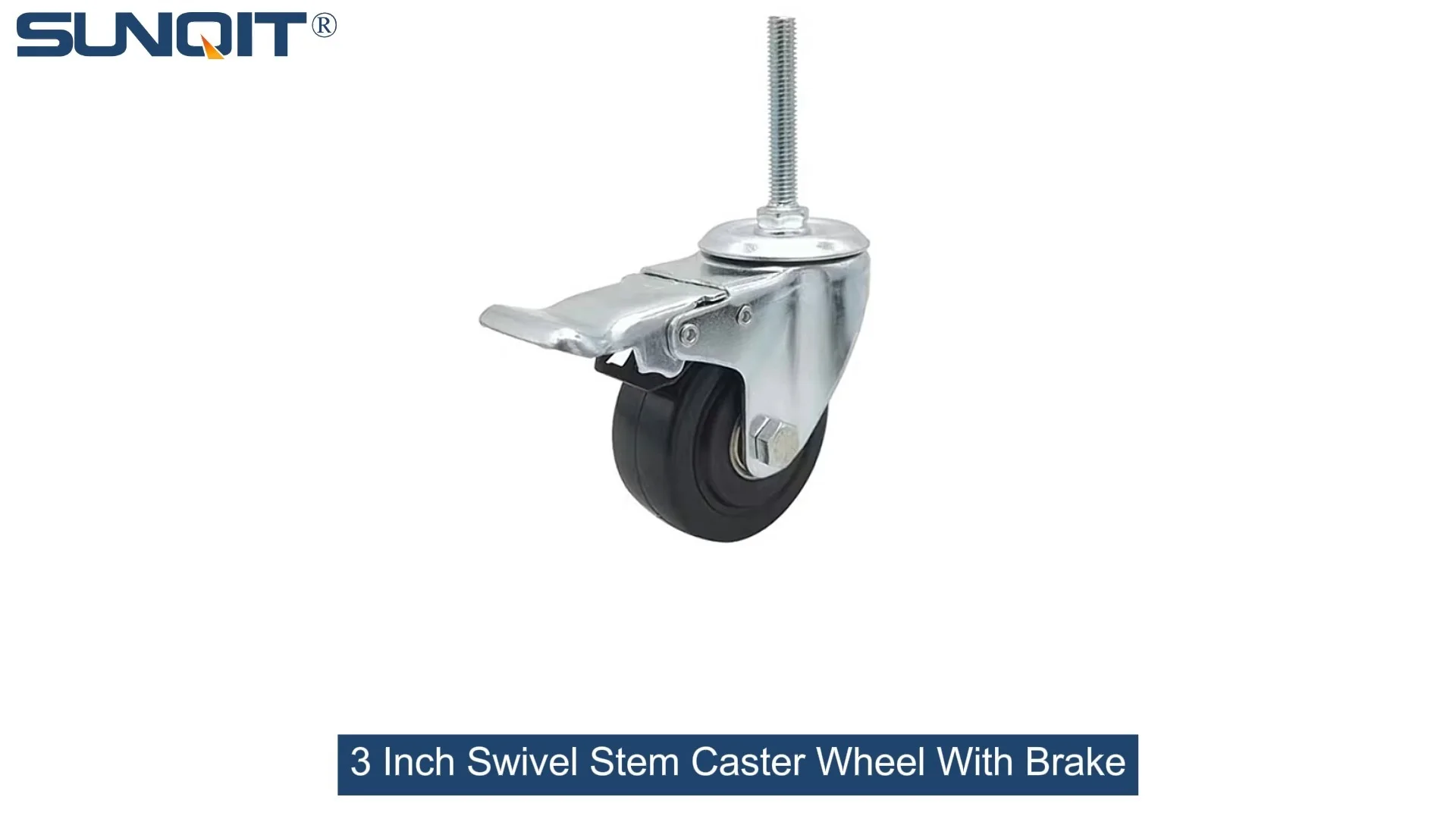
Swivel Stem Caster Wheel with Brake
360 Degree Swivel Stem Caster with brake. Threaded-post mount design, castors diameter 3 inch.Each swivel caster wheels loading 70KGS. Heavy enough and widely suit for carts, chairs, cabinet, flow rack, workbench, turnover rolley.
In the hushed, precision-driven world of medical cleanrooms, where a single stray particle can compromise a life-saving procedure or invalidate a critical lab result, every component of the environment matters. From the HEPA filters humming overhead to the sterile gowns worn by technicians, sterility and control are non-negotiable. Yet, amid the high-tech equipment and stringent protocols, there's an unsung hero working quietly beneath the surface: the caster wheel. Specifically, the swivel stem caster wheel with brake—a small but mighty component that bridges mobility and stability, ensuring that essential equipment moves when needed and stays put when it matters most. In medical cleanrooms, where flexibility must coexist with absolute precision, these casters aren't just accessories; they're guardians of workflow efficiency, patient safety, and regulatory compliance.
The Critical World of Medical Cleanrooms
Medical cleanrooms are specialized environments designed to minimize contamination by controlling airborne particles, temperature, humidity, and air pressure. They're the backbone of pharmaceutical manufacturing, surgical suite preparations, medical device assembly, and diagnostic labs—settings where even microscopic contaminants (like dust, bacteria, or chemical residues) can have catastrophic consequences. To maintain this level of control, cleanrooms adhere to strict international standards, such as ISO 14644, which classifies cleanrooms based on the number of particles per cubic meter. For example, an ISO Class 7 cleanroom (common in pharmaceutical compounding) allows no more than 352,000 particles of 0.5μm or larger per cubic meter—far cleaner than the air in a typical hospital room.
These standards demand more than just air filtration. Every surface, material, and piece of equipment must be evaluated for its potential to shed particles, harbor bacteria, or react with cleaning agents. Floors must be seamless and non-porous to prevent liquid pooling. Walls and ceilings are often made of stainless steel or epoxy to resist corrosion and simplify sanitization. Even lighting fixtures are recessed to avoid creating dust traps. In this environment, "good enough" doesn't exist—equipment must be engineered to meet the cleanroom's needs, not the other way around.
Mobility in Cleanrooms: A Balancing Act
While sterility is paramount, medical cleanrooms are also dynamic spaces. Procedures change, staffing shifts, and equipment needs to adapt. A workbench used for vaccine preparation in the morning might need to be repositioned in the afternoon to make way for a mobile imaging machine. A medication cart must glide smoothly from the pharmacy to a patient's bedside without jostling contents or leaving a trail of particles. Lab technicians might need to rearrange testing stations to accommodate a sudden influx of samples. In short, mobility isn't a luxury here—it's a necessity for maintaining productivity and responsiveness.
But mobility in a cleanroom comes with unique challenges. Traditional casters, designed for industrial warehouses or office settings, often fall short. They might shed rubber particles as they roll, use lubricants that off-gas harmful chemicals, or have crevices where bacteria can hide. A caster that works perfectly in a factory could, in a cleanroom, become a contamination source. Worse, poor mobility can lead to inefficiency: if a technician struggles to move a heavy workstation, valuable time is wasted, and frustration mounts. Even worse, an unstable cart might tip, spilling sterile supplies or compromising delicate equipment. The solution? Casters that are specifically engineered to balance mobility with cleanroom compatibility—enter the swivel stem caster wheel with brake.

Swivel Stem Caster Wheels with Brake: Design for Precision
At first glance, a swivel stem caster wheel with brake might seem simple: a wheel attached to a swiveling housing, mounted on a stem, with a brake lever. But in reality, its design is the result of careful engineering to address the unique demands of medical environments. Let's break down its key components and how they contribute to cleanroom performance:
Swivel Functionality: Maneuverability Without Compromise
The "swivel" in swivel stem casters refers to the ability of the wheel housing to rotate 360 degrees around the stem, allowing equipment to turn, pivot, and navigate tight spaces with minimal effort. In a cleanroom, where aisles may be narrow and equipment densely packed, this maneuverability is critical. A workbench mounted on swivel casters can be easily repositioned to align with a laminar flow hood, or a medication cart can be turned to access a patient's bed from the optimal angle. Unlike rigid casters (which only move forward and backward), swivel casters eliminate the need for constant pushing and pulling, reducing the physical strain on staff and minimizing the risk of collisions that could dislodge particles.
Stem Mount: Stability in a Compact Design
The "stem" in swivel stem casters refers to the cylindrical rod that extends from the caster housing, designed to be inserted into a pre-drilled hole or socket in the equipment (like the leg of a workbench or the base of a cart). This mounting style offers several advantages over plate-mounted casters (which use a metal plate bolted to the equipment). For one, it's more compact, leaving less surface area exposed—important in cleanrooms where every nook and cranny is a potential dust trap. It also provides a secure, rigid connection that minimizes wobbling, which is essential when moving delicate equipment (like centrifuges or microscopes) that can't tolerate vibration. Additionally, stem mounts are easier to install and replace, reducing downtime during maintenance—a critical factor in 24/7 medical settings.
Brake Mechanism: Control When It Counts
The brake is what elevates these casters from "useful" to "indispensable" in medical environments. A reliable brake ensures that equipment stays stationary during critical tasks—whether a technician is pipetting samples on a mobile workbench or a nurse is preparing medications on a cart. Most swivel stem casters with brakes use a foot-operated lever, allowing hands-free engagement and release. When engaged, the brake locks the wheel (and sometimes the swivel housing) to prevent movement, even on slightly uneven floors. In cleanrooms, where sudden movement could spill sterile solutions or disrupt airflow patterns, this stability is non-negotiable. A poorly functioning brake isn't just an annoyance; it's a safety hazard.

Cleanroom Compatibility: Why Material and Design Matter
Not all swivel stem casters are created equal—and in a medical cleanroom, the difference between "compatible" and "non-compatible" can mean the difference between passing an FDA inspection and shutting down operations. To earn a place in these environments, casters must meet three critical criteria: they must not shed particles, they must be easy to clean, and they must resist the harsh chemicals used in sanitization.
Materials: From Wheels to Bearings
The materials used in swivel stem caster wheels with brakes are carefully selected to minimize contamination risk. Let's start with the wheel itself. In cleanrooms, rubber or polyurethane wheels are common, but not just any rubber will do. "Non-marking" rubber is a must, as it won't leave scuff marks that could harbor bacteria or require aggressive cleaning. Even better, some wheels are made from silicone or EPDM rubber, which are non-porous, resistant to chemical disinfectants (like bleach or alcohol), and less likely to shed tiny rubber particles as they wear. For heavier equipment, polyurethane wheels offer durability without sacrificing cleanability—they're tough enough to handle frequent use but still smooth enough to avoid damaging cleanroom floors.
The caster housing and stem are typically made from stainless steel (304 or 316 grade), chosen for its corrosion resistance and ease of sanitization. Stainless steel doesn't rust, even when exposed to frequent cleaning with acidic or alkaline solutions, and its smooth surface leaves nowhere for bacteria to hide. Bearings, a critical component for smooth rotation, are often sealed to prevent lubricant leakage. In cleanrooms, standard petroleum-based lubricants are a no-go—they can off-gas volatile organic compounds (VOCs) or drip onto floors, creating contamination risks. Instead, sealed bearings use food-grade or medical-grade lubricants (like silicone-based greases) that are non-toxic and won't react with cleaning agents.
Design: Minimizing Crevices and Traps
Beyond materials, the caster's design plays a key role in cleanroom compatibility. Cleanroom casters are engineered to have as few crevices, seams, or recesses as possible—features that could trap dust, water, or bacteria. For example, the swivel joint (where the housing rotates around the stem) is often enclosed to prevent particles from accumulating inside. Wheel hubs are smooth and free of decorative grooves, and brake levers are contoured to avoid creating ledges where debris could settle. Even the stem itself is often polished to a mirror finish, making it easier to wipe down with disinfectant wipes or spray.
Another design consideration is "non-shedding." Casters must not release fibers, paint chips, or metal shavings as they move. This is why plastic components (like wheel cores) are avoided unless they're made from high-quality, virgin materials that don't degrade over time. Even labels or markings on the casters are kept to a minimum—printed with non-toxic inks that won't flake off during cleaning.

Swivel Stem Casters vs. Other Caster Types: A Cleanroom Comparison
To understand why swivel stem caster wheels with brakes are the gold standard for medical cleanrooms, it helps to compare them to other common caster types. Below is a breakdown of how they stack up against alternatives in key cleanroom criteria:
| Caster Type | Cleanroom Compatibility | Key Advantages | Limitations in Cleanrooms |
|---|---|---|---|
| Swivel Stem Caster with Brake | Excellent (ISO Class 5–8) | 360° maneuverability, stem mount minimizes surface area, sealed bearings, easy to clean, reliable brake | Higher cost than basic casters; not ideal for extremely heavy loads (>1,000 lbs) |
| Rigid (Non-Swivel) Casters | Fair (ISO Class 8+) | Simple design, low cost, durable for straight-line movement | Poor maneuverability; requires more force to reposition equipment, increasing particle shedding risk |
| Plate-Mounted Swivel Casters | Good (ISO Class 7–8) | High weight capacity, easy to install on flat surfaces | Plate creates crevices for dust; bulkier design harder to sanitize; may require more floor space |
| Industrial Heavy-Duty Casters | Poor (Not recommended for ISO Class 7 or lower) | Extreme durability for heavy loads | Often use metal-on-metal components (shed particles); lubricants may not be cleanroom-safe; rough surfaces trap contaminants |
As the table shows, swivel stem casters with brakes excel in cleanrooms because they balance mobility, cleanability, and control. Rigid casters lack maneuverability, plate-mounted casters are harder to sanitize, and industrial casters are simply too rugged for the delicate needs of medical environments. For cleanrooms where ISO Class 7 or stricter standards apply, the choice is clear: swivel stem casters with brakes are the only option that doesn't force a trade-off between functionality and compliance.
Real-World Impact: How These Casters Transform Medical Workflows
To appreciate the value of swivel stem caster wheels with brakes, consider their role in everyday medical scenarios. Take, for example, a hospital's pharmacy cleanroom, where technicians compound sterile medications for intravenous (IV) use. Here, a mobile workbench (fitted with swivel stem casters with brakes) is essential. In the morning, the workbench might be positioned near a laminar flow hood for preparing chemotherapy drugs. By afternoon, it could be moved to a different station for antibiotic compounding—all without disrupting the cleanroom's airflow or requiring the technician to lift heavy equipment. When in use, the brakes lock the workbench in place, ensuring stability as the technician measures precise doses. At the end of the shift, the casters' smooth surfaces make sanitization a breeze: a quick wipe with isopropyl alcohol, and the workbench is ready for the next user.
In surgical settings, these casters are equally vital. Mobile instrument carts, used to transport sterile tools to and from the operating room, rely on swivel stem casters to navigate tight spaces between beds and equipment. The brake ensures the cart stays stationary during surgery, preventing accidental movement that could jar instruments or compromise sterility. Even surgical lights and monitors—often mounted on rolling stands—use these casters to allow surgeons to adjust angles quickly without leaving the sterile field.
Perhaps most importantly, these casters reduce the risk of human error. In a busy lab, a technician rushing to meet a deadline might forget to secure a cart with a faulty brake, leading to a spill. With a reliable foot-operated brake, however, securing the cart becomes second nature—a quick tap with the toe, and the equipment is locked. This small action prevents costly delays, contamination events, and potential harm to patients.
Installation and Maintenance: Keeping Casters Cleanroom-Ready
Even the best casters will fail in a cleanroom if not installed and maintained properly.,swivel stem casters with brakes are designed for straightforward upkeep—provided users follow a few key steps.
Installation: Getting It Right the First Time
Installing swivel stem casters is relatively simple, but precision matters. The stem must fit snugly into the equipment's mounting hole to avoid wobbling, which can generate excess noise and particles. Most stems are threaded or come with a setscrew to secure them in place—technicians should ensure the setscrew is tightened fully (but not over-tightened, which could damage the stem). It's also critical to align the casters evenly: if one caster is higher than the others, the equipment will rock, putting stress on the casters and increasing wear. For mobile workbenches or carts, a good rule of thumb is to use four casters (one at each corner) for stability, with at least two of them being swivel stem casters with brakes for optimal control.
Maintenance: Prolonging Performance and Cleanliness
Cleanroom casters require regular maintenance to stay in top shape. Here's a quick checklist for technicians:
- Daily Cleaning: Wipe casters with a lint-free cloth dampened with a hospital-grade disinfectant (e.g., quaternary ammonium compounds or hydrogen peroxide). Pay special attention to the wheel treads and swivel joint, where dust or debris can accumulate.
- Weekly Inspection: Check brakes for wear or sticking—test the brake lever to ensure it fully engages and releases. Inspect wheels for cracks, chunking, or embedded particles (like hair or dirt), which can scratch floors or shed debris.
- Monthly Lubrication: Apply a small amount of medical-grade, silicone-based lubricant to the swivel joint and bearings (if not sealed). Avoid petroleum-based lubricants, which can off-gas or react with cleaning chemicals.
- Quarterly Replacement Check: Even the best casters wear out. If wheels show signs of uneven wear, brakes fail to lock consistently, or the swivel joint becomes stiff, replace the caster immediately—delaying can compromise safety.
Looking Ahead: Innovations in Cleanroom Caster Technology
As medical cleanrooms evolve—adopting automation, robotics, and more stringent sustainability standards—casters are evolving too. Manufacturers are now developing "smart" casters equipped with sensors that monitor brake status, wheel wear, and even temperature, alerting technicians to maintenance needs before failures occur. For example, a caster with a built-in RFID tag could track usage patterns, helping facilities predict when replacements are needed. Other innovations include antimicrobial wheel materials (infused with silver ions to inhibit bacterial growth) and ultra-low-friction bearings that reduce the force needed to move equipment, further minimizing particle generation.
Sustainability is also becoming a focus. Some suppliers now offer casters made from recycled stainless steel or biodegradable wheel materials, aligning with healthcare's growing commitment to eco-friendly practices. Even packaging is being reimagined—casters shipped in recyclable, plastic-free materials to reduce waste in cleanroom facilities.
Conclusion: Small Wheels, Big Impact
In the grand scheme of medical innovation, swivel stem caster wheels with brakes may seem. They don't make headlines or win awards, and most people rarely notice them. But in the high-stakes world of medical cleanrooms, their impact is undeniable. They enable technicians to work faster without sacrificing precision, allow facilities to adapt to changing needs, and ensure that every piece of equipment—from a simple workbench to a life-saving drug cart—performs exactly as it should, exactly when it should. In a space where the margin for error is measured in microns, these casters are more than just wheels. They're a testament to the idea that in healthcare, even the smallest components can play a vital role in protecting lives. So the next time you step into a medical cleanroom, take a moment to look down. You might just see the quiet heroes keeping the world of precision and care moving forward—one smooth roll, and one secure brake, at a time.