- Company Articles
- Products and Technology
- Product knowledge
- Swivel Stem Caster Wheel with Brake: Key Features for Lean Manufacturing

Swivel Stem Caster Wheel with Brake: Key Features for Lean Manufacturing
Related Product
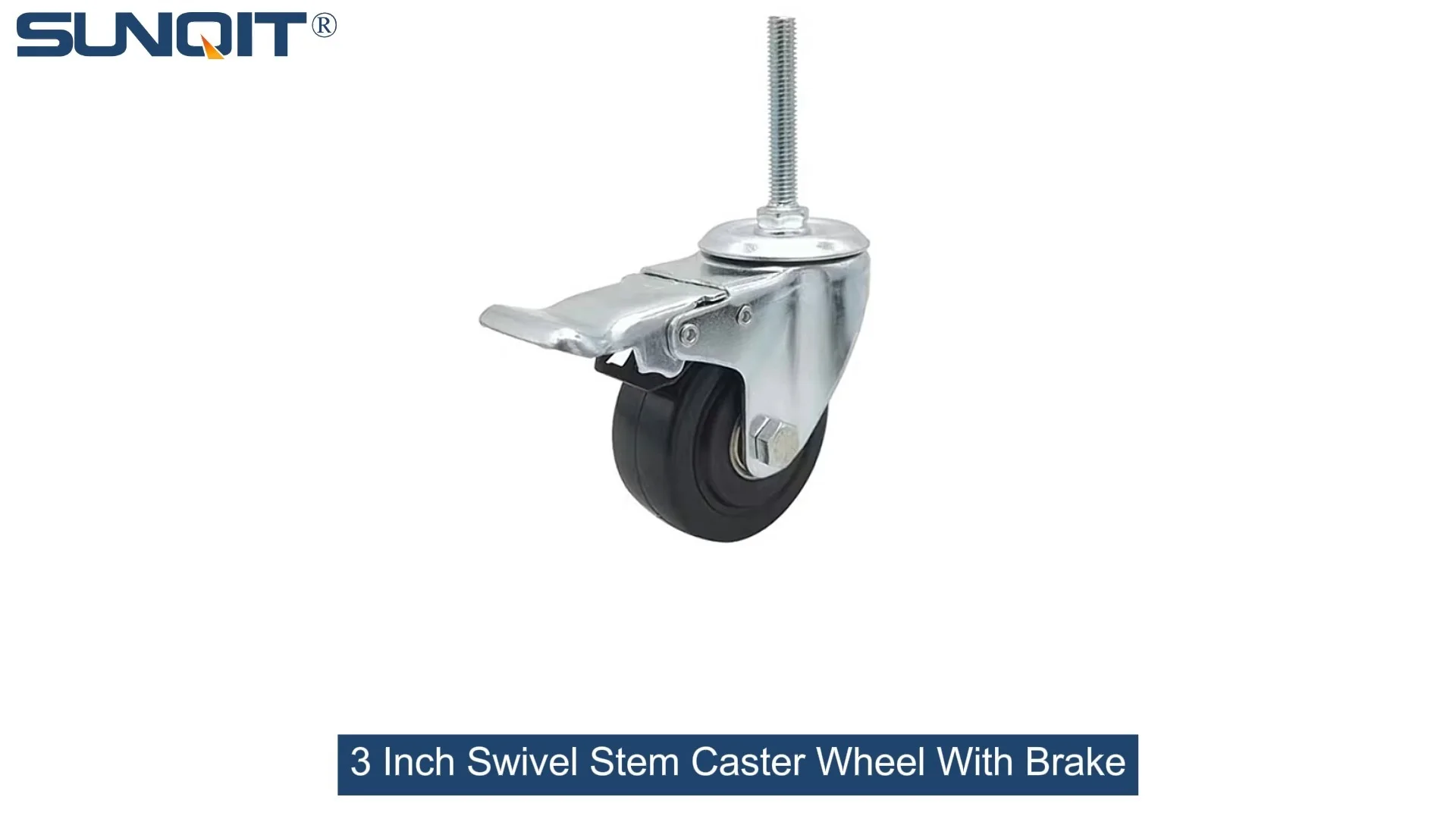
Swivel Stem Caster Wheel with Brake
360 Degree Swivel Stem Caster with brake. Threaded-post mount design, castors diameter 3 inch.Each swivel caster wheels loading 70KGS. Heavy enough and widely suit for carts, chairs, cabinet, flow rack, workbench, turnover rolley.
Walk into any manufacturing facility that's embraced lean principles, and you'll notice something right away: everything has a purpose. There's no clutter, no wasted space, and no unnecessary steps in the workflow. Lean manufacturing isn't just a buzzword—it's a mindset that puts efficiency, respect for people, and continuous improvement at the forefront. But here's the thing: even the most well-designed lean system can hit a wall if the tools and equipment your team relies on aren't built to keep up with the pace of progress. That's where but critical components like the swivel stem caster wheel with brake come into play.
Think about it: in a lean environment, materials need to flow seamlessly from one workstation to the next. Tools should be within arm's reach, not locked away in a distant storage room. And when production needs to shift—whether for a new product run or a layout optimization—your setup should adapt quickly, without requiring a team of engineers or hours of heavy lifting. Swivel stem caster wheels with brakes aren't just "wheels on a stick"; they're the unsung heroes that turn static workbenches into mobile command centers, into agile transport units, and rigid workflows into flexible, responsive systems. In short, they're the mobility backbone of a lean operation.
Why Mobility Matters in Lean Manufacturing
Lean manufacturing was born from the idea that waste—whether of time, materials, or effort—drains productivity and profitability. One of the most common (and often overlooked) forms of waste is motion waste : the unnecessary movement of people, tools, or materials that doesn't add value to the product. Imagine a scenario where an assembly worker has to walk 20 feet to grab a tool, then 20 feet back to their station— every 10 minutes . Over a shift, that's hours of wasted time. Now multiply that across an entire team, and you're looking at a significant hit to efficiency.
Mobility solves this problem by bringing the work to the worker, or the worker to the work—whichever makes more sense. A mobile workbench can be positioned right next to the production line during peak hours, then moved to a storage area during maintenance. A turnover trolley and rack loaded with parts can glide from the warehouse to the assembly line, eliminating the need for multiple trips. And when a workstation needs to be reconfigured—say, to accommodate a new machine or a larger batch size—casters make that adjustment possible in minutes, not days.
But mobility without control is chaos. A trolley that rolls away unexpectedly, a workbench that shifts mid-assembly, or a material rack that drifts into a walkway can create safety hazards, disrupt workflows, and even damage products. That's why the "with brake" part of "swivel stem caster wheel with brake" is non-negotiable. Brakes transform mobility from a liability into an asset, giving workers the freedom to move equipment when needed and lock it in place when it's time to focus.
Swivel Stem Caster Wheel with Brake: What It Is (and Why It's Different)
At its core, a swivel stem caster wheel with brake is a wheeled component designed to attach to the bottom of equipment—think workbenches, turnover trolleys, tool cabinets, or material racks—allowing them to roll smoothly while offering precise control. Let's break down the name: "swivel" means the wheel can rotate 360 degrees, making it easy to maneuver around corners or tight spaces. "Stem" refers to the metal rod (or "stem") that extends from the caster's housing, which is inserted into a hole or bracket on the equipment to secure it in place. "Caster wheel" is the wheel itself, typically made of rubber, nylon, or steel, depending on the application. And "with brake" is the critical safety feature: a mechanism (usually foot-operated) that locks the wheel in place, preventing movement.
But what sets this type of caster apart from others? Unlike rigid casters (which only roll forward and backward), swivel casters offer unmatched maneuverability—essential in busy, dynamic environments where space is tight. And unlike swivel casters without brakes, they provide stability when you need it most. For lean systems, this combination of flexibility and control is a game-changer. It means your equipment can be both highly mobile and rock-solid stable, adapting to the ebb and flow of production without skipping a beat.

Key Features of Swivel Stem Caster Wheels with Brake
Not all swivel stem caster wheels with brake are created equal. The best ones are designed with the unique demands of lean manufacturing in mind—durability, ergonomics, and reliability. Let's dive into the features that matter most:
1. 360-Degree Swivel Mechanism
The swivel mechanism is what gives these casters their maneuverability, and it's all about the bearing. High-quality casters use precision ball bearings or roller bearings in the swivel head, which allow the wheel to rotate smoothly with minimal effort. This is crucial for lean environments, where workers shouldn't have to strain to move equipment. A stiff swivel mechanism can lead to fatigue, frustration, and even injury—all forms of waste lean aims to eliminate. Look for casters with sealed bearings, too; they're less likely to get clogged with dust, debris, or grease, ensuring smooth rotation even in busy factories.
2. Reliable Brake System
The brake is the unsung hero here, and there are two common types: wheel brakes (which lock the wheel itself) and total lock brakes (which lock both the wheel and the swivel mechanism). For most lean applications, total lock brakes are preferable—they prevent both rolling and swiveling, ensuring the equipment stays exactly where you put it. Imagine a workbench with swivel casters that only have wheel brakes: even if the wheel is locked, the swivel head might still rotate, causing the bench to shift slightly. Total lock brakes eliminate that risk, giving workers confidence that their station won't move mid-task.
The brake pedal should also be ergonomic: easy to reach with a foot, requiring minimal force to engage or disengage. A brake that's hard to press can lead to workers skipping the step altogether (a safety risk), while one that's too loose might accidentally disengage. Look for pedals with a non-slip surface, too—important in environments where floors might be wet or oily.
3. Durable Stem Design
The stem is the caster's "anchor" to the equipment, so it needs to be strong and secure. Stems come in different lengths and diameters, and the right one depends on the equipment it's attaching to. For example, a workbench with a thick wooden top might require a longer stem to reach through the material and secure with a nut. A lightweight turnover trolley might use a shorter, threaded stem that screws into a metal bracket. High-quality stems are made of hardened steel, which resists bending or breaking under heavy loads. Some even have a zinc or chrome plating to prevent rust—essential in humid or damp environments.
4. Wheel Material and Tread
The wheel's material and tread (the pattern on the wheel's surface) impact everything from noise levels to floor protection to traction. Here's a quick breakdown of common wheel materials and their best uses:
- Rubber: Quiet, shock-absorbent, and gentle on floors (like concrete or hardwood). Ideal for indoor use where noise is a concern (e.g., electronics assembly lines) or where floor protection is important.
- Nylon: Durable, chemical-resistant, and suitable for heavy loads. Nylon wheels roll easily on smooth surfaces and are a good choice for warehouses or factories with concrete floors.
- Polyurethane (PU): A hybrid of rubber and plastic, PU wheels offer the best of both worlds: durability, quiet operation, and good traction. They're versatile and work well in most indoor environments.
- Steel: Extremely strong and heat-resistant, but loud and hard on floors. Best for outdoor use or heavy-duty applications where floor damage isn't a concern.
The tread pattern also matters. A smooth tread is best for hard, flat floors (like warehouse concrete), while a grooved or knobby tread might be better for uneven surfaces. For lean systems, though, smooth or lightly treaded wheels are usually preferred—they roll more easily, reducing the effort needed to move equipment.
5. Load Capacity
Load capacity refers to how much weight a single caster can support, and it's critical to get this right. Overloading a caster can cause the wheel to crack, the stem to bend, or the swivel mechanism to fail—all of which lead to downtime, safety risks, and added costs. Most casters list their load capacity (in pounds or kilograms) on the product label, but remember: this is per caster. If your equipment has four casters, the total load capacity is four times the per-caster capacity. Always factor in the weight of the equipment itself plus the maximum weight of the materials/tools it will carry. It's better to overestimate than underestimate—lean systems thrive on reliability, not cutting corners.

How Swivel Stem Caster Wheels with Brake Boost Lean Systems
Now that we've covered the features, let's talk about the real-world benefits these casters bring to lean manufacturing. At the end of the day, lean is about creating value for the customer while minimizing waste—and swivel stem casters with brake do both in spades.
1. Eliminating Motion Waste
As we mentioned earlier, motion waste is a silent productivity killer. Swivel stem casters with brake eliminate this by making tools and materials mobile. For example, a workbench equipped with these casters can be positioned right next to the assembly line, so workers don't have to walk to a separate tool station. When the line needs to be reconfigured, the workbench can be moved in seconds, without disrupting the flow. Over time, these small time savings add up to significant gains in productivity.
2. Improving Workflow Flexibility
Lean systems aren't static—they evolve as customer needs change, new products are introduced, or processes are optimized. Swivel stem casters with brake make this evolution possible. Need to add a new workstation? Move an existing mobile workbench into place. Switching from batch production to continuous flow? Rearrange your turnover trolley and rack setup to create a smoother material flow. This flexibility means your operation can adapt quickly to change, without the need for expensive renovations or new equipment.
3. Enhancing Safety
Safety is a cornerstone of lean manufacturing—after all, an injured worker can't contribute to productivity. Swivel stem casters with brake reduce safety risks in two key ways: first, by making equipment easier to move (reducing the risk of strains or sprains from lifting), and second, by keeping equipment stable when in use (preventing tipping, rolling, or shifting). The brake feature is especially important here: a locked caster means tools won't slide off a workbench, parts won't spill from a trolley, and walkways won't be blocked by drifting equipment. This not only protects workers but also reduces the risk of product damage, which is another form of waste.
4. Reducing Downtime
Downtime is the enemy of lean manufacturing, and cheap or poorly designed casters are a common culprit. A stuck swivel joint, a broken wheel, or a faulty brake can bring a workstation to a halt while waiting for repairs. High-quality swivel stem casters with brake, on the other hand, are built to last. They use durable materials, sealed bearings, and robust brake mechanisms that stand up to the wear and tear of daily use. This means fewer breakdowns, less maintenance time, and more uptime for your production line.

Real-World Applications: Where Swivel Stem Casters Shine
Swivel stem caster wheels with brake are versatile, but there are a few applications where they truly excel in lean systems. Let's take a closer look at three common ones:
1. Mobile Workbenches
Workbenches are the heart of many manufacturing operations—they're where assembly, inspection, and testing happen. But a fixed workbench ties workers to one spot, limiting flexibility. Add swivel stem casters with brake, and suddenly that workbench becomes a mobile command center. Need to move it closer to the incoming parts bin? Unlock the brakes and glide it over. Ready to start assembling? Lock the brakes, and it stays steady. Even better, many modern workbenches (like the "workbench e (single deck-without caster)" model, which is designed to be paired with casters) are built with caster compatibility in mind, making it easy to upgrade existing equipment.
For example, in an electronics manufacturing plant, a mobile workbench with ESD (electrostatic discharge) protection can be moved to different assembly lines as needed, ensuring workers always have the tools and ESD-safe surface they need. The brakes keep the bench stable during delicate soldering or component placement, while the swivel casters make it easy to reposition when the line layout changes.
2. Turnover Trolley and Rack
Turnover trolleys and racks are essential for moving materials—raw parts, finished products, tools—around the facility. But a trolley without casters is just a heavy cart that needs to be pushed or pulled with force, leading to fatigue and inefficiency. Swivel stem casters with brake transform these trolleys into agile, easy-to-maneuver assets. A "material rack b (3 row and 3 floor)" loaded with parts can be rolled from the warehouse to the assembly line with minimal effort, thanks to the swivel casters' 360-degree rotation. Once at the line, the brakes lock the rack in place, preventing it from rolling while workers unload parts.
In a lean warehouse, this means faster material flow, reduced labor costs, and fewer bottlenecks. Workers spend less time moving materials and more time adding value to the product—exactly what lean is all about.
3. Flexible Production Cells
Production cells—small, self-contained work areas focused on a specific task—are a hallmark of lean manufacturing. They reduce movement waste by grouping all the tools, materials, and workers needed for a task in one area. But to be truly effective, these cells need to be reconfigurable as production needs change. Swivel stem casters with brake make this possible by allowing machines, workbenches, and material racks within the cell to be rearranged quickly. For example, if demand for a particular product spikes, a production cell can be expanded by adding a mobile workbench and repositioning existing equipment—all in an hour or less, thanks to casters.
Swivel Stem Caster with Brake vs. Other Caster Types
Not sure if swivel stem casters with brake are right for your operation? Let's compare them to other common caster types to see how they stack up:
| Caster Type | Swivel Capability | Brake Functionality | Best For | Limitations in Lean Systems |
|---|---|---|---|---|
| Swivel Stem Caster with Brake | 360° rotation | Total lock (wheel + swivel) or wheel lock | Mobile workbenches, turnover trolleys, flexible production cells | Slightly higher cost than basic casters |
| Rigid Stem Caster | None (only forward/backward) | Often none; some have wheel locks | Straight-line movement (e.g., conveyor lines) | Poor maneuverability; limits workflow flexibility |
| Swivel Stem Caster Without Brake | 360° rotation | None | Lightweight, temporary applications (e.g., moving empty boxes) | Unstable; risk of unintended movement; safety hazards |
As the table shows, swivel stem casters with brake offer the best balance of maneuverability, stability, and flexibility for lean systems. While they may cost a bit more upfront than basic rigid casters, the long-term savings in time, labor, and safety make them a smart investment.
Maintaining Your Swivel Stem Caster Wheels with Brake
Even the best casters need a little TLC to keep performing at their best. Regular maintenance not only extends their lifespan but also ensures they remain safe and reliable. Here are some simple tips to keep your casters in top shape:
1. Keep Them Clean
Dust, dirt, and debris are the enemy of smooth-rolling casters. Over time, they can build up in the swivel joint or around the wheel, causing friction and making the caster harder to move. A quick wipe with a damp cloth or brush once a week (more often in dusty environments) will prevent buildup. For stubborn grime, use a mild detergent—avoid harsh chemicals that can damage the wheel material or brake components.
2. Lubricate Moving Parts
The swivel joint and brake mechanism need lubrication to move smoothly. Use a lightweight machine oil or silicone spray (check the manufacturer's recommendations—some casters use specific lubricants) and apply a few drops to the swivel head and brake pivot points every 3–6 months. Be careful not to over-lubricate, though—excess oil can attract dust and create a messy buildup.
3. Inspect Brakes Regularly
The brake is your first line of defense against unintended movement, so it's critical to check it regularly. Test the brake by engaging it and trying to move the equipment—if it rolls, the brake is worn or misaligned. Look for signs of wear on the brake pad (the part that presses against the wheel) and replace it if it's thin or cracked. Also, check that the brake pedal moves freely and isn't stuck—debris or rust can cause it to jam.
4. Tighten Loose Stems
Over time, the stem (which secures the caster to the equipment) can loosen, causing wobbling or instability. Check the stem periodically and tighten it with a wrench if it's loose. If the stem is stripped or damaged, replace the caster immediately—using a damaged caster is a safety risk.
5. replace Worn Wheels
Wheels wear down over time, especially if they're used on rough floors or carry heavy loads. Signs of wear include cracks, flat spots, or uneven tread. Worn wheels can cause noise, vibration, and poor maneuverability. Most casters allow you to replace just the wheel (rather than the entire caster), which is a cost-effective way to extend their life. Keep a few spare wheels on hand so you can replace them quickly when needed.
Choosing the Right Swivel Stem Caster with Brake for Your Lean System
With so many options on the market, how do you choose the right swivel stem caster with brake for your needs? Here are the key factors to consider:
1. Load Capacity
As we discussed earlier, start by calculating the total weight your equipment will carry (equipment + materials). Then, divide that by the number of casters (usually 4) to get the minimum per-caster load capacity. Add a 30% buffer to account for unexpected loads or uneven weight distribution.
2. Floor Type
The floor surface in your facility will dictate the wheel material. For smooth concrete or hardwood floors, rubber or polyurethane wheels are best (they're quiet and protect floors). For rough concrete or outdoor use, nylon or steel wheels are more durable. If you have ESD-sensitive areas (like electronics manufacturing), look for ESD-compliant wheels that dissipate static electricity.
3. Environment
Consider the conditions your casters will face. Are they exposed to moisture (e.g., food processing)? Look for stainless steel stems or corrosion-resistant coatings. Will they be used in cleanrooms? Choose casters with sealed bearings to prevent particle shedding. High-temperature environments may require heat-resistant wheel materials (like steel or phenolic resin).
4. Maneuverability Needs
If your equipment needs to navigate tight spaces (like between machines or through narrow doorways), prioritize casters with a tight swivel radius and smooth rotation. Larger wheels (4–6 inches) roll more easily over uneven floors, while smaller wheels (2–3 inches) are better for tight spaces.
5. Brake Type
For most lean applications, total lock brakes (which lock both the wheel and swivel) are preferable, as they offer the most stability. Wheel-only brakes are sufficient for light loads or equipment that doesn't need to stay perfectly aligned, but they don't prevent swiveling.
6. Compatibility with Equipment
Check that the caster's stem size (diameter and length) matches the mounting holes or brackets on your equipment. Many manufacturers provide specifications for their equipment (e.g., "workbench e" requires a 10mm diameter stem), making it easy to find compatible casters. If you're unsure, measure the hole diameter and depth on your equipment before purchasing.
The Bottom Line: Casters as Lean Catalysts
In the world of lean manufacturing, success often hinges on the smallest details. Swivel stem caster wheels with brake might not be the most glamorous part of your operation, but they're a critical one. They turn static, rigid systems into dynamic, flexible ones; they reduce motion waste and improve workflow; they keep workers safe and productive. In short, they're the unsung heroes that make lean principles actionable.
Whether you're outfitting a new mobile workbench, upgrading your turnover trolley and rack, or reconfiguring your entire production line, investing in high-quality swivel stem casters with brake is an investment in your lean system's success. They're not just wheels—they're the key to a more efficient, flexible, and resilient operation. And in lean manufacturing, that's the ultimate goal: creating more value with less waste, one smooth roll (and secure stop) at a time.