- Company Articles
- Products and Technology
- Product knowledge
- Swivel Stem Caster Wheel with Brake: Lightweight Design for Portable Lean Workbenches

Swivel Stem Caster Wheel with Brake: Lightweight Design for Portable Lean Workbenches
Related Product
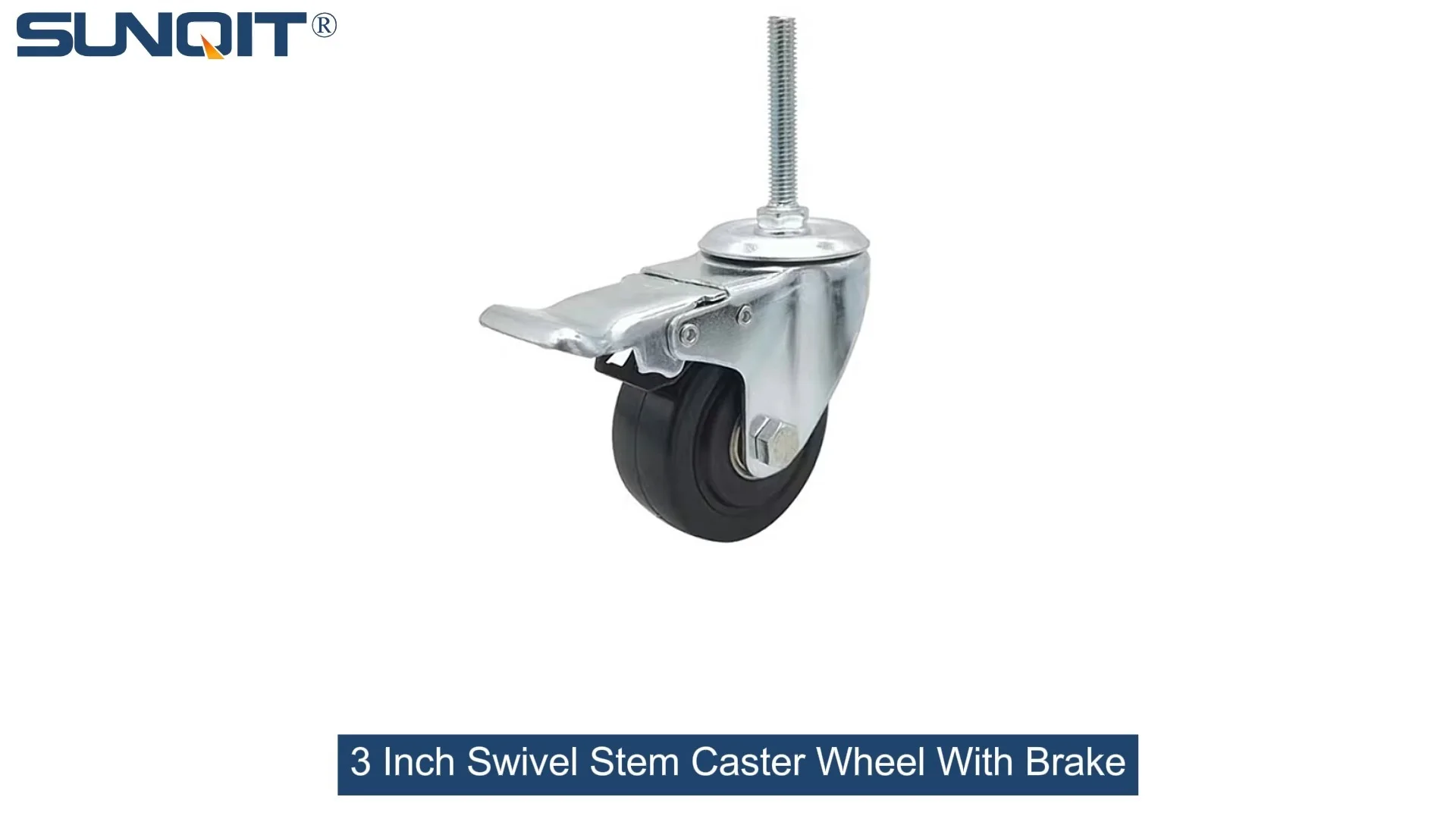
Swivel Stem Caster Wheel with Brake
360 Degree Swivel Stem Caster with brake. Threaded-post mount design, castors diameter 3 inch.Each swivel caster wheels loading 70KGS. Heavy enough and widely suit for carts, chairs, cabinet, flow rack, workbench, turnover rolley.
In the world of manufacturing, warehousing, and small-scale production, the term "lean" has become more than just a buzzword—it's a philosophy that drives efficiency, reduces waste, and empowers teams to work smarter, not harder. At the heart of any lean system lies the idea of adaptability: creating workspaces that can shift, evolve, and respond to changing needs without sacrificing productivity. And when it comes to building such adaptable spaces, few components are as quietly critical as the casters that keep your workbenches moving. Today, we're diving into a game-changer for lean workbench mobility: the swivel stem caster wheel with brake. Lightweight, reliable, and designed with portability in mind, this unassuming tool is redefining how teams set up, rearrange, and optimize their workspaces.
The Unsung Hero of Lean Workspaces: Why Mobility Matters
Think about a typical day in a small electronics assembly shop. The morning starts with a rush order for circuit boards, requiring the team to rearrange their workbenches into a U-shape to streamline material flow. By midday, a batch of larger components arrives, and suddenly the U-shape feels cramped—they need to spread out. By afternoon, a quality check station needs to be moved closer to the packaging area to cut down on walking time. In a rigid workspace, each of these changes would eat up precious minutes (or even hours) of labor. But with workbenches on wheels? It's a matter of unlocking brakes, gliding the bench into place, and locking again—all in under a minute.
This is the power of mobility in a lean system. Every second saved on rearranging is a second gained for actual production. It's about eliminating "motion waste," one of the seven core wastes identified in lean methodology. When workers don't have to walk across the shop to grab tools or materials, when workbenches can follow the flow of orders instead of the other way around, productivity spikes. And at the center of that mobility? Casters. Not just any casters, though—ones that balance lightness, durability, and control. Enter the swivel stem caster wheel with brake.
What Is a Swivel Stem Caster Wheel with Brake, Anyway?
Let's break it down. A "caster" is essentially a wheeled device mounted to the bottom of furniture, equipment, or—you guessed it—workbenches, to make them movable. The "swivel" part means the wheel can rotate 360 degrees, allowing the bench to turn and maneuver in tight spaces without having to be lifted. The "stem" refers to the vertical rod (usually threaded or smooth) that attaches the caster to the workbench's frame, creating a secure connection. And the "brake"? That's the critical safety feature: a lever or pedal that locks the wheel in place, keeping the bench stable when it's time to work.
But not all swivel stem casters are created equal. Heavy-duty industrial casters, for example, are built to haul tons of weight—think loaded pallet racks or large machinery. They're tough, but they're also bulky and heavy, making them overkill for most lean workbenches. On the flip side, cheap plastic casters might be lightweight, but they lack the durability to handle daily use, and their brakes often slip or fail, turning a "mobile workbench" into a frustrating, wobbly hazard.
The sweet spot? A lightweight swivel stem caster with a reliable brake. These are designed specifically for mid-weight loads (think workbenches with tools, components, or semi-finished products) and prioritize ease of movement without sacrificing stability. They're the kind of caster that feels almost effortless to push, even when the bench is loaded, but locks down so firmly you could lean on the bench without it budging.

The Lightweight Advantage: Why "Light" Doesn't Mean "Weak"
You might be wondering: If it's lightweight, isn't it just flimsy? Not at all. Modern materials and engineering have made it possible to trim excess weight without cutting corners on strength. Many high-quality swivel stem casters with brakes use aluminum or reinforced plastic for the frame, paired with polyurethane wheels. Aluminum is strong yet lightweight, while polyurethane offers a smooth roll, good floor protection (no scuff marks!), and resistance to wear and tear. The result? A caster that might weigh just 2-3 pounds per unit—light enough that even a small team member can move a fully loaded workbench—but tough enough to handle hundreds of pounds of weight without bending or breaking.
Why does lightweight matter so much for lean workbenches? Let's say you have a standard lean workbench, around 4 feet long and 2 feet deep, made of aluminum or steel. Without casters, it might weigh 50-75 pounds. Add four heavy-duty casters (say, 5 pounds each), and now it's 70-95 pounds. Load it with tools, a laptop, and materials, and you're pushing 150+ pounds. Suddenly, moving it requires two people, defeating the "quick rearrange" goal. But with lightweight casters (2 pounds each), the total bench weight drops to 58-83 pounds—manageable for one person to move, even when loaded. That's the difference between a workspace that adapts and one that stays stuck.

Key Features of a Top-Notch Swivel Stem Caster Wheel with Brake
Not all swivel stem casters with brakes are created equal. To truly enhance your lean workbench, look for these must-have features:
- Smooth Swivel Action: The caster should rotate freely without sticking. Look for sealed ball bearings in the swivel head—they reduce friction, ensuring easy turning even after months of use.
- Reliable Brake Mechanism: The brake should be easy to engage (usually a foot pedal) and hold firm. A "total lock" brake, which locks both the wheel and the swivel, is ideal—it prevents the bench from rolling and swiveling when locked, adding extra stability.
- Floor-Friendly Wheels: Polyurethane or rubber wheels are gentler on concrete, tile, or hardwood floors than metal, preventing scratches and noise. They also grip better, reducing slipping on smooth surfaces.
- Stem Compatibility: Check the stem size (diameter and length) to ensure it fits your workbench's mounting holes. Most lean workbenches use standard stem sizes, but double-checking avoids frustration later.
- Weight Capacity: Don't skimp here! A caster rated for 150 pounds per wheel is better than one rated for 100, even if your bench is light now—you never know when you'll need to load it up with heavier tools.

How Swivel Stem Casters with Brakes Transform Lean Workbenches
Let's get practical. How does adding these casters to a lean workbench actually change day-to-day operations? Let's walk through a few scenarios:
Scenario 1: The Dynamic Assembly Line A small furniture manufacturer builds custom desks. Some days, they're assembling 10 small desks; other days, 2 large ones. With workbenches on swivel stem casters with brakes, they can reconfigure the line in 10 minutes: tight rows for small desks (maximizing space), spread-out stations for large desks (giving workers room to maneuver). No more wrestling with heavy benches or settling for a "one-size-fits-all" layout.
Scenario 2: The Mobile Workstation A tech repair shop has a lean workbench equipped with diagnostic tools. When a customer brings in a laptop, the technician rolls the bench to the front counter to work while chatting with the customer (building rapport!). When a bulky server needs fixing, the bench rolls to the back room, where there's more space. The brake keeps it steady during repairs, so screws and parts don't go rolling off.
Scenario 3: The Cleanup Champion At the end of the shift, deep cleaning is a breeze. Instead of wiping around a fixed workbench (and missing the dust bunnies underneath), just unlock the brakes, roll the bench aside, sweep or mop, then roll it back. It's a small change, but it turns a 30-minute chore into a 10-minute task—another win for eliminating waste.
Comparing Caster Types: Why Swivel Stem with Brake Stands Out
To really see the value, let's compare the swivel stem caster wheel with brake to other common caster types used on workbenches:
| Caster Type | Weight (per caster) | Maneuverability | Brake Control | Best For |
|---|---|---|---|---|
| Swivel Stem with Brake | 2-3 lbs | 360° swivel, tight turns | Total lock (wheel + swivel) | Lean workbenches, mobile stations, frequent reconfiguration |
| Fixed (Non-Swivel) Caster | 3-4 lbs | Only moves forward/backward | Wheel lock only (if included) | Heavy machinery, straight-line movement only |
| Heavy-Duty Plate-Mount Caster | 5-7 lbs | 360° swivel, but bulky | Strong lock, but hard to engage | Industrial equipment, very heavy loads |
| Swivel Stem (No Brake) | 2-3 lbs | 360° swivel, easy to move | None—risk of rolling | Temporary setups, light loads only |
As the table shows, the swivel stem caster with brake hits the sweet spot: lightweight enough for easy movement, maneuverable enough for tight spaces, and controlled enough to stay put when needed. It's the Goldilocks of casters for lean workbenches—not too heavy, not too flimsy, just right.
Beyond Workbenches: Where Else Can These Casters Shine?
While we've focused on lean workbenches, these casters are versatile. Here are a few other ways they can boost efficiency in your lean system:
Turnover Trolleys: Trolleys used to move materials between stations become easier to push and park, reducing strain on workers.
Tool Carts: Mobile tool storage that can follow the workbench, ensuring tools are always within arm's reach.
Inspection Tables: Quality check stations that can be rolled to the production line instead of making workers carry products to a fixed table.
Training Stations: In a warehouse or factory, training new hires often requires setting up temporary workbenches. With these casters, stations can be assembled, used, and stored away quickly.
Caring for Your Casters: Tips for Longevity
Like any tool, your swivel stem casters with brakes will last longer with a little TLC. Here's how to keep them rolling smoothly:
- Clean Regularly: Wipe wheels and swivel heads with a damp cloth to remove dust, debris, or grease. Built-up grime can make swiveling stiff.
- Lubricate Moving Parts: Every 3-6 months, add a drop of light machine oil to the swivel bearings and wheel axles. This prevents rust and keeps movement smooth.
- Check Brakes: Test the brake pedal regularly to ensure it engages fully. If it feels loose or slips, tighten the mounting screws or replace worn brake pads (yes, caster accessories like replacement pads exist!).
- Avoid Overloading: Stick to the caster's weight capacity. Overloading can bend stems, crack wheels, or damage brakes.
Choosing the Right Supplier: Why It Matters
You've decided to invest in swivel stem casters with brakes for your lean workbench—great! Now, where to buy them? Not all suppliers are created equal. Look for a supplier that specializes in lean system components, not just generic hardware. Why? Because they'll understand the unique needs of lean environments: lightweight design, compatibility with standard lean workbenches, and reliable customer support if you need help choosing the right caster for your setup.
A good supplier will also offer a range of caster accessories, from replacement wheels to stem extenders, so you can customize your setup. And if they stock other lean tools—like flow racks, aluminum profiles, or workbench accessories—even better. One-stop shopping saves time and ensures all your components work together seamlessly.
Final Thoughts: Small Caster, Big Impact on Lean Systems
In the grand scheme of a lean system, a caster might seem like a tiny detail. But as any lean practitioner will tell you, it's the tiny details that add up to big results. A swivel stem caster wheel with brake isn't just a "wheel"—it's a tool that unlocks adaptability, cuts waste, and puts control back in the hands of your team. It's the difference between a workspace that fights against your workflow and one that flows with it.
So, the next time you're setting up or upgrading your lean workbench, don't overlook the casters. Choose lightweight, swivel stem models with reliable brakes. Your team will thank you when they can rearrange in minutes, not hours. Your productivity will thank you when motion waste becomes a thing of the past. And your lean system? It'll be stronger, more flexible, and ready to tackle whatever comes next.
After all, in lean, every pound saved, every second gained, and every roll of a caster brings you one step closer to perfection. And isn't that the goal?