- Company Articles
- Products and Technology
- Product knowledge
- Swivel Stem Caster Wheel with Brake: Locking Mechanism Types & Applications

Swivel Stem Caster Wheel with Brake: Locking Mechanism Types & Applications
Related Product
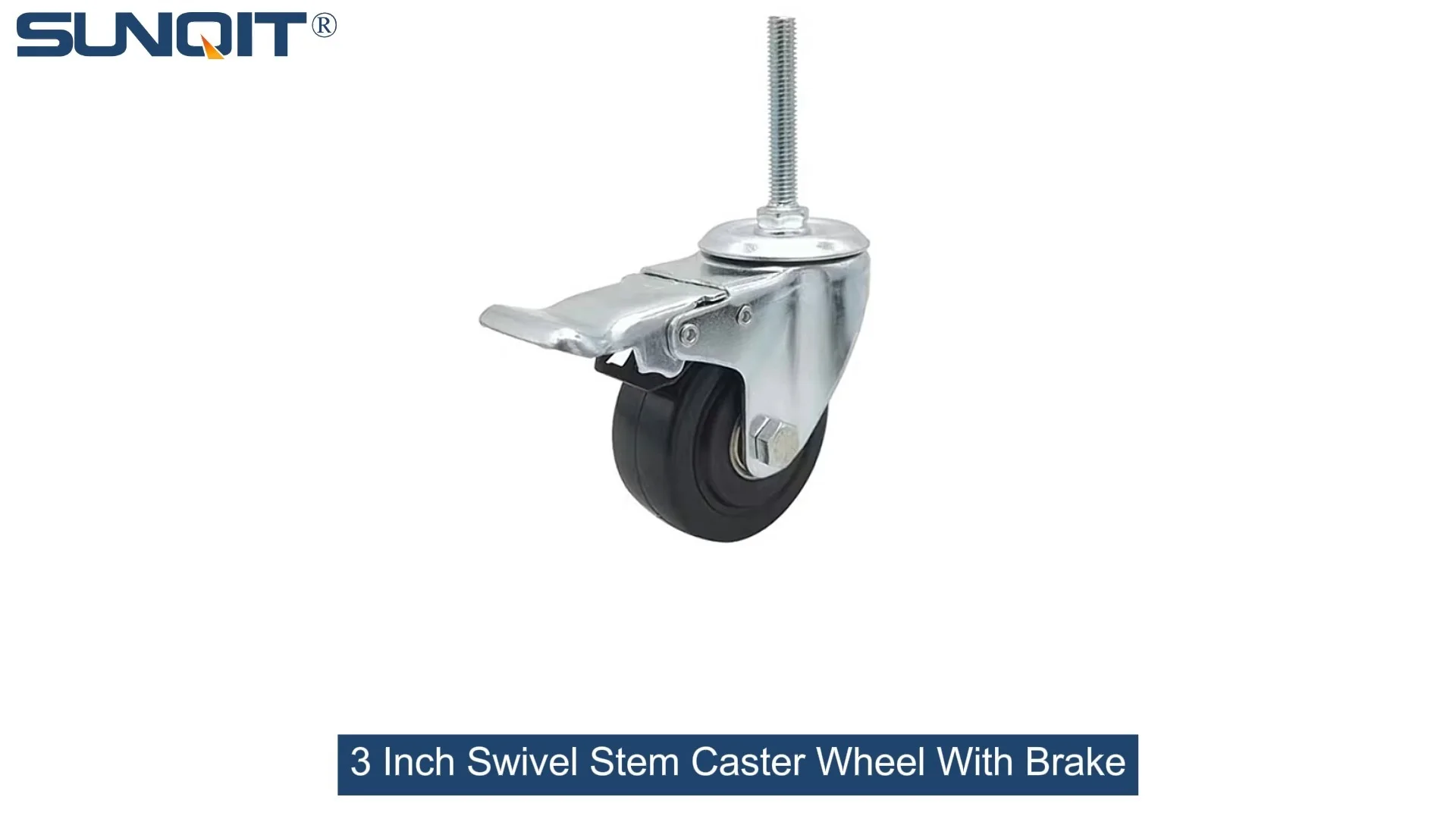
Swivel Stem Caster Wheel with Brake
360 Degree Swivel Stem Caster with brake. Threaded-post mount design, castors diameter 3 inch.Each swivel caster wheels loading 70KGS. Heavy enough and widely suit for carts, chairs, cabinet, flow rack, workbench, turnover rolley.
In the bustling world of manufacturing, logistics, and daily operations, the ability to move equipment smoothly while keeping it securely in place is more than a convenience—it's a cornerstone of efficiency and safety. Enter the swivel stem caster wheel with brake: a humble yet indispensable component that bridges mobility and stability. Whether you're repositioning a workbench on the factory floor, maneuvering a turnover trolley through a warehouse, or securing a medical cart in a hospital room, these casters play a silent but critical role. In this article, we'll dive deep into the types of locking mechanisms that make these casters reliable, explore their real-world applications, and uncover why choosing the right one matters for your workflow.
What Are Swivel Stem Caster Wheels with Brakes?
Before we explore their mechanisms, let's clarify what sets swivel stem caster wheels with brakes apart. A caster wheel is a wheeled device mounted to the bottom of an object to enable easy movement. "Swivel" means the wheel can rotate 360 degrees, allowing the object to turn in any direction without lifting. The "stem" refers to the vertical rod that attaches the caster to the equipment—think of it as the anchor that connects the wheel to the cart, workbench, or trolley. And the "brake"? That's the game-changer: a mechanism that locks the wheel (or both the wheel and swivel motion) to prevent unintended movement.
These casters are more than just wheels; they're a fusion of mobility and control. Without a brake, a loaded trolley might roll away on an incline; a workbench might shift mid-assembly, risking errors or injury. With a brake, you gain the freedom to move when needed and the security to stay put when it matters most. Now, let's break down the locking mechanisms that make this possible.
Locking Mechanism Types: How They Work & When to Use Them
Not all brakes are created equal. Swivel stem casters with brakes come with different locking mechanisms, each designed for specific needs. Let's explore the most common types, their inner workings, and the scenarios where they shine.
1. Total Lock (Swivel + Wheel Lock)
The total lock mechanism is the heavyweight champion of stability. As the name suggests, it locks two components: the wheel (preventing rotation) and the swivel joint (stopping the caster from turning). This dual-action lock ensures the equipment stays completely immobile, even on uneven surfaces or when bumped.
How does it work? Inside the caster housing, a brake pad or cam engages both the wheel tread and the swivel raceway (the ring that allows rotation). When activated—usually via a foot pedal or lever—the pad presses against the wheel to stop spinning, while a separate component jams the swivel raceway, freezing the caster's direction. Release the pedal, and springs retract the brake components, restoring mobility.
Best for: High-stability needs, such as lean pipe workbenches used in precision assembly. Imagine a technician soldering tiny electronics on a workbench: even a slight shift could ruin the component. A total lock caster ensures the workbench stays rock-solid, letting the technician focus on accuracy.
Pros: Maximum stability; prevents both rolling and swiveling. Cons: Slightly heavier and more complex than other mechanisms; may require more force to engage/disengage.
2. Wheel-Only Lock (Single-Action Lock)
If you need to stop movement but still want the caster to swivel (e.g., to reposition the equipment without rolling), a wheel-only lock is your go-to. This mechanism locks just the wheel, leaving the swivel joint free to rotate. It's like hitting pause on rolling but keeping the steering wheel loose.
The mechanics are simpler here: a brake pad or clamp presses directly against the wheel's tread when activated, friction stopping the wheel from spinning. The swivel raceway remains unobstructed, so you can turn the caster direction even while locked. This is ideal for situations where you need temporary stability but plan to reorient the equipment soon.
Best for: turnover trolley and rack systems in warehouses. Picture a worker loading boxes onto a trolley: they lock the wheels to stand still while stacking, then unlock, swivel the trolley to face the next shelf, and lock again. No need to unlock the swivel—just pivot and go.
Pros: Lightweight; easy to engage; allows swiveling while locked. Cons: Less stable than total lock on slopes; may shift if pushed hard.
3. Side-Lock Brakes
Side-lock brakes are a variation of wheel-only locks, but with a unique activation method. Instead of a top-mounted pedal, the brake lever is positioned on the side of the caster housing. To lock, you flip the lever downward, which presses a brake shoe against the wheel. Release by flipping it up.
These are popular in tight spaces where a top pedal might get in the way—think under-shelf casters or equipment with low ground clearance. They're also favored for lighter loads, as the lever requires manual flipping (no foot operation).
Best for: Small carts or utility shelves in offices or retail stores. A side-lock caster lets staff quickly lock a display cart during restocking without bending down to reach a pedal.
Pros: Compact design; works in tight spaces. Cons: Not ideal for heavy loads; requires hand operation (less convenient than foot pedals).
4. Top-Lock Foot Brakes
Top-lock foot brakes are the most user-friendly option for frequent locking/unlocking. The brake pedal sits on top of the caster housing, making it easy to engage with a quick tap of the foot—no bending or reaching. They're typically wheel-only locks, though some models offer total lock variants.
The pedal is connected to a spring-loaded brake arm. When you step on the pedal, it pushes the arm against the wheel, stopping rotation. Step again (or lift with your foot) to release the spring, and the wheel spins freely. This "step-on, step-off" design is why they're a staple in busy environments like factories and hospitals.
Best for: High-traffic areas where speed matters. Nurses rushing to a patient's room can lock a medical cart in seconds with a foot tap; factory workers can secure a tool cart between tasks without breaking their workflow.
Pros: Ergonomic; quick to engage; foot-operated (no hand contact). Cons: Pedal may get damaged if stepped on heavily; not as compact as side-locks.
| Locking Mechanism | What It Locks | Activation Method | Best For | Key Advantage |
|---|---|---|---|---|
| Total Lock | Wheel + Swivel | Foot pedal/lever | Precision work (lean pipe workbenches) | Maximum stability |
| Wheel-Only Lock | Wheel only | Foot pedal/side lever | Turnover trolleys, mobile racks | Allows swiveling while locked |
| Side-Lock Brake | Wheel only | Side lever (hand-operated) | Tight spaces (under-shelf carts) | Compact design |
| Top-Lock Foot Brake | Wheel only (sometimes total) | Top-mounted foot pedal | High-traffic areas (hospitals, factories) | Quick, hands-free operation |

Applications: Where Swivel Stem Caster Wheels with Brakes Shine
Now that we understand the mechanisms, let's explore where these casters make a tangible difference. From manufacturing floors to healthcare facilities, their versatility ensures they're found in nearly every industry. Here are the top applications:
1. Manufacturing: Lean Pipe Workbenches & Assembly Lines
In manufacturing, flexibility is king. Lean pipe workbenches —modular workstations built with aluminum or steel pipes and joints—are designed to adapt to changing production needs. Add swivel stem casters with total lock brakes, and suddenly that workbench becomes a mobile hub. Need to reconfigure the assembly line for a new product? Unlock the casters, roll the bench to its new spot, and lock it down. The total lock ensures it stays steady during intricate tasks like electronics assembly or quality inspections, where even a millimeter of movement can cause defects.
Casters here also need to handle heavy loads—think tools, parts bins, and equipment weighing hundreds of pounds. A robust wheel-only lock might suffice for lighter benches, but for heavy-duty setups, total lock casters are non-negotiable to prevent shifting under stress.
2. Warehousing: Turnover Trolleys & Material Racks
Warehouses thrive on speed and organization, and turnover trolley and rack systems are the backbone of material handling. These trolleys transport goods from storage to packing stations, while racks hold inventory for easy access. Swivel stem casters with wheel-only locks are perfect here: workers can lock the trolley to load/unload, then swivel it to navigate tight aisles without unlocking the wheels. For racks that need to be repositioned (e.g., seasonal inventory shifts), top-lock foot brakes allow quick locking/unlocking between locations.
Durability is key in warehouses, where floors are often concrete and debris is common. Casters with sealed bearings and non-marking wheels (to protect floors) paired with reliable brakes reduce downtime from repairs and keep operations running smoothly.
3. Healthcare: Medical Carts & Equipment
In hospitals and clinics, precision and hygiene are paramount. Medical carts—carrying medications, tools, or patient records—must move quietly and stop instantly when needed. Swivel stem casters with top-lock foot brakes are ideal here: nurses can lock the cart with a quick tap while administering care, then unlock and glide to the next room. The swivel feature allows easy maneuvering around beds and tight corners, while the brake ensures the cart doesn't roll during procedures.
Hygiene is another factor: casters with smooth, easy-to-clean surfaces (like stainless steel stems) and non-porous wheels prevent germ buildup, critical in sterile environments.
4. Retail: Display Carts & Mobile Shelving
Retailers constantly refresh store layouts to highlight new products, and mobile display carts are their secret weapon. Swivel stem casters with side-lock brakes let staff rearrange displays quickly: lock the wheels to set up a promotional stand, then unlock and reposition when the sale ends. The side-lock lever is easy to reach from a standing position, and the compact design keeps the cart low-profile, avoiding tripping hazards in busy stores.
For heavier shelving units, wheel-only locks provide stability during restocking, while swivel casters make it easy to shift the shelf to clean behind it or adjust for crowd flow.

Choosing the Right Caster: Key Factors to Consider
With so many options, how do you pick the perfect swivel stem caster with brake for your needs? Here are the critical factors to evaluate:
Load Capacity
Every caster has a maximum load rating—never exceed it. A caster rated for 500 lbs per wheel might fail if you load 600 lbs, risking damage to the brake mechanism or wheel. Calculate the total weight of your equipment plus its typical load, then divide by the number of casters (e.g., a 2000 lbs trolley with 4 casters needs 500 lbs capacity per caster). Err on the side of caution: overloading is the top cause of caster failure.
Floor Type
Hardwood, concrete, carpet, or tile—your floor surface dictates wheel material. Soft floors (carpet) need larger, wider wheels to prevent sinking; hard floors (concrete) benefit from non-marking wheels (rubber or polyurethane) to avoid scratches. For uneven floors, casters with shock-absorbing wheels and strong brakes (like total lock) prevent wobbling.
Environment
Is your workspace wet (e.g., food processing), dusty (construction), or sterile (laboratories)? In wet areas, choose casters with corrosion-resistant stems (stainless steel) and brakes with sealed components to prevent rust. In cleanrooms, non-shedding wheels and easy-to-disinfect materials are a must. For ESD-sensitive environments (electronics manufacturing), look for ESD-compliant casters that dissipate static electricity—though that's a topic for another day!
Frequency of Use
How often will you lock/unlock the caster? For high-frequency use (e.g., hourly in a factory), top-lock foot brakes are more convenient than side-locks, which require manual flipping. For occasional use (e.g., monthly shelf repositioning), a basic wheel-only lock will suffice.

Maintenance Tips: Keeping Your Casters Rolling (and Locking) Smoothly
Even the best casters need care to perform. Here's how to extend their lifespan and ensure reliable braking:
- Clean regularly: Wipe wheels and brake components with a damp cloth to remove dirt and debris, which can jam brakes or scratch floors.
- Lubricate moving parts: Apply silicone-based lubricant to swivel raceways and brake pivots every 3–6 months to reduce friction and prevent rust.
- Inspect brakes monthly: Check if the brake pad is worn (replace if less than 1/8 inch thick) and ensure the pedal/lever moves smoothly. Tighten loose stems or nuts to prevent wobbling.
- Avoid overloading: Stick to the caster's load rating to prevent bent stems or broken brakes.
Conclusion: The Unsung Hero of Workplace Efficiency
Swivel stem caster wheels with brakes may seem like small components, but their impact is enormous. They turn static workbenches into mobile hubs,, and chaotic warehouses into organized spaces. By understanding the different locking mechanisms—total lock for stability, wheel-only lock for flexibility, side-locks for tight spaces, and top-locks for convenience—you can choose casters that align with your workflow.
Whether you're outfitting a lean pipe workbench in a factory, a turnover trolley in a warehouse, or a medical cart in a hospital, the right caster with the right brake ensures safety, efficiency, and peace of mind. So next time you lock a caster in place, take a moment to appreciate the engineering that keeps your world moving—without moving when it shouldn't.