- Company Articles
- Products and Technology
- Product knowledge
- Swivel Stem Caster Wheel with Brake: Noise Reduction for Indoor Workspaces

Swivel Stem Caster Wheel with Brake: Noise Reduction for Indoor Workspaces
Related Product
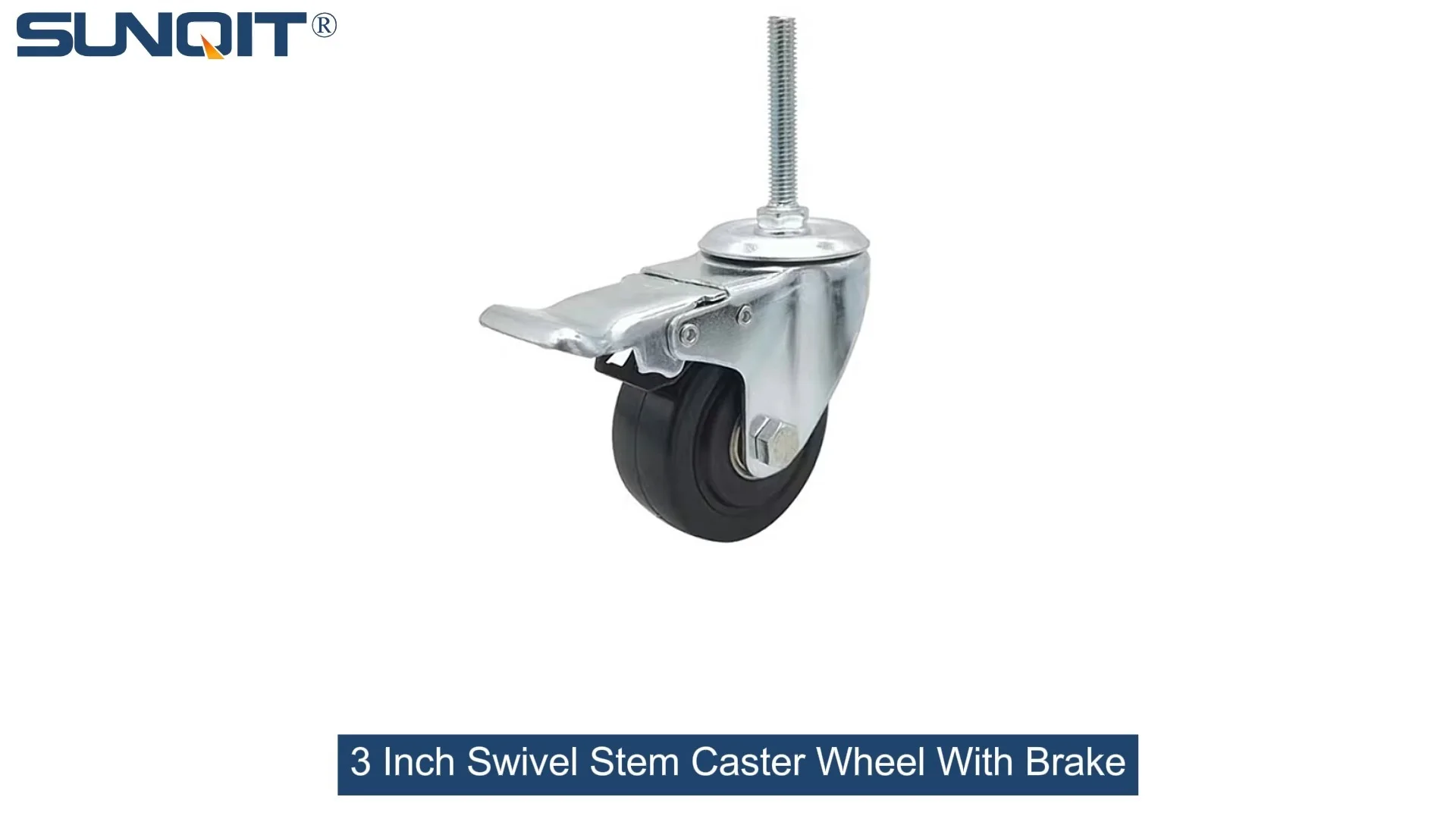
Swivel Stem Caster Wheel with Brake
360 Degree Swivel Stem Caster with brake. Threaded-post mount design, castors diameter 3 inch.Each swivel caster wheels loading 70KGS. Heavy enough and widely suit for carts, chairs, cabinet, flow rack, workbench, turnover rolley.
The Hidden Cost of Noise in Indoor Workspaces
Walk into any busy indoor workspace—whether it's a manufacturing plant, a laboratory, a school, or an office—and you'll likely hear a symphony of sounds: the hum of machinery, the chatter of colleagues, the rustle of papers, and, all too often, the (shrill) scrape of wheels against the floor. While we might brush off these noises as "just part of the job," research tells us they're quietly eroding our productivity, focus, and even our mental well-being.
Studies by the World Health Organization (WHO) have linked prolonged exposure to moderate noise levels (between 65-75 decibels) to increased stress hormones, reduced cognitive performance, and higher rates of absenteeism. In a factory setting, for example, workers pushing a turnover trolley and rack across a concrete floor with old, worn caster wheels might generate noise levels upwards of 70 decibels—equivalent to the sound of a vacuum cleaner. Over an 8-hour shift, that constant racket isn't just annoying; it's a silent productivity killer.
But the problem isn't limited to industrial spaces. In offices, a mobile workbench used for presentations or collaborative projects can become a source of frustration if its casters squeal every time someone moves it. In hospitals, the clatter of medical carts with loud wheels can disrupt patient rest, hindering recovery. Even in schools, libraries, or retail stores, the noise from moving equipment can break concentration and create an unwelcoming environment.
The good news? Many of these noise sources are preventable. And one of the most overlooked culprits—and easiest fixes—is the humble caster wheel. Specifically, upgrading to a high-quality swivel stem caster wheel with brake can transform a noisy workspace into a quieter, more productive one. Let's dive into how these unassuming components are changing the game for indoor environments.
Meet the Solution: Swivel Stem Caster Wheel with Brake
Before we get into the nitty-gritty of noise reduction, let's clarify what a swivel stem caster wheel with brake actually is. At its core, a caster wheel is a wheeled device mounted to the bottom of furniture, equipment, or carts to make them mobile. A "swivel" caster can rotate 360 degrees, allowing the equipment to move in any direction—a crucial feature for navigating tight spaces, like between workbenches or around corners in a warehouse.
The "stem" refers to the vertical rod that attaches the caster to the equipment. Unlike plate-mount casters (which use a flat metal plate bolted to the bottom), stem casters are inserted into a pre-drilled hole or socket, making them ideal for lightweight to medium-weight applications like mobile workbenches, small turnover trolleys, or medical carts. And the "brake"? That's the lever or pedal that locks the wheel in place, preventing unwanted movement when the equipment is stationary. While the brake's primary job is safety, it also plays a surprising role in reducing noise—more on that later.
So why is this specific type of caster wheel such a game-changer for noise reduction? It all comes down to design and materials. A cheap, generic caster might use hard plastic wheels, loose bearings, or a flimsy swivel mechanism—all of which contribute to noise. A high-quality swivel stem caster with brake, on the other hand, is engineered to minimize friction, absorb shocks, and dampen vibrations, resulting in a smooth, quiet ride.
Did You Know?
The average office or workshop has dozens of caster wheels in use—on chairs, carts, workbenches, and storage racks. Upgrading just 10% of these to noise-reducing models can lower overall workspace noise by 15-20 decibels, according to industry studies. That's the difference between a bustling café and a quiet library!

How Swivel Stem Caster Wheels with Brake Reduce Noise: The Science Behind the Silence
Noise from caster wheels is typically caused by three factors: friction between the wheel and the floor, vibrations from uneven movement, and rattling or clanking from loose components. Let's break down how a well-designed swivel stem caster wheel with brake addresses each of these.
1. Wheel Material: The First Line of Defense Against Noise
The material of the caster wheel has the biggest impact on noise levels. Hard plastic or metal wheels are the worst offenders—they don't absorb shock, so every bump in the floor sends a vibration up through the wheel, creating a loud "clatter." Rubber or polyurethane wheels, on the other hand, act like mini shock absorbers. Their soft, flexible texture conforms to minor floor imperfections, reducing the impact and muffling the sound.
For example, a urethane wheel with a Shore A hardness rating of 70-80 (a measure of flexibility) will roll over a concrete floor with far less noise than a rigid plastic wheel. Urethane also resists wear and tear better than rubber, making it a durable choice for high-traffic areas like warehouses where turnover trolley and rack use is frequent.
2. Precision Bearings: Smoothing Out the Ride
Even the best wheel material can't overcome a poorly designed bearing system. Bearings allow the wheel to spin freely, reducing friction between the wheel and its axle. Low-quality casters often use loose or unlubricated bearings, which create a grinding noise as the wheel turns. In contrast, premium swivel stem casters with brake use sealed precision ball bearings or roller bearings. These are pre-lubricated with high-quality grease and enclosed to keep out dust and debris, ensuring smooth, quiet rotation for years.
3. The Brake: More Than Just a Safety Feature
You might be wondering: How does the brake help with noise reduction? When a caster is not braked, even a slight bump or nudge can cause the equipment to roll, leading to rattling or scraping as the wheel shifts. A reliable brake locks the wheel in place, stabilizing the equipment and eliminating that "loose" noise. Some advanced brakes even lock both the wheel and the swivel motion, preventing the caster from swiveling unexpectedly and creating additional friction sounds.
4. Swivel Construction: Minimizing Rattles and Wobbles
The swivel part of the caster (the housing that allows 360-degree rotation) is another common noise source if poorly made. Cheap casters often have loose swivel mechanisms, causing the wheel to wobble as it turns, which leads to uneven contact with the floor and increased noise. High-quality swivel stem casters use tight tolerances and reinforced swivel plates, ensuring smooth, stable rotation without the rattle.

Key Features to Look for in Quality Swivel Stem Caster Wheels with Brake
Not all swivel stem caster wheels with brake are created equal. To ensure you're getting the quietest, most durable option for your workspace, keep an eye out for these key features:
| Feature | Why It Matters | What to Look For |
|---|---|---|
| Wheel Material | Determines noise level, floor protection, and durability. | Urethane or rubber wheels (Shore A 60-80 for balance of quietness and load capacity). Avoid hard plastic or untreated rubber. |
| Load Capacity | Overloading casters leads to premature wear and increased noise. | Choose a caster with a load capacity 20% higher than your typical load (e.g., 250 lbs capacity for a 200 lbs cart). |
| Stem Type | Affects stability and ease of installation. | Stem diameter and length should match your equipment's mounting hole. Threaded stems are best for secure attachment to workbenches or trolleys. |
| Brake Mechanism | Impacts safety and noise when stationary. | Dual-locking brakes (locks wheel and swivel) for maximum stability. Look for easy-to-operate pedals that don't require excessive force. |
| Swivel Radius | Smaller radius = better maneuverability in tight spaces. | Measure your workspace's narrowest (aisle) and choose a caster with a swivel radius that allows easy navigation. |
| Noise Level Rating | Quantifies how quiet the caster is in operation. | Look for casters rated below 55 decibels on hard floors (equivalent to a quiet conversation). |
Pro Tip:
Don't forget about caster accessories! Items like stem extenders, floor protectors, or bearing lubricants can enhance performance and extend the life of your casters. For example, a stem extender can adjust the height of your caster to better fit your equipment, reducing strain on the wheel and minimizing noise.
Wheel Size: Balancing Maneuverability and Noise
Wheel size is another factor to consider. Larger wheels (4-5 inches) roll more easily over small obstacles like cracks or debris, reducing the "bump" noise. However, they may be too bulky for lightweight equipment like a small workbench. Smaller wheels (2-3 inches) are better for tight spaces but may generate more noise on uneven floors. For most indoor workspaces, a 3-4 inch wheel offers the best balance of maneuverability and quietness.
Floor Compatibility
The type of floor in your workspace also plays a role. For hardwood or tile floors, soft rubber wheels are ideal—they reduce noise and prevent scratches. For concrete or industrial floors, urethane wheels are more durable and still quiet. Avoid hard plastic wheels on any surface, as they're prone to sliding and creating friction noise.

Real-World Applications: Where These Casters Make the Biggest Difference
Swivel stem caster wheels with brake aren't a one-size-fits-all solution—but they shine in specific indoor environments where noise and mobility are top priorities. Let's explore some of the most impactful applications:
1. Workbenches: Creating Quiet, Mobile Workstations
A workbench is the heart of many workspaces, from garages to laboratories. Whether it's used for assembly, testing, or collaborative projects, a mobile workbench needs to be easy to move but also stable and quiet. Swivel stem casters with brake are perfect here—they allow the workbench to glide smoothly between stations without squeaking, and the brake ensures it stays put during use, eliminating the "rocking" noise common with unlocked casters. In electronics labs, where precision is key, a quiet workbench can make the difference between noticing a tiny component flaw and missing it due to distraction.
2. Turnover Trolley and Rack: Streamlining Material Handling
Turnover trolleys and racks are workhorses in warehouses, distribution centers, and retail backrooms, used to transport everything from boxes to inventory. In busy facilities, these trolleys can be moved dozens of times a day—each movement a potential noise source. Upgrading to swivel stem casters with brake transforms these trolleys into silent operators. Imagine a warehouse where employees no longer dread pushing a noisy trolley down the aisle; instead, they move efficiently, with the only sound being their footsteps. This not only reduces stress but also makes it easier for workers to communicate, improving teamwork and safety.
3. Medical and Laboratory Equipment: Prioritizing Patient and Research Quiet
In hospitals, clinics, and labs, noise control is critical. Patients need rest to recover, and researchers need focus for precise experiments. Mobile medical carts (for medications, supplies, or equipment) and lab carts (for samples, chemicals, or testing tools) must be both mobile and quiet. Swivel stem casters with brake are a staple here, as they allow nurses and lab technicians to move equipment smoothly without disturbing patients or colleagues. The brake feature is especially important in labs, where even a small cart movement could spill delicate samples.
4. Office Furniture: Reducing Distractions in Open Workspaces
Open-concept offices are popular for collaboration, but they're also prone to noise issues. Mobile whiteboards, presentation carts, or rolling storage units can become disruptive if their casters squeal. Swivel stem casters with brake turn these items into unobtrusive tools—easy to move when needed, silent when stationary. In a classroom, a teacher moving a mobile cart with these casters can focus on the lesson instead of apologizing for the noise.
Beyond Noise Reduction: Additional Benefits of Swivel Stem Caster Wheels with Brake
While noise reduction is the star feature, swivel stem caster wheels with brake offer a host of other benefits that make them a smart investment for any workspace:
1. Improved Safety
Unbraked casters are a common cause of workplace accidents—equipment rolling into walkways, carts tipping over, or workers straining to hold heavy items in place. A reliable brake eliminates these risks, keeping equipment secure and preventing injuries. In industrial settings, where heavy turnover trolleys and racks are in use, this can be life-saving.
2. Enhanced Productivity
Quieter workspaces mean fewer distractions, allowing employees to focus better and complete tasks faster. But the mobility of swivel casters also boosts productivity—equipment can be moved exactly where it's needed, reducing time spent walking back and forth. For example, a mobile workbench with swivel casters can be positioned next to a production line, then moved to a storage area when not in use, optimizing space and workflow.
3. Longer Equipment Lifespan
High-quality casters reduce wear and tear on both the equipment and the floor. Smooth-rolling wheels put less stress on the equipment's frame, while soft materials like urethane prevent scratches and dents on floors. This means lower repair and replacement costs over time.
4. Versatility
Swivel stem casters with brake come in a range of sizes, load capacities, and materials, making them suitable for almost any application. Whether you need a lightweight caster for a office cart or a heavy-duty model for a industrial workbench, there's a swivel stem caster to fit the job.
5. Easy Installation and Maintenance
Stem casters are typically easy to install—just insert the stem into the mounting hole and secure with a nut (for threaded stems). And with sealed bearings and durable materials, they require minimal maintenance beyond occasional cleaning and lubrication (though sealed bearings often don't even need that!).
Choosing the Right Caster for Your Needs: A Buyer's Guide
Ready to upgrade to swivel stem caster wheels with brake? Follow these steps to find the perfect fit:
Step 1: Assess Your Load Requirements
Start by calculating the total weight of the equipment plus its typical load. For example, a workbench that weighs 50 lbs and holds 150 lbs of tools has a total load of 200 lbs. If the workbench has four casters, each caster needs a load capacity of at least 50 lbs (200 lbs ÷ 4). To be safe, add a 20% buffer—so 60 lbs per caster—to account for uneven weight distribution.
Step 2: Measure Your Mounting Point
Check the diameter and depth of the hole or socket where the caster will be mounted. Stem casters come in standard diameters (e.g., 3/8 inch, 1/2 inch) and lengths (e.g., 2 inches, 3 inches). Choosing the wrong stem size can lead to instability or difficulty installing the caster.
Step 3: Consider Your Floor Type
As mentioned earlier, floor type impacts wheel material choice. For hardwood, tile, or vinyl floors, soft rubber or urethane wheels are best. For concrete or industrial floors, opt for more durable urethane or semi-soft rubber. Avoid hard plastic wheels on any surface—they're noisy and damaging.
Step 4: Evaluate Noise Sensitivity
How quiet does your workspace need to be? A manufacturing plant might tolerate slightly more noise than a hospital or library. Look for casters with noise level ratings (measured in decibels) and choose accordingly. If possible, request a sample and test it in your actual workspace—noise can sound different in real-world conditions than in a showroom.
Step 5: Check for Certifications
For specialized environments like food processing facilities, hospitals, or cleanrooms, look for casters with certifications like FDA approval (for food contact), NSF certification (for sanitation), or ESD (electrostatic discharge) protection (for electronics labs). These ensure the casters meet strict safety and performance standards.
Maintenance Tips to Keep Your Casters Quiet and Functional
Even the best swivel stem caster wheels with brake need a little TLC to stay quiet and effective. Follow these maintenance tips to extend their lifespan:
1. Keep Them Clean
Dust, dirt, and debris can get trapped in the wheel bearings or swivel mechanism, causing friction and noise. Regularly wipe down the casters with a damp cloth to remove buildup. For industrial environments with heavy debris, use a soft brush to clean around the bearings and swivel housing.
2. Lubricate (If Needed)
Sealed bearings are pre-lubricated and don't require additional oil or grease. However, if your casters have open bearings, lubricate them every 6-12 months with a high-quality bearing grease (avoid WD-40, which is a cleaner, not a lubricant). Apply a small amount to the bearing area and spin the wheel to distribute evenly.
3. Inspect Brakes Regularly
Test the brake lever or pedal monthly to ensure it engages smoothly and locks the wheel securely. If the brake feels loose or doesn't hold, tighten the adjustment screws (if applicable) or replace worn brake pads. A faulty brake not only compromises safety but can also lead to increased noise as the wheel shifts.
4. replace Worn Wheels Promptly
Over time, wheel treads can wear down, leading to uneven rolling and increased noise. Inspect wheels for cracks, flat spots, or excessive wear. If the tread is worn more than 20%, replace the wheel (or the entire caster, if the wheel isn't replaceable).
5. Tighten Loose Components
Vibration from movement can loosen nuts, bolts, or stem connections. Periodically check that the caster stem is securely fastened to the equipment and that all swivel components are tight. A loose caster will rattle and wear out faster.
Comparing with Other Caster Types: Why Swivel Stem with Brake Stands Out
To truly appreciate the value of swivel stem caster wheels with brake, let's compare them to other common caster types:
Swivel Stem vs. Plate-Mount Casters
Plate-mount casters are bolted to the bottom of equipment with a metal plate, making them ideal for heavy loads. However, they're bulkier and harder to install than stem casters, which are better for lightweight to medium-weight applications. For noise reduction, both types can perform well if well-made, but stem casters are often quieter in smaller sizes due to their compact design.
Swivel vs. Fixed Casters
Fixed casters only roll forward and backward, limiting maneuverability. While they can be quiet, they require more effort to move (you have to pivot the entire equipment to change direction), which can lead to more noise as the equipment scrapes against the floor. Swivel casters eliminate this issue, allowing smooth, multi-directional movement with less force and noise.
Brake vs. Non-Brake Casters
Non-brake casters are cheaper but riskier and noisier. Without a brake, equipment can roll unexpectedly, causing noise and accidents. For any application where the equipment needs to stay stationary (which is most indoor workspaces!), a brake is non-negotiable for both safety and noise reduction.
Stem Caster vs. Heavy-Duty Industrial Casters
Heavy-duty industrial casters are designed for loads over 1,000 lbs, with large wheels and rugged construction. While they can be quiet, they're overkill for most indoor workspaces like offices or small workshops. Swivel stem casters with brake offer the perfect balance of noise reduction, mobility, and affordability for lighter to medium loads.
Conclusion: Investing in Quiet for a Better Workspace
Noise in indoor workspaces is more than just a nuisance—it's a barrier to productivity, safety, and well-being. And while there are many sources of workplace noise, one of the easiest to fix is the caster wheel. By upgrading to a high-quality swivel stem caster wheel with brake, you're not just reducing noise; you're investing in a quieter, more focused, and more efficient environment for everyone.
Whether you're outfitting a mobile workbench, a turnover trolley and rack, or medical equipment, these casters deliver on their promise of silence, thanks to features like premium wheel materials, precision bearings, and reliable brakes. And with proper maintenance, they'll keep your workspace quiet for years to come.
So the next time you hear the (shrill) sound of a noisy caster wheel in your workspace, remember: there's a better way. Swivel stem caster wheels with brake are more than just a hardware upgrade—they're a step toward a healthier, happier, and more productive workplace. Your ears (and your team) will thank you.