- Company Articles
- Products and Technology
- Product knowledge
- Swivel Stem Caster Wheel with Brake: Stability Features for Uneven Floors

Swivel Stem Caster Wheel with Brake: Stability Features for Uneven Floors
Related Product
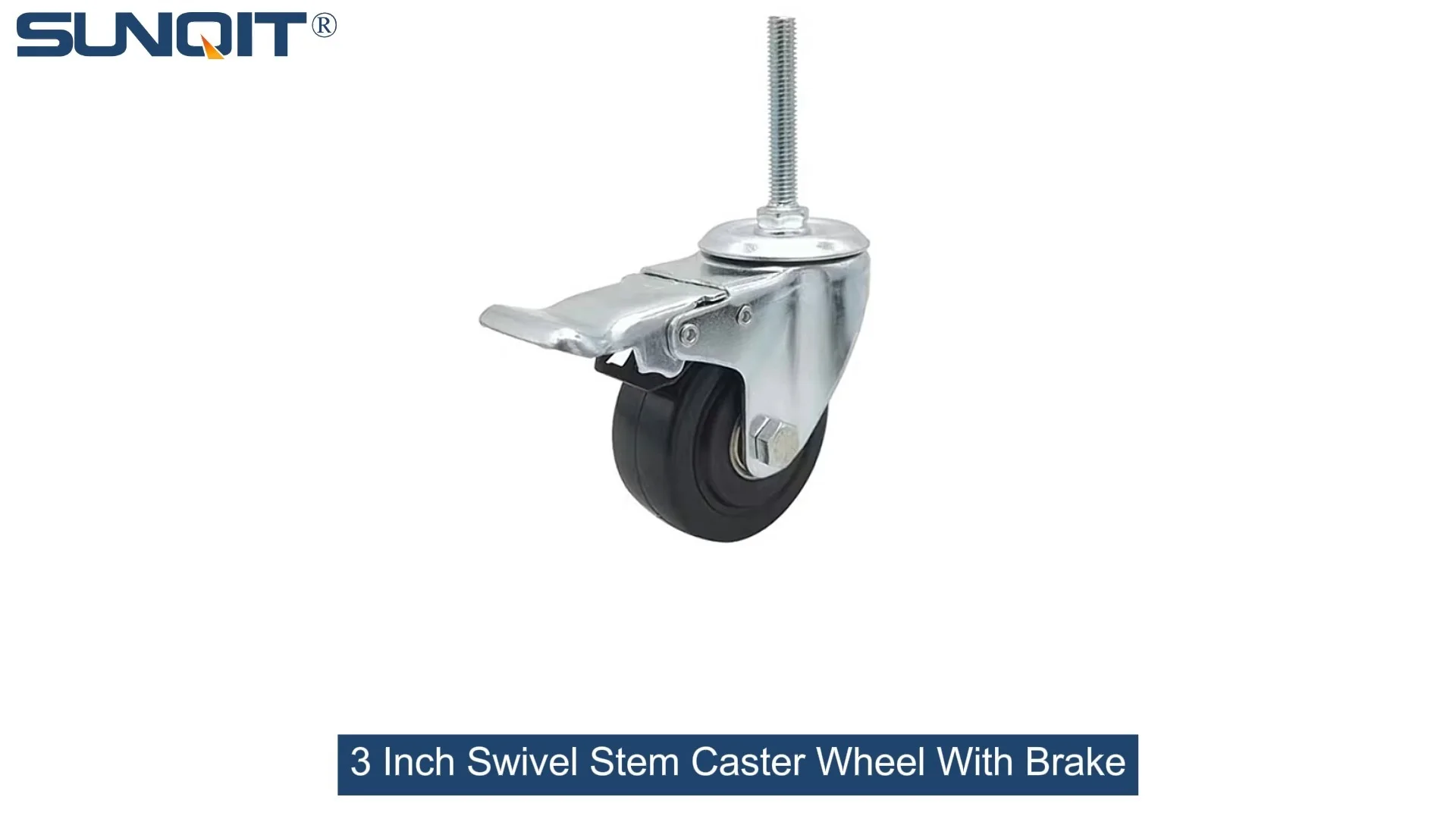
Swivel Stem Caster Wheel with Brake
360 Degree Swivel Stem Caster with brake. Threaded-post mount design, castors diameter 3 inch.Each swivel caster wheels loading 70KGS. Heavy enough and widely suit for carts, chairs, cabinet, flow rack, workbench, turnover rolley.
In the world of manufacturing, warehousing, and even small workshops, mobility and stability are two sides of the same coin. Whether you're moving a heavy workbench across a factory floor, shifting a turnover trolley loaded with parts, or repositioning a material rack to optimize workflow, the last thing you need is a wobbly, unsteady piece of equipment. And let's face it—few floors are perfectly smooth. Cracks, uneven concrete, minor slopes, or even temporary obstacles like loose cables can turn a simple move into a frustrating (and potentially dangerous) task. That's where the swivel stem caster wheel with brake steps in: a but powerful tool designed to balance mobility with rock-solid stability, even when the ground beneath isn't cooperating.
If you've ever struggled with a workbench that drifts when you're trying to work, or a trolley that veers off course on a slightly uneven surface, you know the importance of reliable casters. But not all casters are created equal. The swivel stem caster wheel with brake isn't just about moving things around—it's about giving you control. Control to stop precisely where you need, control to keep equipment steady during use, and control to navigate tricky floors without sacrificing safety or efficiency. In this article, we'll dive deep into what makes these casters special, focusing on their stability features for uneven floors, the components that make them tick, and why they're a must-have for anyone who values both mobility and peace of mind.
Understanding Swivel Stem Caster Wheels with Brake: The Basics
Before we get into the nitty-gritty of stability features, let's start with the fundamentals. What exactly is a swivel stem caster wheel with brake? At its core, it's a caster—a wheel mounted on a fork-like structure—that combines three key elements: a swivel mechanism, a stem for attachment, and a brake system. Let's break that down.
First, the swivel mechanism : Unlike rigid casters, which only move forward and backward, swivel casters can rotate 360 degrees. This makes them incredibly maneuverable, allowing equipment to turn, pivot, and navigate tight spaces with ease. That's why you'll find them on everything from office chairs to heavy-duty industrial trolleys—they make movement fluid and intuitive.
Next, the stem design : The "stem" refers to the rod or shaft that connects the caster to the equipment it's moving. Stem casters are typically inserted into a hole or socket on the bottom of a workbench, trolley, or rack, then secured with a nut or bolt. This design is popular because it's compact, easy to install, and works well with lightweight to medium-heavy equipment. Compare that to plate casters, which are mounted with a metal plate and screws—stems are often a better choice when space is limited or when you need a lower profile.
Finally, the brake system : This is what sets "with brake" casters apart. The brake is usually a foot-operated lever (though some are hand-operated) that, when engaged, locks either the wheel itself or the swivel mechanism (or both). Locking the wheel prevents it from rolling, while locking the swivel keeps the caster from rotating. Together, these features turn a mobile piece of equipment into a stationary one, ensuring it stays put even if bumped or jostled.
Now, you might be thinking: "Why not just use any swivel caster?" The answer lies in the challenge of uneven floors. On perfectly smooth ground, almost any caster can work, but when the floor dips, rises, or has rough patches, stability becomes a problem. A standard swivel caster without a brake might roll unexpectedly on a slope; a rigid caster can't adjust to unevenness, leading to wobbling. The swivel stem caster with brake, however, is engineered to address these issues head-on.
Key Stability Features for Uneven Floors: What Makes These Casters Stand Out
So, what exactly makes a swivel stem caster wheel with brake stable on uneven floors? It's not just one feature—it's a combination of thoughtful design choices that work together to counteract the challenges of rough terrain. Let's explore the most important ones.
1. Dual-Lock Brakes: Stopping Power When You Need It
The brake system is the star here, and not all brakes are created equal. The best swivel stem casters with brake feature dual-lock brakes , which lock both the wheel and the swivel simultaneously. Why does this matter on uneven floors? Imagine you're working on a slightly sloped surface: if you only lock the wheel, the swivel might still allow the caster to rotate, causing the equipment to shift or tilt. By locking the swivel, you "fix" the direction of the caster, preventing it from turning and keeping the load balanced. On uneven ground, this dual lock acts like an anchor, ensuring your workbench or trolley doesn't twist or slide, even if one wheel is on a higher spot than the others.
Some brakes are designed to engage gradually, which is helpful for precision stopping. Others have a "positive lock" mechanism, meaning once engaged, they won't release unless intentionally unlocked—no slipping or partial engagement, even under heavy loads. This is crucial for stability: a brake that gives way on an incline isn't just annoying; it's a safety hazard.
2. Swivel Offset and Kingpin Design: Smoothing Out the Bumps
The swivel mechanism itself plays a big role in how well a caster handles uneven floors. Look for casters with a swivel offset —the distance between the center of the wheel and the center of the swivel bearing. A properly offset design allows the wheel to pivot more smoothly when encountering obstacles, reducing the "jerk" you feel when rolling over a bump. This not only makes movement easier but also helps maintain stability by distributing weight more evenly across the casters.
Kingpinless swivel designs are another upgrade to watch for. Traditional casters have a kingpin (a bolt that holds the swivel race together), which can wear down over time, leading to play or wobble. Kingpinless casters use a raceway system instead, which is more durable and reduces friction, ensuring smooth swiveling even after years of use on rough floors. Less wobble means more stability, especially when the caster is under load.
3. Wheel Material and Tread: Grip and Shock Absorption
The wheel itself is often overlooked, but it's a critical stability component—especially on uneven floors. The material and tread pattern of the caster wheel determine how well it grips the surface, absorbs shocks, and rolls over obstacles. For uneven floors, here's what to look for:
- Rubber or polyurethane treads : These materials are softer than hard plastic or metal, which means they conform slightly to uneven surfaces. Think of them like running shoes with cushioned soles—they absorb small bumps and provide better traction, reducing the chance of slipping. Polyurethane, in particular, is a popular choice because it's durable, resistant to chemicals and oils (common in industrial settings), and offers excellent grip on both smooth and rough floors.
- Wide tread width : A wider wheel spreads the load over a larger area, which helps prevent sinking into soft spots (like cracks filled with debris) or tipping on uneven edges. Narrow wheels can get caught in gaps; wide wheels glide over them more easily.
- Non-marking treads : While this is more about floor protection than stability, it's worth noting—non-marking rubber or polyurethane won't leave scuffs on finished floors, which is a bonus for workshops or warehouses where appearance matters.
4. Stem Strength and Adjustability: A Secure Connection
The stem is the bridge between the caster and your equipment, so its strength and fit are non-negotiable. Swivel stem casters come in various stem types—threaded stems, grip stems, expanding stems—but for stability, a tight, secure fit is key. Threaded stems, which screw into a threaded hole, are ideal because they create a rigid connection, minimizing play between the caster and the equipment. Grip stems (pressed into a hole) work well too, but they rely on friction, so they're better for lighter loads.
Some advanced stem designs even offer height adjustability , which can be a game-changer on uneven floors. By the stem length, you can level out equipment that's sitting on a slope or has one caster higher than the others. Pair this with adjustable leveling feet (a common caster accessory), and you've got a system that can adapt to almost any floor irregularity. Imagine a workbench with four casters: if one corner is slightly lower due to a dip in the floor, you can raise that caster's stem to level the bench, ensuring it doesn't rock during use.
5. Load Capacity: Matching the Caster to the Job
Last but never least: load capacity. A caster's stability is only as good as its ability to support the weight it's carrying. Overloading a caster can cause the wheel to bend, the swivel mechanism to seize, or the brake to fail—all of which lead to instability, especially on uneven floors. When choosing a swivel stem caster with brake, always check the load rating (usually listed in pounds or kilograms) and make sure it's rated for more than the maximum weight of your equipment plus its contents. For example, if your workbench weighs 200 lbs and you typically load it with 300 lbs of tools and parts, choose a caster with a load capacity of at least 500 lbs (and preferably more, to be safe).
Remember: load capacity is per caster, not total. So if your equipment has four casters, the total load capacity is four times the per-caster rating. Distributing weight evenly across all four casters is also crucial—uneven loading can cause some casters to bear more weight than others, leading to premature wear and instability.

Components That Matter: Beyond the Wheel
A swivel stem caster wheel with brake is more than just a wheel on a stick—it's a system of components working together to deliver stability. Let's zoom in on the parts that make the biggest difference, including the caster wheel itself, caster accessories, and how adjustable leveling feet can complement your casters for even better results.
The Caster Wheel: The Foundation of Stability
We touched on wheel material and tread earlier, but let's dive deeper. The caster wheel is the only part of the caster that touches the floor, so its design directly impacts how the caster handles uneven surfaces. Here are a few key wheel features to consider:
- Wheel diameter : Larger wheels (e.g., 5-6 inches) roll over obstacles more easily than smaller ones (2-3 inches). Think of a bicycle vs. a skateboard—bigger wheels handle bumps better. For very uneven floors, a larger diameter can make a noticeable difference in smoothness and stability.
- Bearing type : Casters use either ball bearings or roller bearings to reduce friction in the wheel. Ball bearings are standard and work well for light to medium loads, while roller bearings (or precision bearings) are smoother and more durable for heavy loads. On uneven floors, smoother rolling means less jostling, which helps keep equipment steady.
- Hub material : The hub is the center of the wheel, where it attaches to the caster fork. Metal hubs are stronger than plastic ones and less likely to crack under stress, which is important for maintaining alignment on rough floors. A cracked hub can cause the wheel to wobble, leading to instability.
Caster Accessories: Enhancing Performance
Caster accessories might seem like afterthoughts, but they can significantly boost stability, especially on uneven floors. Here are a few to look for:
- Swivel locks : While many casters with brakes include a swivel lock as part of the brake system, standalone swivel locks are available as accessories. These are useful if you need to lock the swivel without engaging the wheel brake (e.g., when moving equipment in a straight line and wanting to prevent sideways drift).
- Brake extensions : In some cases, the brake lever might be hard to reach (e.g., on low-profile equipment). Brake extensions add length to the lever, making it easier to engage or disengage the brake, even when the caster is close to the ground.
- Dust covers : For casters used in dusty or dirty environments (like construction sites or warehouses with debris), dust covers prevent dirt from getting into the swivel mechanism or brake. A clean mechanism operates more smoothly and lasts longer, ensuring consistent performance on uneven floors.
Adjustable Leveling Feet: A Perfect Pair for Casters
While we're focused on casters, it's worth mentioning adjustable leveling feet as a complementary component. These are small, threaded feet that can be screwed into the bottom of equipment, often alongside casters. When you need maximum stability—say, during precision work on a workbench—you can lower the leveling feet to lift the casters off the ground, effectively turning the equipment into a stationary unit. On uneven floors, you can adjust individual leveling feet to compensate for dips, ensuring the equipment sits perfectly flat.
Some equipment even combines casters and leveling feet in a single design: the casters allow for mobility, and the leveling feet provide stability when parked. This is especially useful for workbenches or heavy racks that need to be moved occasionally but stay in place most of the time. For example, a workbench with four swivel stem casters and four adjustable leveling feet gives you the best of both worlds—roll it to a new location, engage the caster brakes, then lower the leveling feet to lock it into a stable, wobble-free position, even if the floor isn't perfect.

How Swivel Stem Caster Wheels with Brake Compare to Other Caster Types
To truly appreciate the stability of swivel stem casters with brake on uneven floors, it helps to compare them to other common caster types. Let's break down the pros and cons of four popular options:
| Caster Type | Mobility | Stability on Uneven Floors | Brake Function | Best For |
|---|---|---|---|---|
| Rigid Caster (No Swivel) | Low—only moves forward/backward | Poor—can't pivot to adjust to unevenness; may tip if one wheel hits a bump | Usually none; some have wheel locks | Straight-line movement on smooth floors (e.g., conveyor systems) |
| Swivel Caster (No Brake) | High—360° rotation for easy maneuvering | Fair—swivels to navigate unevenness but lacks control; may roll unexpectedly on slopes | None | Lightweight equipment that's constantly moving (e.g., shopping carts) |
| Plate Caster (Swivel with Brake) | High—same swivel maneuverability as stem casters | Good—plate mounting is strong, but plates add height, which can increase tipping risk on uneven floors | Wheel and/or swivel lock | Heavy equipment where mounting space isn't limited (e.g., large toolboxes) |
| Swivel Stem Caster with Brake | High—excellent swivel maneuverability | Excellent—stem design is low-profile (reduces tipping), brake locks wheel/swivel, and wheel materials adapt to unevenness | Dual-lock (wheel + swivel) available | Medium-heavy equipment on uneven floors (e.g., workbenches, turnover trolleys, material racks) |
As the table shows, swivel stem casters with brake strike the best balance between mobility and stability for uneven floors. Rigid casters are too restrictive, swivel casters without brakes lack control, and plate casters, while strong, can be bulkier and more prone to tipping on slopes due to their higher profile. The swivel stem design keeps the center of gravity low, the brake system locks in place, and the wheel materials adapt to rough surfaces—making them the top choice for anyone who needs to move equipment but refuses to compromise on stability.

Practical Applications: Where Swivel Stem Caster Wheels with Brake Shine
Theory is great, but let's talk real-world scenarios. Where do swivel stem caster wheels with brake make the biggest difference? Here are a few common applications where their stability features for uneven floors truly shine:
Workbench Mobility and Stability
A workbench is the heart of any workshop or manufacturing station, and it's often loaded with tools, parts, and ongoing projects. Being able to move it to a new location (e.g., closer to a material rack or near a colleague for collaboration) is invaluable—but once it's in place, it needs to stay steady. On an uneven floor, a workbench with standard casters might rock when you're using a drill or saw, making precise work impossible. With swivel stem casters with brake, you can roll the bench to where you need it, engage the dual locks, and trust that it won't budge. Even if the floor has a slight slope, the brakes keep it anchored, and the wheel treads grip to prevent slipping during use.
Many workbenches also come with adjustable leveling feet, which pair perfectly with these casters. For example, the "Workbench E (Single Deck—Without Caster)" is a popular model that can be retrofitted with swivel stem casters and leveling feet, giving users the flexibility to move or lock down as needed. This combination ensures the work surface stays level, even if the floor isn't, which is critical for tasks like assembly, testing, or quality control.
Turnover Trolleys and Material Racks
Turnover trolleys and material racks are workhorses in warehouses and factories, transporting parts, raw materials, and finished goods between stations. These trolleys often carry heavy loads, and their paths can take them across some of the most uneven floors in a facility—think loading docks, areas near production lines with spilled oil or debris, or older concrete with cracks. A trolley with faulty casters isn't just inefficient; it's a safety risk. A swivel stem caster with brake ensures the trolley can be moved smoothly around obstacles, then locked in place when loading or unloading. The wide wheel treads prevent it from getting stuck in cracks, and the brakes keep it from rolling away when parked on a slope—no more chasing runaway trolleys or struggling to keep them steady while loading.
Take the "Material Rack B (3 Row and 3 Floor)," a common storage solution for small parts. Adding swivel stem casters with brake to this rack turns it into a mobile storage unit that can be positioned right next to a production line, then locked to prevent movement. This saves time (no more walking back and forth to a stationary rack) and reduces the risk of parts falling off due to a wobbly rack.
Industrial and Laboratory Settings
In settings where precision and safety are paramount—like laboratories or cleanrooms—even minor instability can have serious consequences. A lab cart carrying fragile glassware or sensitive equipment can't afford to wobble on an uneven floor. Swivel stem casters with brake provide the control needed here: smooth movement for repositioning, precise braking for stability during use, and non-marking wheels to protect specialized flooring. In industrial settings with ESD (electrostatic discharge) concerns, some casters even come with conductive wheels or brakes to prevent static buildup—though that's a bonus feature beyond the scope of stability, it's a testament to how versatile these casters can be.
Choosing the Right Swivel Stem Caster Wheel with Brake: What to Look For
Now that you know why swivel stem casters with brake are ideal for uneven floors, how do you choose the right one for your needs? Here are the key factors to consider:
- Floor type : Is your floor concrete, tile, wood, or carpet? For rough concrete, opt for polyurethane or rubber wheels with deep treads. For smooth tile or wood, non-marking wheels are a must to avoid scratches.
- Load capacity : Calculate the total weight of your equipment plus its typical load, then divide by the number of casters (usually 4). Choose casters with a load rating that exceeds this per-caster weight to be safe.
- Environment : Will the casters be exposed to oil, chemicals, water, or extreme temperatures? Look for wheels and bearings resistant to these elements (e.g., stainless steel components for wet areas, chemical-resistant polyurethane for labs).
- Swivel and brake type : Do you need dual locks (wheel + swivel) or just a wheel lock? Kingpinless swivel mechanisms are more durable for heavy use. Foot brakes are easier to operate than hand brakes for most applications.
- Stem size and type : Measure the hole diameter and depth on your equipment to ensure the stem fits. Threaded stems are best for secure attachment; expanding stems work well if you can't drill threaded holes.
- Wheel size and material : Larger wheels (5+ inches) for very uneven floors; smaller wheels for tight spaces. Rubber or polyurethane for grip and shock absorption.
When in doubt, consult with a caster supplier who can help you match the caster to your specific needs. Many suppliers offer samples, so you can test a few options on your actual floor before committing to a full set.
Maintenance Tips: Keeping Your Casters Stable for the Long Haul
Even the best swivel stem caster wheels with brake need a little TLC to maintain their stability, especially on uneven floors. Here are some simple maintenance tips to keep them performing at their best:
- Clean the brakes regularly : Brakes can get clogged with dust, hair, or debris, which can prevent them from engaging fully. Use a brush or compressed air to clean the brake mechanism monthly, and lubricate with a light oil (like WD-40) if it starts to stick.
- Inspect wheels for wear : Check the tread for cracks, flat spots, or excessive wear. Worn wheels lose grip and stability, especially on uneven floors. replace wheels if the tread is less than 1/8 inch thick or if there's visible damage.
- Tighten stems and hardware : Vibrations from moving on uneven floors can loosen stem nuts or bolts. Check them quarterly and tighten as needed to prevent the caster from wobbling.
- Lubricate swivel mechanisms : A little grease or oil in the swivel raceway keeps the caster turning smoothly. Do this every 6 months (more often in dirty environments) to prevent rust and friction.
- Check alignment : If a caster starts to wobble even when the brakes are off, the wheel or swivel mechanism might be misaligned. This can happen if the stem is bent or the fork is damaged. replace the caster if alignment can't be fixed—misaligned casters are unstable and can damage floors.
By following these tips, you'll extend the life of your casters and ensure they continue to provide the stability you need, even on the most uneven floors.
Conclusion: Stability That Moves with You
At the end of the day, the swivel stem caster wheel with brake is more than just a piece of hardware—it's an investment in efficiency, safety, and peace of mind. Whether you're running a busy factory, a small workshop, or a laboratory, the ability to move equipment freely and lock it securely, even on uneven floors, can transform how you work. No more struggling with wobbly workbenches, no more chasing runaway trolleys, no more compromising on where you can set up shop.
From their dual-lock brakes and shock-absorbing wheels to their strong stems and versatile design, these casters are built to handle the real-world challenges of imperfect floors. Pair them with caster accessories like swivel locks or adjustable leveling feet, and you've got a system that adapts to your space, not the other way around.
So the next time you're frustrated by a piece of equipment that won't stay put or a floor that seems determined to trip you up, remember: the right casters can make all the difference. Swivel stem caster wheels with brake aren't just about moving things—they're about giving you control. And in a world where every second and every safety detail counts, that control is priceless.