- Company Articles
- Products and Technology
- Product knowledge
- Swivel Stem Caster Wheel with Brake: Tread Options for Smooth vs Rough Floors

Swivel Stem Caster Wheel with Brake: Tread Options for Smooth vs Rough Floors
Related Product
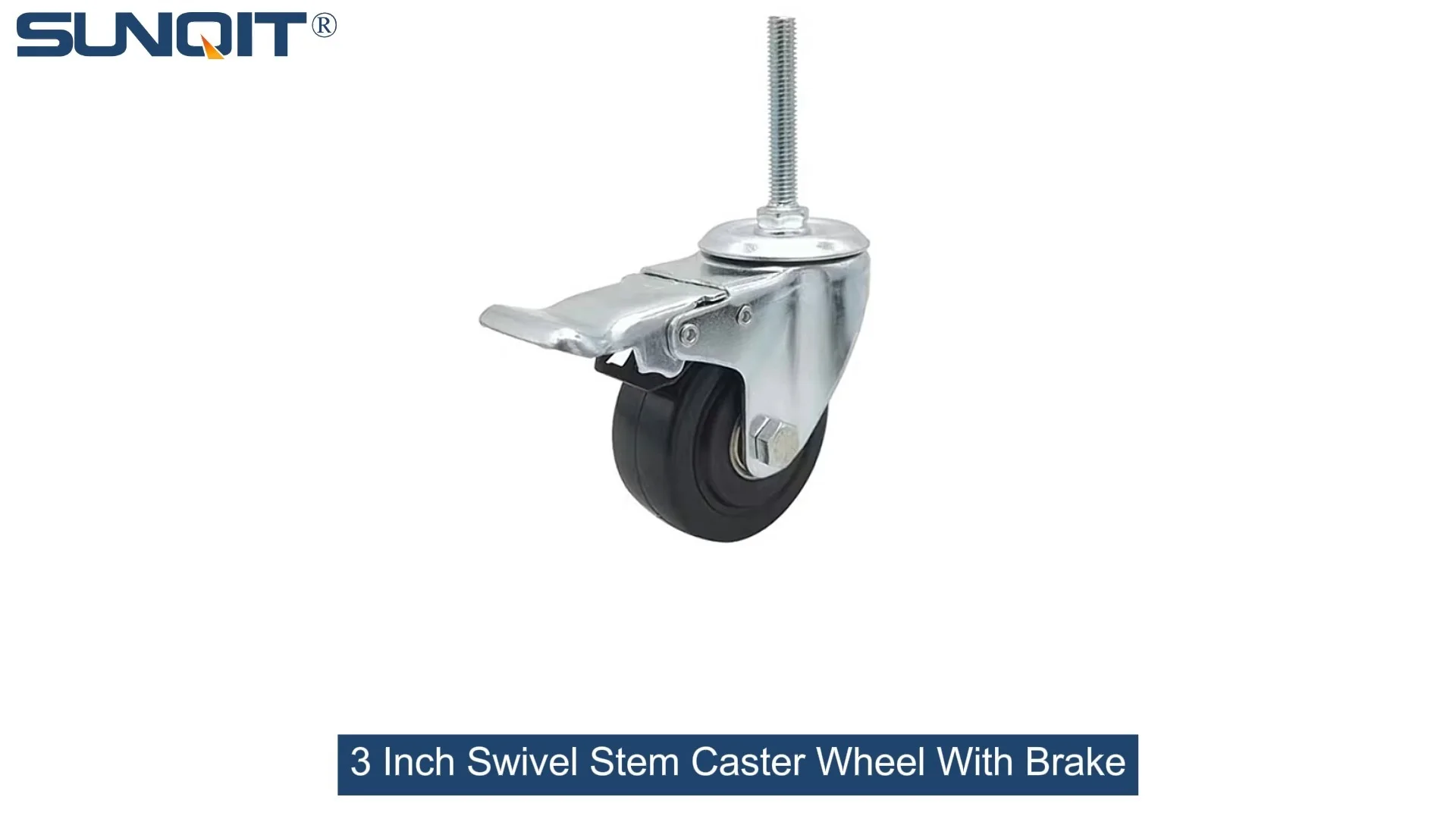
Swivel Stem Caster Wheel with Brake
360 Degree Swivel Stem Caster with brake. Threaded-post mount design, castors diameter 3 inch.Each swivel caster wheels loading 70KGS. Heavy enough and widely suit for carts, chairs, cabinet, flow rack, workbench, turnover rolley.
Walk into any bustling workspace—a warehouse where pallets glide between shelves, a hospital where medication carts zip down corridors, or a small workshop where a workbench needs to shift from one corner to another—and you'll quickly realize something: the unsung heroes keeping everything moving (and stopping) are the caster wheels. We rarely think about them until they fail: a wheel that sticks on a smooth floor, a brake that doesn't engage on a slope, or a tread that tears after a week on rough concrete. But when it comes to balancing mobility, safety, and efficiency, few components matter more than the swivel stem caster wheel with brake . These specialized wheels combine the flexibility of 360-degree movement with the security of a reliable brake, making them indispensable in countless industries. Yet, not all of these wheels are built the same—and the secret to their performance lies in one often-overlooked part: the tread. In this guide, we'll explore how tread options for swivel stem caster wheels with brake differ, why they matter for smooth vs. rough floors, and how to choose the right one for your space.
What Is a Swivel Stem Caster Wheel with Brake, Anyway?
Before diving into treads, let's break down what makes a swivel stem caster wheel with brake unique. At its core, it's a wheel assembly designed to attach to equipment (like carts, workbenches , or machinery) via a stem—a rod or bolt that inserts into a mounting hole or socket. Unlike plate-mount casters (which bolt onto a flat surface), stem casters are favored for their simplicity: drill a hole, insert the stem, and secure it with a nut or pin. This makes them ideal for equipment where space is tight or drilling a full plate mount isn't feasible.
The "swivel" part comes from a rotating raceway (the housing that holds the wheel), allowing the wheel to turn 360 degrees. This is what gives the caster its maneuverability—critical for navigating tight corners or crowded spaces. Then there's the brake: a mechanism that locks the wheel (and sometimes the swivel) in place. Most brakes are foot-operated (step on to lock, step again to release), ensuring quick, one-handed operation when you need to stabilize a load.
But here's the thing: even the best swivel and brake design can fail if the tread isn't suited to the floor. Imagine attaching a delicate rubber tread to a caster meant for a gravel driveway—it would tear in days. Or using a hard steel tread on a polished hospital floor—you'd leave scratches and create a deafening racket. Tread is the interface between the caster and the ground, and its material, texture, and hardness directly impact everything from traction to floor damage to noise.
Tread Materials: The Foundation of Performance
Think of caster tread like the soles of your shoes. You wouldn't wear flip-flops on a hiking trail, and you wouldn't lace up steel-toed boots for a day at the mall. The same logic applies here: tread materials are engineered for specific conditions. Let's break down the most common options and how they stack up.
Polyurethane: The All-Rounder for Smooth Spaces
Polyurethane is the Swiss Army knife of caster treads. Made by blending plastic and rubber, it's tough yet flexible, offering a rare balance of durability, grip, and floor protection. Unlike pure rubber, polyurethane resists oil, grease, and chemicals—making it a favorite in factories and labs. It's also non-marking, which is why you'll see it on workbenches in electronics shops or medical carts in hospitals, where scuffing polished floors is a big no-no.
On smooth floors—think polished concrete, marble, or hardwood—polyurethane truly shines. Its slightly soft texture conforms to tiny imperfections in the floor, creating friction that prevents slipping, even when the caster is loaded with heavy tools or supplies. It also absorbs shock, reducing noise (no more "clanking" as you roll a cart down a corridor) and vibration (critical for sensitive equipment like microscopes or test tubes). The downside? Polyurethane isn't invincible. On rough, abrasive surfaces like gravel or cracked asphalt, its flexibility works against it: rocks and debris can tear at the tread, leading to premature wear.
Rubber: The Grip Master (But Less Durable)
Natural or synthetic rubber treads are all about traction. Rubber's high coefficient of friction means it "sticks" to floors, making it ideal for situations where slippage could be dangerous—like loading docks or ramps. It also excels at absorbing vibration, which is why you'll find it on laundry carts in hotels or food service trolleys, where a smooth ride prevents spills.
But rubber has a trade-off: it's softer than polyurethane or nylon, so it wears faster on rough surfaces. Drag a rubber-treaded caster over gravel or uneven concrete, and you'll notice chunks of rubber peeling off within weeks. It's also prone to marking floors if it contains carbon black (a common additive for strength), so opt for "non-marking rubber" if you're working on polished surfaces.
Nylon: The Hard, Lightweight Performer
Nylon treads are the opposite of rubber: hard, rigid, and built for speed. Made from a tough thermoplastic, they have low rolling resistance, meaning they glide effortlessly on smooth floors—great for light loads like mail carts or office chairs. Nylon is also chemical-resistant (it won't degrade in contact with oils or solvents) and moisture-proof, making it a solid choice for wet environments like car washes or breweries.
The catch? On smooth, dry floors, nylon can be slippery under heavy loads. Imagine pushing a fully loaded workbench with nylon treads across a waxed warehouse floor—hit a slight incline, and it might start sliding backward. And on rough floors? Nylon's rigidity becomes a liability. It doesn't absorb shocks, so every bump sends vibrations through the equipment, and sharp debris can chip or crack the tread.
Steel & Cast Iron: The Heavy-Duty Warriors
When the going gets tough, steel and cast iron treads step up. These are the tanks of the caster world, designed for extreme loads (think 1,000+ pounds) and brutal environments. Steel treads are stamped or forged from high-carbon steel, while cast iron is poured into molds, creating a dense, wear-resistant surface. Both laugh at rough floors: gravel, rebar, even broken glass barely leaves a mark. They're also heat-resistant, making them ideal for foundries or outdoor use in hot climates.
But there's a reason you don't see steel treads in hospitals: they're loud. Rolling a steel-treaded cart across concrete sounds like a drumline practicing in your garage. They also mark floors—badly. Drag a steel wheel across a polished floor, and you'll leave scratch lines that won't buff out. For these reasons, steel and cast iron are reserved for heavy-industry settings where durability trumps noise or aesthetics.

Smooth Floors: What Treads Work Best?
Smooth floors—polished concrete, hardwood, tile, or vinyl—are common in offices, retail spaces, labs, and hospitals. They're easy to clean, look professional, and allow for fast, efficient movement. But they also demand caster treads that prioritize three things: grip (to prevent slipping), floor protection (to avoid scratches), and quiet operation (to keep the peace).
Let's start with grip. On a perfectly smooth floor (like marble), even a slight incline can turn a loaded cart into a runaway train. Polyurethane treads are your best bet here: their rubber-like texture creates friction without being overly sticky, so the caster rolls smoothly but stops when you hit the brake. Rubber works too, but only if it's non-marking—otherwise, you'll leave black streaks that require special cleaners to remove.
Floor protection is another big concern. Nylon treads, while smooth-rolling, are hard enough to scratch soft floors like hardwood or vinyl. Polyurethane, being slightly elastic, acts like a buffer: it conforms to the floor rather than digging into it. This is why workbenches in woodworking shops often use polyurethane-treaded casters—they protect the shop's polished concrete floors from the bench's heavy weight.
Noise is the final piece. In settings like hospitals or libraries, a loud caster can disrupt workflows or annoy customers. Polyurethane and rubber excel here: their softness absorbs sound waves, so rolling a cart sounds more like a whisper than a roar. Nylon, being hard, is louder, but still quieter than steel. Avoid steel treads on smooth floors unless you want to sound like you're operating a jackhammer.
| Tread Material | Best For Smooth Floors? | Grip | Floor Protection | Noise Level |
|---|---|---|---|---|
| Polyurethane | Yes – Top choice | Excellent (non-slip even when loaded) | Best (non-marking, elastic buffer) | Quiet (whisper-soft on tile/concrete) |
| Non-Marking Rubber | Yes – Good alternative | Excellent (superior traction on inclines) | Good (no scratches, but check for marking) | Quiet (slightly louder than polyurethane) |
| Nylon | Only for light loads | Poor (slippery under heavy weight) | Fair (may scratch soft floors) | Moderate (more noise than polyurethane) |
| Steel/Cast Iron | No – Avoid | Good (but only if floor is textured) | Poor (scratches, marks) | Very loud (clanking, echoing) |

Rough Floors: Treads Built to Battle the Elements
Rough floors are the opposite: uneven, abrasive, and full of obstacles. Think construction sites (gravel, rebar), outdoor warehouses (cracked asphalt), or factories with oil spills and metal shavings. Here, the priority shifts from grip and quiet to durability and puncture resistance. A tread that works on smooth floors will fail here—polyurethane might tear, rubber might wear thin, and nylon might crack. So what treads thrive in the chaos?
Steel and cast iron are the obvious winners. Their hardness and density laugh off sharp debris: a nail or piece of glass will bounce off a steel tread instead of piercing it. They also handle uneven terrain better than soft treads. Imagine rolling a cart over a pothole: a polyurethane tread would sink into the hole, making the cart hard to push, while a steel tread would roll right over it. For extreme loads—like a 2,000-pound tool chest—steel is the only option that won't flatten or deform.
But steel isn't perfect. It's heavy, which can make carts harder to push (though the trade-off is durability). And in wet conditions, it can rust if not coated (look for galvanized steel to prevent this). For lighter loads (say, a 500-pound garden cart), heavy-duty rubber (like the kind used on truck tires) works well. Its thickness resists abrasion, and its flexibility helps it conform to rough surfaces, providing better traction than steel on muddy or wet terrain.
Avoid polyurethane and nylon on rough floors unless you're prepared to replace them frequently. Polyurethane, while durable on smooth surfaces, will wear down quickly on gravel—the small rocks act like sandpaper, grinding away the tread. Nylon, being rigid, will crack under the stress of uneven ground. Save these for indoor use only.

Beyond Floor Type: Other Factors to Consider
Floor type is the biggest factor in choosing a tread, but it's not the only one. Here are a few more things to keep in mind:
Load Capacity
Every caster has a maximum load rating, and the tread plays a role in this. Soft treads like rubber or polyurethane can compress under heavy loads, reducing their lifespan. For example, a polyurethane tread rated for 300 pounds might only handle 200 pounds on a rough floor, as the added friction and abrasion strain the material. Always check the manufacturer's specs and err on the side of overcapacity—better to have a caster that's too strong than one that fails mid-shift.
Environment
Is your workspace wet? Chemical-filled? Extremely hot or cold? Polyurethane and nylon handle chemicals well, but rubber can degrade in oil or solvents. Steel resists heat, but rubber hardens in cold temperatures (making it brittle). For outdoor use, look for treads with UV protection to prevent sun damage.
Caster Accessories Matter Too
Even the best tread won't perform if the caster's other components are cheap. Caster accessories like bearings, swivel locks, and stem adapters play a role in how smoothly the caster rolls and how securely it attaches to your equipment. For example, a sealed bearing (instead of an open one) keeps dirt and debris out, extending the caster's life. A stem adapter (one of the many useful caster accessories ) can help you fit a caster with a 1-inch stem into a 0.75-inch hole, saving you from having to drill a new one.
Brake Quality
A swivel stem caster wheel with brake is only as good as its brake. Look for brakes that lock both the wheel and the swivel (called "total lock" brakes)—these prevent the caster from moving or turning, which is crucial for stability on inclines. Avoid "wheel-only" brakes; they stop the wheel from rolling but allow the caster to swivel, which can still lead to movement if the load shifts.
Real-World Example: Choosing Casters for a Workshop Workbench
Let's put this all together with a real-world scenario. Suppose you run a small woodworking shop with a workbench that weighs 300 pounds (empty) and holds tools and materials up to another 200 pounds. The shop has polished concrete floors (smooth) and a small outdoor area with gravel (rough) where you sometimes stage lumber. You need swivel stem caster wheels with brake that let you move the bench indoors but also roll it outside occasionally.
Indoors, the priority is floor protection (you don't want to scratch the concrete), quiet operation (so you can hear your tools), and grip (the bench can't slide when you're sawing). Polyurethane treads are perfect here: non-marking, quiet, and grippy. Outdoors, the gravel is abrasive, so you need something durable. But you can't use steel—indoor noise would be a problem. The solution? Heavy-duty polyurethane with a thicker tread (1.5 inches instead of the standard 1 inch). It's still flexible enough for indoor use but tough enough to handle occasional outdoor trips. Pair it with total-lock brakes and sealed bearings (to keep sawdust out), and you've got a caster that works indoors and out.
Final Thoughts: Tread Care = Longevity
No matter which tread you choose, taking care of it will extend its life. Clean the treads regularly—wipe off oil, grease, or debris that can degrade the material. Lubricate the swivel joint and brake mechanism to keep them moving smoothly. And replace worn treads promptly: a tread that's 50% worn won't grip as well, increasing the risk of accidents. Many manufacturers sell replacement wheels, so you don't have to buy a whole new caster—just swap the tread.
At the end of the day, the swivel stem caster wheel with brake is a small component with a big job. By choosing the right tread for your floor type—polyurethane for smooth, steel for rough—you'll ensure your equipment moves when you need it to, stays put when you don't, and lasts for years to come. And isn't that worth a little extra thought?