- Company Articles
- Products and Technology
- Product knowledge
- Swivel Stem Caster Wheel with Brake: UV Resistance for Outdoor Industrial Use

Swivel Stem Caster Wheel with Brake: UV Resistance for Outdoor Industrial Use
Related Product
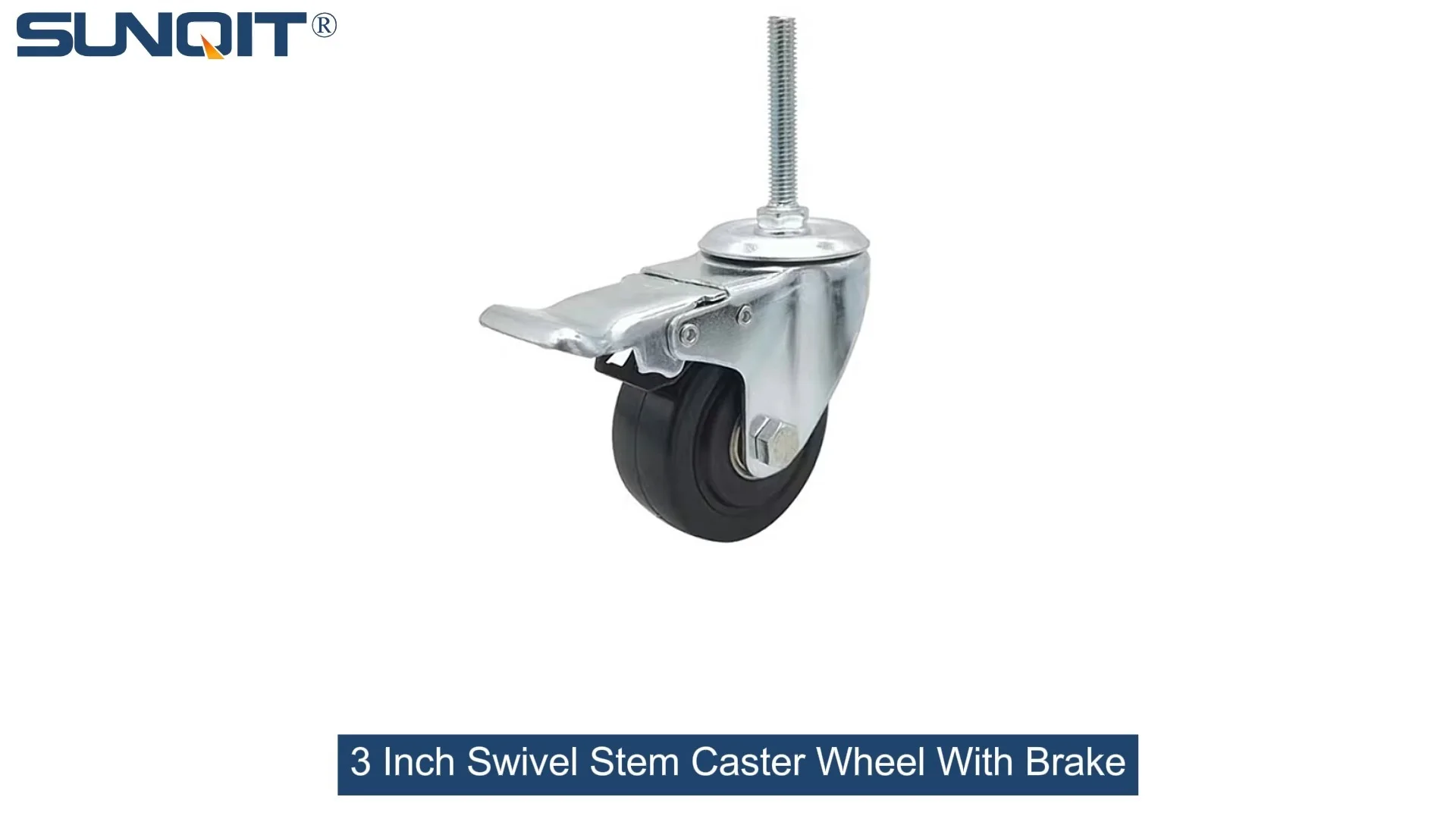
Swivel Stem Caster Wheel with Brake
360 Degree Swivel Stem Caster with brake. Threaded-post mount design, castors diameter 3 inch.Each swivel caster wheels loading 70KGS. Heavy enough and widely suit for carts, chairs, cabinet, flow rack, workbench, turnover rolley.
Picture this: It's a sweltering summer afternoon at a busy manufacturing plant. The loading dock is buzzing with activity—forklifts zipping by, workers maneuvering heavy material racks, and mobile workbenches gliding across the pavement. But suddenly, a loud scrape echoes through the area. A maintenance technician rushes over to find that a caster wheel on one of the workbenches has locked up, its once-smooth rotation now jerky and unresponsive. Upon closer inspection, the wheel's rubber has cracked and faded, the brake mechanism feels stiff, and the stem shows signs of rust. "Not again," sighs the plant manager. "These casters never last more than a few months out here. The sun just eats them alive."
If this scenario sounds familiar, you're not alone. Outdoor industrial environments—loading docks, construction sites, logistics yards—pose unique challenges for equipment mobility. Extreme temperatures, rain, dust, and most notably, ultraviolet (UV) radiation from the sun, can turn even the sturdiest caster wheels into liabilities. But what if there was a caster designed to stand up to these harsh conditions? Enter the swivel stem caster wheel with brake : a yet critical component that's quietly revolutionizing how industries handle outdoor mobility. In this article, we'll dive deep into why UV resistance matters for outdoor industrial casters, how these specialized wheels work, and why they're becoming a cornerstone of modern lean system setups.
What Is a Swivel Stem Caster Wheel with Brake?
Before we get into the nitty-gritty of UV resistance, let's start with the basics. A swivel stem caster wheel is a type of wheel assembly designed to attach to the bottom of equipment—think workbenches, turnover trolleys, or material racks—allowing them to move smoothly in any direction. The "stem" refers to the vertical rod that secures the caster to the equipment, while the "swivel" mechanism lets the wheel rotate 360 degrees, making tight turns and precise positioning a breeze. The "brake" is the star here: a lever or pedal that locks either the wheel (to prevent rolling) or the swivel (to keep the equipment facing a fixed direction), or both, ensuring stability when the equipment is stationary.
But not all swivel stem casters are created equal. Standard casters, often made with basic rubber or plastic components, might work well indoors, where they're shielded from the elements. But outdoors? They're often no match for UV rays, which break down polymers over time, causing wheels to crack, fade, or lose elasticity. That's where UV-resistant swivel stem casters with brakes come in. These are engineered with materials and designs specifically to withstand prolonged sun exposure, moisture, and temperature fluctuations—making them indispensable for outdoor industrial use.
Why UV Resistance Matters in Outdoor Industrial Settings
You might be wondering: Is UV radiation really that big of a deal? Let's break it down. The sun emits three types of UV rays: UVA, UVB, and UVC. While UVC is mostly absorbed by the ozone layer, UVA and UVB penetrate the atmosphere and can wreak havoc on materials. UVA rays, in particular, are known for causing "photoaging"—a process where the chemical bonds in polymers (like rubber, plastic, or polyurethane) break down over time. This leads to a host of problems:
- Brittleness: Rubber or plastic wheels become hard and prone to cracking, reducing shock absorption and increasing noise during movement.
- Fading: Colors fade, making equipment look worn and unprofessional—though this is more cosmetic than functional, it can still impact brand perception in customer-facing areas.
- Reduced Grip: UV damage can wear down the tread on wheels, making them slippery on wet or uneven surfaces—a major safety hazard in industrial settings.
- Brake Failure: Brake components, often made with plastic or metal, can degrade too. UV-exposed brake levers might become brittle and snap, or the locking mechanism could seize up, leaving equipment unable to stay in place.
- Increased Downtime: When casters fail, equipment is sidelined. Workers waste time waiting for replacements, and projects fall behind schedule—costing companies both time and money.
For industries that rely on outdoor mobility—like construction, logistics, or agriculture—these issues aren't just inconveniences; they're safety risks and financial drains. A cracked wheel could cause a workbench to tip over, spilling tools or materials. A seized brake might lead to a trolley rolling downhill, endangering workers. And replacing casters every few months adds up: if a single caster costs $20 and a workbench uses four, replacing them twice a year per bench in a plant with 50 benches totals $8,000 annually. Multiply that across all equipment, and the numbers get staggering.
UV-resistant swivel stem casters with brakes address these problems head-on. By using materials that are inherently resistant to UV degradation and adding protective coatings, they extend the lifespan of casters from months to years—saving money, reducing downtime, and keeping operations running smoothly.

Materials That Make the Difference: What Goes Into UV-Resistant Casters
So, what sets UV-resistant swivel stem casters with brakes apart from their standard counterparts? It all starts with the materials. Let's take a closer look at the key components and how they're engineered for outdoor durability:
1. Wheel Materials: Polyurethane vs. Rubber vs. Nylon
The wheel is the part of the caster that takes the most abuse—so getting its material right is critical. Here's how common wheel materials stack up when it comes to UV resistance:
- Standard Rubber: Affordable and quiet, but rubber is highly susceptible to UV damage. Over time, it hardens, cracks, and loses flexibility—making it a poor choice for outdoor use.
- Nylon: Nylon wheels are durable and resistant to chemicals, but they can become brittle in direct sunlight, especially at high temperatures. They also lack the shock absorption of rubber, making them noisy on rough surfaces.
- UV-Stabilized Polyurethane: This is the gold standard for UV-resistant caster wheels. Polyurethane is already known for its balance of durability, grip, and flexibility, but adding UV stabilizers (chemicals that absorb or reflect UV rays) takes it to the next level. These stabilizers prevent photoaging, keeping the wheel elastic and crack-free even after years of sun exposure. Plus, polyurethane wheels offer excellent load capacity—some can handle up to 800 lbs per wheel—making them ideal for heavy industrial equipment.
2. Stem and Frame: Corrosion Resistance
The stem (the metal rod that attaches the caster to the equipment) and the frame (the housing that holds the wheel) are equally important. Outdoor environments often mean moisture—rain, dew, or humidity—which can lead to rust. A rusted stem might seize in the mounting hole, making it impossible to replace the caster without drilling or cutting. To prevent this, UV-resistant casters typically use:
- Stainless Steel: Stainless steel stems and frames are resistant to rust and corrosion, even in wet conditions. They're strong, durable, and maintain their structural integrity under UV exposure.
- Zinc-Plated Steel: For a more cost-effective option, zinc-plated steel provides a protective barrier against moisture. While not as corrosion-resistant as stainless steel, it's still far better than untreated steel for outdoor use.
3. Brake Mechanisms: Smooth Operation, Even in the Sun
A caster's brake is only useful if it works reliably. UV-resistant swivel stem casters with brakes often feature enclosed brake mechanisms, which protect internal components (like springs and levers) from dust, moisture, and UV rays. Some models use stainless steel brake parts instead of plastic, ensuring the lever doesn't snap or become stiff over time. Others add lubricants that are resistant to high temperatures, preventing the brake from seizing up on hot days.

Key Features to Look for in UV-Resistant Swivel Stem Casters with Brakes
Not all UV-resistant casters are created equal. When shopping for outdoor industrial use, keep an eye out for these essential features:
1. UV Resistance Rating
Look for casters with a UV resistance rating, such as "UV stabilized" or "tested for 5,000+ hours of sunlight exposure." This indicates that the materials have been specifically treated to withstand sun damage.
2. Dual-Lock Brakes
The best outdoor casters have dual-lock brakes, which lock both the wheel (preventing rolling) and the swivel (preventing rotation). This is especially important on uneven terrain, where a swiveling caster could cause equipment to shift unexpectedly.
3. Load Capacity
Outdoor equipment is often heavy—think loaded material racks or workbenches with tools. Make sure the caster's load capacity (measured in pounds per wheel) matches your needs. A good rule of thumb: choose a caster with a load capacity 20% higher than your expected maximum load to account for uneven weight distribution.
4. Tread Design
The tread on the wheel affects grip, noise, and durability. For outdoor use, look for deep, wide treads that can handle gravel, dirt, or wet pavement without slipping. UV-resistant polyurethane treads are ideal here, as they maintain their grip even as they age.
5. Swivel Radius
The swivel radius is the distance from the center of the stem to the edge of the wheel. A smaller swivel radius means the caster can rotate in tighter spaces—useful for maneuvering in crowded loading docks or construction sites.

Fitting Into Lean Systems: How UV-Resistant Casters Boost Efficiency
In today's industrial landscape, lean manufacturing and lean system principles are all about eliminating waste—whether it's time, materials, or labor. UV-resistant swivel stem casters with brakes align perfectly with these goals by reducing downtime, minimizing replacement costs, and improving workflow efficiency.
Consider a lean system focused on "continuous flow," where materials and tools are moved seamlessly from one workstation to the next. If a caster fails mid-shift, the entire flow is disrupted. Workers have to stop what they're doing to fix or replace the caster, leading to delays and lost productivity. UV-resistant casters, with their longer lifespan and reliability, keep equipment moving, ensuring that the production line stays on track.
Mobility is also a key tenet of lean systems. Mobile workbenches, for example, allow workers to bring tools directly to the job site, reducing unnecessary movement. But if those workbenches can't withstand outdoor conditions, they're limited to indoor use—restricting flexibility. UV-resistant casters free up equipment to be used anywhere, whether it's a sunny loading dock, a rainy construction site, or a dusty warehouse floor.
Plus, by reducing the need for frequent caster replacements, these casters cut down on waste. Fewer broken casters mean fewer trips to the landfill, aligning with the "sustainability" aspect of modern lean practices. It's a win-win: your operation runs more efficiently, and you reduce your environmental footprint.
Real-World Applications: Where UV-Resistant Swivel Stem Casters Shine
UV-resistant swivel stem casters with brakes aren't just a one-trick pony—they're versatile enough to enhance a wide range of outdoor industrial equipment. Here are some common applications:
1. Mobile Workbenches
Outdoor workbenches are used for everything from equipment maintenance to on-site assembly. UV-resistant casters ensure these workbenches can be easily moved across gravel, pavement, or grass without worrying about wheel damage. The brake feature keeps them stable while workers use power tools or handle heavy parts.
2. Material Racks and Turnover Trolleys
Material racks and turnover trolleys are the backbone of logistics operations, transporting everything from raw materials to finished products. UV-resistant casters with brakes make it easy to load and unload these racks outdoors, even on sloped surfaces, without fear of the trolley rolling away.
3. Construction Equipment
On construction sites, mobile toolboxes, scaffolding platforms, and temporary workstations need to withstand harsh weather. UV-resistant casters ensure these tools stay mobile and functional, even after weeks of exposure to sun, rain, and dust.
4. Agricultural Machinery
Farms and agricultural facilities use mobile carts for feeding livestock, transporting produce, or storing equipment. UV-resistant casters hold up to long hours in the sun and can handle rough terrain like dirt or gravel.
Comparing Caster Types: Why UV-Resistant Swivel Stem Casters with Brakes Stand Out
Still not convinced that UV-resistant swivel stem casters with brakes are worth the investment? Let's compare them to other common caster types in outdoor settings:
| Caster Type | UV Resistance | Load Capacity | Brake Reliability | Suitable for Outdoor Use? | Typical Lifespan (Outdoors) |
|---|---|---|---|---|---|
| Standard Rubber Casters | Low—prone to cracking/fading | Medium (200-400 lbs) | Low—plastic brakes degrade quickly | No | 3-6 months |
| Nylon Casters | Medium—can become brittle in sun | High (500-800 lbs) | Medium—metal brakes last longer, but wheels may crack | Limited | 6-12 months |
| Non-Brake Swivel Casters | Varies by material | Varies | None—no brake mechanism | Only if UV-resistant, but unsafe on slopes | Varies (3-24 months) |
| UV-Resistant Swivel Stem Caster with Brake | High—UV-stabilized materials | High (300-1,000+ lbs) | High—enclosed, corrosion-resistant brakes | Yes | 2-5 years |
As the table shows, UV-resistant swivel stem casters with brakes outperform other types in nearly every category when it comes to outdoor use. Their combination of durability, load capacity, and brake reliability makes them the clear choice for industrial settings where equipment is exposed to the elements.
Maintenance Tips: Extending the Life of Your UV-Resistant Casters
While UV-resistant swivel stem casters with brakes are built to last, a little maintenance can go a long way in ensuring they perform at their best for years to come. Here are some simple tips:
- Clean Regularly: Dirt, debris, and grime can build up in the swivel mechanism or around the brake, causing it to stick. Use a hose or pressure washer to rinse off wheels and stems, then wipe dry with a cloth.
- Lubricate Moving Parts: Apply a UV-resistant lubricant (like silicone spray) to the swivel bearing and brake mechanism every 3-6 months. This keeps the caster rotating smoothly and prevents the brake from seizing.
- Inspect Brakes Monthly: Test the brake regularly to ensure it locks securely. If it feels loose or doesn't engage properly, tighten any loose bolts or replace worn parts (like brake pads).
- Check for Wear: Keep an eye on the wheel tread and stem for signs of damage. If the tread is worn down or the stem shows rust (even on stainless steel), it might be time for a replacement—though with UV-resistant casters, this should be a rare occurrence.
The Bottom Line: Investing in Durability Pays Off
In the world of outdoor industrial equipment, the smallest components often have the biggest impact. Swivel stem caster wheels with brakes might seem like a minor detail, but their performance can make or break a day's productivity. UV-resistant models, with their ability to withstand sun, rain, and rough terrain, are more than just a upgrade—they're a smart investment in reliability, safety, and efficiency.
By choosing UV-resistant casters, you're not just avoiding the frustration of frequent replacements or the cost of downtime. You're empowering your team to work more flexibly, move equipment with confidence, and focus on what really matters—getting the job done. So the next time you're shopping for casters, don't settle for "good enough." Look for the UV-resistant label, check the brake mechanism, and invest in a caster that's built to last—even under the harshest outdoor conditions.
After all, in industrial settings, the right caster isn't just a wheel—it's the foundation of a smoother, safer, and more productive operation. And when the sun is shining and the work is rolling along without a hitch, you'll be glad you made the switch.