- Company Articles
- Products and Technology
- Product knowledge
- Swivel Stem Caster Wheel with Brake: Waterproof Features for Humid Environments

Swivel Stem Caster Wheel with Brake: Waterproof Features for Humid Environments
Related Product
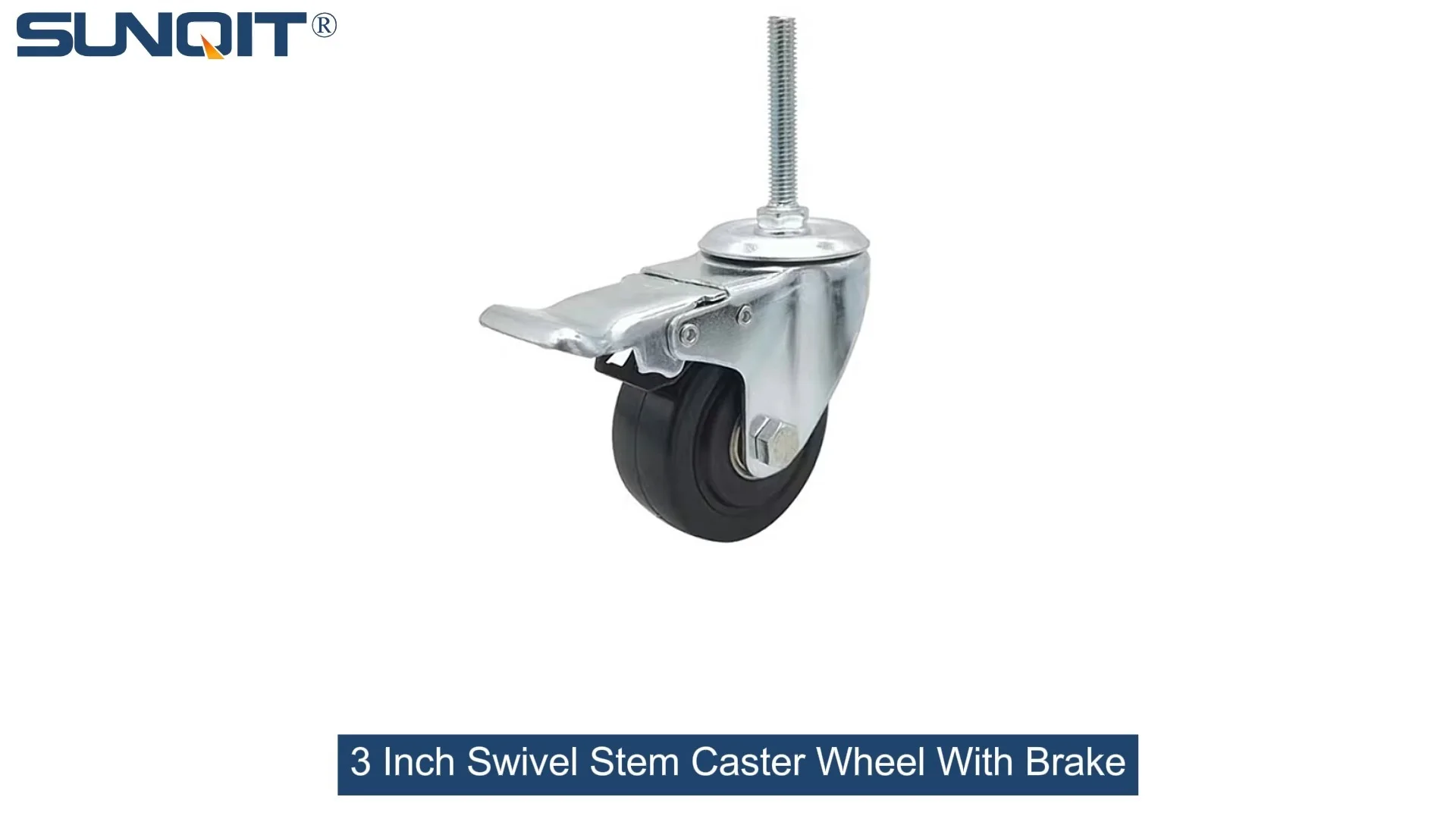
Swivel Stem Caster Wheel with Brake
360 Degree Swivel Stem Caster with brake. Threaded-post mount design, castors diameter 3 inch.Each swivel caster wheels loading 70KGS. Heavy enough and widely suit for carts, chairs, cabinet, flow rack, workbench, turnover rolley.
The Hidden Challenge of Humid Workspaces
Walk into any manufacturing plant, warehouse, or food processing facility, and you'll likely notice a common unsung hero: the caster wheel. These small but mighty components keep workbenches mobile, trolleys rolling, and production lines flowing. But in environments where humidity lingers—coastal factories, tropical warehouses, or facilities with frequent washdowns—casters face a silent enemy: moisture. Rust creeps into bearings, brakes seize up, and wheels degrade far faster than they should. For operations that rely on lean systems to stay efficient, a stuck caster or a corroded brake isn't just an annoyance; it's a bottleneck waiting to happen.
This is where the swivel stem caster wheel with brake steps in—not just as a mobility solution, but as a defender against the elements. Designed with waterproof features that stand up to damp air, splashes, and even occasional submersion, these casters are changing the game for businesses that can't afford downtime. Let's dive into how they work, why they matter, and how they're becoming a cornerstone of resilient, humidity-ready workspaces.
What Makes a Swivel Stem Caster Wheel with Brake Different?
First, let's break down the basics. A swivel stem caster wheel with brake is exactly what it sounds like: a wheel mounted on a stem (a rod that attaches to equipment like workbenches or trolleys), able to rotate 360 degrees for easy maneuvering, and equipped with a brake to lock it in place when stability is needed. But not all casters are built the same—especially when it comes to fighting moisture.
Traditional casters often use standard steel components and open bearings, which are quick to absorb moisture. Over time, that moisture leads to rust, which grits up the swivel mechanism and makes the wheel hard to turn. Brakes, usually made of basic rubber or metal, can crack or corrode, failing to grip when you need them most. For a lean system that prioritizes smooth, consistent workflows, this unpredictability is a problem. Imagine a production line where a trolley's caster jams mid-move, forcing workers to stop, unload, and fix the issue—suddenly, that "lean" efficiency grinds to a halt.

Waterproof Features: The Against Moisture
Waterproof swivel stem casters with brakes are engineered to fight moisture at every level. Let's unpack the key features that make them humidity-resistant:
1. Sealed Bearings: Keeping Water Out, Smoothness In
The heart of any caster is its bearing, and in humid environments, an open bearing is an open invitation for trouble. Waterproof casters use sealed or shielded bearings—metal or rubber seals that wrap around the bearing, blocking moisture, dust, and debris from getting inside. Think of it like a raincoat for the caster's joints: even if water splashes or humidity hangs in the air, the bearing stays dry, ensuring the wheel swivels and rolls as smoothly on day 100 as it did on day 1.
2. Rust-Resistant Materials: From Stem to Wheel
Material choice is everything. Instead of plain steel, these casters often feature stems and frames made from stainless steel or zinc-plated steel—alloys that naturally resist corrosion. The wheels themselves might be made from polyurethane or rubber compounds infused with additives to prevent cracking in damp conditions. Even the brake components get an upgrade: some models use stainless steel brake pedals or corrosion-resistant springs, ensuring the brake engages firmly, even after months of exposure to humidity.
3. IP Ratings: A Measure of Protection
Many waterproof casters come with an IP (Ingress Protection) rating, a two-digit code that tells you how well they resist solids and liquids. For humid environments, look for ratings like IP54 (protected against dust and splashing water from any direction) or IP65 (dust-tight and protected against low-pressure water jets). These ratings aren't just technical specs—they're a promise that the caster can handle the real-world conditions of your workspace, whether it's a warehouse near the ocean or a bakery with daily steam cleaning.
4. Drainage Design: Letting Moisture Escape
Even with seals and rust-resistant materials, some moisture might still find its way in. That's why many waterproof casters include subtle drainage channels or weep holes in the swivel housing. These tiny openings allow any trapped water to escape, preventing pooling that could lead to rust over time. It's a small detail, but it makes a big difference in long-term durability—especially in environments where casters are hosed down or exposed to condensation.

Why Lean Systems Can't Afford "Just Any Caster"
Lean systems are all about eliminating waste—whether it's time, materials, or effort. When a caster fails in a lean environment, it introduces waste in ways you might not expect. A workbench that won't move because of a rusted swivel forces workers to walk farther to retrieve tools. A trolley with a stuck brake delays material delivery to the production line, causing idle time. Over weeks and months, these small disruptions add up, chipping away at the efficiency lean systems aim to create.
Waterproof swivel stem casters with brakes align perfectly with lean principles by reducing maintenance waste. Instead of replacing casters every few months, you invest in a durable solution that lasts years. Instead of scheduling frequent repairs, your team focuses on value-adding tasks. And because the brakes and swivel mechanisms stay reliable, you avoid the "rework" of fixing mistakes caused by unstable equipment—like a workbench that shifts mid-assembly, leading to errors in the final product.
Take, for example, a electronics manufacturing plant that uses ESD workstations to protect sensitive components. In a humid climate, standard casters on these workstations might rust, creating static risks (rust is a poor conductor, disrupting ESD protection). A waterproof caster with a stainless steel stem and ESD-safe wheels, though? It maintains both mobility and static control, keeping the lean system on track and products defect-free.

Comparing the Options: Standard vs. Waterproof Swivel Stem Casters
Still on the fence about whether waterproof casters are worth the investment? Let's put them side by side with standard casters in a humid environment. The table below breaks down key factors like durability, maintenance, and cost over time:
| Feature | Standard Swivel Stem Caster with Brake | Waterproof Swivel Stem Caster with Brake |
|---|---|---|
| Materials | Plain steel, open bearings, basic rubber wheels | Stainless steel/zinc-plated frames, sealed bearings, moisture-resistant wheels |
| Expected Lifespan in Humid Environments | 6–12 months | 3–5 years |
| Maintenance Needs | Frequent lubrication, brake adjustments, bearing cleaning | Minimal: occasional lubrication (if needed), brake checks |
| Failure Risks | High: rusted bearings, seized brakes, cracked wheels | Low: sealed components prevent moisture damage |
| Cost Over Time | Higher (frequent replacements and repairs) | Lower (one-time investment, minimal upkeep) |
| Ideal For | Dry, indoor environments with low humidity | Coastal areas, food processing, washdown zones, tropical climates |
The numbers speak for themselves: while waterproof casters might have a higher upfront cost, their longevity and reliability make them the more economical choice for humid workspaces. For businesses running lean, this isn't just a purchase—it's a long-term investment in uninterrupted productivity.
Case Study: A Bakery's Battle with Humidity
Consider a mid-sized artisanal bakery in Miami, where the air is thick with moisture year-round. Their production line relied on turnover trolleys with standard casters to move dough, pans, and finished goods between stations. Within months, the casters began to rust: wheels squeaked, brakes stuck, and one trolley even collapsed when a corroded stem gave way, spilling dozens of loaves. The bakery was replacing casters every 3 months, at a cost of $200 per trolley (they had 10 trolleys). That's $8,000 a year in caster replacements alone—not counting the downtime from stuck trolleys.
After switching to waterproof swivel stem casters with brake (stainless steel frames, sealed bearings, IP54 rating), the results were dramatic. Six months in, not a single caster had failed. The brakes still engaged smoothly, the wheels rolled silently, and maintenance crews reported zero rust. The bakery estimates they'll save over $6,000 in the first year alone, not to mention the time saved from avoiding disruptions. "It's not just about the casters," said the plant manager. "It's about keeping our lean system lean. When the trolleys move like they should, everything else falls into place."
Choosing the Right Waterproof Caster: Key Considerations
Not all waterproof casters are created equal. To find the best fit for your humid workspace, keep these factors in mind:
1. Load Capacity: Don't Skimp on Strength
Even the most waterproof caster won't help if it can't support your equipment. Check the load rating (usually listed in pounds or kilograms) and make sure it exceeds the weight of your workbench, trolley, or machine. Remember: if you're adding tools or materials to the equipment, factor that into the total weight.
2. Wheel Material: Grip and Durability
Wheel material affects both traction and resistance to moisture. Polyurethane wheels are a popular choice—they're non-marking, grip well on smooth floors, and resist cracking in humidity. For heavier loads, rubber wheels with a moisture-resistant compound work well. Avoid plastic wheels in very humid environments; they can become brittle over time.
3. Brake Type: Foot vs. Side-Operated
Waterproof casters come with different brake styles. Foot brakes are easy to engage with a quick step, ideal for workbenches that need frequent locking. Side-operated brakes (levers) are better for trolleys that stay locked for longer periods. Look for brakes with stainless steel components and moisture-resistant springs to ensure they don't seize.
4. Stem Size and Mounting: Fit Matters
Swivel stem casters come in various stem diameters and lengths. Measure the mounting hole on your equipment (workbench, trolley, etc.) to ensure the stem fits snugly. A loose stem can cause wobbling, which leads to premature wear—even on a waterproof caster.
Beyond Casters: Complementary Accessories for Humid Lean Systems
Waterproof casters are a star player, but they work best when paired with other humidity-resistant components. For example, adjustable leveling feet with anti-slip suction cups can stabilize workbenches in damp areas, preventing sliding even if the floor is wet. Aluminum lean pipes and joints, which resist corrosion better than steel, are ideal for building mobile racks and trolleys that work alongside your casters. And caster accessories like corrosion-resistant mounting plates or stem extenders ensure the entire mobility system stays moisture-proof, from top to bottom.
Think of it as a system: your waterproof casters keep equipment moving, aluminum lean pipes keep structures strong, and adjustable leveling feet keep everything stable. Together, they create a workspace that's not just lean, but resilient—ready to handle whatever humidity throws its way.
The Bottom Line: Investing in Long-Term Efficiency
In humid environments, the cost of "cheap" casters is far higher than the price tag. Stuck brakes, rusted swivels, and frequent replacements eat into your budget and disrupt your lean system. Waterproof swivel stem caster wheels with brake aren't just a "nice-to-have"—they're a strategic investment in keeping your operation running smoothly, reducing waste, and protecting your bottom line.
So the next time you're evaluating equipment for your workspace, don't overlook the casters. Ask: Will these stand up to our humidity? Will they keep our lean system efficient? For the answer to both, look no further than a waterproof swivel stem caster with brake. It's a small component with a big impact—proving that sometimes, the best defense against moisture is a well-designed offense.