- Company Articles
- Products and Technology
- Product knowledge
- Swivel Stem Caster Wheels: A Key Component in Lean Pipe System Customization

Swivel Stem Caster Wheels: A Key Component in Lean Pipe System Customization
Related Product
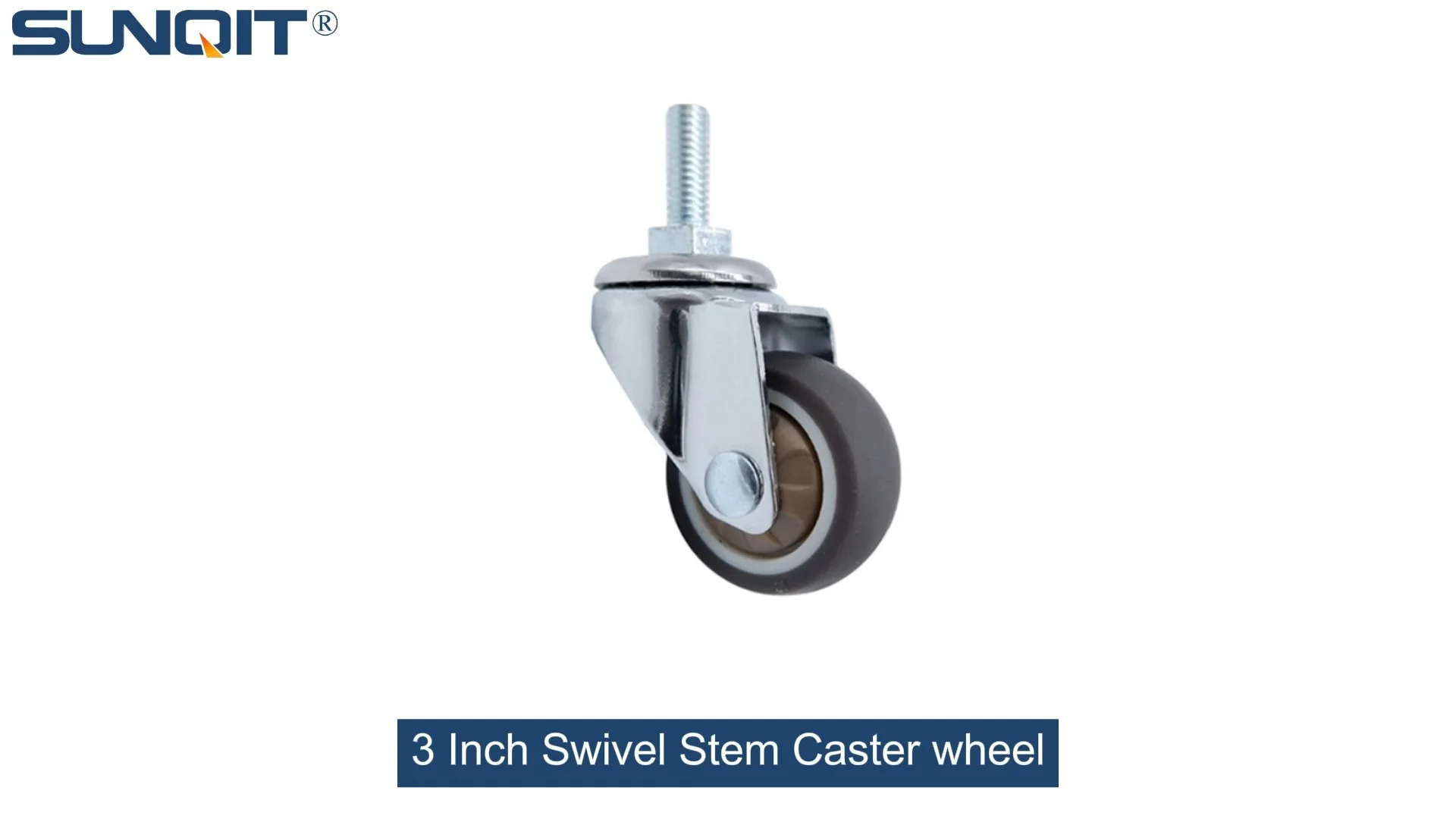
Swivel Stem Caster wheel
360 Degree Swivel Stem Caster. Threaded-post mount design, castors diameter 3 inch.Each swivel caster wheels loading 70KGS. Heavy enough and widely suit for carts, chairs, cabinet, flow rack, workbench, turnover rolley.
Walk into any modern manufacturing facility, and you'll notice a rhythm—a steady flow of materials, workers moving with purpose, and workstations that seem to adapt as easily as a well-choreographed dance. Behind that rhythm lies a carefully designed system, and at its heart are components that blend flexibility with reliability. One such component, often overlooked but critically important, is the swivel stem caster wheel —especially when it comes to building custom lean pipe systems . These small but mighty wheels are the unsung heroes of lean manufacturing, turning static workbenches into mobile hubs, rigid material racks into agile transport tools, and fixed layouts into adaptable spaces that grow with your business. In this article, we'll dive deep into why swivel stem caster wheels matter, how they integrate with other lean components like lean pipe workbenches and aluminum profiles , and why choosing the right ones can transform your workflow from clunky to seamless.
Understanding Lean Pipe Systems: The Backbone of Modern Manufacturing
Before we zoom in on caster wheels, let's take a step back to understand the bigger picture: lean pipe systems. Born from the principles of lean manufacturing—think waste reduction, efficiency, and continuous improvement—these systems are modular frameworks built using lightweight pipes (often steel, aluminum, or stainless steel) and connectors. Unlike traditional fixed infrastructure, lean pipe systems are designed to be adaptable . Need to reconfigure a production line for a new product? Swap out a section of pipe. Want to add a shelf to a workstation? Snap on a connector. This flexibility makes them indispensable in industries ranging from automotive and electronics to logistics and pharmaceuticals.
At their core, lean pipe systems are about solving problems. A lean pipe workbench , for example, isn't just a table—it's a custom-built station where tools, materials, and equipment are positioned exactly where workers need them, reducing unnecessary movement (a classic form of waste in lean terms). Material racks, flow racks, and conveyors built with lean pipes follow the same logic: they keep materials flowing smoothly, minimize handling time, and ensure every square foot of floor space is used intentionally. But here's the catch: for these systems to truly deliver on their promise of flexibility, every component must work in harmony. And that's where swivel stem caster wheels come in.
Why Customization Matters: One Size Does Not Fit All
If there's one lesson lean manufacturing teaches us, it's that no two operations are identical. A small electronics workshop assembling circuit boards has very different needs than a heavy machinery plant building engines. That's why customization is non-negotiable when designing lean pipe systems. A generic workbench might work for a week, but as production demands change—higher volumes, new product lines, updated safety standards—you'll quickly hit walls. Maybe you need to move the workbench closer to the conveyor line. Maybe you need to adjust its height to accommodate taller workers. Maybe you need to add a shelf for tools, or switch from a static setup to one that can be rolled into a cleaning station at the end of the shift.
This is where components like swivel stem caster wheels shine. They turn fixed structures into mobile assets, allowing you to reposition equipment in minutes instead of hours. But not all casters are created equal. A caster that works for a lightweight aluminum profile cart might buckle under the weight of a steel workbench loaded with tools. A wheel designed for smooth concrete floors could scratch delicate warehouse tiles. And a caster without a brake? It might send your materials rolling across the floor during assembly, creating safety hazards and delays. Customization, in this context, means choosing casters that align with your specific load requirements, floor type, and mobility needs—ensuring your lean pipe system works for you, not against you.

Swivel Stem Caster Wheels: Design, Function, and Why They're Different
Let's get technical—without the jargon. A swivel stem caster wheel is exactly what it sounds like: a wheel mounted on a swivel joint, attached to a stem (a rod or bolt) that screws or inserts into a mounting point. Unlike plate-mount casters, which attach via a flat metal plate (common in heavy-duty applications), stem-mount casters are ideal for lightweight to medium-duty setups where space is tight or drilling holes for a plate isn't feasible. The "swivel" part is key: it allows the wheel to rotate 360 degrees, making the attached structure incredibly maneuverable. Push a workbench with swivel casters, and it glides around corners, squeezes through narrow aisles, and locks into place exactly where you need it.
But what makes a high-quality swivel stem caster? Let's break it down:
- Stem Design: The stem is the connection point between the caster and your lean pipe structure. It can be threaded (for screwing into a nut or tapped hole) or unthreaded (for inserting into a sleeve or bracket). For lean pipe systems, threaded stems are often preferred because they offer a secure, tool-free connection when paired with caster accessories like stem adapters or lock nuts.
- Swivel Mechanism: Inside the caster's housing is a raceway—usually a ring of ball bearings or roller bearings—that allows the wheel to rotate smoothly. Cheap casters might use plastic bearings, which wear out quickly under load. High-quality ones use steel bearings, which handle weight better and resist corrosion.
- Wheel Material: The wheel itself is critical. Nylon wheels are lightweight, affordable, and work well on smooth floors but can be noisy. Rubber wheels absorb shock, reduce noise, and protect delicate floors (think hospital or lab settings). Polyurethane wheels are a middle ground—durable, quiet, and suitable for both smooth and slightly rough surfaces. For heavy loads or industrial environments, steel wheels are tough but can scratch floors if not paired with a rubber tread.
- Brakes: A good caster isn't just about movement—it's about control. Many swivel stem casters come with brakes that lock the wheel (preventing rotation) or the swivel joint (preventing the wheel from turning). Some even have "total lock" brakes that do both, ensuring the structure stays put even on slight inclines.
When you're building a lean pipe workbench , for example, the casters you choose will directly impact how usable that workbench is. Imagine a workstation where you need to switch between assembly and packing tasks. With swivel stem casters that lock securely, you can roll the bench to the packing area, hit the brakes, and work without it shifting. If the casters are low-quality, though, the bench might wobble, the wheels might stick, or the brakes might fail—turning a tool designed to save time into a source of frustration.

Integrating Swivel Stem Casters with Lean Pipe Workbenches and Aluminum Profiles
Now, let's talk about how these casters fit into the broader ecosystem of lean pipe components. Take a lean pipe workbench —a staple in most manufacturing facilities. A basic workbench might have a wooden or metal top, a frame built from lean pipes (steel or aluminum), and shelves for storage. But add swivel stem casters, and suddenly it's a mobile command center. Here's how the integration works:
First, the workbench frame. If it's built with aluminum profiles (hollow, T-slot extrusions), attaching casters is straightforward. Aluminum profiles are lightweight yet strong, and their T-slot design allows for easy mounting: simply slide a stem adapter into the slot, secure it with a bolt, and screw the caster's stem into the adapter. For traditional steel lean pipes, you'd use a caster mounting base—a small plate with a threaded hole that clamps onto the pipe using pipe clamps or bolts. Either way, the goal is a secure connection that can handle the workbench's weight plus any tools or materials placed on it.
Height is another consideration. Swivel stem casters come in different stem lengths, which let you adjust how high the workbench sits off the floor. This is crucial for ergonomics: a workbench that's too low forces workers to hunch, leading to fatigue and injuries. Too high, and it's hard to reach tools. By choosing casters with the right stem length, you can fine-tune the workbench height to match your team's needs—another example of customization in action.
Aluminum profiles, in particular, pair exceptionally well with swivel stem casters. Because aluminum is lighter than steel, the overall weight of the structure is reduced, which means the casters don't have to work as hard. This extends their lifespan and makes the workbench easier to maneuver. Plus, aluminum profiles are corrosion-resistant, making them ideal for environments with moisture or chemicals—think food processing or pharmaceutical plants—where steel might rust. When combined with stainless steel swivel stem casters (which resist rust), you get a workbench that's both mobile and durable enough to stand up to harsh conditions.
| Caster Type | Load Capacity (lbs) | Wheel Material | Brake Type | Ideal Floor Type | Best For |
|---|---|---|---|---|---|
| Light-Duty Nylon Swivel Stem | 100–250 | Nylon | None (manual lock optional) | Smooth concrete, tile | Small parts storage carts, lightweight workbenches |
| Medium-Duty Rubber Swivel Stem | 250–500 | Rubber | Wheel lock (single brake) | Concrete, hardwood, vinyl | General assembly workbenches, tool carts |
| Heavy-Duty Polyurethane Swivel Stem | 500–1000 | Polyurethane (on steel core) | Total lock (wheel + swivel) | Concrete, asphalt, rough floors | Heavy equipment workstations, material transport racks |
| ESD-Compliant Swivel Stem | 250–750 | Conductive rubber or polyurethane | Wheel lock | Electronics cleanrooms, static-sensitive areas | ESD workbenches, circuit board assembly stations |
| Stainless Steel Swivel Stem | 300–800 | Stainless steel (with rubber tread) | Total lock | Wet environments, food processing | Cleanroom workbenches, pharmacy material carts |

The Hidden Benefits: How Swivel Stem Casters Improve Workflow and Safety
We've talked about flexibility and customization, but the benefits of swivel stem casters go beyond that. Let's break down how they impact day-to-day operations:
Reduced Setup Time: In traditional manufacturing, reconfiguring a production line could take hours—disassembling workbenches, moving heavy equipment with forklifts, reattaching everything. With swivel stem casters, workers can reposition a lean pipe workbench in minutes. Need to add a new station? Roll in an extra bench. Seasonal demand spike? Rearrange the line to double capacity. This agility is a game-changer for small to medium businesses that need to pivot quickly.
Improved Ergonomics: Heavy lifting is a leading cause of workplace injuries. When materials or tools are stored on mobile carts with swivel casters, workers don't have to bend, reach, or carry heavy loads across the floor. Instead, they roll the cart to their workstation—reducing strain on backs, shoulders, and knees. Over time, this leads to fewer injuries, lower absenteeism, and happier, more productive teams.
Enhanced Safety: A caster with a reliable brake isn't just a convenience—it's a safety feature. In busy facilities, an unattended cart rolling downhill could collide with workers or equipment. Swivel stem casters with total-lock brakes eliminate this risk by keeping the cart firmly in place. Additionally, wheels made from non-marking materials (like rubber or polyurethane) prevent scuffs and scratches on floors, reducing slip hazards from loose debris.
Space Optimization: Floor space is expensive, and lean manufacturing is all about using it wisely. Mobile workbenches with swivel casters can be tucked away when not in use, freeing up space for other tasks. For example, a packaging bench might be rolled into a corner during morning assembly, then brought out in the afternoon when orders need to be shipped. This flexibility turns underused areas into functional workspace.
Choosing the Right Swivel Stem Caster: Key Questions to Ask
With so many options on the market, how do you pick the right swivel stem caster for your lean pipe system? Start by asking these questions:
1. What's the total load? Calculate the weight of the structure (workbench, cart, etc.) plus the maximum weight of materials/tools it will carry. Choose a caster with a load capacity that exceeds this total—overloading casters leads to premature failure. As a rule of thumb, aim for a caster rated for 1.5 times your expected load.
2. What type of floor will it roll on? Smooth concrete? Tile? Carpet? Rough asphalt? Nylon wheels work on smooth floors but struggle with carpet. Rubber or polyurethane wheels are better for uneven surfaces. If you're in a cleanroom or lab, look for non-marking wheels to avoid leaving tracks.
3. Do you need brakes? If the structure will be stationary during use, brakes are a must. Decide between wheel locks (prevent rotation) or total locks (prevent rotation and swiveling). For inclines or busy areas, total locks are safer.
4. What's the environment like? Is there moisture (e.g., food processing)? Choose stainless steel casters to resist rust. Static-sensitive areas (electronics)? Go for ESD-compliant wheels. High temperatures? Look for heat-resistant materials like phenolic resin.
5. How often will it be moved? If the caster will be rolled frequently, invest in a high-quality swivel mechanism with steel bearings. For occasional use, a basic model might suffice—but remember, cheap casters cost more in the long run if they need frequent replacement.
When in doubt, consult a lean pipe supplier with experience in custom systems. They can help you match casters to your specific needs, ensuring you don't overspend on features you don't need or skimp on ones you do.
Caster Accessories: The Little Extras That Make a Big Difference
No component exists in a vacuum, and swivel stem casters are no exception. Caster accessories might seem minor, but they can significantly enhance performance and longevity. Here are a few to consider:
Stem Adapters: These allow you to attach stem-mount casters to surfaces that don't have threaded holes—like aluminum profiles or wooden workbench legs. They come in various sizes to match different stem diameters and profile slots.
Lock Nuts: To prevent casters from loosening over time, add a lock nut to the stem after installation. This is especially important for casters on frequently moved equipment, where vibration can cause threads to back out.
Floor Protectors: If you're worried about wheels scratching delicate floors, add rubber or felt pads to the caster housing. They act as a buffer between the caster and the floor, reducing damage.
Brake Extensions: For tall workbenches or carts, reaching the brake lever can be tricky. Brake extensions add a long handle that's easy to access, making it simpler to lock/unlock the casters.
These accessories might seem like small investments, but they extend the life of your casters, improve usability, and prevent costly damage to floors or equipment.
Real-World Success: How One Manufacturer Transformed Its Line with Swivel Stem Casters
Let's wrap up with a story. A mid-sized electronics manufacturer was struggling with a common problem: their assembly line was rigid. Workbenches were bolted to the floor, and materials were stored on fixed racks 50 feet away. Workers spent hours each day walking back and forth to fetch parts, leading to fatigue and delays. The production manager knew they needed a lean solution but wasn't sure where to start.
After consulting a lean pipe supplier , they decided to replace their fixed workbenches with custom lean pipe workbenches mounted on swivel stem casters. Here's what happened next:
- Reduced Walking Time: Workers could now roll their workbenches directly to the material racks, cutting walking time by 60%. What used to take 10 minutes per trip now took 2.
- Flexible Lines: When a new product was introduced, the team reconfigured the assembly line in 2 hours instead of 2 days. They simply rolled the workbenches into the new layout and locked the casters.
- Happier Workers: Ergonomic adjustments (via caster stem length) reduced back pain complaints by 40%. The team reported feeling less fatigued and more productive.
- Lower Costs: By eliminating the need for forklifts to move heavy equipment, the company saved on fuel and maintenance costs. They also reduced product damage from dropped materials (thanks to mobile carts with secure brakes).
The key takeaway? Swivel stem casters weren't the only component in their success, but they were the glue that held the custom lean system together. By choosing casters that matched their load, floor type, and mobility needs, they turned a static, inefficient line into a dynamic, adaptable one.
Conclusion: Small Wheels, Big Impact
In the world of lean manufacturing, it's often the smallest components that make the biggest difference. Swivel stem caster wheels might not grab headlines, but they're foundational to building lean pipe systems that are truly flexible, efficient, and worker-centric. Whether you're designing a lean pipe workbench for a small workshop or a full production line for a large factory, the right casters can transform how you work—reducing waste, improving safety, and giving you the agility to adapt to whatever the future brings.
So, the next time you're planning a lean pipe system, don't overlook the casters. Ask questions, consider your unique needs, and partner with a supplier who understands how these components fit together. After all, in lean manufacturing, every detail counts—and that includes the wheels that keep your operation rolling.