- Company Articles
- Products and Technology
- Product knowledge
- Swivel Stem Caster Wheels for Automated Conveyors: Synchronized Movement

Swivel Stem Caster Wheels for Automated Conveyors: Synchronized Movement
Related Product
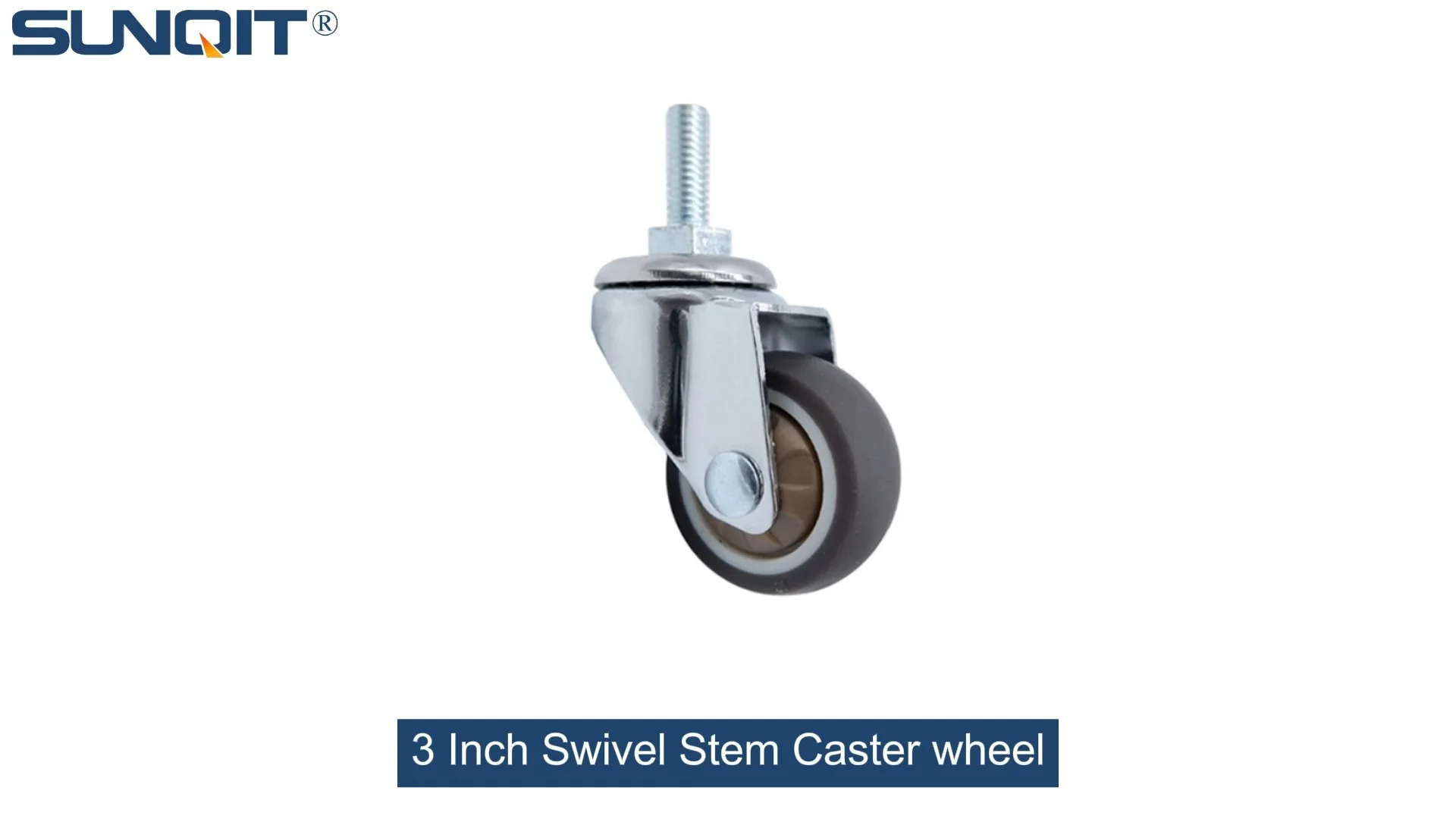
Swivel Stem Caster wheel
360 Degree Swivel Stem Caster. Threaded-post mount design, castors diameter 3 inch.Each swivel caster wheels loading 70KGS. Heavy enough and widely suit for carts, chairs, cabinet, flow rack, workbench, turnover rolley.
The Heartbeat of Automated Conveyors
Walk into any modern manufacturing plant, warehouse, or distribution center, and you'll hear it—the steady, rhythmic hum of automated conveyors. They're the unsung heroes of efficiency, moving products from assembly lines to packaging stations, from storage racks to shipping docks, without pause. But behind that seamless flow lies a network of small, often overlooked components working in perfect harmony. Among them, swivel stem caster wheels stand out as quiet conductors, ensuring that conveyor systems, roller tracks, and even mobile workbenches move in sync, keeping operations running like a well-tuned orchestra.
Think about it: A conveyor belt might carry boxes at a constant speed, but what about the sections that need to pivot, adjust, or reposition? That's where swivel stem caster wheels come in. They're the reason a heavy material rack can glide smoothly around a corner, why a workbench can be reconfigured in minutes to adapt to a new production line, and how roller tracks maintain consistent product flow even when the layout changes. In short, they're the glue that holds the flexibility of automated systems together.
Real-World Impact: A mid-sized electronics manufacturer in Ohio recently shared a story that highlights this. Their old assembly line relied on fixed conveyors with rigid, bolted-down sections. When they needed to shift production to a new smartphone model, reconfiguring the line took three days —days of downtime, lost revenue, and frustrated workers. After upgrading to conveyor systems equipped with high-quality swivel stem caster wheels and modular roller tracks, the same reconfiguration now takes four hours . "It's like night and day," their plant manager said. "We're not just faster—we're agile. And in this industry, agility is everything."
What Are Swivel Stem Caster Wheels? Breaking Down the Basics
Let's start with the basics: A caster wheel is essentially a wheel mounted on a frame, designed to attach to the bottom of a piece of equipment to make it mobile. But "swivel stem" casters take this a step further. Unlike rigid casters, which only roll forward and backward, swivel casters can rotate 360 degrees around a central stem (hence the name). This rotation is what gives them their signature flexibility—they can follow the direction of the equipment being moved, whether that's straight, sideways, or around a tight corner.
The "stem" part refers to the vertical rod that connects the caster to the equipment. This stem is typically threaded or hollow, allowing it to be secured to the bottom of a workbench, conveyor section, or material rack. Some stems are fixed, while others are "expanding," meaning they can adjust to fit different mounting holes—a handy feature for businesses using a mix of old and new equipment.
Key Components of a Swivel Stem Caster Wheel
To truly appreciate their design, let's break down the parts:
- The Wheel: The star of the show. Made from materials like rubber, plastic, aluminum, or stainless steel, depending on the load capacity and environment. For example, rubber wheels are great for smooth floors and noise reduction, while stainless steel wheels handle heavy loads and resist corrosion in wet or chemical-heavy areas.
- The Swivel Head: The mechanism that allows 360-degree rotation. It contains bearings (often ball bearings or roller bearings) to reduce friction, ensuring smooth swiveling even under heavy loads.
- The Stem: The vertical shaft that attaches the caster to the equipment. Threaded stems are common for permanent mounting, while expanding stems (like the "360° swivel expanding stem casters" you might see from suppliers) are ideal for temporary or adjustable setups.
- The Brake (Optional): Many swivel stem casters come with a brake lever that locks either the wheel (to prevent rolling) or the swivel head (to keep the caster facing a fixed direction). This is crucial for safety—imagine a loaded material rack rolling away unexpectedly!
What makes these casters so reliable? It's all in the precision of the swivel head. A well-engineered swivel head distributes weight evenly across the bearings, reducing wear and ensuring that even after thousands of rotations, the caster still moves smoothly. Cheap casters often cut corners here, using plastic bearings or flimsy swivel mechanisms that seize up or break under stress. That's why choosing a reputable supplier—one that specializes in industrial-grade casters and conveyor components—is so important.

The Symbiosis: Swivel Stem Casters and Conveyor Systems
Conveyor systems and swivel stem caster wheels aren't just "compatible"—they're designed to work together. Think of conveyors as the arteries of a facility, carrying materials where they need to go. Swivel stem casters are the valves that control the flow, allowing those arteries to bend, branch, and adapt without losing pressure (or in this case, efficiency).
Integration with Roller Tracks: Keeping the Flow Consistent
Roller tracks—those series of small wheels mounted in a frame that let products slide or roll along a path—are a staple in conveyor systems. They're perfect for moving boxes, bins, or parts with minimal effort. But roller tracks alone are static. Pair them with swivel stem caster wheels, and suddenly they become dynamic. Here's how:
- Modular Sections: Many modern roller tracks are built in modular sections, each mounted on a frame with swivel stem casters. This means you can add, remove, or reposition sections as needed. For example, if a seasonal rush requires an extra "lane" in your shipping area, you can roll a new roller track section into place, lock the casters, and start using it immediately.
- Alignment with Conveyor Belts: Roller tracks often feed into or receive from conveyor belts. Swivel stem casters make it easy to fine-tune the alignment between the two. A slight misalignment can cause products to jam or tip over; with casters, you can adjust the roller track's position by inches until everything flows perfectly.
- Ergonomic Material Handling: In warehouses, workers often need to move roller tracks to load or unload materials. Without casters, this would require heavy lifting or forklifts—both time-consuming and risky. With swivel stem casters, a single worker can reposition a loaded roller track safely and quickly.
Synchronization Mechanisms: How Casters Keep the Beat
Synchronization is the key to any efficient conveyor system. If one section moves faster than another, products pile up. If a turn is too tight, items get stuck. Swivel stem casters help maintain this synchronization in two key ways:
Load Distribution: High-quality casters are designed to handle specific weight capacities—from 100 lbs for a small workbench to 2,000 lbs or more for industrial material racks. When every caster in a system is rated for the load it's carrying, the weight distributes evenly, preventing sagging or uneven rolling that could disrupt product flow.
Smooth Rotation: Ever pushed a cart where one wheel "fights" the direction you're moving? That's a caster with poor swivel action, and it's a synchronization killer. In conveyor systems, this can cause sections to drift off course, leading to jams or misaligned products. Premium swivel stem casters use precision bearings and lubricated swivel heads to ensure that every rotation is smooth and consistent—so the entire system moves as one.
Technical Note: Many suppliers now offer "swivel lock" casters, which allow operators to lock the swivel head in a fixed direction (e.g., straight ahead) when needed. This is especially useful for long conveyor runs where you want to prevent lateral movement, but still need the option to unlock and reposition later. It's a small feature, but it makes a big difference in maintaining synchronization during extended production runs.

Materials Matter: Choosing the Right Build for Your Needs
Not all swivel stem caster wheels are created equal—and a big part of that comes down to materials. The environment you're working in, the weight of your loads, and even the type of floor (concrete, tile, carpet) will determine which material is best. Let's break down the most common options and when to use them.
| Material | Best For | Pros | Cons | Common Applications |
|---|---|---|---|---|
| Aluminum | Light to medium loads, clean environments | Lightweight, corrosion-resistant, non-marking | Lower load capacity than steel | Workbenches, medical equipment, food processing (with food-grade lubricants) |
| Stainless Steel | Heavy loads, wet/chemical environments | High load capacity, highly corrosion-resistant, durable | Heavier, more expensive than aluminum | Industrial material racks, outdoor conveyors, pharmaceutical production |
| Rubber (Polyurethane) | Indoor use, noise reduction, delicate floors | Shock-absorbent, quiet, non-marking, good traction | Can wear quickly under heavy loads or sharp debris | Retail warehouses, electronics assembly lines, office equipment |
| Nylon/Plastic | Light loads, budget-friendly options | Affordable, chemical-resistant, lightweight | Prone to cracking under heavy loads or impact | Small parts bins, lightweight workbenches, temporary setups |
Beyond the Wheel: Roller Track Guide Rails and Accessories
The caster wheel itself is just one piece of the puzzle. To truly optimize your system, you'll also want to pay attention to accessories like roller track guide rails. These are the channels that guide products along the roller track, preventing them from slipping off or veering sideways. They come in materials like plastic (yellow or grey, for visibility or neutrality) or aluminum, and they're often paired with casters to create a fully integrated solution.
For example, plastic roller track guide rails in yellow are popular in manufacturing because they're bright and easy to spot, reducing the risk of workers tripping. Grey guide rails, on the other hand, blend into warehouse floors, making them a good choice for high-traffic areas where aesthetics matter. Aluminum guide rails, like "aluminum guide rail A" or "aluminum guide rail B" from suppliers, are lightweight yet strong, ideal for heavy-duty roller tracks that need to stay aligned even under stress.
Another key accessory? Caster accessories like caster brakes, stem extenders, or replacement bearings. These small parts might seem trivial, but they're essential for maintaining your system over time. A stuck brake can turn a safe workbench into a hazard, while a worn bearing can turn smooth rolling into a jerky, inefficient mess. That's why partnering with a supplier that stocks a full range of accessories is just as important as choosing the right casters.

Beyond the Factory Floor: Diverse Applications
When we talk about swivel stem caster wheels and conveyor systems, it's easy to focus on large factories—and for good reason: that's where they're most visible. But their impact extends far beyond manufacturing. Let's explore some of the less obvious but equally important places these components shine.
Workbenches: The Unsung Heroes of Flexibility
Walk into any workshop, lab, or assembly area, and you'll find workbenches. They're where the hands-on work happens—assembling parts, testing products, packing orders. But a fixed workbench is a one-trick pony. Add swivel stem caster wheels, and suddenly it's a mobile command center. Need to move it closer to the conveyor line? Roll it over. Want to set up a temporary quality control station by the shipping dock? Done. Even better, many modern workbenches (like "workbench E (single deck-without caster)" from suppliers) are designed to be caster-ready, with pre-drilled holes that make adding or removing casters a breeze.
In hospitals, for example, mobile workbenches with swivel stem casters are used to transport medical supplies between departments. In labs, they're equipped with ESD (electrostatic discharge) protection to safely handle sensitive electronics. And in restaurants, they're used as portable prep stations that can be wheeled out during peak hours and stored away when not needed. The common thread? Flexibility.
Retail and Warehousing: From Stockrooms to Storefronts
Retailers are another big user of swivel stem caster wheels. Think about the metal racks in a clothing store—many are mounted on casters, allowing staff to rearrange displays overnight for a fresh look. In warehouses, "turnover trolley and rack" systems (a term you'll often see from suppliers) rely on casters to move inventory quickly from storage to shipping. Even the checkout lanes in grocery stores? Those conveyor belts are often part of modular systems with casters, making it easy to add or remove lanes during busy shopping periods.
Food and Beverage: Cleanliness and Compliance
The food and beverage industry has strict rules about cleanliness and corrosion resistance—and for good reason. Stainless steel swivel stem caster wheels are a staple here, as they're easy to sanitize and won't rust when exposed to water or cleaning chemicals. Roller tracks with plastic guide rails (like the "plastic roller track guide rail yellow" mentioned earlier) are also popular, as they're non-porous and won't harbor bacteria. From bakeries using mobile racks to cool pastries, to breweries moving kegs along conveyor lines, these components help businesses stay compliant while staying efficient.
The Lean Advantage: How Swivel Stem Casters Support Lean Systems
By now, you might be thinking, "These casters sound great, but are they worth the investment?" For businesses focused on lean systems—those built around minimizing waste and maximizing value—the answer is a resounding yes. Lean management is all about continuous improvement, and swivel stem caster wheels are a tool that makes that improvement possible.
Here's how they support key lean principles:
Reducing Waste (Muda)
Waste in manufacturing can take many forms: time wasted on reconfiguring equipment, labor wasted on moving heavy objects, or materials wasted due to jams and errors. Swivel stem casters attack all three:
- Time Waste: As the Ohio electronics manufacturer example showed, reconfiguring systems with casters takes a fraction of the time compared to fixed setups. Less downtime = less waste.
- Labor Waste: A single worker can move a loaded material rack or reposition a conveyor section with casters, eliminating the need for multiple people or heavy machinery.
- Material Waste: Smooth-rolling casters and aligned roller tracks reduce jams and product damage, meaning fewer defective items and less scrap.
Flexibility (Heijunka): Balancing Workload
Heijunka, or workload balancing, is a core lean principle. It's about avoiding peaks and valleys in production by adjusting to demand. Swivel stem casters make this possible by letting businesses scale up or down quickly. Need to add a second shift? Roll out extra workbenches and conveyor sections. Demand dropped? Store unused components on mobile racks until they're needed. It's about using resources only when and where they're needed—no more, no less.
Respect for People (Respect for Humanity)
At its heart, lean is about people. Heavy, hard-to-move equipment leads to fatigue, injuries, and low morale. Swivel stem casters make work easier and safer. A study by the National Institute for Occupational Safety and Health (NIOSH) found that using ergonomic, mobile equipment (including casters) reduces the risk of musculoskeletal injuries by up to 40%. Happier, healthier workers are more productive—and that's a win for everyone.
Maintenance 101: Keeping Your Casters Rolling Smoothly
Like any piece of equipment, swivel stem caster wheels need a little TLC to keep performing at their best. The good news? Maintenance is simple, and a little goes a long way. Here's what you need to know:
Regular Inspections: Catch Problems Early
Set a schedule—monthly for high-use equipment, quarterly for less frequent use—to inspect your casters. Look for:
- Debris: Hair, dirt, or small parts can get stuck in the swivel head or around the wheel, causing friction. Clean them out with a brush or compressed air.
- Wear: Check the wheel tread for cracks, flat spots, or uneven wear. If the tread is worn down, it's time to replace the wheel.
- Loose Parts: Tighten any loose bolts or nuts on the stem or swivel head. A loose caster can wobble, leading to uneven rolling and premature wear.
- Brake Function: Test the brakes to make sure they engage and release smoothly. If a brake is sticking, clean it with a mild detergent and lubricate lightly.
Lubrication: Keep It Moving
The swivel head and wheel bearings need lubrication to stay smooth. Use a high-quality, water-resistant lubricant (like lithium grease) and apply a small amount to the swivel joint and wheel axles every 3-6 months. Avoid over-lubricating—excess grease can attract dirt and debris.
Replacement: Know When to Let Go
Even the best casters wear out eventually. Signs it's time to replace a caster include:
- Persistent squeaking or grinding, even after lubrication
- Wheel wobbling or uneven rolling
- Cracks in the wheel or swivel head
- Brakes that no longer hold securely
When replacing, always match the new caster's load capacity and stem size to the old one. Mixing and matching can lead to uneven load distribution and system failure.
Choosing Your Supplier: More Than Just a Vendor
You've done your research: You understand how swivel stem caster wheels work, how they integrate with conveyors and roller tracks, and how to maintain them. Now comes the final step: choosing a supplier. This isn't just about buying a product—it's about partnering with a company that understands your needs and can support you long-term.
What to Look For
Product Range: A good supplier should offer a wide variety of casters, roller tracks, and accessories. This includes different materials (aluminum, stainless steel, rubber), load capacities, and styles (swivel lock, expanding stem, ESD-safe). The more options they have, the more likely you'll find exactly what you need.
Quality Certifications: Look for suppliers that adhere to industry standards, like ISO 9001 for quality management. This ensures their products are tested and reliable.
Technical Support: What if you're not sure which caster is right for your workbench? Or need help calculating the load capacity for a custom conveyor system? A good supplier will have a team of experts ready to answer questions and offer guidance.
Inventory and Lead Times: Nothing kills a project faster than waiting weeks for parts. Choose a supplier with a large in-stock inventory and short lead times for custom orders.
Customer Service: Read reviews, ask for references, and pay attention to how responsive they are during the quoting process. You want a supplier that treats you like a partner, not just a sale.
Pro Tip: Many suppliers offer "sample kits" with small quantities of casters, roller tracks, or joints. Ordering a sample lets you test the product in your environment before committing to a large order. It's a small investment that can save you from costly mistakes later.
Conclusion: The Quiet Revolution in Automated Movement
Swivel stem caster wheels might not be the most glamorous part of an automated conveyor system, but they're undoubtedly one of the most important. They're the reason modern manufacturing plants can adapt to changing demands, why warehouses can move inventory with ease, and why workbenches are no longer stuck in one place. They're the quiet revolution that's making businesses more efficient, flexible, and competitive.
As we've explored, their impact goes beyond just movement—they support lean systems, improve workplace safety, and even boost employee morale. And when paired with high-quality roller tracks, conveyors, and accessories, they create a ecosystem of efficiency that can transform how you do business.
So the next time you walk through a factory, warehouse, or workshop, take a moment to look down. Those small wheels under the conveyor sections, the workbenches, and the material racks? They're not just casters. They're the foundation of modern, agile, and human-centered operations. And in a world where change is the only constant, that foundation is more valuable than ever.