- Company Articles
- Products and Technology
- Product knowledge
- Swivel Stem Caster Wheels for Automotive Parts Trolleys: Durability in Harsh Environments

Swivel Stem Caster Wheels for Automotive Parts Trolleys: Durability in Harsh Environments
Related Product
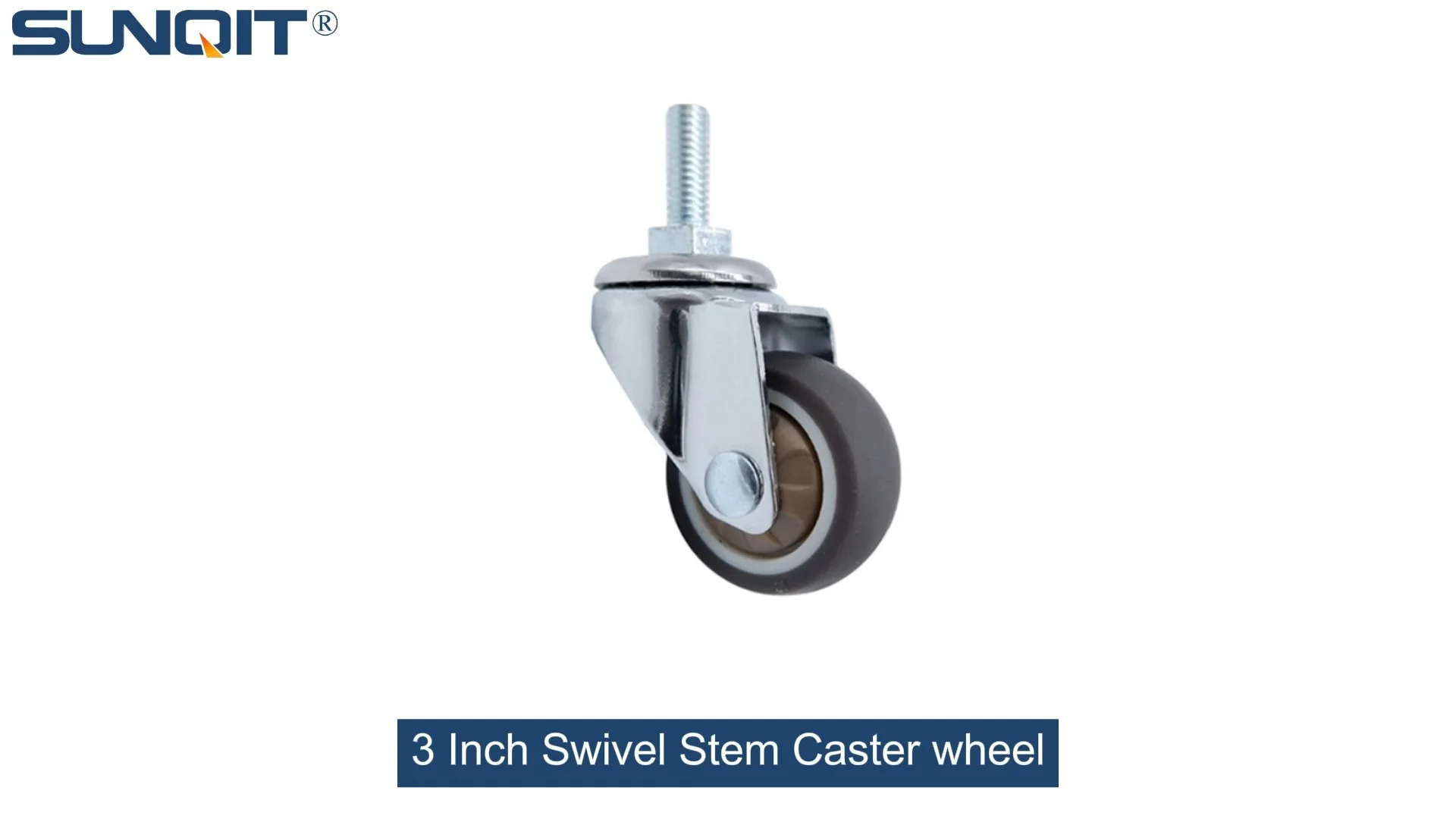
Swivel Stem Caster wheel
360 Degree Swivel Stem Caster. Threaded-post mount design, castors diameter 3 inch.Each swivel caster wheels loading 70KGS. Heavy enough and widely suit for carts, chairs, cabinet, flow rack, workbench, turnover rolley.
Walk into any automotive manufacturing plant, and you'll be met with a symphony of activity: robots welding frames, technicians assembling engines, and parts moving relentlessly from station to station. In the middle of this chaos, there's an unsung hero keeping everything flowing: the humble trolley. But not just any trolley—one equipped with the right wheels. Today, we're diving into a component that often gets overlooked but is critical to keeping production on track: swivel stem caster wheels. Specifically, how these small but mighty parts stand up to the brutal conditions of automotive environments, and why they're non-negotiable for anyone relying on turnover trolley and rack systems to keep parts moving.
The Automotive Floor: A Battlefield for Equipment
Let's start by painting the picture of what a typical automotive manufacturing floor looks like—because it's not a gentle place for equipment. Oil and grease drip from machinery, metal shavings scatter across concrete floors, and temperatures can swing from sweltering near furnaces to chilly in storage areas. Trolleys here aren't just carrying light boxes; they're hauling heavy engine blocks, transmissions, and stacks of sheet metal—often weighing 500 pounds or more. Add in constant movement (trolleys might be pushed, pulled, or even dragged dozens of times a day) and tight spaces (navigating between assembly lines and storage racks), and it's clear: this is a battlefield for caster wheels.
Standard caster wheels don't stand a chance here. Cheap plastic wheels crack under heavy loads. Metal wheels without proper coatings rust when exposed to oil and moisture. Swivel mechanisms jam when metal shavings work their way into bearings. The result? Frequent breakdowns, production delays, and frustrated workers wasting time fixing or replacing wheels instead of building cars. For a lean system supplier, this isn't just a problem—it's a failure to deliver on the promise of efficiency. That's where swivel stem caster wheels come in.
What Makes Swivel Stem Caster Wheels Different?
First, let's clarify: not all caster wheels are created equal. There are fixed casters (they only roll straight), swivel plate casters (mounted on a flat plate), and then there's the swivel stem caster wheel. The "stem" here is key—it's a cylindrical rod that extends from the top of the caster, designed to fit into a pre-drilled hole or socket on the trolley frame. This might sound simple, but it's a design that offers two critical advantages for automotive use: stability and strength.
Unlike plate-mounted casters, which rely on bolts to attach to the trolley, stem casters create a tight, secure connection. The stem is often threaded or flanged, locking into the frame so it doesn't wiggle or loosen—even when the trolley is jostled over uneven floors or sudden bumps. This matters when you're carrying heavy, uneven loads (like a pallet of brake components stacked crookedly); a loose caster can cause the trolley to tip, risking damage to parts or injury to workers.
But the real magic is in the swivel mechanism. Swivel stem casters aren't just about rolling—they're about maneuverability. On an automotive floor, you don't just go straight; you need to pivot around corners, back up into tight storage spots, and even spin 360 degrees to line up with a workbench. A high-quality swivel stem caster uses precision bearings (often sealed to keep out debris) and a reinforced raceway (the ring that allows the wheel to rotate) to ensure smooth, easy swiveling—even under heavy loads. Compare that to a cheap caster, where the swivel might seize up after a week of exposure to oil and metal shavings, and you see why the stem design is a game-changer.

Durability by Design: Features That Withstand the Chaos
So, what exactly makes a swivel stem caster wheel tough enough for automotive work? Let's break down the key features that set industrial-grade models apart from the rest.
1. Wheel Material: Polyurethane vs. Rubber vs. Steel
The wheel itself is the first line of defense. In automotive environments, polyurethane is the gold standard—and for good reason. Polyurethane wheels are a hybrid: they have the elasticity of rubber (so they absorb shocks, reducing noise and vibration) but the hardness of plastic (so they don't flatten or wear down quickly). They also resist oil, grease, and chemicals—critical when a stray oil spill could turn a smooth roll into a slippery disaster. Rubber wheels, by contrast, can degrade when exposed to oil, while steel wheels are durable but noisy and prone to leaving marks on floors (not ideal if you're moving parts through a clean assembly area).
2. Sealed Bearings: Keeping the Grit Out
If there's one enemy of swivel casters, it's debris. Metal shavings, dirt, and oil can sneak into the bearing mechanism, causing friction, rust, and eventually, a seized wheel. That's why top-tier swivel stem casters use sealed bearings—either double-sealed or shielded—to block out contaminants. Think of it like a waterproof watch: the bearings stay clean and lubricated, so the wheel spins freely even after months of rolling through grime.
3. Load Capacity: Built for the Heavy Stuff
Automotive trolleys don't mess around with light loads. A single swivel stem caster wheel might need to support 200–300 pounds (and that's per wheel—most trolleys have four). Industrial models are tested to handle these weights without bending or breaking. Look for casters with a "dynamic load rating" (the weight they can handle while rolling) and a "static load rating" (the weight when stationary)—both should far exceed your typical load to account for unexpected bumps or unevenly distributed parts.
4. Corrosion Resistance: Fighting Rust and Moisture
Oil, moisture, and even cleaning chemicals (used to wipe down floors) can cause metal parts to rust. That's why the best swivel stem casters feature corrosion-resistant coatings—like zinc plating or powder coating—on the stem, raceway, and brackets. Some high-end models even use stainless steel components for extra protection, ensuring the caster doesn't seize up or weaken over time.

Turnover Trolley and Rack Systems: Why Casters Make or Break Efficiency
Now, let's tie this back to the real-world application: turnover trolley and rack systems. These are the workhorses of automotive logistics—used to transport parts from storage to assembly lines, move finished subassemblies between stations, and even act as mobile workbenches. But none of this works if the trolleys can't move smoothly, reliably, and safely.
Imagine a scenario: It's 9 AM, and the assembly line needs a fresh batch of brake calipers from the storage rack. A worker grabs a turnover trolley, loads it up, and starts pushing—but one caster wheel is wobbly, and another is stuck. They struggle to maneuver around a corner, the trolley veers off course, and a box of calipers slides off, crashing to the floor. Now, parts are damaged, the worker is frustrated, and the line is waiting. This isn't just a minor hiccup—it's a $500 mistake (in parts and downtime) caused by a $20 caster wheel.
With swivel stem caster wheels, this scenario becomes a thing of the past. The stem's secure mounting keeps the wheel stable, even with uneven loads. The sealed bearings ensure smooth swiveling, so the trolley glides around corners with minimal effort. And the durable materials mean the caster keeps working day in and day out, without unexpected failures. For a lean system supplier, this isn't just about selling parts—it's about enabling the "lean" in lean manufacturing: reducing waste (like time spent fixing trolleys) and keeping production flowing without interruptions.

Beyond Trolleys: Swivel Stem Casters on Workbenches
It's not just trolleys that benefit from swivel stem casters—they're also a game-changer for mobile workbenches. In automotive shops, workbenches often need to be moved to where the work is: next to an assembly line for quick repairs, or into a storage area for maintenance. A workbench loaded with tools, a vice, and parts can weigh 300 pounds or more—so again, flimsy casters won't cut it.
Swivel stem casters here provide the same benefits: stability when stationary (so the bench doesn't wobble while a technician uses a wrench), maneuverability when moving (easily positioning the bench exactly where it's needed), and durability to handle the daily grind. Many workbenches even pair swivel stem casters with brakes—locking the wheels in place when the bench is in use, then releasing for movement. This versatility is why a quality workbench, paired with reliable casters, becomes an extension of the worker's hands on the floor.
Choosing the Right Swivel Stem Caster: A Quick Guide
So, if you're in the market for swivel stem caster wheels for your automotive operation, what should you look for? Here's a quick checklist to ensure you're getting a caster that will last:
- Assess your load: Calculate the maximum weight your trolley or workbench will carry, then choose casters with a load rating 20–30% higher (to be safe).
- Check the environment: If you're dealing with lots of oil or moisture, prioritize sealed bearings and corrosion-resistant coatings.
- Measure the stem size: The stem diameter and length must match the hole in your trolley frame—too loose, and the caster will wobble; too tight, and you'll damage the frame.
- Test the swivel: Even if you can't test in person, look for reviews or specs mentioning "smooth swivel" and "no play" in the mechanism.
- Don't skimp on brand: A reputable lean system supplier will offer casters from trusted manufacturers, with warranties and support if something goes wrong.
Comparing Caster Types: Why Swivel Stem Wins for Automotive
Still not convinced swivel stem is the way to go? Let's compare it to other common caster types in a head-to-head table, focusing on how they perform in automotive environments:
| Caster Type | Key Features | Best For | Weaknesses in Automotive | Durability Rating (1-5) |
|---|---|---|---|---|
| Swivel Stem Caster | Stem mounting, sealed bearings, polyurethane wheels, corrosion-resistant | Heavy loads, tight spaces, frequent movement | Higher upfront cost (but lower long-term) | 5 |
| Fixed Caster | Rolls straight only, simple design | Straight-line transport (e.g., conveyor lines) | No swivel—hard to maneuver around corners | 3 |
| Swivel Plate Caster | Mounted on a flat plate with bolts | Light to medium loads, flat floors | Bolts can loosen under heavy loads; plate prone to bending | 4 |
| Pneumatic (Air-Filled) Caster | Rubber tires, shock-absorbing | Uneven outdoor surfaces | Prone to punctures from metal shavings; air pressure needs constant checking | 2 |
As you can see, swivel stem casters come out on top for durability and performance in automotive settings. They're not the cheapest option upfront, but when you factor in fewer replacements, less downtime, and smoother operations, they're the most cost-effective choice in the long run.
The Bottom Line: Durability = Productivity
At the end of the day, automotive manufacturing is all about productivity—every minute of downtime costs money, and every broken part disrupts the flow. Swivel stem caster wheels might seem like small components, but they play a huge role in keeping that flow intact. When paired with turnover trolley and rack systems, they ensure parts move where they need to go, when they need to go, without fail.
For anyone running an automotive plant, or even a small parts shop, the message is clear: don't overlook the casters. Invest in high-quality swivel stem caster wheels, sourced from a lean system supplier who understands the demands of your environment. Your workers will thank you (no more struggling with stuck trolleys), your bottom line will thank you (fewer delays and replacements), and your production line will keep humming—one smooth roll at a time.