- Company Articles
- Products and Technology
- Product knowledge
- Swivel Stem Caster Wheels for Clean Rooms: Anti-Static & Contamination Control

Swivel Stem Caster Wheels for Clean Rooms: Anti-Static & Contamination Control
Related Product
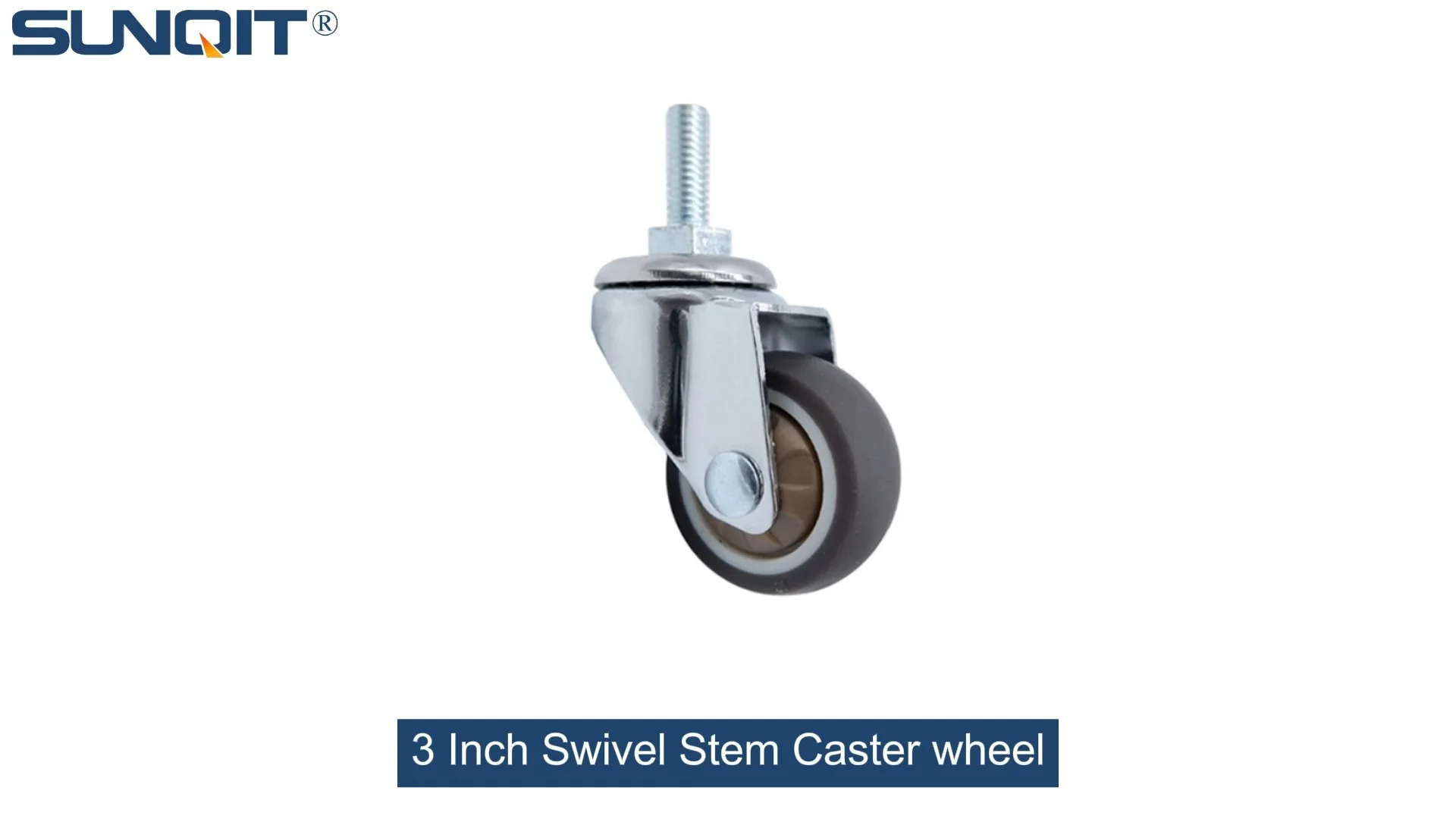
Swivel Stem Caster wheel
360 Degree Swivel Stem Caster. Threaded-post mount design, castors diameter 3 inch.Each swivel caster wheels loading 70KGS. Heavy enough and widely suit for carts, chairs, cabinet, flow rack, workbench, turnover rolley.
In the hushed, controlled environments of clean rooms, where the air is filtered to remove 99.99% of particles larger than 0.5 microns and static electricity is enemy number one, every piece of equipment matters. From the HEPA filters overhead to the gloves on workers' hands, every component is designed to protect sensitive processes and products—whether that's a batch of life-saving pharmaceuticals, a semiconductor wafer worth tens of thousands of dollars, or a precision medical device. But there's one unsung hero often overlooked in these spaces: the wheels that keep things moving. Trolleys, workstations, and material racks glide silently across the floor, and their mobility relies on caster wheels. In clean rooms, however, "just any wheel" won't do. Enter swivel stem caster wheels—engineered to balance mobility, anti-static protection, and contamination control. Let's dive into why these specialized casters are critical, how they work, and why they're the backbone of efficient, safe clean room operations.
Clean Rooms 101: Where Precision Meets Perfection
First, let's set the stage. Clean rooms aren't just "very clean rooms"—they're highly regulated environments classified by the number of particles allowed per cubic meter. For example, an ISO Class 5 clean room (once called Class 100) permits no more than 3,520 particles of 0.5 microns or larger per cubic meter. To put that in perspective, the air outside might have millions of such particles. Industries like microelectronics, pharmaceuticals, biotechnology, and aerospace depend on these spaces to manufacture products where even a single speck of dust or a static discharge can ruin months of work.
Mobility is essential here. Workers need to move tools, materials, and (work-in-progress) without disrupting the environment. Trolleys carry vials of vaccine; workstations holding microscopes slide into place for inspections; racks of circuit boards shift between assembly stations. But each time something moves, it interacts with the floor—and that interaction is where swivel stem caster wheels come into play. A poorly designed caster can shed rubber particles, trap dust in crevices, or generate static electricity, turning a helpful tool into a silent contaminant.
Why Caster Wheels Are Critical in Clean Rooms
Caster wheels might seem like simple components, but in clean rooms, they're high-stakes equipment. Here's why:
- Particle Generation: Standard casters with rough surfaces or low-quality materials can shed tiny particles as they roll. These particles—bits of rubber, plastic, or even metal—float into the air, violating the clean room's particle count limits.
- Static Electricity: When two materials rub together (like a wheel and the floor), static charge builds up. In electronics manufacturing, a static discharge of just 250 volts can damage a semiconductor chip; 1,000 volts can destroy it. Casters that don't dissipate static pose a direct threat to sensitive components.
- Contamination Traps: Casters with crevices, exposed bearings, or loose-fitting parts become hiding spots for dust, bacteria, or chemicals. These trapped contaminants can dislodge during movement, compromising sterility or product quality.
- Maintenance Headaches: Clean rooms require frequent sanitization—think wipe-downs with isopropyl alcohol or steam cleaning. Casters that corrode, trap moisture, or degrade under harsh cleaners add unnecessary complexity to upkeep.
For these reasons, clean room managers don't just "buy casters"—they invest in solutions engineered for the environment. And among the most trusted options are swivel stem caster wheels, designed to address each of these challenges head-on.

What Are Swivel Stem Caster Wheels?
Swivel stem caster wheels combine two key features: a stem-mounted design and a swivel mechanism. Let's break that down. Unlike plate-mounted casters, which attach to equipment via a flat metal plate (secured with screws), stem casters use a cylindrical "stem" that inserts into a socket or bracket on the equipment. This stem can be threaded, friction-fit, or hollow, depending on the application. The swivel mechanism—a raceway with ball bearings—allows the wheel to rotate 360 degrees, making the equipment highly maneuverable, even in tight clean room spaces.
Why stem mounting? In clean rooms, simplicity is often better. Stem casters have fewer parts and a smaller footprint than plate-mounted ones, reducing the number of nooks and crannies where particles can collect. They're also faster to install: just insert the stem into a pre-drilled hole or bracket, secure with a nut, and you're done—no need for multiple screws that could loosen over time and become particle sources. For lightweight to medium-duty equipment like esd workstations or small material trolleys, stem casters strike the perfect balance between stability and cleanability.
The swivel function is equally vital. Clean rooms are often laid out with narrow aisles and precise work zones. A caster that can swivel smoothly means workers can navigate trolleys around corners, position workstations with millimetric accuracy, and reduce the physical strain of pushing heavy loads. But in a clean room, "smooth" doesn't just mean easy to push—it means the swivel mechanism won't generate friction-induced particles or static electricity as it rotates.

Anti-Static Protection: More Than Just a Feature
Static electricity is a silent threat in clean rooms, especially those handling electronics. When two surfaces rub together—say, a caster wheel rolling across a vinyl floor—electrons transfer, creating a static charge. If that charge isn't dissipated, it can jump to nearby objects (like a semiconductor wafer) in an electrostatic discharge (ESD) event. The result? Damaged circuits, failed quality checks, and costly rework. Anti-static swivel stem caster wheels are engineered to prevent this by providing a path for static charge to flow safely to the ground.
How Anti-Static Casters Work
Most anti-static swivel stem caster wheels use one of two approaches to dissipate static: conductive materials or static-dissipative additives. Conductive wheels are made with materials like carbon-loaded rubber or conductive polyurethane, which have low electrical resistance (typically less than 10^5 ohms). This allows static charge to flow directly from the equipment, through the wheel, and into the floor (which is often grounded via conductive tiles or mats). Static-dissipative wheels, on the other hand, have higher resistance (between 10^6 and 10^9 ohms), slowing the discharge to prevent sudden voltage spikes that could still damage sensitive electronics.
The stem itself also plays a role. Many anti-static casters feature conductive stems (often made of stainless steel) that ensure the charge path isn't broken between the equipment and the wheel. Even the bearings matter: sealed, conductive ball bearings prevent static buildup from friction inside the swivel raceway.
The Importance of Brakes: Swivel Stem Caster Wheel with Brake
In clean rooms, mobility is useful, but stability is critical. That's where swivel stem caster wheel with brake options shine. Brakes lock the wheel (and sometimes the swivel mechanism) in place, preventing accidental movement during sensitive tasks—like loading a trolley with vials or conducting a microscope inspection. But in anti-static design, not all brakes are created equal. Standard brakes might use plastic levers that generate static when engaged, or metal components that scratch the floor (creating particles). Anti-static brakes, by contrast, are made with conductive materials and designed to engage smoothly, with minimal friction. Some even integrate the brake into the conductive path, ensuring that even when locked, the caster continues to dissipate static charge.

Contamination Control: Keeping Clean Rooms… Clean
If static is the invisible enemy, contamination is the visible one. Even the best anti-static caster is useless if it sheds rubber particles or traps dust in its design. Contamination control in caster wheels boils down to three principles: non-shedding materials, smooth surfaces, and easy cleanability.
Non-Shedding Materials
Standard rubber wheels are prone to "chunking"—small pieces breaking off as the wheel wears. These chunks become airborne particles, violating clean room particle counts. Swivel stem caster wheels for clean rooms use high-quality, non-shedding materials like ultra-high-molecular-weight polyethylene (UHMWPE), silicone, or thermoplastic elastomers (TPE). These materials are wear-resistant, flexible, and designed to retain their integrity even after thousands of rolls. For example, UHMWPE wheels have a low coefficient of friction, reducing wear, while silicone wheels resist chemical degradation (important for clean rooms that use harsh disinfectants).
Sealed for Protection
Bearings and swivel mechanisms are potential contamination sources if not sealed. Open bearings can leak lubricant (which might contain particles or volatile organic compounds), while exposed swivel raceways can collect dust. Clean room casters solve this with sealed bearings and encapsulated swivel mechanisms. The bearings are often filled with food-grade or pharmaceutical-grade lubricants (to meet FDA or GMP standards) and sealed with rubber gaskets to prevent leakage. The swivel raceway is enclosed in a smooth, crevice-free housing, leaving no space for dust to hide.
Easy to Clean, Easy to Sanitize
Clean room protocols require regular cleaning—sometimes daily, sometimes between shifts. Swivel stem caster wheels must withstand wipe-downs with alcohol, hydrogen peroxide, or even steam without degrading. Their smooth, non-porous surfaces (no seams or grooves) allow workers to quickly sanitize them with a lint-free cloth or spray bottle. Some models even have rounded edges to prevent water or cleaning solution from pooling, reducing the risk of bacterial growth.
Materials Matter: Choosing the Right Wheel for the Job
The material of the wheel and stem determines how well a swivel stem caster performs in a clean room. Let's break down the most common options and their best-use scenarios:
| Material Type | Key Features | Best For | Anti-Static Rating |
|---|---|---|---|
| Conductive Rubber | Carbon-loaded, flexible, good grip on smooth floors | Electronics clean rooms (ESD-sensitive components) | Conductive (≤10^5 ohms) |
| Static-Dissipative Polyurethane | Wear-resistant, shock-absorbent, non-marking | Pharmaceutical or biotech (medium-duty trolleys) | Static-dissipative (10^6–10^9 ohms) |
| Silicone | High-temperature resistance, chemical inertness | Sterile environments (autoclaving, high-heat processes) | Varies (can be made anti-static with additives) |
| UHMWPE | Low friction, non-shedding, impact-resistant | Aerospace or medical device (heavy loads, smooth floors) | Insulative (unless treated) |
The stem material is equally important. Most clean room swivel stem casters use stainless steel stems (304 or 316 grade) for their corrosion resistance and easy cleanability. 316 stainless steel is ideal for clean rooms with high humidity or chemical exposure (like coastal pharmaceutical facilities), while 304 stainless steel works well for standard clean room environments. Aluminum stems are lighter but less durable, making them suitable for lightweight equipment only.
Applications: Where Swivel Stem Caster Wheels Shine
Swivel stem caster wheels aren't one-size-fits-all—they're tailored to specific clean room tasks. Here are some of their most common applications:
ESD Workstations
ESD workstations are critical in electronics manufacturing, where workers assemble circuit boards or test semiconductors. These workstations need to be mobile to adapt to changing production lines, but they also must dissipate static charge to protect components. Swivel stem caster wheels with anti-static properties ensure the workstation stays grounded as it moves, while their smooth swivel action allows precise positioning next to assembly lines.
Material Trolleys
Trolleys carry everything from raw materials to finished products in clean rooms. A trolley with subpar casters can become a particle generator or static hazard. Swivel stem casters with non-shedding wheels and sealed bearings keep the trolley moving smoothly without compromising the environment. For heavier trolleys, swivel stem caster wheel with brake options add stability when loading/unloading, preventing accidental movement.
Laboratory Equipment
In biotech or pharmaceutical clean rooms, lab equipment like centrifuges, incubators, or analytical instruments often sits on mobile carts. These carts need casters that can handle the equipment's weight (sometimes hundreds of pounds) while remaining easy to clean. Swivel stem casters with UHMWPE wheels or silicone wheels are ideal here—they're durable, chemical-resistant, and won't mark floors.
Lean Manufacturing Systems
Many clean rooms adopt lean system principles to reduce waste and improve efficiency. This includes "just-in-time" material delivery, where components are brought to the line exactly when needed. Swivel stem caster wheels support this by making material transport fast and flexible. Trolleys and workstations on casters can be reconfigured quickly as production needs change, reducing downtime and keeping workflows lean.
Choosing the Right Swivel Stem Caster: A Buyer's Guide
Selecting the perfect swivel stem caster wheel for your clean room involves balancing several factors. Here's what to consider:
1. Load Capacity
Start with the weight of the equipment plus its maximum load. Casters are rated for dynamic load (weight while moving) and static load (weight when stationary). Choose a caster with a dynamic load rating at least 20% higher than your expected weight to account for uneven floors or sudden movements.
2. Clean Room Class
ISO Class 5 clean rooms have stricter particle limits than ISO Class 8 rooms. For higher-class rooms (Class 5 or better), opt for casters with ultra-smooth surfaces, sealed mechanisms, and non-shedding materials. Lower-class rooms may allow more flexibility, but it's always safer to over-engineer than under.
3. Floor Type
Vinyl, epoxy, and concrete floors have different friction coefficients. Soft wheels (rubber, TPE) work best on smooth floors (vinyl/epoxy) to prevent slipping, while harder wheels (UHMWPE) are better for rough concrete. Avoid wheels with treads—they can trap particles.
4. Anti-Static Requirements
If handling ESD-sensitive items, ensure the caster has a static-dissipative rating between 10^6 and 10^9 ohms (or conductive, <10^5 ohms for high-risk applications). Ask for test reports from the manufacturer to verify performance.
5. Caster Accessories
Don't overlook caster accessories that enhance clean room performance. Brake covers prevent dust from collecting on brake mechanisms, while stem extenders allow you to adjust caster height (useful for leveling workstations). Some manufacturers offer conductive floor mats to pair with anti-static casters, ensuring a continuous ground path.
Maintenance: Keeping Casters in Top Shape
Even the best swivel stem caster wheels need regular maintenance to perform in clean rooms. Here's a simple routine to follow:
- Daily Inspections: Check for visible wear (chunking, cracks), loose stems, or brake malfunctions. Remove any debris stuck to the wheel with a lint-free cloth.
- Weekly Cleaning: Wipe wheels and stems with a mild detergent or approved disinfectant. Pay special attention to the swivel joint and brake mechanism—these areas can collect dust.
- Monthly Lubrication: If the caster has serviceable bearings (rare in clean rooms, but possible), lubricate with a small amount of clean, food-grade lubricant. Avoid over-lubricating—excess can attract dust.
- Quarterly Replacement Check: Measure wheel diameter and check for uneven wear. If the wheel has lost more than 10% of its original diameter, or if the swivel action feels rough, replace the caster.
Remember: In clean rooms, proactive maintenance is cheaper than reactive repairs. A worn caster can compromise product quality, so don't delay replacements.
Conclusion: The Unsung Heroes of Clean Room Mobility
Swivel stem caster wheels may be small, but their impact on clean room operations is huge. They enable the mobility that keeps production flowing, protect against static and contamination, and support the strict standards that define these critical environments. By choosing the right materials, prioritizing anti-static and non-shedding features, and following proper maintenance, clean room managers can ensure their casters are allies—not enemies—in the fight for precision and purity.
Whether you're outfitting an ESD workstation, a material trolley, or a lean manufacturing line, the right swivel stem caster wheel isn't just a purchase—it's an investment in product quality, regulatory compliance, and operational efficiency. In the world of clean rooms, where perfection is the only acceptable standard, these wheels roll quietly toward success.