- Company Articles
- Products and Technology
- Product knowledge
- Swivel Stem Caster Wheels for Computer Peripheral Production Lines

Swivel Stem Caster Wheels for Computer Peripheral Production Lines
Related Product
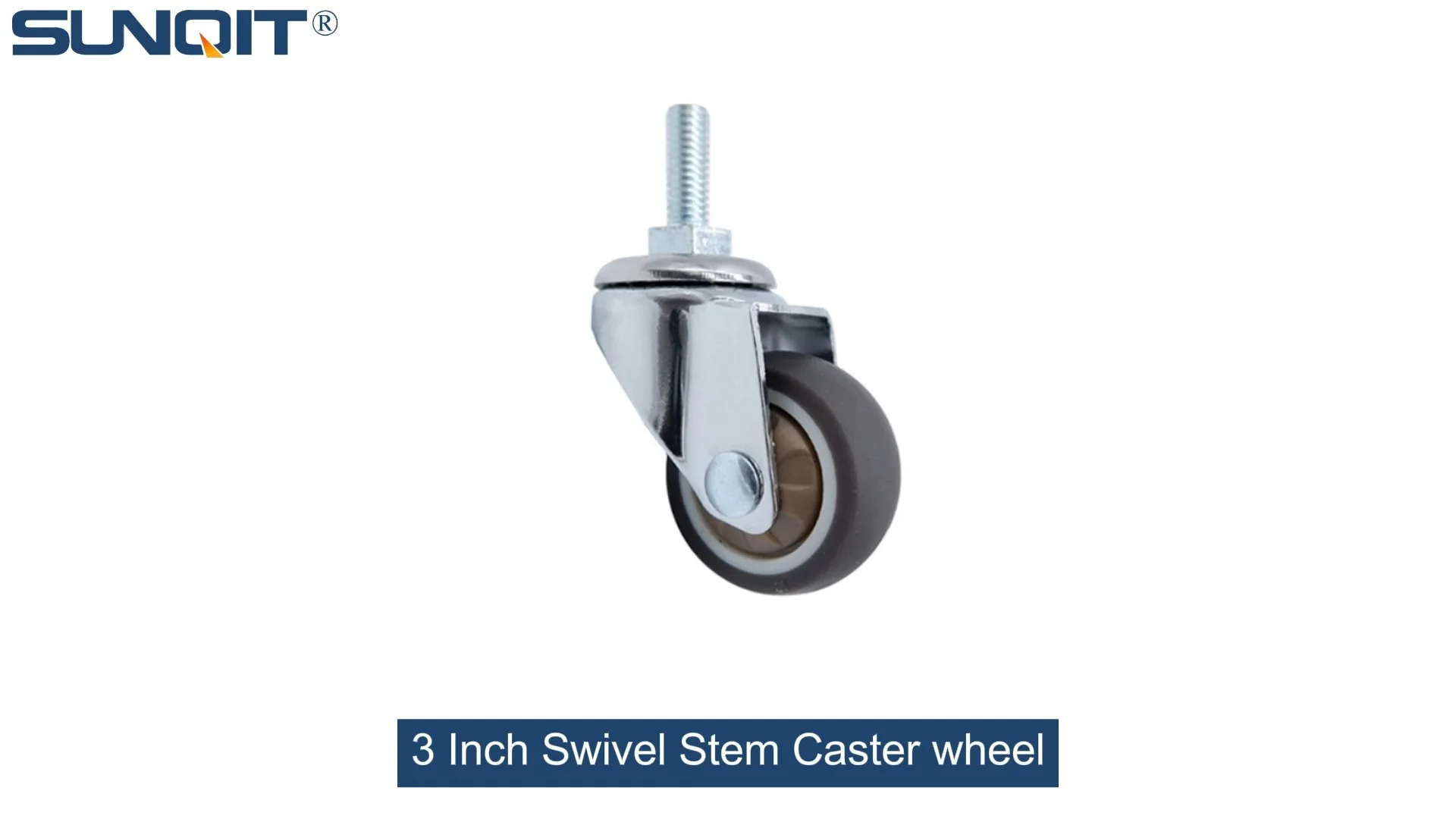
Swivel Stem Caster wheel
360 Degree Swivel Stem Caster. Threaded-post mount design, castors diameter 3 inch.Each swivel caster wheels loading 70KGS. Heavy enough and widely suit for carts, chairs, cabinet, flow rack, workbench, turnover rolley.
In the high-speed world of computer peripheral manufacturing, where every second counts and precision is non-negotiable, the difference between meeting demand and falling behind often lies in the details of your production setup. From keyboards and mice to printers and external drives, computer peripherals require assembly lines that are not just efficient, but also adaptable—capable of shifting between product models, scaling output, and minimizing downtime. One often-overlooked component that plays a pivotal role in this adaptability is the humble caster wheel . More specifically, swivel stem caster wheels with brake mechanisms have emerged as unsung heroes, transforming rigid workstations into dynamic, flexible tools that keep pace with modern production demands.
The Hidden Cost of Static Production Lines
Traditional production lines for computer peripherals often suffer from a common ailment: rigidity. Fixed workbenches, immovable material racks, and static assembly stations might work for long runs of a single product, but in today's market—where consumers crave customization and product lifecycles grow shorter by the year—static setups become bottlenecks. Imagine a scenario where a sudden surge in demand for wireless mice requires reallocating workers from keyboard assembly to mouse production. If the workbenches are bolted to the floor, reconfiguring the line could take hours, if not days, leading to missed deadlines and frustrated teams.
Ergonomic issues compound these problems. Workers stuck in one position for hours on end are more prone to fatigue and injury, especially when manually lifting or shifting heavy components like printer chassis or monitor stands. In a study by the Manufacturing Ergonomics Institute, lines with static workstations reported 37% higher rates of musculoskeletal disorders compared to those with mobile setups. The message is clear: mobility isn't a luxury in modern manufacturing—it's a necessity.
Mobility Redefined: The Rise of Swivel Stem Caster Wheels
Enter the swivel stem caster wheel . Unlike fixed casters that lock movement to a single axis, swivel stem casters rotate 360 degrees, allowing equipment to move in any direction with minimal effort. This maneuverability is game-changing for computer peripheral lines, where assembly tasks often require workers to access multiple stations or reposition workbenches to align with material flow. But what truly elevates these casters from useful to essential is the addition of a brake mechanism.
A swivel stem caster wheel with brake isn't just about stopping movement—it's about control. When a worker needs to focus on precision tasks, like soldering tiny components onto a circuit board or aligning plastic casing parts, the brake locks the caster in place, eliminating unwanted drift. When the task is done, a quick release of the brake allows the workstation to glide to the next stage, reducing the need for manual lifting or pushing heavy equipment. This balance of mobility and stability is critical in environments where both speed and accuracy matter.

Integrating Swivel Stem Casters with Workbenches: A Match Made in Efficiency
At the heart of most computer peripheral assembly lines is the workbench —the central hub where components come together. For years, workbenches were designed to be sturdy and immovable, but today's manufacturers are reimagining them as modular, mobile units. By retrofitting workbenches with high-quality swivel stem caster wheels, production managers unlock a host of benefits:
- On-Demand Line Reconfiguration: Need to shift from assembling 1000 wired keyboards to 500 wireless headsets? With mobile workbenches, teams can rearrange the line in minutes, not days. Casters with brake mechanisms ensure that once positioned, each workbench stays put, maintaining the precision needed for tasks like screw tightening or label application.
- Ergonomic Flexibility: Workers come in all sizes, and a one-height-fits-all workbench is a recipe for discomfort. Mobile workbenches can be adjusted for height and then moved to the optimal location for each operator, reducing strain on backs, shoulders, and wrists. Casters with smooth-rolling wheels mean even fully loaded workbenches (with tools, components, and) can be repositioned with minimal effort.
- Space Optimization: In facilities where floor space is at a premium, mobile workbenches can be tucked away during off-hours or repositioned to create temporary staging areas for incoming components. This is especially valuable for smaller manufacturers or those operating in urban locations where expansion isn't an option.

Synergy with Roller Tracks: Creating a Seamless Material Flow
A mobile workbench is only as effective as the system it operates within. That's where roller track systems come into play. Roller tracks—with their gravity-fed or motorized conveyor belts—are designed to move materials smoothly from one station to the next. When paired with mobile workbenches on swivel stem casters, they create a production ecosystem where both workers and materials can flow without friction.
Consider the example of assembling a wireless printer. Components like the print head, paper tray, and control panel arrive via roller tracks from the warehouse. Instead of workers walking to the track to retrieve parts, mobile workbenches on casters can be positioned directly alongside the roller track. Once a batch of components is assembled, the workbench can be rolled to the next track for quality inspection, then to packaging—all without interrupting the flow of materials. The brake on the caster wheel ensures that during assembly, the workbench stays aligned with the roller track, preventing misalignment that could lead to dropped or damaged components.
This synergy also reduces the risk of human error. When materials are delivered directly to the workbench via roller tracks, and the workbench itself can be positioned at the ideal height and angle, workers spend less time reaching, bending, or searching for tools—freeing up mental bandwidth to focus on the precision required for computer peripheral assembly.

Supporting Lean Systems: Minimizing Waste, Maximizing Value
At its core, computer peripheral manufacturing is about delivering value—high-quality products at competitive prices. This aligns perfectly with the principles of lean system methodologies, which aim to eliminate waste (whether in time, materials, or effort) and continuously improve processes. Swivel stem caster wheels, when integrated with workbenches and roller tracks, play a key role in supporting these lean goals:
Reducing Motion Waste: In lean terms, "motion waste" refers to unnecessary movement of workers or equipment. Mobile workbenches on casters cut down on this waste by bringing the work to the worker, not the other way around. A study by the Lean Manufacturing Association found that facilities using mobile workbenches reduced worker travel time by an average of 22%, translating to an extra 90 minutes of productive work per employee per day.
Minimizing Inventory Waste: With roller tracks feeding components directly to mobile workbenches, manufacturers can adopt a "just-in-time" inventory system, where parts arrive exactly when they're needed. This reduces the need for large storage areas and minimizes the risk of components becoming obsolete or damaged in storage.
Enhancing Continuous Improvement: Lean systems thrive on feedback, and mobile setups make it easier to test and refine processes. For example, if a team notices that a particular assembly step is causing delays, they can quickly reposition workbenches, adjust roller track angles, or add new stations—all without major overhauls. Casters with brakes ensure that these experiments don't compromise safety or precision during testing.
Key Features to Look for in Swivel Stem Caster Wheels
Not all swivel stem caster wheels are created equal, and choosing the right ones for your computer peripheral production line requires careful consideration. Here's a breakdown of critical features to evaluate:
| Feature | Why It Matters | Example Use Case in Peripheral Production |
|---|---|---|
| Brake Mechanism | Ensures stability during precision tasks; prevents accidental movement of loaded workbenches. | Locking the caster when applying adhesive to keyboard keycaps, ensuring even application. |
| Load Capacity | Must support the weight of the workbench, tools, and components (often 200-500 lbs per caster). | A workbench loaded with printer chassis (150 lbs) plus tools (50 lbs) requires casters rated for at least 200 lbs each. |
| Wheel Material | Rubber or polyurethane wheels absorb shock and protect floors; metal wheels offer durability for heavy loads. | Polyurethane wheels are ideal for facilities with polished concrete floors, preventing scratches during movement. |
| Swivel Radius | A smaller radius allows for tighter turns, critical in cramped production areas. | Maneuvering workbenches around roller track corners in a compact facility. |
| Stem Type | Threaded stems are common for easy installation on workbenches; plate-mounted stems offer extra stability for heavy loads. | Threaded stems are ideal for retrofitting existing wooden or metal workbenches without major modifications. |
Real-World Results: A Case Study
To put these benefits into perspective, consider the experience of a mid-sized computer peripheral manufacturer in Taiwan that specializes in gaming accessories. Prior to upgrading to swivel stem caster wheels with brakes, their production line for gaming mice was struggling with two major issues: long setup times for new mouse models and high worker fatigue due to static workstations.
After retrofitting 12 workbenches with heavy-duty swivel stem casters (rated for 300 lbs each) and integrating them with existing roller tracks, the results were striking: setup time for new models dropped from 8 hours to just 45 minutes, as workbenches could be quickly repositioned to match new assembly sequences. Worker-reported fatigue decreased by 40%, and the number of minor injuries (like strained backs from lifting) fell by 65%. Most importantly, production output increased by 22% in the first quarter post-upgrade, allowing the company to meet a sudden surge in demand for their wireless gaming mice.
Maintenance Tips for Long-Lasting Performance
To ensure your swivel stem caster wheels continue to deliver value, regular maintenance is key. Here are a few simple steps to keep them rolling smoothly:
- Clean Wheels Weekly: Dust, debris, and small components (like loose screws or plastic shavings) can get trapped in wheel bearings, causing friction. A quick wipe with a damp cloth and a blast of compressed air will keep them clean.
- Lubricate Bearings Monthly: Use a silicone-based lubricant on swivel joints and wheel bearings to prevent rust and ensure smooth rotation. Avoid oil-based lubricants, which can attract dust.
- Inspect Brakes Daily: Before each shift, check that brake levers engage fully and release cleanly. A stuck brake can lead to uneven wear on wheels, while a loose brake compromises safety.
- replace Worn Wheels Promptly: If a wheel starts to wobble, squeak excessively, or show signs of flat spots, replace it immediately. A damaged wheel can put extra strain on the caster stem and lead to premature failure.
The Future of Mobile Manufacturing
As computer peripheral manufacturers continue to embrace automation, AI-driven quality control, and customizable production, the role of mobility will only grow. Future innovations may include "smart" caster wheels with sensors that monitor load capacity, track movement patterns, or even alert maintenance teams when bearings need lubrication. Imagine a system where your roller tracks and mobile workbenches communicate, automatically repositioning workstations based on real-time production data—all enabled by the humble caster wheel.
But even without these futuristic additions, the current generation of swivel stem caster wheels with brake mechanisms offers a clear path to improved efficiency, safety, and adaptability. For manufacturers looking to stay competitive in a market that waits for no one, investing in these small but powerful components is not just a smart move—it's a necessary one.
Conclusion: Small Wheels, Big Impact
In the grand scheme of computer peripheral production, swivel stem caster wheels might seem like minor players. But as we've explored, their impact is anything but minor. By transforming static workbenches into mobile hubs, enabling seamless integration with roller tracks, and supporting lean system principles, these wheels help manufacturers meet the twin demands of speed and precision. Whether you're assembling a budget-friendly mouse or a high-end gaming keyboard, the right caster wheels can turn a struggling production line into a well-oiled machine—one smooth roll at a time.
So the next time you walk through your facility, take a moment to look down. Those small, unassuming wheels beneath your workbenches might just be the key to unlocking your team's full potential.