- Company Articles
- Products and Technology
- Product knowledge
- Swivel Stem Caster Wheels for Food Processing Equipment: Sanitary Design

Swivel Stem Caster Wheels for Food Processing Equipment: Sanitary Design
Related Product
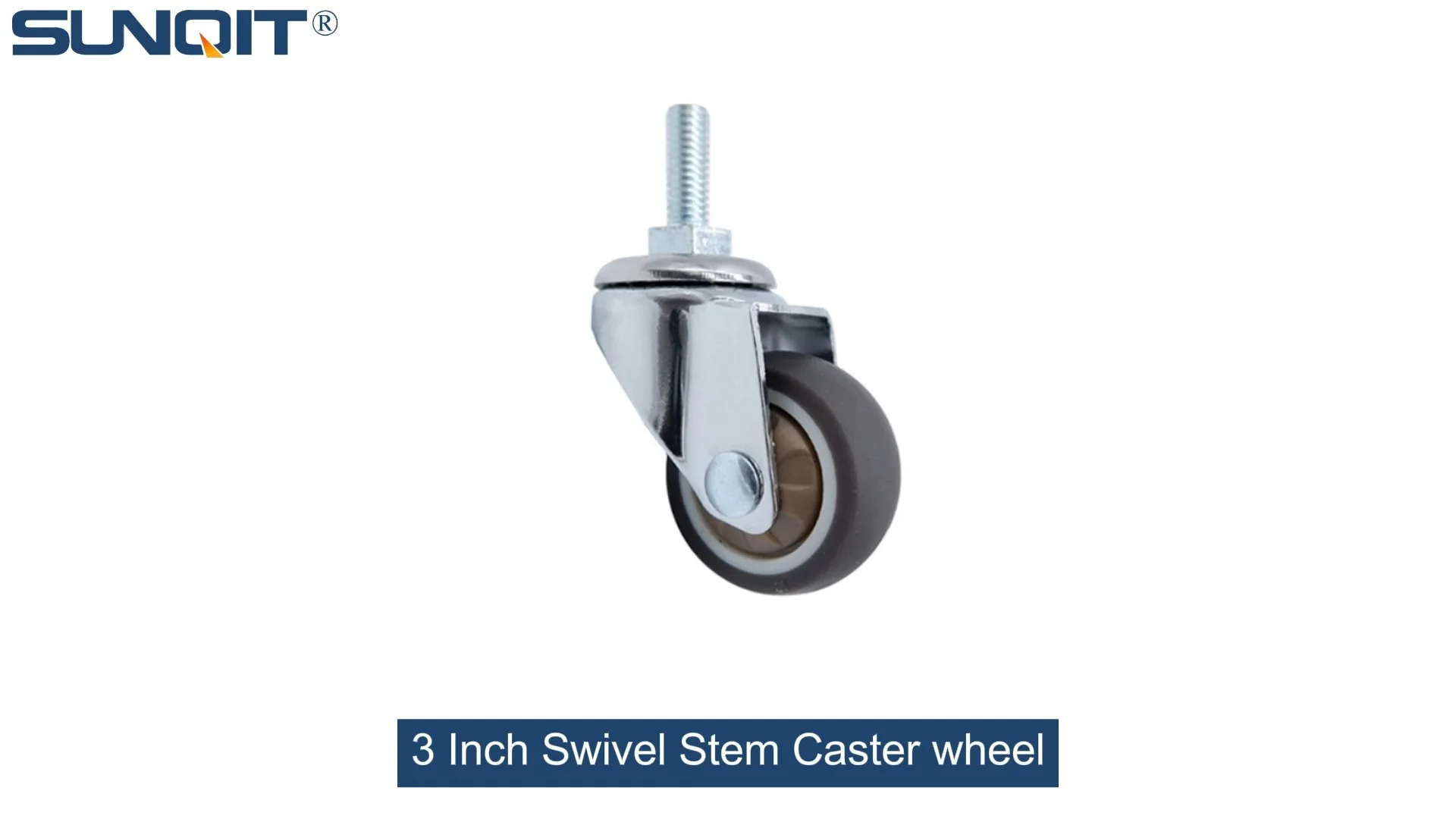
Swivel Stem Caster wheel
360 Degree Swivel Stem Caster. Threaded-post mount design, castors diameter 3 inch.Each swivel caster wheels loading 70KGS. Heavy enough and widely suit for carts, chairs, cabinet, flow rack, workbench, turnover rolley.
The unsung heroes of efficient, hygienic production lines—how these small components make a big impact on food safety and workflow.
Introduction: The Quiet Workhorses of Food Processing Lines
Walk into any food processing facility, and your eyes might first be drawn to the massive mixers, gleaming conveyor belts, or rows of stainless steel worktables. But if you look closer—under those worktables, beneath the mobile ingredient trolleys, or at the base of the sanitizing stations—you'll find a component that keeps the entire operation moving: swivel stem caster wheels. These small, unassuming devices are the backbone of mobility in food processing, allowing equipment to glide smoothly across floors, adapt to changing production needs, and maintain the strict hygiene standards that keep our food safe.
In an industry where even a single bacterial contamination can lead to product recalls, lost revenue, or worse, public health risks, every detail matters. Sanitary design isn't just a buzzword here—it's a necessity. And when it comes to caster wheels, "good enough" simply won't cut it. Standard casters, with their crevices, painted surfaces, or flimsy materials, can trap food particles, harbor bacteria, or corrode under frequent washdowns. That's where sanitary swivel stem caster wheels step in: engineered from the ground up to prioritize cleanliness, durability, and compliance. Let's dive into why these components are non-negotiable for modern food processing, and how they're designed to meet the unique challenges of this high-stakes environment.
Why Mobility Matters in Food Processing: The Role of Caster Wheels
Food processing is a dance of precision and adaptability. Production lines shift daily—one day packaging frozen vegetables, the next assembling ready-to-eat meals. Workstations need to reconfigure quickly, raw ingredients must move from storage to prep areas efficiently, and finished products require seamless transport to packaging zones. At the heart of this flexibility is mobility, and at the heart of mobility? Caster wheels. A well-chosen caster wheel transforms static equipment into a dynamic tool, reducing manual labor, cutting down on downtime, and ensuring that every square foot of the facility is used optimally.
Consider a typical scenario: a bakery producing artisanal bread. Dough mixers, proofing racks, and cooling trays all need to move between stations. Without reliable casters, workers might strain to push heavy equipment, risking injury or slowdowns. A stuck caster could even lead to spills, contaminating the floor and requiring costly cleanups. In a high-volume facility, these delays add up—missed deadlines, increased labor costs, and frustrated teams. Sanitary swivel stem casters eliminate these issues by offering smooth, consistent movement, even under heavy loads, and their design ensures that mobility never comes at the expense of hygiene.
But mobility in food processing isn't just about speed—it's about safety. Equipment that moves erratically or gets stuck can create hazards: tripping risks, collisions with other machinery, or damage to delicate ingredients. Swivel stem casters, with their 360-degree rotation and precise maneuverability, allow operators to navigate tight spaces (like between production lines or around cleaning stations) with ease. This not only protects workers but also safeguards the integrity of the food itself. A stable, smoothly moving trolley is far less likely to spill batter, topple a rack of pastries, or jostle fragile produce than one with clunky, unresponsive wheels.

Sanitary Design 101: What Makes a Caster "Food-Safe"?
Sanitary design isn't a one-size-fits-all concept—it's a set of principles engineered to minimize contamination risks, simplify cleaning, and withstand the harsh conditions of food processing environments (think daily washdowns with high-pressure hoses, exposure to acids, oils, and sanitizing chemicals). When applied to caster wheels, these principles translate into specific features that set them apart from standard industrial casters. Let's break down the key elements that make a swivel stem caster "sanitary" and why each matters.
1. No Hidden Crevices: The Enemy of Bacteria
Bacteria love to hide. In food processing, even a tiny gap between a caster's wheel and its frame can trap food particles, moisture, and debris, creating a breeding ground for pathogens like Salmonella or E. coli . Sanitary casters eliminate these risks with smooth, continuous surfaces and minimal seams. Unlike standard casters, which might have exposed bolts, rivets, or welded joints, sanitary designs use rounded edges and sealed components to prevent buildup. For example, the swivel head—the part that allows the wheel to rotate—is often enclosed in a stainless steel housing with a labyrinth seal, which blocks water, food, and bacteria from entering the internal bearings. This not only keeps the caster clean but also extends its lifespan by protecting moving parts from corrosion.
2. Corrosion-Resistant Materials: Stainless Steel Leads the Way
Food processing facilities are wet, chemical-intensive environments. Daily washdowns with hot water, chlorine, or caustic cleaners can quickly degrade casters made from painted steel or low-grade metals, leading to rust, chipping, or pitting. Once the surface is compromised, bacteria can take hold, and the caster becomes a liability. That's why sanitary swivel stem casters are almost always constructed from high-quality stainless steel—specifically 304 or 316 grades. Stainless steel pipe series components, like stems, frames, and wheel hubs, offer exceptional corrosion resistance: 304 stainless steel handles most general food processing environments, while 316 (often called "marine-grade") adds molybdenum for extra protection against salt, acids, and aggressive sanitizers (ideal for seafood processing or facilities using brine solutions).
But stainless steel isn't the only material in play. Wheel treads, for example, might be made from food-grade polyurethane or rubber. These materials are non-marking (so they won't leave scuffs on clean floors), resistant to oils and chemicals, and easy to wipe down. Importantly, they're also free from phthalates and other harmful additives that could leach into food—a must for compliance with FDA regulations.
3. Easy to Clean: Design for Disassembly (or No Disassembly Needed)
In a busy production facility, time is money. Sanitary casters are designed to be cleaned quickly and thoroughly, without requiring tools or disassembly. Smooth, non-porous surfaces mean that a quick spray with a hose or wipe with a sanitizing cloth is often enough to remove residue. Some models even feature "tool-less" designs, where the wheel can be easily removed for deep cleaning (though this is rare—most sanitary casters are engineered to be cleaned in place to minimize downtime). Compare this to standard casters, which might require unscrewing bolts or prying off covers to reach hidden areas—a process that's not only time-consuming but also risks damaging the caster or leaving small parts behind, which could become contamination hazards.

Beyond the Wheel: Critical Caster Accessories for Sanitary Systems
A caster wheel is only as good as its supporting components. In sanitary food processing setups, even the smallest caster accessories —from brakes to stem mounts—play a role in maintaining hygiene and performance. Let's explore the most important accessories and how they contribute to a food-safe system.
Brakes: Stopping Power Without Compromising Cleanliness
When a mobile workstation or trolley needs to stay put during use (e.g., while loading ingredients or packaging products), a reliable brake is essential. But standard brake mechanisms—like foot pedals with exposed springs or levers—can trap food particles and moisture. Sanitary caster brakes are designed to avoid this. Many use "enclosed" foot brakes, where the spring and linkage are housed within the stainless steel frame, preventing debris from collecting. Others feature "no-touch" designs, where the brake is activated by a foot pad that's smooth and easy to wipe down. Some advanced models even offer "total lock" brakes, which lock both the wheel and the swivel head, ensuring the equipment stays stationary even on uneven floors—critical for preventing accidental movement that could lead to spills or injuries.
Stem Mounts: Secure Attachment, Minimal Risk
The stem is what connects the caster to the equipment—whether it's a workbench, trolley, or conveyor frame. Sanitary stem mounts are designed to create a tight, seamless connection that doesn't trap debris. Threaded stems are common, where the caster screws into a threaded hole in the equipment leg, creating a flush, crevice-free joint. Expanding stems are another option: these use a wedge or collet system to grip the inside of a hollow leg, eliminating the need for external nuts or bolts that could harbor bacteria. Both designs ensure that the connection point is easy to clean and doesn't compromise the structural integrity of the equipment.
Seals and Bearings: Keeping Contaminants Out
The bearings inside a caster's swivel head and wheel hub are critical for smooth movement, but they're also vulnerable to contamination. Sanitary casters use specialized seals to protect these components: labyrinth seals (which use a series of channels to block water and debris) or lip seals (made from food-grade rubber or silicone) are common. Some models even use "sealed-for-life" bearings, which are pre-lubricated with food-grade grease and never need re-lubrication—eliminating the risk of grease leaking onto food or floors. This is a key advantage over standard casters, which often require regular lubrication with non-food-grade oils, posing contamination risks.

Compliance: Meeting the Strict Standards of Food Safety
In food processing, compliance isn't optional—it's a legal and ethical obligation. Regulatory bodies like the FDA (U.S.), USDA (U.S.), and EU 10/2011 (Europe) set strict guidelines for equipment design, including casters, to ensure food safety. Sanitary swivel stem casters are engineered to meet or exceed these standards, giving facilities the documentation and peace of mind they need to pass audits and avoid costly penalties. Let's take a closer look at what these standards entail and how casters stack up.
| Regulatory Body | Key Requirements for Casters | How Sanitary Casters Comply |
|---|---|---|
| FDA (U.S.) |
- Materials must be "food contact safe" (no toxic leaching)
- Surfaces must be smooth and non-porous - Design must allow for easy cleaning and inspection |
- Stainless steel frames and food-grade polyurethane wheels
- Seamless, crevice-free construction - Labyrinth seals to prevent debris buildup |
| USDA (U.S.) |
- Must be "easily cleanable" for meat, poultry, and egg processing
- No painted or coated surfaces that can chip - Resistant to corrosion from sanitizers |
- 316 stainless steel for high-moisture environments
- No paint or coatings—raw stainless steel finish - Sealed bearings with food-grade lubricant |
| EU 10/2011 |
- Materials must be approved for food contact (EFSA list)
- Design must prevent microbial growth - Resistance to common food processing chemicals |
- Compliance with EFSA-approved materials (e.g., POM wheels)
- Smooth, rounded edges to eliminate bacterial traps - Chemical-resistant polyurethane treads |
For facility managers, choosing compliant casters isn't just about avoiding fines—it's about protecting their brand. A single recall due to contamination can erode consumer trust, cost millions in lost revenue, and even lead to legal action. Sanitary casters provide a critical layer of defense by minimizing contamination risks at the source. When auditors visit, having documentation (like material safety data sheets, compliance certificates, or test reports) for your casters shows a commitment to food safety and can streamline the inspection process.
Real-World Impact: How Sanitary Casters Transform Food Processing Lines
To truly understand the value of sanitary swivel stem casters, let's look at a real-world example: a mid-sized bakery in the Midwest that specializes in artisanal bread and pastries. Before upgrading to sanitary casters, the bakery faced two recurring issues: frequent equipment breakdowns and struggles to pass audits due to caster-related contamination risks.
The bakery's production line relied on mobile worktables and dough-mixing trolleys, all fitted with standard steel casters. These casters had painted frames that chipped easily, leaving rust spots on the floor. The wheels, made from hard rubber, often got stuck, forcing workers to exert extra effort to move them—leading to fatigue and occasional spills. Worse, the casters' exposed bearings and crevices trapped flour dust and dough residue, which would harden into a crust that was nearly impossible to clean. During a routine USDA audit, inspectors flagged these casters as a "high risk" for bacterial growth, giving the bakery 30 days to address the issue or face a shutdown.
The solution? Switching to stainless steel swivel stem casters with food-grade polyurethane wheels and enclosed brakes. Within weeks, the changes were dramatic. The new casters glided smoothly, even when loaded with 500-pound batches of dough, reducing worker strain and speeding up production by 15%. The stainless steel frames withstood daily washdowns without rusting, and the crevice-free design meant that flour and dough residue could be hosed off in seconds. During the follow-up audit, the inspectors praised the bakery for its "exemplary equipment hygiene," and the facility has since maintained a perfect compliance record.
But the benefits didn't stop there. The bakery also noticed a reduction in maintenance costs: the old casters needed to be replaced every 6–8 months, while the new sanitary casters have lasted over three years with minimal upkeep. Workers reported higher job satisfaction, citing the easier movement of equipment and cleaner work environment. And perhaps most importantly, the bakery's brand reputation received a boost—local restaurants and cafes now specifically request their bread, citing confidence in the facility's commitment to food safety.
Choosing the Right Sanitary Swivel Stem Caster: Key Considerations
Not all sanitary casters are created equal. To find the best fit for your facility, you'll need to consider factors like load capacity, floor type, environmental conditions, and compliance requirements. Here's a checklist to guide your decision:
1. Load Capacity: Match the Caster to the Job
Start by calculating the maximum weight the caster will need to support. This includes the weight of the equipment plus its typical load (e.g., a trolley with 300 pounds of dough). Sanitary casters are rated for specific capacities, usually ranging from 100 to 1,500 pounds per wheel. It's always better to overestimate—choosing a caster with a higher capacity than needed reduces wear and tear and ensures longevity. For example, a trolley that regularly carries 400 pounds should use casters rated for at least 500 pounds.
2. Wheel Material: Grip, Durability, and Floor Protection
The wheel tread material affects traction, noise, and floor protection. In food processing, common options include:
-
Polyurethane (PU):
Offers excellent grip, is non-marking, and absorbs shock (reducing noise). Ideal for smooth floors like concrete or tile.
-
Rubber:
Provides superior traction on wet floors (critical in washdown areas) but may wear faster than polyurethane.
-
Stainless Steel:
Best for extreme temperatures (e.g., freezers or ovens) or environments with sharp debris, but can be noisy and may scratch soft floors.
Choose based on your facility's floor type and conditions—for most bakeries, delis, or beverage plants, polyurethane is a versatile choice.
3. Stem Type: Threaded, Expanding, or Plate-Mounted?
Swivel stem casters come with different stem types to attach to equipment:
-
Threaded stems:
Screw into a threaded hole in the equipment leg (common for worktables and small trolleys).
-
Expanding stems:
insert into hollow legs and expand to create a tight fit (ideal for larger, heavier equipment).
-
Plate mounts:
Bolt onto the bottom of equipment (used when stems aren't an option, though less common in sanitary designs due to potential crevices).
Consult your equipment manufacturer to determine the best stem type for your setup—most food processing equipment is designed to accommodate threaded or expanding stems for easy caster replacement.
4. Environmental Factors: Washdowns, Chemicals, and Temperatures
Consider your facility's unique conditions. If you use high-pressure washdowns (1,000+ psi), look for casters with IP69K ratings (certified dust-tight and resistant to high-temperature, high-pressure water). For cold environments (like meat processing freezers), choose casters with low-temperature grease and wheels that won't harden or crack. If your facility uses aggressive chemicals (like chlorine or peracetic acid), opt for 316 stainless steel frames and chemical-resistant polyurethane wheels to avoid degradation.
Maintenance: Keeping Sanitary Casters in Top Shape
Even the best sanitary casters require regular maintenance to perform at their best. Fortunately, their design makes upkeep simple—no specialized tools or extensive training needed. Here's a step-by-step guide to maintaining your casters:
Daily Cleaning: Quick and Effective
After each production shift, spray the casters with warm water (avoid high-pressure hoses directly on bearings, as this can force water past seals). Use a soft brush or cloth to wipe away any visible debris, paying special attention to the wheel tread and swivel head. For stubborn residue (like dried food), use a mild, food-grade detergent—never abrasive cleaners, which can scratch stainless steel surfaces. Rinse thoroughly and dry with a clean towel to prevent water spots.
Weekly Inspection: Catch Issues Early
Once a week, inspect each caster for signs of wear: check the wheel tread for cracks or flat spots, ensure the swivel head rotates smoothly without sticking, and test the brake (if equipped) to make sure it engages and releases properly. Tighten any loose stems or bolts (though this should be rare with sanitary designs). If you notice unusual noise, vibration, or resistance, address it immediately—these are often signs of bearing wear or debris buildup.
Lubrication: Only When Necessary
Most sanitary casters with sealed bearings are "lubricated for life" and don't require additional grease. If your casters do need lubrication (check the manufacturer's guidelines), use only food-grade lubricants (like NSF H1-rated grease) to avoid contamination. Apply a small amount to the swivel head and wheel bearings, then rotate the caster several times to distribute the grease evenly. Wipe away any excess to prevent attracting dust.
Conclusion: Investing in Sanitary Casters—A Smart Choice for Food Safety
In the fast-paced world of food processing, every component plays a role in creating safe, high-quality products. Sanitary swivel stem casters may be small, but their impact is huge: they keep equipment moving efficiently, reduce contamination risks, and ensure compliance with strict food safety standards. By choosing casters designed for hygiene—with stainless steel frames, crevice-free construction, and food-grade materials—facilities can protect their workers, their products, and their bottom line.
The bakery example we explored earlier isn't an anomaly—it's a testament to how the right casters can transform operations. From smoother mobility and reduced downtime to passing audits with flying colors, the benefits are clear. And while sanitary casters may cost more upfront than standard models, their durability and low maintenance needs make them a cost-effective investment in the long run.
So, the next time you walk through a food processing facility, take a moment to look down. Those unassuming wheels under the worktables and trolleys? They're more than just moving parts—they're guardians of food safety, quietly ensuring that the products we love are made with care, precision, and a commitment to cleanliness. And in an industry where trust is everything, that's priceless.