- Company Articles
- Products and Technology
- Product knowledge
- Swivel Stem Caster Wheels for Laboratory Equipment: Precision Movement

Swivel Stem Caster Wheels for Laboratory Equipment: Precision Movement
Related Product
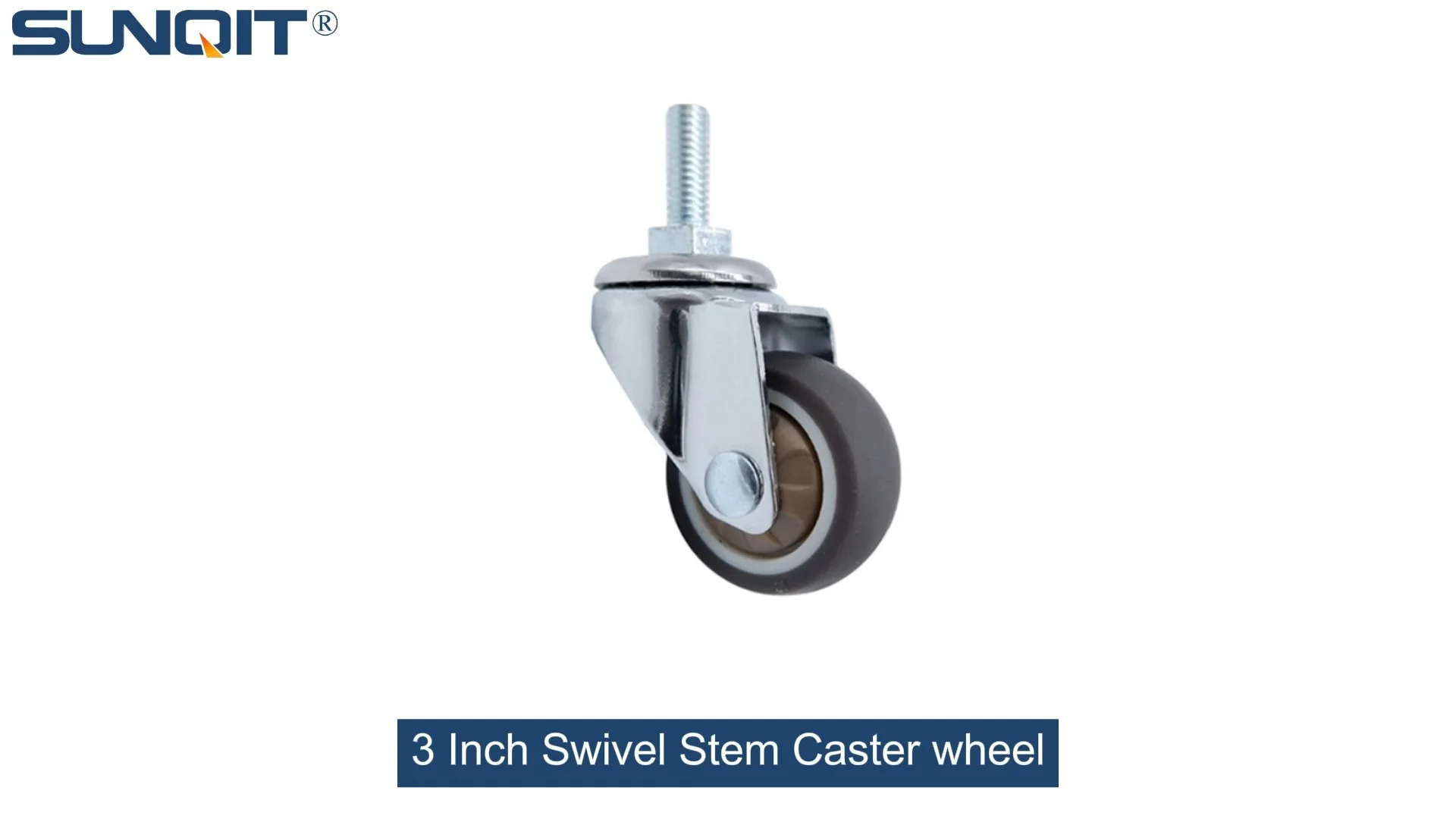
Swivel Stem Caster wheel
360 Degree Swivel Stem Caster. Threaded-post mount design, castors diameter 3 inch.Each swivel caster wheels loading 70KGS. Heavy enough and widely suit for carts, chairs, cabinet, flow rack, workbench, turnover rolley.
The Unsung Heroes of Lab Mobility
Walk into any modern laboratory, and you'll likely notice a symphony of activity: researchers hunched over microscopes, automated analyzers humming softly, and carts gliding smoothly across the floor carrying samples. Behind this seamless orchestration lies a component that plays a critical role in maintaining efficiency, safety, and precision: swivel stem caster wheels. These small but mighty devices are the backbone of lab mobility, allowing sensitive equipment, workstations, and storage units to be repositioned with ease—without compromising stability or accuracy.
In a lab environment, where even the smallest miscalculation can derail an experiment and strict safety protocols govern every movement, the ability to move equipment precisely is non-negotiable. Whether it's adjusting the position of a fume hood to align with a ventilation duct, reconfiguring a workbench to accommodate a new testing setup, or transporting a centrifuge across the room to share with a colleague, swivel stem caster wheels make these tasks possible. But not all casters are created equal. The unique demands of labs—from heavy loads and corrosive chemicals to the need for vibration-free stability—require specialized solutions. Let's dive into what makes swivel stem caster wheels indispensable for laboratory equipment, and how they deliver the precision movement that modern labs rely on.
What Are Swivel Stem Caster Wheels?
At their core, swivel stem caster wheels are a type of wheel assembly designed to attach to the bottom of equipment, allowing it to roll and rotate 360 degrees. The "stem" refers to the vertical rod that secures the caster to the equipment—typically inserted into a pre-drilled hole or mounted via a plate. The "swivel" mechanism, housed in the caster's top plate, uses ball bearings or a raceway to enable smooth rotation, so the wheel can turn in any direction without needing to pivot the entire piece of equipment. This design is a game-changer for labs, where maneuverability in tight spaces (think between lab benches or around bulky instruments) is often essential.
Unlike fixed casters, which only roll forward and backward, swivel casters offer unmatched flexibility. Picture a lab cart loaded with glassware: with fixed casters, navigating around a corner would require multiple steps—pushing, pulling, readjusting. With swivel stem casters, a gentle nudge is enough to pivot the cart smoothly, reducing the risk of spills or breakage. This flexibility is especially valuable in labs with dynamic layouts, where equipment is frequently rearranged to adapt to new projects or regulatory changes.
But the real magic lies in the precision of their movement. High-quality swivel stem casters are engineered to minimize friction, ensuring that even heavy equipment (like a 500-pound analytical balance) can be moved with minimal effort. They also feature locking mechanisms—often called "brakes"—that immobilize both the wheel and the swivel joint, converting a mobile piece of equipment into a stable, stationary workstation in seconds. This dual functionality—mobility when needed, stability when required—is what sets swivel stem caster wheels apart in lab settings.

Why Precision Movement Matters in Labs
In most workplaces, "good enough" mobility might suffice. But in a laboratory, precision movement is a matter of safety, accuracy, and efficiency. Let's break down why:
1. Protecting Sensitive Equipment
Laboratory equipment is often delicate and expensive. A slight jolt or uneven roll could misalign the optics in a microscope, disrupt the calibration of a spectrophotometer, or even damage the internal components of a PCR machine. Swivel stem caster wheels with precision bearings ensure that movement is smooth and vibration-free. The swivel mechanism distributes weight evenly, preventing sudden shifts that could jar sensitive instruments. For example, when moving a cryogenic freezer—loaded with samples stored at -80°C—any abrupt movement could cause vials to shift, risking leaks or temperature fluctuations. Swivel casters with soft, shock-absorbing treads mitigate this risk, keeping the load stable throughout the move.
2. Safety First: Avoiding Hazards
Labs are filled with potential hazards: corrosive chemicals, sharp tools, and high-temperature equipment, to name a few. A caster that sticks or wobbles could cause a researcher to lose control of a cart, leading to spills (of acids, solvents, or biological samples) or collisions with other equipment. Swivel stem caster wheels with reliable swivel mechanisms and durable wheels reduce these risks. Their ability to rotate smoothly means operators can navigate around obstacles with precision, avoiding sudden jerks that might otherwise lead to accidents. Additionally, models like the swivel stem caster wheel with brake add an extra layer of safety: when engaged, the brake locks both the wheel and the swivel joint, ensuring the equipment stays put even on uneven floors or during seismic activity (a critical feature in regions prone to earthquakes).
3. Adapting to Dynamic Workflows
Modern labs are no longer static spaces. The rise of interdisciplinary research means teams often collaborate across projects, requiring equipment to be shared or repositioned on the fly. A lean system approach—focused on minimizing waste and maximizing efficiency—has also taken hold in lab management. Swivel stem caster wheels align perfectly with lean principles by enabling quick reconfiguration of workspaces. For instance, a lab might start the day using a workbench for sample preparation, then wheel it to a different area in the afternoon for data analysis, eliminating the need for duplicate equipment. This adaptability reduces clutter, saves space, and ensures that every square foot of the lab is used effectively.

Key Features of Lab-Grade Swivel Stem Caster Wheels
Not all swivel stem caster wheels are suited for laboratory use. Labs demand casters that can withstand harsh conditions, support heavy loads, and maintain precision over time. Here are the critical features to look for:
Load Capacity: Handling the Heaviest Gear
Laboratory equipment is often surprisingly heavy. A standard biosafety cabinet, for example, can weigh upwards of 300 pounds; a large autoclave might tip the scales at over 1,000 pounds. Swivel stem casters must be rated to support these loads without sagging or failing. Manufacturers specify load capacity per caster, so it's important to calculate the total weight of the equipment (including any supplies or samples it will carry) and divide by the number of casters to ensure each one is within its limits. Overloading casters can lead to premature wear, unstable movement, or even catastrophic failure—risks no lab can afford.
Wheel Material: Balancing Durability and Floor Protection
The wheel itself is a critical component, and its material must be chosen based on the lab's environment. Common options include:
- Polyurethane: A popular choice for labs, polyurethane wheels offer a balance of durability, chemical resistance, and floor protection. They're non-marking, so they won't scuff vinyl or epoxy floors, and they absorb shocks well, reducing vibration during movement. They also stand up to mild chemicals, making them suitable for general lab use.
- Rubber: Soft rubber wheels provide excellent traction and are ultra-quiet—ideal for labs where noise levels must be kept low (like those housing sensitive acoustic equipment). However, they may not be as resistant to harsh solvents as polyurethane.
- Nylon: For labs with heavy loads or exposure to oils and greases, nylon wheels are a tough option. They're highly durable and heat-resistant, but they can be noisy and may mark floors if not properly maintained.
- Stainless Steel: In sterile environments (like cleanrooms or pharmaceutical labs), stainless steel wheels are preferred for their corrosion resistance and ease of sanitization. They're often paired with non-marking treads to protect floors.
Swivel Stem Caster Wheel with Brake: Locking in Stability
Arguably the most important feature for lab casters is a reliable brake system. The swivel stem caster wheel with brake is designed to lock two components: the wheel (preventing rolling) and the swivel joint (preventing rotation). This dual locking ensures that once equipment is positioned, it stays put—even if bumped or vibrated. Some brakes are foot-operated, allowing researchers to engage or disengage them without bending down, while others feature a lever or pedal. In labs where stability is critical (like during microscopy or pipetting), a failsafe brake is non-negotiable.
Chemical Resistance: Standing Up to Harsh Substances
Labs are rife with chemicals that can degrade inferior materials. From acids and bases to organic solvents, casters must resist corrosion and swelling. Polyurethane and stainless steel are generally resistant to most common lab chemicals, but it's always wise to check the manufacturer's chemical compatibility chart. For example, prolonged exposure to strong oxidizers like hydrogen peroxide might damage rubber wheels, while aromatic solvents could cause some plastics to crack. Choosing the right material here prevents premature failure and ensures a longer lifespan for the casters.

Comparing Caster Types for Lab Use
Swivel stem casters are just one type of caster used in labs. To understand why they're often the top choice, let's compare them to other common options:
| Caster Type | Key Features | Best For | Limitations |
|---|---|---|---|
| Swivel Stem Caster Wheel with Brake | 360° rotation, dual wheel/swivel lock, stem mounting | Heavy equipment, frequent reconfiguration, tight spaces | Stem may require precise mounting hole alignment |
| Fixed Stem Caster | Rolls only forward/backward, no swivel | Straight-line movement (e.g., conveyor systems) | Limited maneuverability; poor for tight spaces |
| Plate-Mounted Swivel Caster | Swivel rotation, mounted via a metal plate (instead of a stem) | Equipment with flat bases (e.g., storage racks) | Bulky; may not fit in tight clearances |
| Heavy-Duty Swivel Caster | Reinforced frame, high load capacity (1,000+ lbs per caster) | Autoclaves, large freezers, industrial-scale equipment | Heavier and more expensive than standard casters |
As the table shows, swivel stem casters (especially those with brakes) excel in versatility and maneuverability—two traits that make them ideal for the dynamic needs of labs. Their stem mounting is also space-efficient, allowing them to be used on equipment with limited clearance between the base and the floor.
Applications: Where Swivel Stem Casters Shine in Labs
Swivel stem caster wheels are used across a wide range of lab equipment, each with unique demands. Here are some common applications:
Workbenches and Lab Stations
Modular workbenches are a staple in modern labs, and swivel stem casters transform them into flexible workspaces. Researchers can adjust the height (often with adjustable leveling feet for stability when stationary) and roll the bench to different locations as needed. For example, a microbiology lab might use a caster-equipped workbench for culturing samples in the morning, then move it to a laminar flow hood in the afternoon for analysis. The swivel stem caster wheel with brake ensures the bench stays locked in place during use, preventing accidental movement that could disrupt delicate procedures.
Transport Carts and Trolleys
From carrying pipette tips and microplates to transporting hazardous waste, lab carts rely on swivel stem casters for smooth, precise movement. A cart loaded with glass vials, for instance, needs to glide around corners without spilling—a task made easy by the 360° rotation of swivel casters. Some carts even feature specialized caster accessories like wheel locks or bumpers to further enhance safety.
Analytical Instruments
Instruments like mass spectrometers, HPLC systems, and centrifuges are often mounted on caster-equipped bases. This allows technicians to move them for maintenance (e.g., accessing the back panel for repairs) or to reposition them for better workflow. The precision of swivel stem casters is critical here: even a small vibration during movement could misalign internal components, leading to inaccurate results.
Fume Hoods and Safety Cabinets
Fume hoods and biosafety cabinets must be positioned to ensure proper airflow and containment. Swivel stem casters make it easy to adjust their placement during installation or renovations, ensuring they align with ventilation systems and meet safety codes. Once in place, the brakes lock them down, preventing movement that could compromise containment.
Choosing the Right Swivel Stem Caster Wheels for Your Lab
Selecting the perfect swivel stem casters for your lab equipment involves considering several factors. Here's a step-by-step guide:
Step 1: Assess the Load
Calculate the total weight of the equipment, including any supplies it will regularly carry. Divide this by the number of casters (most equipment uses 4) to determine the minimum load capacity per caster. It's wise to add a 20% buffer to account for unexpected loads or uneven weight distribution.
Step 2: Evaluate the Environment
Consider the lab's conditions: Are there corrosive chemicals? High temperatures? Sterile requirements? Choose wheel materials (polyurethane, stainless steel, etc.) and brake components that can withstand these conditions.
Step 3: Measure Clearance and Mounting
Check the distance between the equipment's base and the floor (clearance). Casters must fit within this space without dragging. Also, determine the mounting type: stem casters require a hole or socket, while plate-mounted casters need a flat surface for screws. Ensure the equipment is compatible with your chosen mounting style.
Step 4: Prioritize Safety Features
Opt for a swivel stem caster wheel with brake to ensure stability during use. Look for brakes that are easy to engage/disengage and that lock both the wheel and swivel joint. For labs with mobility-impaired researchers, foot-operated brakes are preferable to hand levers.
Step 5: Consider Long-Term Maintenance
Like all lab equipment, casters require regular maintenance to perform their best. Choose models with accessible components (e.g., replaceable wheels, lubrication points) and readily available caster accessories (like replacement brakes or bearings). This ensures that if a caster fails, it can be repaired quickly, minimizing downtime.
Maintaining Swivel Stem Caster Wheels: Prolonging Performance
Even the highest-quality casters will underperform without proper maintenance. Here's how to keep your swivel stem casters in top shape:
Regular Inspection
Schedule monthly checks to look for signs of wear: loose stems, cracked wheels, or sticky swivel joints. Test the brakes to ensure they engage fully and release smoothly. Tighten any loose bolts or nuts, and replace worn components immediately—don't wait for a caster to fail mid-use.
Cleaning and Lubrication
Labs are dusty environments, and debris can accumulate in caster joints, causing friction and impeding swivel movement. Wipe wheels and stems with a damp cloth regularly to remove dust and spills. For swivel joints, apply a silicone-based lubricant (avoid oil-based lubricants, which can attract dust) every 3–6 months to keep rotation smooth.
Replacing Worn Parts
Wheels, brakes, and bearings will eventually wear out. Keep spare caster accessories on hand (like replacement wheels or brake pads) to minimize downtime. When replacing wheels, ensure they match the original load capacity and material to maintain performance.
The Future of Lab Mobility: Innovation in Swivel Stem Casters
As labs evolve, so too do the tools that support them. Swivel stem caster wheels are no exception. Manufacturers are increasingly integrating smart features, like sensors that monitor load capacity in real time and alert users if a caster is overloaded. Others are developing eco-friendly materials, such as recycled polyurethane, to reduce environmental impact. For sterile labs, antimicrobial coatings are being added to casters to prevent the growth of bacteria and fungi, enhancing safety.
Another trend is the integration of casters with lean system principles, where mobility is seen as a way to reduce waste and improve workflow. Labs are using caster-equipped equipment to create "cellular" workspaces—self-contained areas for specific tasks—that can be reconfigured in minutes. This flexibility allows labs to adapt to new research needs without costly renovations.
Conclusion: Precision in Motion, Confidence in Results
Swivel stem caster wheels may be small, but their impact on laboratory operations is enormous. They enable the precision movement that makes dynamic, efficient, and safe labs possible—whether by allowing a researcher to reposition a workbench in seconds, protecting sensitive equipment from vibration during transport, or ensuring that a biosafety cabinet stays locked in place during critical procedures. By choosing the right casters—prioritizing load capacity, chemical resistance, and reliable brakes—labs can enhance productivity, reduce risk, and focus on what matters most: advancing science.
So the next time you see a lab cart gliding across the floor or a workbench locked securely in place, take a moment to appreciate the swivel stem caster wheels beneath it. These unsung heroes are more than just wheels—they're the foundation of precision in motion, and a testament to the thoughtfulness that goes into creating safe, efficient laboratory environments.