- Company Articles
- Products and Technology
- Product knowledge
- Swivel Stem Caster Wheels for Lean Pipe Systems: Customization Options

Swivel Stem Caster Wheels for Lean Pipe Systems: Customization Options
Related Product
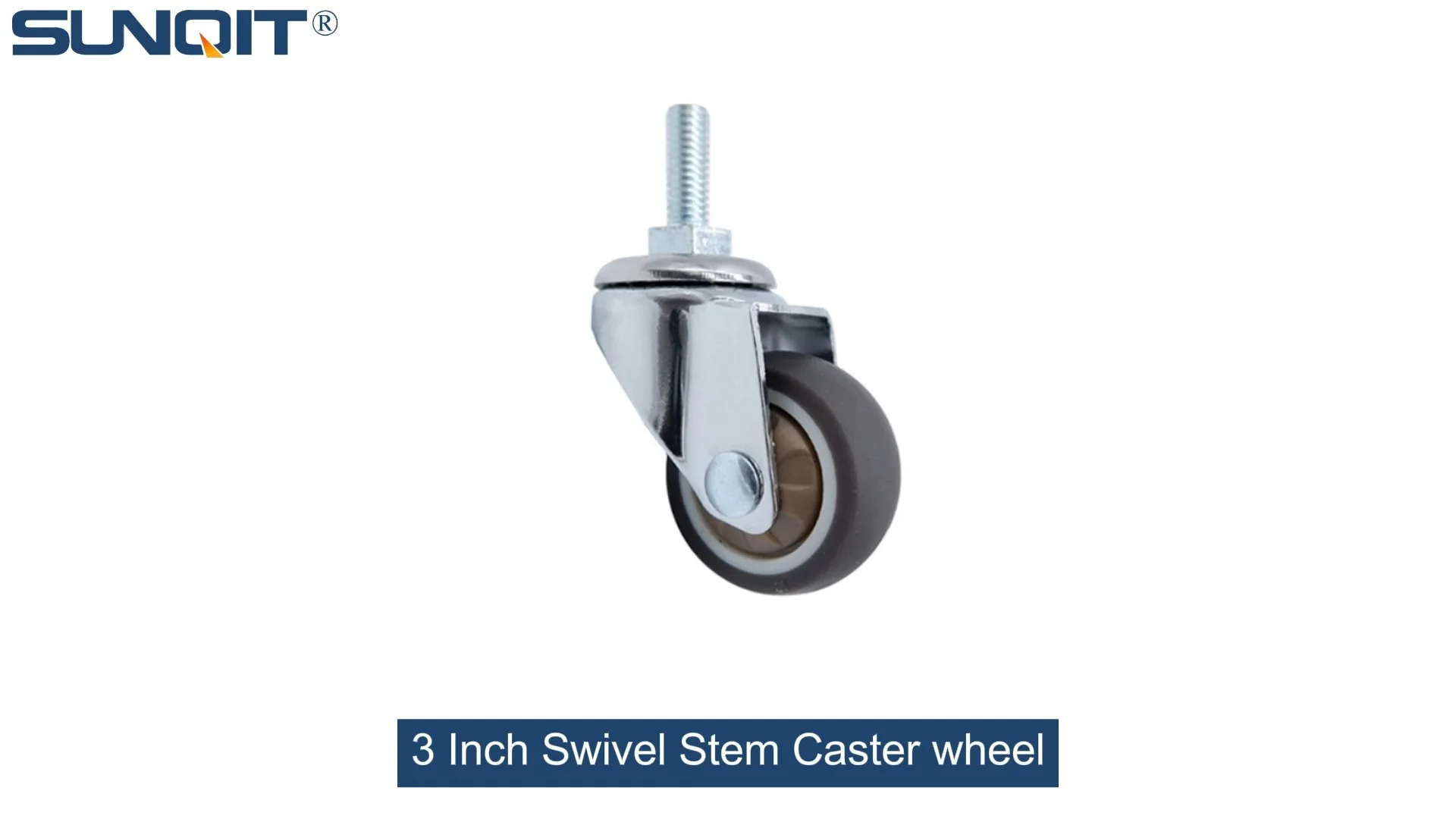
Swivel Stem Caster wheel
360 Degree Swivel Stem Caster. Threaded-post mount design, castors diameter 3 inch.Each swivel caster wheels loading 70KGS. Heavy enough and widely suit for carts, chairs, cabinet, flow rack, workbench, turnover rolley.
Walk into any well-run manufacturing facility, and you'll notice a quiet efficiency humming through the space. Tools glide into place when needed, workbenches shift to accommodate new tasks, and materials flow seamlessly from one station to the next. Behind much of this fluidity are yet critical components: swivel stem caster wheels. These small but mighty parts are the unsung heroes of lean pipe systems, turning static structures into dynamic, adaptable workspaces. But not all caster wheels are created equal. The real magic lies in customization—tailoring these wheels to fit your unique workflow, environment, and challenges. In this guide, we'll explore how swivel stem caster wheels enhance lean systems, dive into the key customization options available, and show you how to choose the perfect setup for your operation.
What Are Swivel Stem Caster Wheels?
At their core, swivel stem caster wheels are wheel assemblies mounted on a vertical stem that allows 360-degree rotation. Unlike fixed casters that only roll forward and backward, these casters let you maneuver equipment with a light push—ideal for tight corners, quick reconfigurations, and on-the-fly adjustments. The "stem" is the metal rod that secures the wheel assembly to your lean pipe structure, whether it's a workbench, a material rack, or a turnover trolley. Think of it as the bridge between mobility and stability: the stem locks the caster firmly into place, while the swivel mechanism ensures flexibility.
In lean pipe systems—where the goal is to minimize waste, maximize efficiency, and adapt quickly—this balance is everything. A poorly chosen caster can slow down workflows, damage floors, or even compromise product quality. But when customized correctly, swivel stem casters become an extension of your lean strategy, making it easier to implement 5S principles, reduce unnecessary movement, and keep production lines running smoothly.
Why Customization Matters in Lean Systems
Lean manufacturing thrives on precision. What works for a automotive plant assembling engines might be disastrous for a electronics workshop building circuit boards. That's why off-the-shelf casters rarely cut it. Customization lets you address your specific pain points: Maybe your team struggles with static electricity damaging sensitive components (hello, ESD workbench needs). Or perhaps your facility has uneven concrete floors that make rolling heavy carts a chore. By tailoring swivel stem caster wheels to your environment, you're not just buying a part—you're investing in a solution that aligns with your lean goals.
Consider this: A food processing plant needs casters that resist corrosion from frequent washdowns. A warehouse handling bulky goods requires wheels that can support heavy loads without squeaking. A pharmaceutical lab demands ultra-quiet casters to maintain sterile, distraction-free zones. Customization turns generic casters into tools that solve these unique problems, making your lean pipe system truly work for you.

Key Customization Options for Swivel Stem Caster Wheels
When it comes to customizing swivel stem casters for your lean pipe system, the options are more nuanced than you might expect. Let's break down the most critical choices and how they impact performance.
1. Wheel Material: Traction, Durability, and Environment
The material of your caster wheel affects everything from how smoothly it rolls to how long it lasts. Here's how to choose based on your workspace:
| Wheel Material | Best For | Key Benefits |
|---|---|---|
| Rubber (Natural/Synthetic) | ESD workbenches, cleanrooms, hardwood floors | Shock-absorbent, non-marking, quiet; ESD-safe variants prevent static damage |
| Polyurethane (PU) | Concrete floors, heavy loads, general manufacturing | Durable, oil/chemical-resistant, combines rubber's grip with plastic's toughness |
| Nylon | Warehouses, high-load applications | Lightweight, low friction, handles heavy weights without flattening |
| Stainless Steel | Food processing, wet environments | Corrosion-resistant, heat-resistant, easy to sanitize |
2. Stem Specifications: Fit and Compatibility
The stem is what connects the caster to your lean pipe structure, so getting its size and shape right is crucial. Most lean pipe systems use 28mm or 30mm pipes, but stems come in various diameters (often 10mm to 16mm) and lengths (25mm to 100mm). A stem that's too short might not secure properly; one that's too long could protrude and create a tripping hazard. Many suppliers also offer threaded stems, friction-fit stems, or stems with locking nuts—choose based on how often you need to remove or adjust the caster.
For example, if you frequently reconfigure your workbench (common in agile manufacturing), a friction-fit stem lets you pop casters on and off quickly. If your setup stays consistent, a threaded stem with a nut provides a permanent, rock-solid connection.
3. Brake Systems: Control and Safety
Mobility is great, but sometimes you need equipment to stay put. That's where brake customization comes in. The most common options are:
- Total Lock Brakes: Lock both the wheel and the swivel mechanism, preventing movement in any direction—ideal for workbenches during assembly.
- Wheel-Only Brakes: Stop the wheel from rolling but allow swiveling—useful for positioning carts before loading/unloading.
- Directional Locks: Fix the swivel to roll only forward/backward, like a shopping cart—good for long, straight aisles.
In high-traffic areas or on sloped floors, a reliable brake system isn't just a convenience—it's a safety must. For ESD workbenches, where sudden movement could jostle sensitive components, total lock brakes are often the go-to choice.
4. Load Capacity: Matching Wheels to Your Needs
Casters are rated by how much weight they can support, usually per wheel. A small workbench might need 50kg capacity per caster, while a heavy-duty material rack could require 200kg or more. Always factor in the total weight of your equipment plus its maximum load, then divide by the number of casters (and add 30% for safety). Overloading casters leads to premature wear, wobbly equipment, and even accidents—exactly what lean systems aim to eliminate.
5. Caster Accessories: The Finishing Touches
Sometimes the difference between a good caster and a great one lies in the accessories. Caster accessories like brake extensions (for easy reach on tall carts), wheel covers (to protect floors from debris), or stem adapters (to fit non-standard pipe sizes) can elevate performance. For example, if your team struggles to reach brakes on high trolleys, a simple brake extension bar reduces strain and speeds up workflow—small changes that add up to big efficiency gains.

Choosing the Right Customization: A Real-World Example
Let's put this all together with a scenario. Imagine you run a small electronics assembly line. Your team uses lean pipe workbenches to build circuit boards, and you've been dealing with two issues: static electricity damaging components, and workbenches drifting during delicate soldering tasks. Here's how you'd customize swivel stem casters to solve these problems:
Step 1: Wheel Material – Opt for ESD-safe rubber wheels. These wheels dissipate static charge, protecting sensitive electronics on your ESD workbench.
Step 2: Brake System – Install total lock brakes. This keeps the workbench completely stationary during soldering, preventing accidental movement that could ruin a connection.
Step 3: Stem Size – Choose a 12mm diameter stem with a 40mm length, compatible with your lean pipe workbench's 28mm pipes.
Step 4: Load Capacity – Each workbench holds tools, components, and a technician's weight—around 150kg total. With four casters, you'd pick 50kg capacity per wheel (plus that 30% safety buffer).
The result? A safer, more stable workspace with fewer damaged parts and smoother workflows—all thanks to customized casters.

Why Partner with a Reliable Lean Pipe Supplier?
Customizing swivel stem casters isn't a DIY project. It requires expertise in lean systems, material science, and engineering. A reputable lean pipe supplier will take the time to understand your workflow, assess your environment, and recommend the right customization options. They'll also ensure compatibility with your existing lean pipe joints, aluminum profiles, or aluminum pipe accessories—saving you from costly mistakes like ordering casters that don't fit your pipes.
Look for suppliers who offer samples or prototype testing. A good supplier will let you test casters in your actual workspace before committing to a bulk order, ensuring they perform as expected. They'll also provide guidance on maintenance—like lubricating swivel joints or replacing worn wheels—to extend the life of your casters and keep your lean system running at peak efficiency.
Final Thoughts: Small Wheels, Big Impact
Swivel stem caster wheels might seem like minor components in the grand scheme of your lean pipe system, but their impact is anything but small. The right customization turns them into tools that reduce waste, improve safety, and make your team's daily work easier. Whether you're outfitting an ESD workbench, a heavy-duty material rack, or a fleet of turnover trolleys, taking the time to tailor these wheels to your needs is an investment in your operation's success.
So, the next time you're evaluating your lean system, don't overlook the casters. With the right customization, they'll keep your workflow rolling smoothly—literally and figuratively.