- Company Articles
- Products and Technology
- Product knowledge
- Swivel Stem Caster Wheels for Material Racks: Enhancing Warehouse Mobility

Swivel Stem Caster Wheels for Material Racks: Enhancing Warehouse Mobility
Related Product
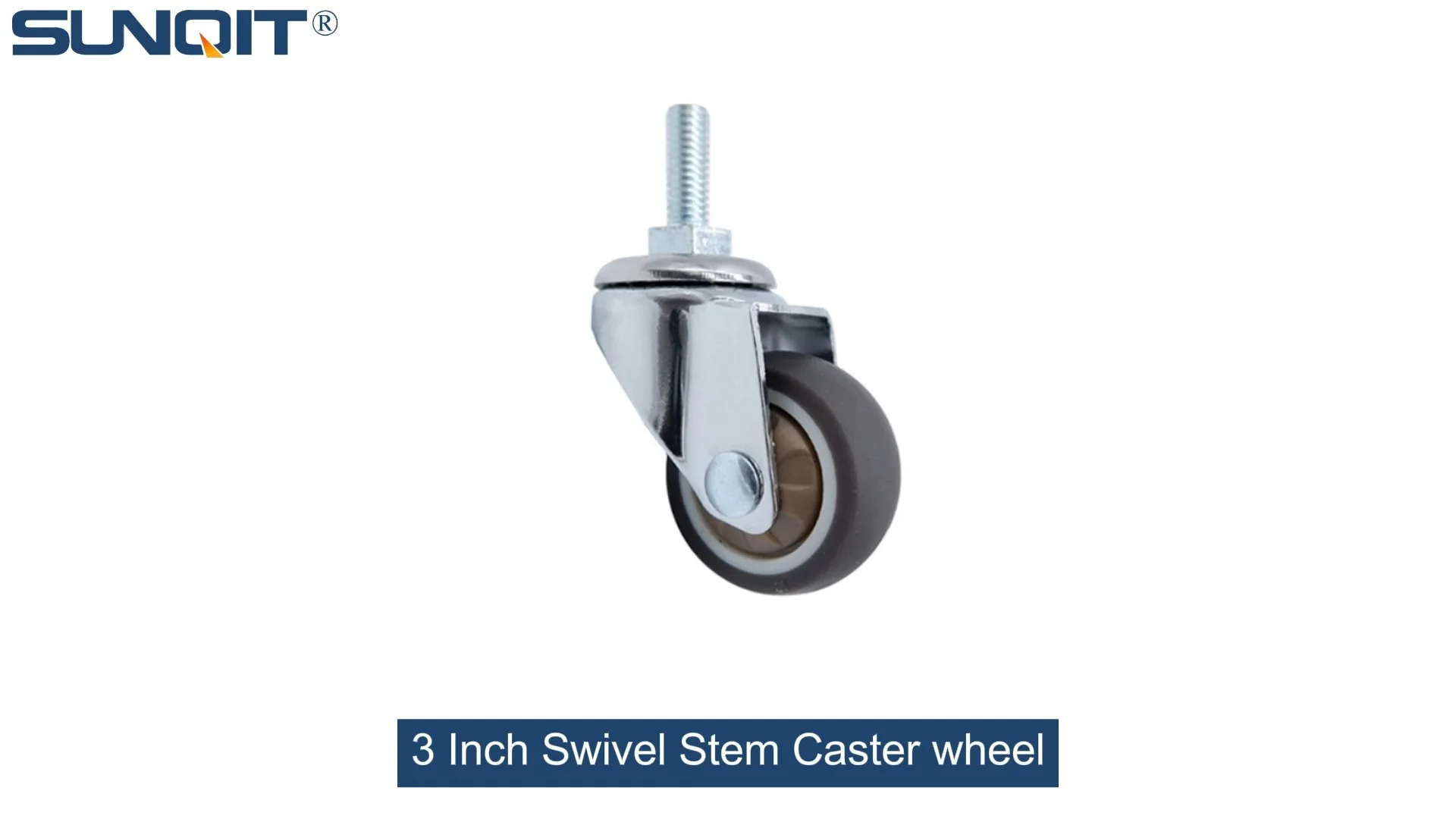
Swivel Stem Caster wheel
360 Degree Swivel Stem Caster. Threaded-post mount design, castors diameter 3 inch.Each swivel caster wheels loading 70KGS. Heavy enough and widely suit for carts, chairs, cabinet, flow rack, workbench, turnover rolley.
In the fast-paced world of modern warehousing, efficiency isn't just a buzzword—it's the backbone of profitability. Every square foot of space, every minute of labor, and every piece of equipment plays a role in keeping operations running smoothly. Yet, among the towering shelves, high-tech inventory systems, and heavy-duty machinery, there's a small component that often goes unnoticed: the caster wheel. Specifically, swivel stem caster wheels. These unassuming tools are quietly revolutionizing how material racks function, turning static storage units into dynamic assets that adapt to the ever-changing needs of warehouses, factories, and distribution centers. In this article, we'll dive deep into how swivel stem caster wheels enhance warehouse mobility, why they're a game-changer for material racks, and how they align with broader lean system principles to drive efficiency.
The Role of Material Racks in Modern Warehouses
Gone are the days when warehouses were simply large rooms filled with boxes stacked haphazardly. Today's facilities are orchestrated ecosystems where every item has a place, and every movement is optimized. At the heart of this organization are material racks—versatile structures designed to store, organize, and protect everything from small components to bulky goods. But as warehouses evolve, so do the demands on these racks.
Traditional static material racks, bolted to the floor or fixed in place, served their purpose in an era of stable inventory and predictable workflows. They offered durability and maximum storage density, but little else. The problem? Modern warehouses don't deal in "stable" or "predictable." Seasonal fluctuations, shifting consumer demands, and the rise of e-commerce have turned flexibility into a non-negotiable. A warehouse might need to reconfigure its layout to accommodate a sudden influx of holiday stock one month, then shift to smaller, faster-moving items the next. Static racks can't keep up with that pace. They're rigid, time-consuming to adjust, and often lead to wasted space or bottlenecks when workflows change.
Enter the modern material rack: a multi-functional tool that does more than just store. Today's racks need to support picking, packing, assembly, and even temporary storage during peak times. They need to move. Whether it's transporting goods from receiving to shipping, repositioning to create more space for a new production line, or bringing materials directly to a workbench on the factory floor, mobility has become a key requirement. And that's where swivel stem caster wheels step in.
The Unsung Hero: Swivel Stem Caster Wheels
So, what exactly are swivel stem caster wheels, and why are they so crucial for material racks? Let's start with the basics. A caster wheel is a wheel mounted on a frame (called a yoke or fork) that allows objects to be moved easily. When that frame can rotate 360 degrees, it's a swivel caster. The "stem" refers to the vertical rod that attaches the caster to the bottom of the material rack—think of it like a bolt that screws or inserts into a pre-drilled hole in the rack's frame. This stem mount is particularly popular for material racks because it's compact, easy to install, and doesn't require a large mounting plate, which saves space and keeps the rack's base low to the ground.
The magic of swivel stem caster wheels lies in their design. The swivel mechanism, typically housed in the yoke, uses ball bearings to allow smooth rotation. This means the wheels can turn in any direction, making the material rack highly maneuverable—even in tight aisles or crowded warehouse floors. Unlike rigid casters (which only roll forward and backward), swivel casters let operators pivot, turn, and navigate around obstacles with minimal effort. For material racks, which often hold heavy loads, this flexibility is a game-changer.
Wheel material is another critical factor. Swivel stem caster wheels come in a range of materials, each suited to different warehouse environments. Rubber wheels, for example, offer excellent shock absorption and are quiet—ideal for facilities where noise reduction is important, like electronics assembly plants. Polyurethane wheels are durable, resistant to chemicals and abrasions, and provide a smooth ride on uneven concrete floors. Nylon wheels, on the other hand, are lightweight and cost-effective, making them a good choice for lighter loads or cleanroom settings where debris must be minimized. No matter the material, the right wheel ensures the caster can handle the rack's weight without damaging the floor or getting stuck on cracks or uneven surfaces.

Key Benefits of Swivel Stem Caster Wheels for Material Racks
It's easy to underestimate the impact of a well-designed caster wheel, but when paired with material racks, swivel stem casters deliver a host of benefits that ripple through the entire warehouse operation. Let's break down the most significant advantages:
1. Enhanced Mobility: Maneuvering Tight Spaces with Ease
Warehouses are rarely wide-open spaces. They're filled with other racks, machinery, workstations, and personnel, leaving narrow aisles and tight corners to navigate. Static racks can't move, so if you need to access items stored behind them, you might have to unload everything in front—a time-consuming and labor-intensive process. Swivel stem caster wheels eliminate this problem. With 360-degree rotation, a material rack can be easily pushed, pulled, or pivoted around obstacles. Imagine a scenario where a picker needs to retrieve a small batch of components from the back of a rack. Instead of climbing over or moving other items, they can simply roll the entire rack forward a few feet, grab what they need, and push it back. This not only saves time but also reduces the risk of accidents from overreaching or lifting heavy objects.
2. Flexibility in Layout: Adapting to Changing Needs
One of the biggest challenges in warehouse management is predicting future needs. A layout that works perfectly for this quarter's inventory might be inefficient next quarter. Swivel stem caster wheels turn material racks into modular components that can be rearranged on the fly. Need to create a temporary assembly line for a rush order? Roll several material racks into place to form a U-shape around the workbench. Seasonal inventory spike? Reposition racks to free up floor space for additional storage. This flexibility isn't just about convenience—it's about survival in a market where adaptability is key to staying competitive. Static racks lock you into a single layout; mobile racks with swivel casters let you evolve.
3. Labor Efficiency: Reducing Strain, Boosting Productivity
Warehouse work is physically demanding, and anything that reduces strain on employees is a win for both workers and employers. Pushing or pulling a loaded material rack with poorly designed casters can lead to back injuries, fatigue, and slowdowns. Swivel stem caster wheels, with their smooth rotation and low rolling resistance, make moving heavy racks significantly easier. High-quality casters distribute weight evenly, and features like ball bearings in the swivel joint minimize friction, so even a fully loaded rack can be maneuvered by a single person. This reduces the need for multiple workers to move a single rack, frees up labor for other tasks, and lowers the risk of workplace injuries—all of which contribute to higher productivity and lower turnover.
4. Safety Improvements: Stability and Control
Mobility doesn't have to mean sacrificing safety—in fact, swivel stem caster wheels can enhance it. Many models come with built-in brake systems, such as foot brakes that lock both the wheel and the swivel mechanism. When a material rack is in use, the brake can be engaged to keep it firmly in place, preventing accidental movement that could cause spills or collisions. Additionally, wheel materials like polyurethane or rubber provide better traction than hard plastic, reducing the risk of the rack slipping on smooth floors. Some casters even feature shock-absorbing properties, which protect fragile items stored on the rack from damage during transport. For warehouses handling delicate electronics or glassware, this is a critical advantage.
5. Compatibility with Diverse Material Rack Types
Swivel stem caster wheels aren't one-size-fits-all—they're designed to work with a wide range of material rack styles, from lightweight shelving units to heavy-duty steel racks. For example, a material rack b (3 row and 3 floor), a common design for storing small to medium-sized parts, can be easily outfitted with swivel stem casters to turn it into a mobile picking station. Even specialized racks, like those used for storing long items or bulky equipment, can benefit from these casters. The stem mount design is versatile, fitting into standard mounting holes on most rack frames, and many manufacturers offer casters with adjustable stems to accommodate different rack heights or leg sizes. This compatibility means warehouses don't have to replace their existing racks to gain mobility—they can simply upgrade with casters, making it a cost-effective solution.

How Swivel Stem Caster Wheels Integrate with Lean Systems
In recent years, lean system principles have become a cornerstone of efficient warehouse and manufacturing operations. Lean is all about eliminating waste—whether it's wasted time, wasted space, or wasted effort—and creating value for the customer. Swivel stem caster wheels align perfectly with this philosophy, supporting key lean practices in several ways:
First, lean systems emphasize "just-in-time" (JIT) inventory, where materials are delivered to the production line exactly when they're needed, rather than being stockpiled. Mobile material racks with swivel stem casters make JIT possible by allowing materials to be transported directly to the point of use. Instead of workers walking back and forth to a distant storage area, the rack comes to them, reducing "motion waste"—one of the seven types of waste identified in lean methodology.
Second, 5S, a lean tool for organizing workspaces (Sort, Set in Order, Shine, Standardize, Sustain), relies on visual order and easy access to tools and materials. Swivel stem caster wheels help maintain this order by allowing racks to be positioned precisely where they're needed, keeping walkways clear and tools within arm's reach. At the end of a shift, racks can be quickly rolled back to their designated spots, ensuring the workspace remains organized and standardized.
Finally, continuous improvement—another lean principle—is supported by the flexibility of mobile racks. When processes are tested and refined, the layout can be adjusted without significant cost or downtime. For example, if a team discovers that moving a material rack closer to the assembly line reduces picking errors, they can make that change immediately with swivel casters, then measure the impact and adjust further if needed. This agility makes it easier to implement and sustain improvements over time.

Choosing the Right Swivel Stem Caster Wheels for Your Material Racks
Not all swivel stem caster wheels are created equal, and choosing the right ones for your material racks depends on several factors. To ensure you get the most out of your investment, consider the following:
| Factor to Consider | Key Questions to Ask | Example Solutions |
|---|---|---|
| Load Capacity | How much weight will the rack hold, including the rack itself? |
Light-duty (100-300 lbs): Nylon wheels for small parts racks.
Heavy-duty (600+ lbs): Polyurethane wheels with reinforced stems for metal parts racks. |
| Floor Type | Is the floor concrete, tile, carpet, or uneven? |
Smooth concrete: Rubber wheels for quiet operation.
Uneven floors: Polyurethane wheels with shock absorption. |
| Environment | Are there extreme temperatures, moisture, or chemicals present? |
Wet areas: Stainless steel stems and nylon wheels (resistant to rust).
Cleanrooms: Non-marking rubber wheels to avoid debris. |
| Brake Needs | Will the rack need to stay stationary during use? | Foot brakes for occasional locking; total-lock brakes (locks wheel and swivel) for high-traffic areas. |
| Stem Size & Compatibility | What's the diameter and length of the mounting hole in the rack? | Standard stem sizes (e.g., 3/8" or 1/2" diameter) for most racks; adjustable stems for non-standard holes. |
It's also worth considering caster accessories to enhance performance. For example, if your material racks are frequently moved over rough surfaces, adding stem extenders can raise the rack slightly to prevent bottoming out. Wheel guards can protect the caster mechanism from dirt and debris, extending its lifespan. And if you need extra stability, swivel locks can temporarily turn a swivel caster into a rigid one, preventing unwanted movement during loading or unloading.
Maintenance Tips for Longevity and Reliability
Like any piece of equipment, swivel stem caster wheels require regular maintenance to ensure they continue performing at their best. Neglecting them can lead to stuck swivels, worn wheels, or even stem failure—all of which can compromise mobility and safety. Here are some simple maintenance steps to follow:
- Inspect Regularly: Check casters weekly for signs of wear, such as cracks in the wheel, loose stems, or debris caught in the swivel joint. Pay special attention to brakes—ensure they engage and release smoothly.
- Clean Debris: Warehouse floors can accumulate dirt, dust, and small particles that get trapped in the swivel mechanism or around the wheel axle. Use a brush or compressed air to clean these areas regularly, as debris can cause friction and slow rotation.
- Lubricate Moving Parts: The swivel joint and wheel bearings need lubrication to stay smooth. Use a high-quality lubricant (like lithium grease) every 3-6 months, depending on usage. Avoid over-lubricating, as this can attract more dirt.
- replace Worn Wheels: If a wheel becomes flat, cracked, or loses traction, replace it immediately. Continuing to use a damaged wheel can strain the stem and swivel joint, leading to more costly repairs.
- Tighten Loose Stems: Over time, stems can loosen due to vibration. Check the stem nut or bolt periodically and tighten it if needed to prevent the caster from wobbling.
By following these steps, you can extend the life of your swivel stem caster wheels and ensure your material racks remain mobile and reliable for years to come.
Real-World Impact: Case Studies
To truly understand the difference swivel stem caster wheels can make, let's look at a couple of real-world examples:
Case Study 1: Automotive Parts Warehouse
A mid-sized automotive parts distributor was struggling with slow order fulfillment. Their static material racks were arranged in long rows, and pickers had to walk back and forth between racks to collect parts for each order—a process that took an average of 25 minutes per order. After retrofitting 50 material racks with heavy-duty swivel stem caster wheels (with brakes), they reorganized the layout into smaller "pods" where racks could be positioned around a central packing station. Pickers now roll the necessary racks to the station, reducing walking time by 60%. Order fulfillment time dropped to 10 minutes per order, and employee fatigue reports decreased by 40%.
Case Study 2: Electronics Assembly Plant
An electronics manufacturer using lean system principles wanted to implement JIT inventory for circuit board components. Their existing static racks were located 50 feet from the assembly line, requiring workers to make multiple trips daily. By adding swivel stem caster wheels to their material rack b (3 row and 3 floor) units, they created mobile "kitting carts" that could be loaded with components and rolled directly to the assembly line. This eliminated 2 hours of walking per worker per day, reduced component damage (due to fewer transfers), and made it easier to adjust production lines for different product models. The plant saw a 15% increase in daily output within the first month.
Conclusion: Small Wheels, Big Results
Swivel stem caster wheels may be small, but their impact on warehouse mobility and efficiency is undeniable. By turning static material racks into dynamic, adaptable tools, they address some of the biggest challenges in modern warehousing: tight spaces, changing layouts, labor strain, and the need for lean, waste-free operations. Whether you're running a small distribution center or a large manufacturing plant, investing in quality swivel stem caster wheels is an investment in flexibility, productivity, and safety.
As warehouses continue to evolve, the ability to move, adapt, and optimize will only grow more important. Swivel stem caster wheels are more than just a convenience—they're a strategic tool that helps businesses stay agile in a competitive market. So the next time you walk through a warehouse, take a moment to notice those small wheels under the racks. They might not be glamorous, but they're hard at work, keeping operations moving forward—one smooth roll at a time.