- Company Articles
- Products and Technology
- Solution
- Swivel Stem Caster Wheels for Mechanical Manufacturing: Heavy Load Solutions

Swivel Stem Caster Wheels for Mechanical Manufacturing: Heavy Load Solutions
Related Product
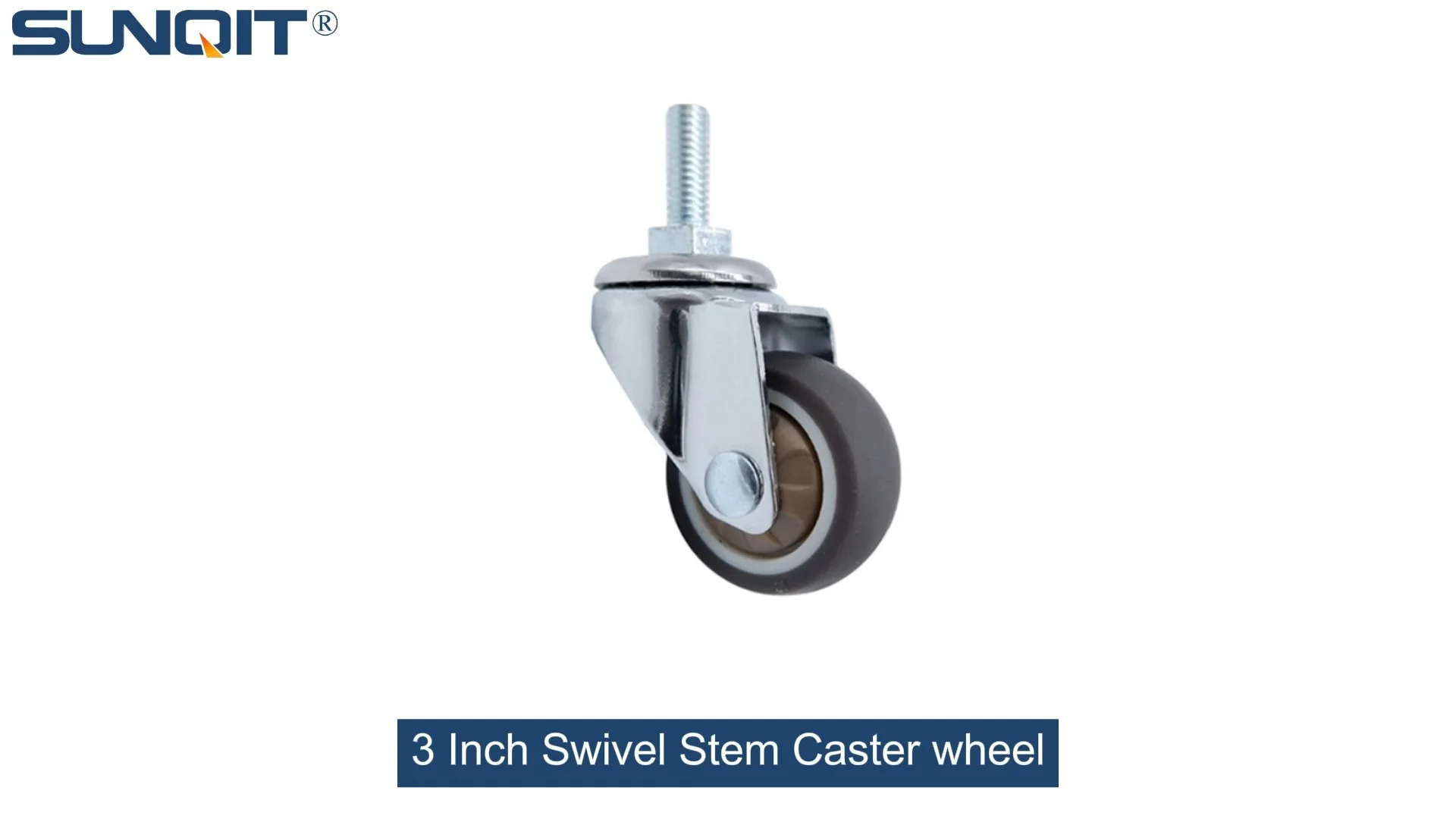
Swivel Stem Caster wheel
360 Degree Swivel Stem Caster. Threaded-post mount design, castors diameter 3 inch.Each swivel caster wheels loading 70KGS. Heavy enough and widely suit for carts, chairs, cabinet, flow rack, workbench, turnover rolley.
The Unsung Workhorses of the Factory Floor
Walk into any mechanical manufacturing plant, and you'll be met with a symphony of activity: the whir of machinery, the clink of tools, and the steady movement of materials from one station to the next. Amidst all this chaos, there's a component so that it's easy to overlook—yet without it, much of the magic would grind to a halt. We're talking about swivel stem caster wheels. These small, wheeled devices are the quiet backbone of modern manufacturing, enabling the smooth, safe movement of heavy workbenches, assembly lines, and material carts that keep production on track.
In mechanical manufacturing, where precision and efficiency are non-negotiable, the ability to move heavy loads with ease isn't just a convenience—it's a necessity. Whether it's a 500kg workbench loaded with sensitive equipment or a turnover trolley stacked with raw materials, every movement must be controlled, stable, and efficient. This is where swivel stem caster wheels shine. Designed to handle substantial weight while offering 360-degree maneuverability, they turn cumbersome objects into agile tools that adapt to the ever-changing demands of the factory floor.
But not all caster wheels are created equal. When it comes to heavy loads—think industrial workbenches, metal fabrication tables, or automated guided vehicles (AGVs)—standard casters simply won't cut it. They sag under pressure, lock up during turns, or wear out quickly, leading to downtime, safety risks, and costly replacements. That's why mechanical manufacturers rely on heavy-duty swivel stem caster wheels, engineered to withstand the toughest conditions while delivering the performance that lean system principles demand.
What Makes Swivel Stem Caster Wheels Unique?
To understand why swivel stem caster wheels are a go-to for heavy loads, let's break down their design. At first glance, they might look like any other wheel, but a closer inspection reveals a (ingenious) structure tailored for durability and maneuverability. The "stem" refers to the vertical rod that attaches the caster to the equipment—typically threaded or hollow, allowing it to bolt or press-fit into a mounting plate on the bottom of a workbench, trolley, or rack. The "swivel" part is where the magic happens: a rotating head (or raceway) that lets the wheel turn 360 degrees, making even large, heavy objects easy to pivot in tight spaces.
For heavy-load applications, the materials used in these casters are critical. The wheel itself is often made from polyurethane, rubber, or steel. Polyurethane is a popular choice because it balances durability with floor protection—its soft, non-marking surface won't scratch concrete or epoxy floors, while its high load-bearing capacity (often up to 1,500kg per caster) makes it ideal for heavy workbenches. Steel wheels, on the other hand, are built for extreme loads; some can handle over 3,000kg, though they're better suited for rough surfaces like concrete or asphalt where floor damage is less of a concern.
The swivel head is another key component. Heavy-duty models use precision ball bearings or roller bearings to reduce friction, ensuring smooth rotation even when fully loaded. Sealed bearings are a must in manufacturing environments, where dust, oil, and debris can quickly gum up moving parts. A good swivel head should also have a "raceway" (the circular track where the bearings sit) made from hardened steel, which resists wear and ensures the caster maintains its maneuverability over time.
Then there's the brake mechanism—a feature that's non-negotiable for safety in manufacturing. The swivel stem caster wheel with brake is a game-changer here. These brakes can be foot-operated, allowing operators to lock the wheel in place with a simple tap, preventing accidental movement when loading, unloading, or working on equipment. Some advanced models even have dual-locking brakes, which lock both the wheel and the swivel head, providing maximum stability for tasks that require precision, like assembly or inspection.

Heavy Load Challenges: How Swivel Stem Casters Rise to the Occasion
Moving heavy loads in a manufacturing setting isn't just about raw strength—it's about overcoming a unique set of challenges. Let's start with weight distribution. A typical workbench might weigh 300kg empty, but add tools, parts, and operators, and that number can easily double. If the casters aren't designed to handle uneven weight distribution, the load can shift, causing the equipment to tip or the casters to fail. Heavy-duty swivel stem casters address this with reinforced stems and wide wheel bases, which spread the weight evenly and reduce stress on individual components.
Floor conditions are another hurdle. Manufacturing floors are rarely perfect—they're often cracked, uneven, or covered in oil and debris. A standard caster might get stuck in a crack or skid on a greasy surface, but heavy-duty models are built to adapt. Polyurethane wheels, for example, have a high coefficient of friction, providing better traction on slippery floors. Steel wheels, with their rigid construction, can roll over small debris without getting jammed. Some casters even come with tread patterns designed to channel away liquids, reducing the risk of slips.
Maneuverability is also a key concern. In a busy factory, space is often limited, and equipment needs to navigate around other machines, workers, and conveyor belts. A heavy load on fixed wheels would be impossible to pivot, but swivel stem casters make it easy. The 360-degree rotation allows operators to turn tight corners, back up, and reposition equipment with minimal effort—saving time and reducing the risk of collisions. This is especially important in lean system environments, where every second counts and wasted movement (a form of "muda" or waste in lean terms) is actively eliminated.
Let's take a real-world example: a automotive parts manufacturer that recently upgraded its assembly line workbenches. Previously, the workbenches were fixed to the floor, requiring workers to walk back and forth to retrieve tools and parts—a process that wasted 20 minutes per shift per worker. By installing heavy-duty swivel stem casters with brakes, the company made the workbenches mobile. Now, workers can position the bench exactly where they need it, reducing movement and cutting down on fatigue. The brakes ensure the bench stays put during assembly, and the casters' high load capacity means even fully loaded benches (up to 800kg) move smoothly. The result? A 15% increase in productivity and a 30% reduction in workplace injuries related to lifting and reaching.

Caster Accessories: The Little Extras That Make a Big Difference
While the caster wheel itself is the star, caster accessories play a crucial role in maximizing performance and longevity. These small components might seem trivial, but they can extend the life of your casters, improve safety, and tailor them to specific applications. Let's start with bearings. High-quality bearings reduce friction, making the caster easier to roll and reducing wear on the swivel head. Stainless steel bearings are a great choice for humid or corrosive environments, as they resist rust and corrosion. For extremely heavy loads, tapered roller bearings are ideal—they can handle both radial and axial loads, providing smoother rotation under pressure.
Axle caps are another essential accessory. These small covers fit over the ends of the axle, preventing dirt and debris from entering the wheel hub and damaging the bearings. Without axle caps, a single stone or piece of metal shavings could get stuck in the hub, causing the wheel to seize up—a costly and dangerous problem in a manufacturing setting.
Brake pads are also worth mentioning. Over time, the brake pads on a swivel stem caster wheel with brake will wear down, reducing their effectiveness. Replacing them with high-quality, heat-resistant pads can ensure the brakes remain reliable, even after years of use. Some manufacturers offer brake pad kits that include everything needed for a quick replacement, minimizing downtime.
Stem covers are another useful accessory, especially for threaded stems. These covers protect the threads from damage during installation or use, ensuring a tight, secure fit between the caster and the equipment. They also prevent rust from forming on the stem, which could weaken the connection over time.

Swivel Stem Casters and Lean Manufacturing: A Perfect Partnership
Lean manufacturing is all about eliminating waste, streamlining processes, and maximizing value. At first glance, swivel stem caster wheels might not seem like a "lean tool," but they play a vital role in supporting lean principles. Let's break it down. One of the core tenets of lean is "flow"—ensuring materials, information, and equipment move through the production process without interruption. Swivel stem casters enable this flow by making it easy to reconfigure workstations, move materials to where they're needed, and adapt to changing production demands.
For example, in a traditional manufacturing setup, workbenches are fixed in place, and materials are transported via forklifts or conveyor belts—both of which can cause bottlenecks. With caster-equipped workbenches, operators can bring the workstation to the materials, reducing transportation waste. This is especially useful in "cellular manufacturing," a lean approach where all tools and materials for a specific task are grouped together in a "cell." Swivel stem casters allow these cells to be rearranged quickly, adapting to changes in production volume or product design.
Another lean principle is "standardization," and swivel stem casters help here too. By using the same type of caster across multiple pieces of equipment, manufacturers can simplify maintenance, reduce inventory costs, and ensure consistent performance. For example, a company might standardize on a 5-inch swivel stem caster with brake for all its workbenches and trolleys. This means technicians only need to stock one type of bearing, brake pad, and wheel, reducing the risk of delays due to missing parts.
Safety is also a key part of lean manufacturing—after all, accidents lead to downtime, which is a form of waste. Swivel stem caster wheels with brakes help prevent accidents by keeping equipment stable during use, reducing the risk of tip-overs or collisions. They also make it easier to comply with safety regulations, such as OSHA requirements for secure workstations and material handling.
Choosing the Right Swivel Stem Caster: A Buyer's Guide
With so many options on the market, choosing the right swivel stem caster for your heavy-load application can be overwhelming. To simplify the process, start by defining your needs. What's the maximum load the caster will need to support? This includes the weight of the equipment plus any materials, tools, or operators that will be on it. As a rule of thumb, always choose a caster with a load capacity that's 20% higher than your maximum expected load—this provides a safety buffer.
Next, consider the floor type. If you have smooth concrete or epoxy floors, polyurethane wheels are a good choice—they're quiet, non-marking, and provide good traction. For rough or outdoor surfaces, steel wheels are more durable. If your facility uses cleanrooms or has strict hygiene requirements, stainless steel casters are ideal, as they're easy to clean and resistant to corrosion.
Brake requirements are another factor. Do you need a basic wheel lock, or do you need to lock both the wheel and swivel head? For most manufacturing applications, a swivel stem caster wheel with brake that locks the wheel is sufficient. However, for tasks that require maximum stability—like precision assembly or testing—dual-locking brakes are worth the investment.
To help you compare options, here's a table of common heavy-duty swivel stem caster types and their ideal applications:
| Caster Type | Load Capacity (kg) | Wheel Material | Brake Type | Ideal Application |
|---|---|---|---|---|
| Heavy-Duty Steel Swivel Stem Caster | 1,500 – 3,000 | Steel | Wheel lock | Outdoor use, rough surfaces, extremely heavy loads |
| Polyurethane Wheel Swivel Stem Caster with Brake | 500 – 1,500 | Polyurethane | Dual-locking (wheel + swivel) | Indoor manufacturing, cleanrooms, smooth floors |
| Rubber Wheel Swivel Stem Caster | 300 – 800 | Rubber | Wheel lock | Quiet environments, sensitive equipment |
| Stainless Steel Swivel Stem Caster | 500 – 1,200 | Stainless Steel | Wheel lock | Corrosive environments, food processing, cleanrooms |
Finally, don't forget to consider the caster's mounting type. Swivel stem casters are available with threaded stems, hollow stems, or plate mounts. Threaded stems are ideal for equipment with pre-drilled holes, while plate mounts are better for wooden or metal surfaces that can be bolted into. Choose a mounting type that's compatible with your equipment to ensure a secure fit.
Maintenance Tips to Extend Caster Lifespan
Even the best swivel stem casters will wear out over time if not properly maintained. Fortunately, with a little care, you can extend their lifespan and keep them performing at their best. Start with regular inspections. Check the wheels for cracks, flat spots, or embedded debris. If you notice any damage, replace the wheel immediately—continuing to use a damaged wheel can cause stress on the stem and swivel head, leading to more serious issues.
Lubrication is another key maintenance task. The swivel head and wheel bearings need to be lubricated every 6 months (or more often in high-use environments) to reduce friction and prevent rust. Use a high-quality lithium-based grease, which is resistant to water and high temperatures. Be sure to clean the bearings before lubricating to remove any dirt or old grease that could contaminate the new lubricant.
Brake maintenance is also important. Test the brakes regularly to ensure they engage smoothly and hold the load securely. If the brakes feel loose or don't lock properly, adjust the tension or replace the brake pads. Caster accessories like brake pad kits make this easy—most kits include step-by-step instructions, so even non-technical staff can perform the replacement.
Finally, train your operators to use the casters properly. Misuse—like dragging heavy loads instead of pushing them, or overloading the equipment—can drastically reduce caster lifespan. Encourage operators to report any issues immediately, and reward proactive maintenance to foster a culture of care.
Future Trends: The Next Generation of Heavy-Duty Casters
As manufacturing evolves, so too do the tools that support it—and swivel stem caster wheels are no exception. One emerging trend is the use of smart casters equipped with sensors. These sensors can monitor load capacity, wheel temperature, and wear, sending real-time data to a central system. This allows maintenance teams to predict when a caster might fail, scheduling replacements before downtime occurs. In smart factories, these sensors can even integrate with IoT platforms, automatically triggering alerts or work orders when maintenance is needed.
Another trend is the development of eco-friendly casters. Manufacturers are increasingly using recycled materials for wheels and stems, and water-based lubricants to reduce environmental impact. Some companies are even experimenting with biodegradable polyurethane, which breaks down naturally at the end of its lifespan—aligning with the growing focus on sustainability in manufacturing.
Finally, there's the rise of custom casters. As manufacturing becomes more specialized, companies are demanding casters tailored to their unique needs—whether it's a caster that can withstand extreme temperatures, resist chemicals, or fit into an unusually small space. Suppliers are responding with modular designs, allowing customers to mix and match stems, wheels, and brakes to create a caster that's perfect for their application.
Conclusion: Small Wheels, Big Impact
Swivel stem caster wheels may be small in size, but their impact on mechanical manufacturing is enormous. They enable the smooth movement of heavy loads, enhance safety, and support lean system principles that drive efficiency and productivity. From the reinforced stems that handle uneven weight distribution to the swivel stem caster wheel with brake that keeps equipment stable, every component is designed to meet the unique challenges of the factory floor.
As manufacturing continues to evolve, the role of swivel stem casters will only grow. With advancements in materials, smart technology, and customization, these unsung heroes will continue to adapt, ensuring that factories remain agile, safe, and efficient. So the next time you walk through a manufacturing plant, take a moment to appreciate the small wheels under those workbenches and trolleys—they're doing more than just rolling; they're keeping the world of manufacturing moving forward.