- Company Articles
- Products and Technology
- Product knowledge
- Swivel Stem Caster Wheels for Mobile Workbenches: On-the-Go Productivity

Swivel Stem Caster Wheels for Mobile Workbenches: On-the-Go Productivity
Related Product
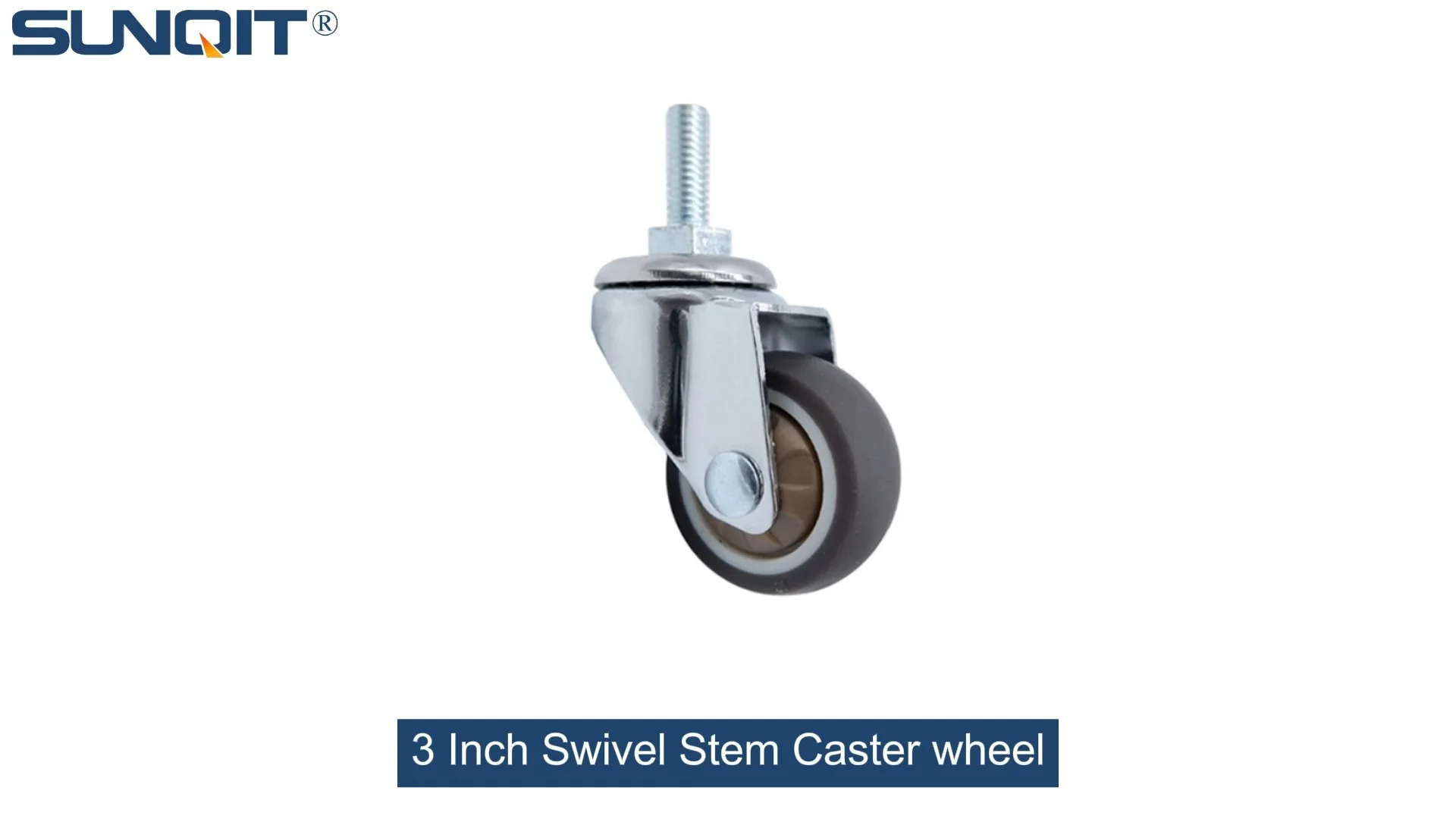
Swivel Stem Caster wheel
360 Degree Swivel Stem Caster. Threaded-post mount design, castors diameter 3 inch.Each swivel caster wheels loading 70KGS. Heavy enough and widely suit for carts, chairs, cabinet, flow rack, workbench, turnover rolley.
In the rhythm of a busy workshop, warehouse, or lab, every second counts. Picture this: You're in the middle of assembling a product, and suddenly you need a tool from the other side of the room. Or maybe you're rearranging your workspace to accommodate a new project, and your heavy workbench feels like it's glued to the floor. Frustrating, right? This is where the humble yet powerful swivel stem caster wheel steps in. These small but mighty components transform static workbenches into mobile hubs of efficiency, turning "I can't reach that" into "I'll be right there."
Mobile workbenches have become the backbone of modern, agile workspaces. Whether you're in manufacturing, woodworking, electronics assembly, or even a home garage, the ability to move your workbench with ease isn't just a convenience—it's a productivity game-changer. And at the heart of that mobility? Caster wheels. But not just any caster wheels: swivel stem caster wheels, designed to offer unmatched maneuverability, stability, and control. In this article, we'll dive deep into why these casters matter, how they work, and how to choose the right ones for your workbench. We'll also explore real-world scenarios where they shine, from bustling warehouses with lean pipe workbenches to precision-focused labs, and share tips to keep them rolling smoothly for years.
The Rise of Mobile Workbenches: Why Static Just Doesn't Cut It Anymore
Not long ago, workbenches were permanent fixtures—heavy, immovable pieces of furniture bolted to the floor or so cumbersome that rearranging them required a team of people and a few hours of downtime. But as workspaces evolved, so did the need for flexibility. Today's businesses thrive on adaptability: seasonal demand shifts, new product lines, team collaborations, and even remote work setups all require workspaces that can pivot quickly. Static workbenches? They're the opposite of agile.
Enter mobile workbenches. These aren't just "workbenches on wheels"—they're strategic tools designed to make your workflow smarter. Imagine a lean pipe workbench, built with modular aluminum pipes and joints, that can be reconfigured in minutes. Add swivel stem caster wheels, and suddenly that workbench can glide to where the action is, whether it's next to a production line, a packing station, or a colleague's desk for a quick brainstorm. It's not just about moving tools; it's about moving your entire workspace to the task at hand.
The benefits of mobility are tangible. In a warehouse, for example, a mobile workbench with swivel stem casters can reduce the time workers spend walking back and forth between stations by up to 30%, according to a 2023 study by the Manufacturing Efficiency Institute. In a lab, sterile workbenches that need to be positioned near fume hoods or microscopes can be adjusted without disrupting sensitive experiments. Even in small garages, mobile workbenches mean you can roll your tools right to the car you're repairing, instead of hauling parts across the floor.
But here's the catch: Not all mobility is created equal. A workbench with cheap, fixed casters might roll in a straight line, but try navigating a tight corner or stopping precisely next to a shelf, and you'll quickly realize the difference between "mobile" and " effectively mobile." That's where swivel stem caster wheels come into play—they're the secret to making mobility feel effortless.
Why Caster Wheels Are the Unsung Heroes of Mobile Workbenches
Think of a workbench as a body: The frame is the skeleton, the surface is the skin, and the caster wheels? They're the legs—supporting the weight, enabling movement, and dictating how smoothly the whole system functions. A workbench might have a sturdy top and a modular design, but if its casters are flimsy, noisy, or hard to maneuver, it might as well be static. Caster wheels aren't an afterthought; they're a critical component that directly impacts productivity, safety, and even employee satisfaction.
Let's break down their role: First, load support . A typical workbench, when fully loaded with tools, materials, and projects, can weigh anywhere from 200 to 800 pounds (and sometimes more). Caster wheels must bear that weight consistently, without bending, cracking, or sinking into the floor. Second, mobility . The wheels need to roll smoothly over different surfaces—concrete, tile, carpet, even slightly uneven floors—without getting stuck or causing the workbench to wobble. Third, control . Once you've moved the workbench, you need to stop it precisely where you want it, without it drifting or tipping. And finally, durability . Casters endure daily wear and tear—scratches, impacts, dust, and moisture—so they need to stand up to the demands of your workspace.
Swivel stem caster wheels excel in all these areas, but their biggest superpower is maneuverability. Unlike fixed casters, which only roll forward and backward, swivel casters can rotate 360 degrees, allowing the workbench to pivot, turn, and glide around obstacles with minimal effort. It's like the difference between pushing a shopping cart with stiff wheels and one with smooth, swiveling ones—suddenly, tight aisles or crowded workshops feel.

The Swivel Stem Advantage: What Makes These Casters Stand Out
Swivel stem caster wheels aren't just "swiveling casters"—the "stem" part matters, too. Unlike plate-mount casters, which attach to the workbench via a flat metal plate, swivel stem casters use a cylindrical stem (usually threaded or smooth) that inserts into a hole or socket in the workbench leg. This design offers several key benefits:
- Sleeker profile : Stem casters take up less space under the workbench, leaving more room for legs or storage.
- Easier installation : No need to drill multiple holes for a plate—just insert the stem into a pre-drilled hole and secure it with a nut or pin (though some may require caster accessories like stem adapters for a snug fit).
- Modular flexibility : Swap out casters quickly if you need to change wheel type (e.g., from rubber to polyurethane) or replace a worn one, without removing a whole plate.
But the real magic is in the swivel mechanism. Inside every swivel stem caster is a raceway—a ring of ball bearings or roller bearings—that allows the wheel assembly to rotate freely. High-quality casters use precision bearings that reduce friction, making even heavy workbenches feel light to push. Cheap casters? Their raceways are often made of plastic or low-grade metal, which wear out quickly, causing the swivel to stick or wobble.
Another advantage of swivel stem casters is their ability to distribute weight evenly. When all four casters swivel, the workbench can adjust to uneven floors more easily, reducing the risk of tipping. This is especially important for lean pipe workbenches, which are lightweight but need stability when loaded with tools and materials. A swivel stem caster with a wide wheelbase and a sturdy stem ensures the workbench stays balanced, even when moving over cracks or thresholds.

Key Features of Swivel Stem Caster Wheels: What to Look For
Not all swivel stem caster wheels are created equal. To maximize productivity and avoid headaches down the line, you need to choose casters with the right features for your workspace. Let's break down the most important factors:
1. Wheel Size: Small vs. Large—When to Choose Which
Wheel diameter might seem like a minor detail, but it has a huge impact on how your caster performs. Small wheels (2-3 inches) are great for lightweight workbenches on smooth floors (like office tile or polished concrete). They're compact and affordable, but they struggle with debris, cracks, or uneven surfaces—think of a small wheel getting stuck in a floor joint or rolling over a power cord. Large wheels (4-6 inches), on the other hand, roll over obstacles more easily, reduce rolling resistance (meaning less effort to push), and distribute weight better, making them ideal for heavy workbenches or rough floors (like warehouse concrete with expansion gaps).
For most mobile workbenches, a 4-inch wheel is a sweet spot—it balances maneuverability with obstacle-clearing ability. If you're using a lean pipe workbench that's often loaded with heavy tools, opt for 5-inch wheels to make rolling feel effortless.
2. Wheel Material: The Right Grip for Your Floor
The wheel material determines how well the caster rolls, how much noise it makes, and whether it protects your floors. Here are the most common options:
- Polyurethane (PU) : The gold standard for many workspaces. PU wheels are durable, quiet, and non-marking—perfect for hardwood, tile, or polished concrete. They also have good shock absorption, which reduces vibration when rolling over uneven floors. Great for lean pipe workbenches in offices or labs where noise and floor protection matter.
- Rubber : Softer than PU, rubber wheels offer excellent traction and are even quieter. They're ideal for smooth floors but can wear down faster on rough surfaces like concrete. Best for indoor use in quiet environments (e.g., libraries, small workshops).
- Steel : Built for heavy loads (1,000+ pounds) and rough floors. Steel wheels are tough but loud and can mark floors, so they're better for industrial settings like factories or warehouses where durability trumps noise.
- Nylon : Hard, lightweight, and resistant to chemicals and moisture. Nylon wheels roll easily on smooth floors but can be noisy and may crack under heavy impacts. Good for cleanrooms or environments with oil or solvents.
3. Brakes: Stopping Power When You Need It
A mobile workbench is only useful if it stays put when you want it to. That's why brakes are non-negotiable for swivel stem casters. There are two main types of brakes to consider:
- Swivel lock brakes : These lock the swivel mechanism, preventing the caster from rotating. The wheel can still roll, but the workbench moves in a straight line—useful for transporting heavy loads over long distances without the casters swiveling unexpectedly.
- Total lock brakes (dual-lock) : These lock both the swivel mechanism and the wheel, keeping the workbench completely stationary. This is the safest option for most workbenches, especially when using power tools or handling delicate materials. Look for brakes that are easy to engage with a foot pedal—you don't want to bend down every time you need to lock or unlock.
Pro tip: Choose casters with brakes on at least two wheels (preferably all four for heavy workbenches) to ensure stability. A common mistake is only braking two casters, which can cause the workbench to rock if someone leans on it.
4. Load Capacity: Don't Skimp on Strength
Every caster has a maximum load capacity, which is the weight it can support safely. To find the right capacity, calculate the total weight of your workbench (empty) plus the maximum weight of tools, materials, and anything else you'll place on it. Then divide that total by the number of casters (usually four) to get the minimum capacity per caster. Always round up —it's better to have casters that can handle more weight than you need than risk overloading them.
For example, a lean pipe workbench weighs about 50 pounds empty. If you load it with 250 pounds of tools and materials, the total weight is 300 pounds. Divided by four casters, you need casters with a minimum capacity of 75 pounds each. But to be safe, opt for 100-pound capacity casters—this accounts for uneven weight distribution (e.g., if you pile all the tools on one side) and adds a buffer for future heavier loads.

Compatibility with Workbenches: Making Sure Your Casters Fit
You've chosen the perfect swivel stem caster wheels—now you need to make sure they work with your workbench. The key here is the stem size and the workbench's leg design. Most swivel stem casters come with either a threaded stem (like a bolt) or a smooth stem. Threaded stems screw into a nut embedded in the workbench leg, while smooth stems are secured with a cotter pin or a setscrew.
Lean pipe workbenches, with their modular aluminum frames, are particularly compatible with swivel stem casters. Many lean pipe suppliers offer caster mounting plates or stem adapters that attach to the aluminum pipes, allowing you to add casters without modifying the frame. For example, a caster accessory like a "caster install base" can be clamped to the lean pipe leg, providing a socket for the swivel stem caster to insert into. This modularity means you can upgrade your lean pipe workbench with casters at any time, even after it's been assembled.
Wooden or metal workbenches may require pre-drilled holes for the stem. If your workbench legs don't have holes, you can drill them yourself (use a drill bit slightly smaller than the stem diameter for a tight fit) or use a caster plate adapter (a metal plate with a stem that attaches to the leg via screws). Just make sure the leg material is strong enough to support the stem—hollow metal legs, for example, may need a reinforcing sleeve to prevent the stem from bending the leg.
Another compatibility factor is the caster height. The stem length plus wheel diameter determines how high the workbench sits off the floor. If your workbench is too low, it may be hard to use; too high, and it could feel unstable. Measure the distance from the bottom of the workbench leg to the floor (desired height) and subtract the wheel diameter to get the required stem length. Most swivel stem casters come in standard stem lengths (2-4 inches), but custom lengths are available from suppliers if needed.
Caster Accessories: Small Additions, Big Improvements
Swivel stem caster wheels are powerful on their own, but caster accessories can take their performance to the next level. These add-ons solve common problems, extend caster life, and make your mobile workbench even more versatile. Here are some must-have accessories to consider:
1. Brake Extensions
If your workbench is low to the ground, reaching the brake pedal on the caster can be a hassle. Brake extensions add a longer pedal or a lever that extends up the workbench leg, making it easy to engage or disengage the brake with your foot without bending down.
2. Floor Protectors
Even non-marking wheels can scuff delicate floors (like hardwood or vinyl) over time. Floor protectors, like rubber pads or plastic glides that attach to the caster stem, act as a buffer between the wheel and the floor, reducing scratches and noise.
3. Stem Covers
Exposed stems can collect dust, dirt, or moisture, which can corrode the threads or cause the caster to stick. Stem covers (usually made of rubber or plastic) slip over the stem, keeping debris out and extending the life of the caster.
4. Replacement Wheels
Wheels wear out faster than stems or swivel mechanisms, so having spare wheels on hand can save you downtime. Look for caster accessories like "replacement wheel kits," which include the wheel, axle, and bearings—no need to replace the entire caster.
5. Anti-Tip Casters
For tall or top-heavy workbenches, anti-tip casters (extra casters mounted near the top of the legs) prevent the workbench from tipping over when leaned on or when navigating slopes. These are especially useful in labs or workshops where workbenches hold heavy equipment like microscopes or power tools.
Caring for Your Swivel Stem Casters: Maintenance Tips to Keep Them Rolling
Even the best swivel stem caster wheels won't last forever without proper care. Regular maintenance not only extends their life but also ensures they perform safely and efficiently. Here's a simple maintenance routine to follow:
1. Clean Them Regularly
Dust, dirt, and debris can get stuck in the swivel raceway or around the wheel axle, causing the caster to stick or roll unevenly. Once a week, wipe the wheels and swivel mechanism with a damp cloth to remove surface dirt. For stubborn grime (like oil or grease in a garage), use a mild detergent or degreaser, then dry thoroughly to prevent rust.
2. Lubricate the Swivel Raceway and Axles
Friction is the enemy of smooth rolling. Every 3-6 months (more often in dusty or wet environments), lubricate the swivel raceway and wheel axles with a dry lubricant (like silicone spray) or a light machine oil. Avoid heavy greases, which can attract dirt. To lubricate the raceway, rotate the caster while spraying to ensure the lubricant reaches all the bearings.
3. Check for Loose Stems or Worn Wheels
Before each use, give the casters a quick inspection: Wiggle the stem to see if it's loose (tighten the nut or setscrew if it is), check the wheels for cracks or flat spots, and ensure the brakes engage smoothly. If a wheel is worn unevenly, it may be a sign that the axle is bent or the swivel raceway is damaged—replace the caster immediately to avoid accidents.
4. Protect Them from Extreme Conditions
Swivel stem casters aren't invincible. If you work in a wet environment (like a car wash), choose stainless steel or corrosion-resistant casters and dry them after use. In cold environments, avoid leaving casters on ice or snow, as freezing can damage the bearings. And in workshops with heavy debris (like metal shavings), use wheel guards to prevent particles from getting stuck in the axles.
Real-World Applications: How Swivel Stem Casters Boost Productivity Across Industries
To truly understand the impact of swivel stem caster wheels, let's look at how they're transforming workspaces in different industries:
Auto Repair Shops: Rolling Tool Stations
Auto mechanics spend hours moving between cars and toolboxes. A mobile workbench with swivel stem casters changes the game: Mechanics can load the workbench with wrenches, sockets, and diagnostic tools, then roll it right to the car they're working on. Swivel casters make it easy to maneuver around the car, even in tight garage bays, and total lock brakes keep the workbench steady when using power tools. One shop owner in Texas reported a 25% increase in daily repairs after switching to mobile workbenches with swivel stem casters—less walking, more wrenching.
Electronics Manufacturing: Lean Pipe Workbenches on the Move
Electronics assembly lines rely on precision and speed. Lean pipe workbenches, with their modular design, are perfect for these environments—but adding swivel stem casters takes them to the next level. A team in a California circuit board factory uses lean pipe workbenches with polyurethane swivel casters to move subassemblies between stations. The casters roll smoothly over the factory's epoxy floor, and the swivel lock brakes keep the workbench aligned with the conveyor belt during assembly. When a new product line is introduced, the workbenches are reconfigured and rolled into place in minutes, cutting changeover time by 40%.
Laboratories: Sterile Mobility
Labs require sterile, controlled environments, but that doesn't mean workbenches have to be static. A medical research lab in Boston uses stainless steel swivel stem casters on their laminar flow workbenches. The casters are easy to clean (no crevices for bacteria to hide), and the total lock brakes ensure the workbench stays put during sensitive cell culture work. When the lab needs to rearrange for a large experiment, the workbenches are rolled into place without disrupting the sterile airflow—something that used to require days of planning now takes an hour.
Home Workshops: The Hobbyist's Best Friend
Even small home workshops benefit from mobile workbenches. A woodworker in Oregon built a custom workbench with swivel stem casters, allowing him to roll it outside for sanding (to avoid dust in the house) or next to his table saw for cutting. The rubber wheels are quiet on his garage's concrete floor, and the brakes keep the workbench steady when using a router. "I used to spend 10 minutes moving lumber from the saw to the workbench," he says. "Now I roll the workbench to the saw—it's like adding an extra pair of hands."
Choosing the Right Swivel Stem Caster: A Step-by-Step Guide
With so many options available, choosing the right swivel stem caster can feel overwhelming. But by following these steps, you can narrow down your choices and find the perfect caster for your workbench:
Step 1: Calculate Your Total Load
Add the weight of your workbench (empty) plus the maximum weight of tools, materials, and anything else you'll place on it. Divide by the number of casters (usually four) to get the required load capacity per caster. Round up to the nearest available capacity—e.g., if you need 75 lbs per caster, choose 100 lbs.
Step 2: Assess Your Floor Type
Smooth floors (tile, hardwood, epoxy) need soft wheels (polyurethane, rubber) to prevent marking. Rough floors (concrete, asphalt) need hard wheels (steel, nylon) for durability. If you have mixed floors, polyurethane is a safe all-around choice.
Step 3: Determine Your Mobility Needs
How often will you move the workbench? If it's moved daily, invest in high-quality swivel bearings and brakes. If it's rarely moved but needs occasional repositioning, basic swivel stem casters with total lock brakes should suffice.
Step 4: Check Workbench Compatibility
Measure the stem hole diameter and depth in your workbench legs. Choose a caster with a stem that fits (threaded or smooth, length and diameter). For lean pipe workbenches, check with your supplier for compatible caster mounting accessories.
Step 5: Compare Options (Use the Table Below!)
To help you compare, here's a breakdown of common swivel stem caster types and their best uses:
| Caster Type | Load Capacity (per caster) | Wheel Material | Best Floor Type | Ideal For |
|---|---|---|---|---|
| Light-Duty Swivel Stem (2-3" wheel) | 50-100 lbs | Rubber or Polyurethane | Smooth indoor floors (tile, hardwood) | Small workbenches, hobby workshops, offices |
| Medium-Duty Swivel Stem (4-5" wheel) | 100-300 lbs | Polyurethane or Nylon | Mixed indoor/outdoor (epoxy, concrete) | Lean pipe workbenches, lab benches, auto shops |
| Heavy-Duty Swivel Stem (6+" wheel) | 300-1,000+ lbs | Steel or Cast Iron | Rough industrial floors (concrete, asphalt) | Warehouse workbenches, heavy machinery stations |
Final Thoughts: Swivel Stem Casters—Small Parts, Big Productivity Gains
At first glance, swivel stem caster wheels might seem like components. But in reality, they're the unsung heroes of modern, mobile workspaces. They turn static workbenches into agile tools that adapt to your needs, reduce wasted time, and make every task feel a little easier. Whether you're outfitting a lean pipe workbench in a factory, a hobby bench in your garage, or a sterile lab station, the right swivel stem casters can transform how you work.
Remember: Investing in quality casters isn't a luxury—it's a smart business decision. A $50 set of high-quality swivel stem casters can save you hours of downtime, reduce worker fatigue, and extend the life of your workbench. So don't settle for cheap, flimsy casters that stick, break, or mark your floors. Choose casters with the right load capacity, wheel material, and brakes for your space, and pair them with caster accessories that enhance their performance.
At the end of the day, productivity isn't just about working harder—it's about working smarter. And with swivel stem caster wheels under your workbench, you'll be rolling toward smarter, more efficient workdays in no time.