- Company Articles
- Products and Technology
- Product knowledge
- Swivel Stem Caster Wheels for Packaging Lines: Efficient Cart Movement

Swivel Stem Caster Wheels for Packaging Lines: Efficient Cart Movement
Related Product
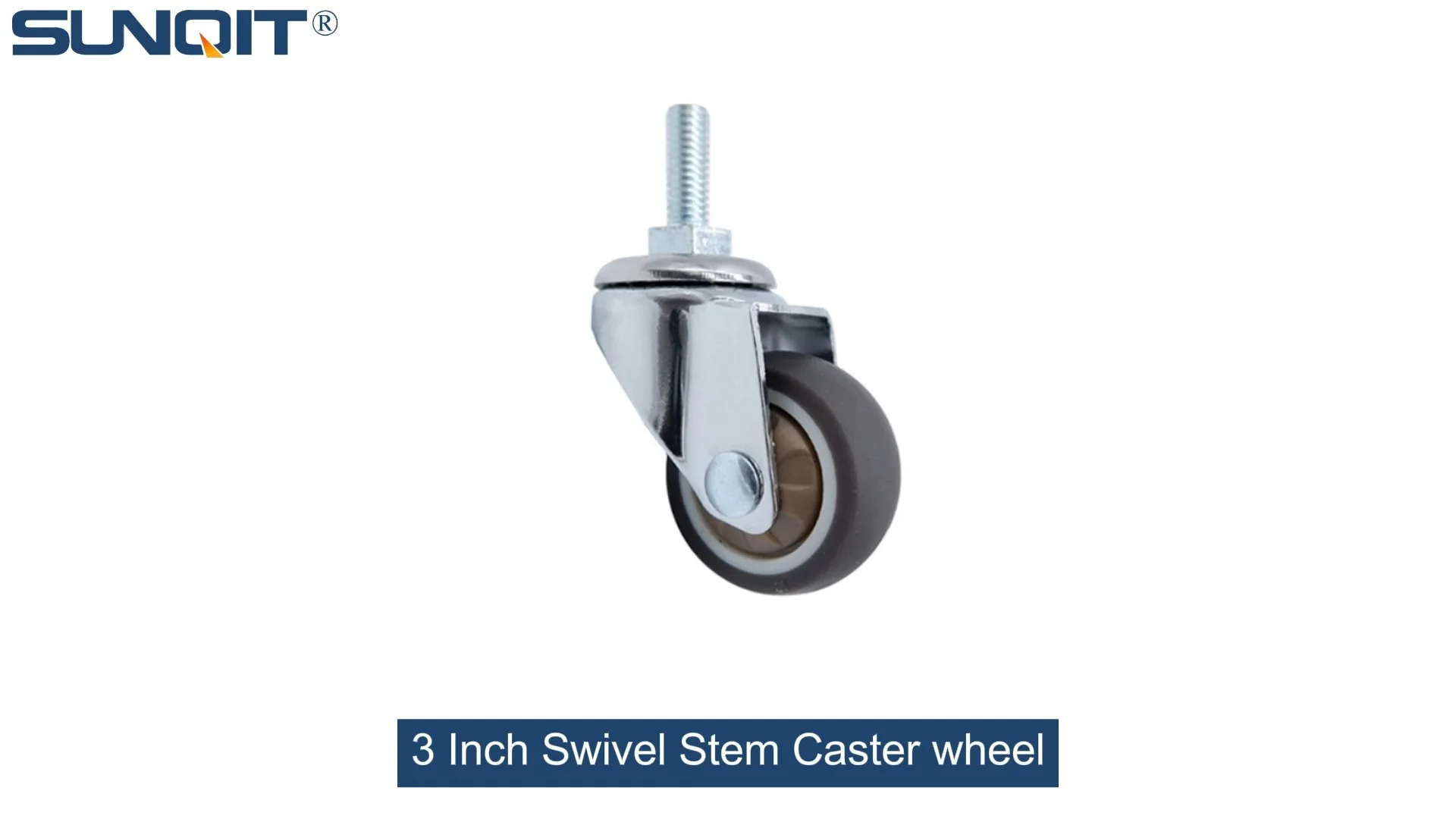
Swivel Stem Caster wheel
360 Degree Swivel Stem Caster. Threaded-post mount design, castors diameter 3 inch.Each swivel caster wheels loading 70KGS. Heavy enough and widely suit for carts, chairs, cabinet, flow rack, workbench, turnover rolley.
Walk into any busy packaging facility, and you'll notice a symphony of movement: boxes sliding down conveyor belts, workers loading products onto pallets, and carts gliding between stations, carrying everything from raw materials to finished goods. In this orchestrated chaos, one small component often goes unnoticed—but without it, the entire rhythm could fall apart: the swivel stem caster wheel. These unassuming wheels, mounted beneath carts, workbenches, and turnover trolleys, are the unsung heroes of efficient packaging line operations. They determine how easily workers can navigate tight spaces, how safely heavy loads are transported, and ultimately, how smoothly the entire production process runs. For packaging managers, the goal is simple: minimize delays, reduce worker fatigue, and keep the line moving. And when it comes to cart movement, the right swivel stem caster wheels—especially those with reliable brakes and durable components—can be the difference between a seamless workflow and a day filled with frustrating bottlenecks.
The Hidden Challenges of Cart Movement in Packaging Lines
Packaging lines are dynamic environments, but they're also full of obstacles that can grind cart movement to a halt. Let's start with space: most facilities are designed to maximize production, which means narrow aisles between workbenches, material racks, and conveyor systems. A cart with clunky wheels might get stuck halfway between a turnover trolley and a rack, forcing a worker to stop, adjust the load, and strain to push it free—wasting precious minutes. Then there are the loads themselves: a cart carrying 500 pounds of glass jars needs to move steadily, but if the wheels wobble or lock up, the risk of spills (and broken products) skyrockets.
Floor conditions add another layer of complexity. Spilled liquids, small debris, or even uneven concrete can turn a smooth roll into a bumpy, noisy struggle. Workers pushing these carts often report fatigue, especially if they're maneuvering around corners or up slight inclines. Over time, this strain leads to slower work, increased absences, and even injuries—all of which chip away at productivity. And let's not forget safety: a cart that won't stay put on a sloped floor could roll into a worker or a piece of equipment, turning a minor hiccup into a major incident. These challenges aren't just annoyances; they're silent drains on efficiency, costing facilities time, money, and morale.
How Swivel Stem Caster Wheels Transform Cart Movement
Enter the swivel stem caster wheel—a small but mighty upgrade that addresses these challenges head-on. Unlike rigid casters, which only move forward and backward, swivel stem casters rotate 360 degrees, allowing carts to pivot, turn, and glide around even the tightest corners. Picture a worker trying to navigate a cart loaded with packaging materials between two workbenches spaced just three feet apart: with rigid wheels, they'd have to stop, back up, and angle the cart repeatedly. With a swivel stem caster wheel, they can simply twist the handle, and the cart pivots smoothly, saving seconds that add up over a shift.
But the real game-changer? Many swivel stem casters come with brakes, turning them into swivel stem caster wheel with brake systems. This feature is a lifesaver in packaging lines, where stability matters as much as movement. Imagine a cart parked on a slight incline near a conveyor—without a brake, it might roll away, risking collisions or spills. With a simple foot tap on the brake lever, the wheel locks in place, keeping the cart secure until it's ready to move again. Workers no longer have to wedge blocks under wheels or hover nervously over loaded carts; the brake does the work, letting them focus on their tasks.

Types of Swivel Stem Caster Wheels for Packaging Needs
Not all swivel stem casters are created equal. Packaging lines have diverse needs—some carts carry lightweight boxes, others haul heavy machinery parts—and choosing the right type ensures optimal performance. Let's break down the most common options:
1. Light-Duty Swivel Stem Casters
Ideal for carts transporting small parts, tools, or empty packaging materials, these casters typically have smaller caster wheel diameters (3-4 inches) and lower load capacities (up to 200 pounds). They're lightweight, affordable, and perfect for smooth, flat floors in areas like office supply storage or light assembly stations.
2. Medium-Duty Swivel Stem Casters
The workhorses of most packaging lines, medium-duty casters handle loads between 200-500 pounds. Their wheels are often made of polyurethane, a material that balances durability and floor protection—critical for facilities with polished concrete or vinyl floors. Many medium-duty models include the swivel stem caster wheel with brake feature, making them versatile for both movement and stationary tasks, like loading products onto a workbench.
3. Heavy-Duty Swivel Stem Casters
For carts carrying bulk materials, metal components, or fully loaded turnover trolley and rack systems, heavy-duty casters are a must. With larger wheels (5-8 inches) and reinforced stems, they can handle loads up to 1,500 pounds or more. These casters often use steel or cast iron wheels for maximum strength, though polyurethane options are available for noise reduction in busy lines.
| Caster Type | Load Capacity | Wheel Material | Brake Option | Best For |
|---|---|---|---|---|
| Light-Duty Swivel Stem | Up to 200 lbs | Rubber | Optional | Small parts, tools |
| Medium-Duty Swivel Stem | 200-500 lbs | Polyurethane | Standard (swivel stem caster wheel with brake) | Packaging materials, workbench transport |
| Heavy-Duty Swivel Stem | 500-1,500+ lbs | Steel/Polyurethane | Standard (dual-lock brake) | Turnover trolley and rack, machinery parts |

Inside the Swivel Stem Caster: Key Components for Reliability
To understand why swivel stem casters outperform other options, let's peek under the hood at their components. At the core is the caster wheel itself—the part that touches the floor. Wheel material matters: rubber wheels are quiet and gentle on hardwood or vinyl floors, while polyurethane wheels are tough, resistant to oils and chemicals, and ideal for concrete. For packaging lines with frequent spills (think beverage or food packaging), polyurethane is a no-brainer—it won't degrade when exposed to liquids.
Then there's the stem: the metal rod that attaches the caster to the cart. Swivel stems come in two main types: threaded and expanding. Threaded stems screw into a nut on the cart, creating a secure, permanent connection. Expanding stems, on the other hand, use a spring-loaded mechanism to grip the inside of a hollow tube, making them easy to install and remove—perfect for carts that need occasional caster swaps.
No discussion of components is complete without caster accessories —the small parts that boost performance and longevity. Axle caps prevent dirt and debris from jamming the wheel bearings, while grease fittings make lubrication a breeze (critical for keeping swivel mechanisms smooth). Brake pads, another key accessory, wear down over time, so having replaceable ones means you won't need to replace the entire caster when the brake stops working.

The Ripple Effects of Efficient Cart Movement
Investing in quality swivel stem casters isn't just about making carts easier to push—it's about transforming the entire packaging line. Let's start with efficiency: when workers spend less time wrestling with stuck carts, they can focus on higher-value tasks, like inspecting products or optimizing workflows. A study by the Material Handling Institute found that facilities using swivel stem casters reported a 12% increase in cart movement speed, translating to 3-4 more completed orders per shift.
Safety is another major win. The swivel stem caster wheel with brake reduces the risk of runaway carts, which are a leading cause of workplace injuries in packaging facilities. Workers also strain less when pushing carts, lowering the chance of back pain or muscle injuries. One packaging plant in Ohio switched to swivel stem casters and saw a 40% drop in worker compensation claims related to cart handling—saving tens of thousands of dollars annually.
Even noise levels improve. Rigid casters often squeak or grind on rough floors, adding to the already loud environment of a packaging line. Swivel stem casters with polyurethane wheels, however, glide quietly, creating a calmer workspace that reduces worker fatigue. Employees report feeling less stressed, and communication between team members becomes easier without the constant background noise of squealing wheels.
Installing Swivel Stem Casters: Tips for Success
So, you've decided to upgrade to swivel stem casters—now what? Installation is straightforward, but a few best practices will ensure your casters perform at their best. First, match the caster to the cart: check the cart's weight capacity (including the maximum load it will carry) and choose a caster that can handle 120% of that weight (this extra capacity prevents premature wear). For example, a cart that holds 300 pounds should use casters rated for at least 360 pounds.
Next, consider the stem type. If your cart has pre-drilled holes, a threaded stem is the way to go—simply screw it in until tight. For carts with hollow legs, an expanding stem is better: insert it into the leg, then tighten the bolt to expand the stem and create a secure grip. Pro tip: Use a torque wrench to avoid over-tightening, which can crack the cart frame or strip the threads.
Don't forget to test the brakes! After installing swivel stem caster wheel with brake units, press the brake lever down and try to move the cart—if it rolls, the brake isn't adjusted properly. Most brakes have a tension screw that can be tightened to increase grip. A quick test now saves headaches later when a cart rolls away during a busy shift.
Maintaining Swivel Stem Casters: Keeping Them Rolling Smoothly
Like any equipment, swivel stem casters need regular care to stay in top shape. The good news? Maintenance is simple and takes just a few minutes per cart each month. Start with cleaning: wipe down the wheels and swivel mechanism with a damp cloth to remove dirt, debris, or packaging residue (sticky labels or tape can jam the swivel joint). For greasy floors, use a mild degreaser to prevent buildup on the wheel treads.
Lubrication is next. Apply a few drops of lithium-based grease to the swivel bearing and wheel axle every 3-6 months (more often if the casters are used in dusty or wet environments). This keeps the rotation smooth and prevents rust. Avoid using oil, which can attract dirt and gum up the mechanism.
Finally, inspect the caster accessories regularly. Check brake pads for wear—if they're thin or cracked, replace them immediately (most suppliers sell replacement pads for a fraction of the cost of a new caster). Tighten loose stems or nuts, and replace any wheels that show signs of uneven wear (a wobbly wheel is a sign the axle is bent or the bearing is failing).
Case Study: How One Packaging Plant Boosted Efficiency with Swivel Stem Casters
Let's look at a real-world example of how swivel stem casters transformed a packaging line. GreenWave Packaging, a mid-sized facility in Michigan, was struggling with cart movement issues in their snack food packaging area. Their old rigid casters frequently got stuck in the narrow gaps between workbench stations and turnover trolley and rack units, leading to delays. Workers complained about sore shoulders from pushing, and the plant manager was worried about rising injury rates.
After researching options, GreenWave upgraded to medium-duty swivel stem caster wheel with brake units with polyurethane wheels. The results were immediate: cart movement time between stations dropped by 18%, and workers reported less strain. The brakes proved invaluable during peak hours, keeping carts stable while workers loaded bags of chips onto them. Within six months, the plant saw a 10% increase in daily output and a 35% decrease in cart-related incidents.
"We didn't realize how much time we were wasting until we switched," said Maria Gonzalez, GreenWave's production supervisor. "Now, the carts glide like they're on ice—even when we're moving heavy loads. And the brakes? Total peace of mind. I don't have to hover over carts anymore; I can trust they'll stay put."
Choosing the Right Supplier: Why Quality Matters
Not all swivel stem casters are created equal, and choosing a reliable supplier is just as important as choosing the right caster type. Look for suppliers that specialize in material handling equipment and offer a range of options, from light-duty to heavy-duty casters. A good supplier will ask about your specific needs—floor type, load capacity, environment (hot, cold, wet)—and recommend the best caster for the job, rather than pushing a one-size-fits-all product.
Check for certifications, too. Casters used in food or pharmaceutical packaging should meet FDA standards for material safety, while those in industrial settings may need to comply with OSHA load requirements. Reputable suppliers will provide test reports or certification documents upon request.
Finally, consider customer service. A supplier that offers fast shipping, easy returns, and responsive support can save you time when you need replacement caster accessories or have questions about installation. GreenWave Packaging, for example, chose a supplier that offered next-day delivery on brake pads, ensuring their carts were back in service quickly when a brake failed unexpectedly.
The Bottom Line: Small Wheels, Big Impact
In the fast-paced world of packaging, every second counts. Swivel stem caster wheels—especially swivel stem caster wheel with brake systems—are more than just a convenience; they're a strategic investment in efficiency, safety, and worker satisfaction. By reducing downtime, preventing injuries, and making cart movement effortless, these small components play a huge role in keeping packaging lines running smoothly.
So, the next time you walk through your packaging facility, take a closer look at those carts. Are they struggling with rigid wheels, or gliding with swivel stems? The answer could be the key to unlocking your line's full potential. After all, in manufacturing, it's often the smallest parts that make the biggest difference.