- Company Articles
- Products and Technology
- Solution
- Swivel Stem Caster Wheels for Small Parts Storage Racks: Easy Access Solutions

Swivel Stem Caster Wheels for Small Parts Storage Racks: Easy Access Solutions
Related Product
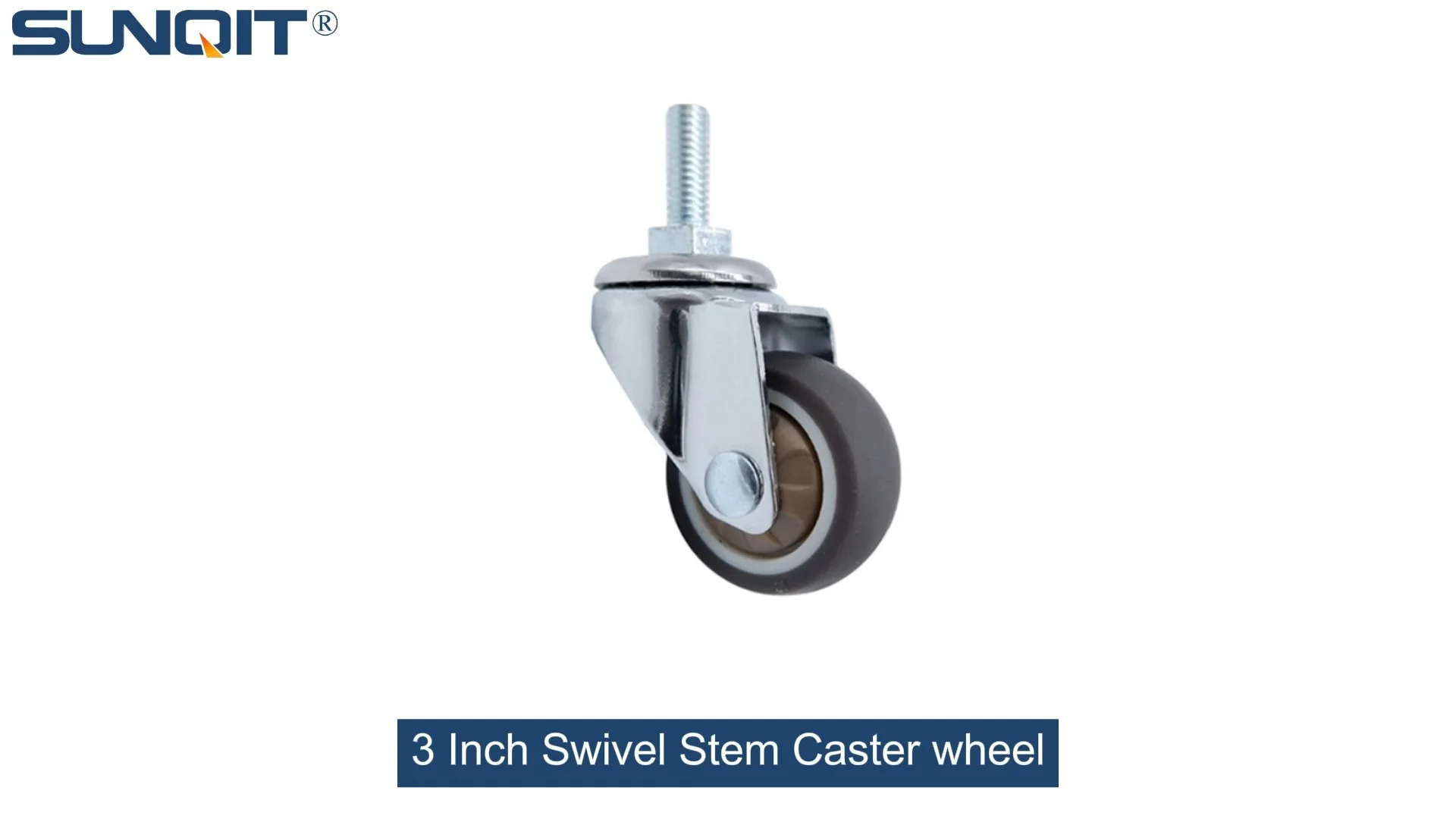
Swivel Stem Caster wheel
360 Degree Swivel Stem Caster. Threaded-post mount design, castors diameter 3 inch.Each swivel caster wheels loading 70KGS. Heavy enough and widely suit for carts, chairs, cabinet, flow rack, workbench, turnover rolley.
Walk into any busy workshop, warehouse, or manufacturing facility, and you'll quickly notice a common challenge: small parts. They're everywhere—nuts, bolts, washers, connectors, and components that keep production lines moving. But here's the thing: storing these parts efficiently is only half the battle. The other half? Making sure they're easily accessible when someone needs them. Nothing slows down a workflow like hunting for a tiny part buried in a fixed rack or struggling to move a heavy storage unit across the floor. That's where swivel stem caster wheels come in. These unassuming little components are the unsung heroes of small parts storage, turning static racks into mobile, flexible solutions that adapt to your team's needs. Let's dive into how they work, why they matter, and how they can transform the way you handle small parts storage.
The Hidden Challenge of Small Parts Storage
Small parts might be small in size, but their storage needs are anything but. Traditional fixed racks—while sturdy—lock these parts into place. Imagine a technician needing a specific connector from the back of a rack that's wedged between two other units. They might have to shuffle other racks aside, stretch awkwardly, or even ask a coworker for help. Multiply that by dozens of parts and dozens of workers each day, and suddenly you're looking at hours of wasted time. Add in the risk of accidents—like a rack tipping over when moved improperly—and it's clear: fixed storage isn't cutting it anymore.
Then there's the issue of flexibility. Production needs change. One day, you might need to prioritize electrical components; the next, mechanical parts. Fixed racks can't adapt to these shifts. They're like furniture that's bolted to the floor—functional, but not functional enough. What if you could reconfigure your storage layout in minutes? What if a small parts rack could glide smoothly to where it's needed, right when it's needed? That's the promise of swivel stem caster wheels.
What Are Swivel Stem Caster Wheels? Breaking Down the Basics
Let's start with the basics: what exactly is a swivel stem caster wheel? At its core, it's a wheel mounted on a swiveling bracket, designed to be attached to the bottom of equipment—like storage racks, workbenches, or trolleys—via a stem (a metal rod that inserts into a hole or socket). The "swivel" part is key: unlike fixed casters that only roll forward and backward, swivel casters rotate 360 degrees. This means the equipment they're attached to can turn, pivot, and maneuver in tight spaces with minimal effort.
The stem itself is a critical feature. It's typically threaded or smooth, designed to fit into pre-drilled holes or mounting brackets on the bottom of a rack or trolley. This makes installation straightforward—no welding or complex tools required. And when paired with a brake mechanism (like the swivel stem caster wheel with brake ), they offer the best of both worlds: mobility when you need it, stability when you don't.
But not all swivel stem casters are created equal. They come in different sizes, materials, and load capacities, each suited to specific tasks. For small parts storage racks, the focus is on balance: enough strength to carry the weight of the parts, but not so heavy that moving the rack becomes a chore. Most models for this use case have wheel diameters between 2 and 5 inches, with materials like rubber, nylon, or polyurethane—all chosen for smooth rolling and floor protection.

The Game-Changing Benefits: Why Swivel Stem Casters Matter for Storage Racks
So, why should you swap out fixed legs for swivel stem caster wheels on your small parts storage racks? Let's break down the benefits:
360-Degree Mobility: No More Stuck in One Spot
The most obvious advantage is mobility. A storage rack on swivel casters isn't tied to one spot. Need to bring a rack of screws closer to the assembly line? Push it over. Want to reorganize the storage area for a new project? Rearrange the racks in minutes. This flexibility transforms static storage into a dynamic system that adapts to your workflow, not the other way around.
And it's not just about moving forward and backward. The swivel function lets you pivot the rack on a dime. In tight spaces—like between workbenches or along narrow aisles—this is a game-changer. A technician can easily maneuver a rack into position without having to backtrack or make multiple trips. It's like turning a clunky shopping cart into a nimble wheelchair—suddenly, movement feels effortless.
Brake Systems: Safety and Stability When You Need It
Mobility is great, but what if the rack starts rolling away while someone is loading or unloading parts? That's where the swivel stem caster wheel with brake shines. These casters come with a simple yet effective brake mechanism—usually a lever or pedal that locks the wheel in place. Step on the brake, and the rack stays put, even on slightly uneven floors. Release it, and you're ready to move again.
This feature is especially important in busy environments. Imagine a turnover trolley and rack loaded with small plastic parts. Without brakes, a slight bump from a passing forklift could send it rolling. With brakes engaged, it's anchored securely. It's peace of mind for your team and a layer of safety that prevents accidents and spills.
Load Capacity: Handling the Weight of Your Parts
Small parts add up. A fully loaded rack of metal fasteners or aluminum profile accessories can weigh hundreds of pounds. Swivel stem casters are engineered to handle this. Most models designed for storage racks have load capacities ranging from 50 to 300 pounds per caster. That means a four-caster rack can easily support 200 to 1,200 pounds—plenty for even the heaviest small parts.
It's important to match the caster's load capacity to your needs, though. Overloading a caster can lead to premature wear, wobbly movement, or even wheel failure. A good rule of thumb: calculate the total weight of your rack plus its typical load, then divide by the number of casters. Aim for a caster with a capacity that exceeds this number by 20% to be safe.

Beyond the Wheel: Exploring Caster and Accessories
A swivel stem caster wheel is more than just a wheel and a stem. To work effectively, it relies on a handful of key accessories that enhance performance, durability, and ease of use. Let's take a closer look at the caster and accessories that make these wheels so versatile:
Stem Extensions and Adapters
Not all storage racks have the same mounting hole depth or diameter. Stem extensions let you adjust the length of the stem to fit thicker rack legs, while adapters can convert threaded stems to smooth stems (or vice versa). This ensures a snug, secure fit, even if your rack wasn't originally designed for casters.
Brake Locks and Replacement Pads
The brake mechanism on a swivel stem caster wheel with brake is a wear part. Over time, the brake pad (the rubber or metal piece that presses against the wheel) can get worn down, making the brake less effective. Replacement brake pads are affordable and easy to install, extending the life of your casters without having to replace the entire unit.
Wheel Guards and Floor Protectors
If your storage area has rough floors or debris, wheel guards (plastic or metal shields) can prevent dirt, grit, or small parts from getting stuck in the wheel bearings. Floor protectors—like soft rubber wheel covers—are ideal for hardwood, tile, or polished concrete floors, preventing scratches and scuffs as you move the rack.
Lubrication Kits
Smooth swiveling and rolling depend on well-lubricated bearings. Caster lubrication kits typically include a small bottle of bearing grease and an applicator, making it easy to keep the swivel joint and wheel bearings moving freely. A quick lubrication every few months can prevent squeaking and extend the life of your casters.

Real-World Applications: Swivel Stem Casters in Action
Still not convinced? Let's look at two common scenarios where swivel stem caster wheels transform small parts storage:
Turnover Trolley and Rack: From Shelf to Station in Seconds
A turnover trolley and rack is a staple in many warehouses. It's a mobile rack with shelves designed to hold bins, boxes, or trays of small parts. When equipped with swivel stem casters, it becomes a "parts delivery system" that can go directly to the assembly line. For example, a picker can load the trolley with the parts needed for the morning shift, then roll it to each workstation. Workers no longer have to walk back and forth to the storage area—parts come to them.
The swivel casters make navigating around workbenches, tools, and other equipment a breeze. Even in crowded spaces, the trolley can pivot to fit through tight gaps. And with brakes engaged, it stays steady while workers grab parts, preventing accidental movement.
Workbench Mobility: Adapting to Your Workflow
A workbench is where the magic happens—assembling parts, testing components, or packing orders. But what if you need extra space on the workbench? Or what if you want to move the workbench closer to a machine? Swivel stem casters let you do just that. Attach them to the bottom of the workbench, and suddenly it's a mobile workstation. Need to collaborate with a coworker? Roll the workbench next to theirs. Done with a project? Push it against the wall to free up floor space.
For workbenches used with small parts storage racks, pairing the two with matching casters creates a cohesive system. You can roll the rack right up to the workbench, making it easy to grab parts without bending or stretching. It's a small change that adds up to big improvements in comfort and efficiency.
Choosing the Right Swivel Stem Caster: A Buyer's Guide
With so many options on the market, how do you choose the right swivel stem caster for your small parts storage rack? Here's a breakdown of the key factors to consider:
Wheel Material
- Rubber: Quiet, shock-absorbent, and gentle on floors. Great for indoor use on smooth surfaces like concrete or tile.
- Nylon: Durable and resistant to chemicals, oils, and abrasion. Ideal for industrial environments with rough floors.
- Polyurethane: Combines the best of rubber and nylon—smooth rolling, floor-friendly, and tough. A good all-around choice.
Wheel Size
Smaller wheels (2–3 inches) are more maneuverable in tight spaces but may struggle with rough floors. Larger wheels (4–5 inches) roll more easily over debris and uneven surfaces but take up more space. For most small parts racks, 3–4 inch wheels strike the right balance.
Brake Type
There are two main brake types: side brakes (a lever on the side of the caster) and top brakes (a pedal on top of the swivel head). Side brakes are easier to engage with your foot from the side, while top brakes are better for quick, one-handed operation. Choose based on how you'll typically use the rack.
Load Capacity
As mentioned earlier, calculate the total weight of your rack and parts, then divide by the number of casters. Err on the side of overcapacity to avoid issues down the line.
To help visualize, here's a comparison table of common swivel stem caster models for small parts storage racks:
| Caster Model | Wheel Material | Wheel Size (Inches) | Load Capacity (Per Caster) | Brake Type | Best For |
|---|---|---|---|---|---|
| Light-Duty Rubber Swivel Stem | Rubber | 3 | 75 lbs | None | Light parts, smooth floors, occasional movement |
| Medium-Duty Polyurethane Swivel Stem with Brake | Polyurethane | 4 | 150 lbs | Top brake | Moderate loads, mixed floors, frequent movement |
| Heavy-Duty Nylon Swivel Stem with Brake | Nylon | 5 | 300 lbs | Side brake | Heavy parts, rough floors, industrial use |
Installation Made Simple: Adding Casters to Your Storage Racks
You don't need to be a mechanic to install swivel stem casters. With a few basic tools, you can upgrade your storage rack in under an hour. Here's a step-by-step guide:
Tools You'll Need
Drill (if your rack doesn't have pre-drilled holes), drill bits (matching the stem diameter), wrench, and a rubber mallet (to tap the stem into place).
Step 1: Prepare the Rack
Empty the rack completely. You don't want to risk parts falling out during installation. If the rack is heavy, enlist a helper to hold it steady while you work.
Step 2: Mark and Drill Holes (If Needed)
If your rack doesn't have pre-drilled holes for casters, measure and mark the center of each leg. Use a drill bit slightly smaller than the stem diameter (this ensures a tight fit). Drill straight down to a depth equal to the stem length plus 1/4 inch (to allow for a little extra space).
Step 3: insert the Casters
For smooth stems: Apply a small amount of lubricant to the stem, then push it into the hole. If it's tight, tap the top of the stem gently with a rubber mallet until it's flush with the leg. For threaded stems: Screw the stem into the hole by hand, then tighten with a wrench until snug (don't over-tighten—you could strip the threads).
Step 4: Test the Casters
Once all casters are installed, stand the rack upright and give it a gentle push. It should roll smoothly and straight. Test the brakes (if equipped) by pressing the pedal—they should lock the wheels firmly in place.
Maintenance Tips: Extending the Life of Your Caster Wheels
Swivel stem casters are built to last, but a little maintenance goes a long way in keeping them rolling smoothly. Here are some simple tips:
Clean the Wheels Regularly
Dirt, hair, and debris can get caught in the wheel bearings, causing squeaking or uneven movement. Wipe the wheels with a damp cloth weekly, and use a toothpick or small brush to dislodge any stubborn debris from the bearings.
Lubricate the Swivel Joint and Bearings
Every 3–6 months, apply a few drops of lubricating oil (like 3-in-1 oil) to the swivel joint (where the caster rotates) and the wheel bearings. This reduces friction and prevents rust, especially in humid environments.
Check Brakes and Tighten Loose Parts
Inspect the brakes monthly to make sure they're engaging properly. If the brake pad is worn, replace it. Also, check the stem for looseness—tighten threaded stems or tap smooth stems back into place if they start to wiggle.
Conclusion: Transforming Access, One Wheel at a Time
Small parts storage might not be the most glamorous part of running a facility, but it's critical to keeping things running smoothly. Swivel stem caster wheels—especially the swivel stem caster wheel with brake —are a simple, affordable way to turn static racks into dynamic, mobile solutions. They reduce wasted time, improve safety, and give your team the flexibility to adapt to changing needs.
Whether you're outfitting a turnover trolley and rack , a workbench , or a standalone storage unit, the right casters can make a world of difference. So, don't let your small parts stay stuck in place. Invest in swivel stem casters, and watch as your workflow becomes more efficient, your team more productive, and your storage area more adaptable than ever before.
After all, in the world of small parts, easy access isn't a luxury—it's a necessity. And with swivel stem caster wheels, it's a necessity you can achieve with just a few turns of a wrench.