- Company Articles
- Products and Technology
- Solution
- Swivel Stem Caster Wheels for Storage Logistics: Smooth Movement Solutions

Swivel Stem Caster Wheels for Storage Logistics: Smooth Movement Solutions
Related Product
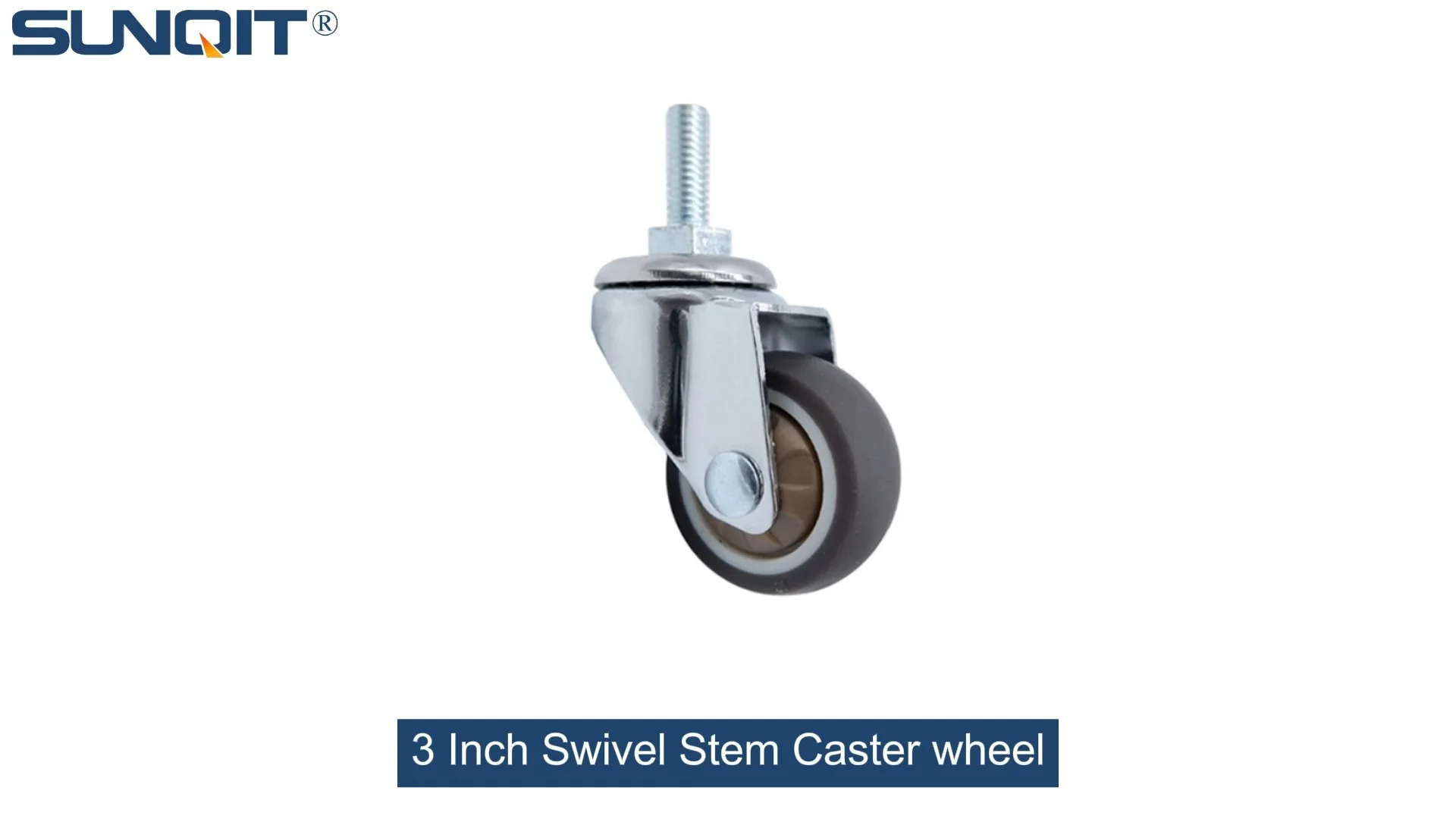
Swivel Stem Caster wheel
360 Degree Swivel Stem Caster. Threaded-post mount design, castors diameter 3 inch.Each swivel caster wheels loading 70KGS. Heavy enough and widely suit for carts, chairs, cabinet, flow rack, workbench, turnover rolley.
The Unsung Hero of Efficient Storage Logistics
In the fast-paced world of storage and logistics, every second counts. From bustling warehouses processing thousands of orders daily to manufacturing floors where components must flow seamlessly to assembly lines, the ability to move materials, tools, and products with ease is the backbone of operational success. Yet, for all the focus on high-tech inventory management systems and automated conveyor belts, one humble component often goes unnoticed: the caster wheel. Specifically, the swivel stem caster wheel—a small but mighty tool that turns clunky, labor-intensive movement into a smooth, almost effortless process.
Imagine a typical morning in a mid-sized e-commerce warehouse. Workers rush to pick orders, carts loaded with packages weave through narrow aisles, and pallets are shifted from storage racks to shipping docks. Now, picture one of those carts suddenly jamming halfway down an aisle because its wheels won't swivel properly, or a workbench that's supposed to be mobile but feels like it's glued to the floor. Productivity grinds to a halt, frustration rises, and deadlines edge closer. This isn't just a hypothetical scenario—it's a daily reality for many facilities still relying on outdated or low-quality casters.
Enter the swivel stem caster wheel. Designed to combine flexibility, durability, and precision, these wheels are engineered to handle the unique demands of storage logistics. Whether mounted on a turnover trolley and rack, a mobile workbench, or a material cart, they transform how teams interact with their workspace. In this article, we'll dive deep into what makes swivel stem caster wheels indispensable, explore their key features, and uncover how they integrate with other logistics components—like roller tracks and caster accessories—to create a truly seamless workflow.
What Are Swivel Stem Caster Wheels, Anyway?
At first glance, a caster wheel might seem like a simple contraption: a wheel attached to a mounting plate or stem. But swivel stem casters are far more sophisticated. Let's break them down. The "stem" refers to the vertical rod that connects the wheel assembly to the equipment it's mounted on—think of it as the caster's "spine." Unlike plate-mounted casters, which use screws or bolts to attach to flat surfaces, stem casters are designed to fit into pre-drilled holes or sockets, making them ideal for equipment with tubular frames or hollow legs, such as workbenches, carts, and some types of turnover trolley and rack units.
The "swivel" part is where the magic happens. A well-engineered swivel mechanism allows the wheel to rotate 360 degrees around the stem, enabling the equipment to turn on a dime. This is critical in tight spaces—like warehouse aisles or manufacturing cells—where maneuverability can mean the difference between meeting a deadline and falling behind. But not all swivel stems are created equal. High-quality models feature precision bearings (often ball bearings or tapered roller bearings) that reduce friction, ensuring smooth rotation even under heavy loads.
One of the most valuable variations is the swivel stem caster wheel with brake. As the name suggests, this type includes a built-in braking mechanism that locks the wheel in place, preventing unwanted movement. Imagine a workbench that needs to stay stationary during assembly but be moved easily when reconfiguring the production line—the brake allows workers to toggle between mobility and stability in seconds. This versatility is a game-changer for dynamic work environments where flexibility is key.
Key Takeaway: Swivel stem caster wheels combine a vertical stem mounting system with a 360-degree swivel mechanism, offering unmatched maneuverability for equipment like workbenches and turnover trolleys. Models with brakes add an extra layer of control, making them ideal for environments where both mobility and stability are needed.

The Anatomy of a Reliable Swivel Stem Caster
To truly appreciate why swivel stem caster wheels excel in storage logistics, let's dissect their components. Each part plays a role in ensuring smooth movement, durability, and safety—qualities that matter when every cart, trolley, or workbench is carrying valuable inventory or tools.
The Wheel: The wheel itself is the point of contact with the floor, so its material and design are critical. Common options include rubber, polyurethane, nylon, and steel. Rubber wheels are prized for their shock absorption and quiet operation, making them ideal for indoor spaces where noise is a concern. Polyurethane, a synthetic material, strikes a balance between durability and floor protection—it's resistant to chemicals and abrasions, yet soft enough to avoid scratching concrete or hardwood floors. Nylon wheels are lightweight and affordable but can be noisy on hard surfaces, while steel wheels are built for heavy loads but may damage delicate floors without proper care.
The Stem: Stems come in various lengths and diameters to fit different equipment. Some are threaded, allowing them to be screwed into place, while others are smooth and rely on friction or a locking pin for secure attachment. The stem's strength is non-negotiable—if it bends or breaks under load, the entire caster fails. High-quality stems are often made from cold-rolled steel or stainless steel, treated for corrosion resistance in damp or dusty environments.
The Swivel Head: This is the heart of the caster. Inside the swivel head, bearings reduce friction between the stem and the wheel assembly. Precision ball bearings are common in light to medium-duty casters, offering smooth rotation with minimal effort. For heavier loads, tapered roller bearings distribute weight more evenly, extending the caster's lifespan. A good swivel head should also include a raceway (the channel where bearings sit) made from hardened steel to prevent wear over time.
The Brake (When Included): The brake mechanism on a swivel stem caster wheel with brake typically works by pressing a pad or lever against the wheel, stopping rotation. Some brakes also lock the swivel head, preventing the wheel from turning—useful for keeping equipment aligned on roller tracks or in fixed workstations. Foot-operated brakes are the most common, allowing workers to engage or disengage the brake without bending down, saving time and reducing strain.
Caster Accessories: While not part of the caster itself, accessories like replacement wheels, brake pads, and stem extenders are essential for maintenance and customization. For example, if a wheel wears down from constant use on rough concrete, swapping it out with a new polyurethane wheel (a common caster accessory) is far cheaper than replacing the entire caster. Similarly, stem extenders can adjust the height of a cart or workbench to match the height of a roller track, ensuring materials slide on and off smoothly.

Why Swivel Stem Casters Shine in Storage Logistics
Now that we understand what swivel stem caster wheels are made of, let's explore why they're a must-have for storage logistics. Their benefits extend far beyond "just rolling"—they directly impact productivity, safety, and even employee morale.
1. Maneuverability in Tight Spaces: Warehouses and manufacturing facilities are often designed with efficiency in mind, which means narrow aisles and compact workstations. A cart equipped with fixed wheels might require multiple maneuvers to navigate a 90-degree turn, but a swivel stem caster wheel allows for a smooth, single motion. This is especially valuable when moving turnover trolley and rack units loaded with heavy boxes—workers can pivot quickly without straining, reducing the risk of injury and cutting down on travel time.
2. Reduced Physical Strain: Manual material handling is a leading cause of workplace injuries, from back strains to repetitive motion disorders. Swivel stem casters with low-friction bearings require less force to push or pull, even with heavy loads. Studies have shown that equipment with high-quality casters can reduce pushing force by up to 30%, making tasks feel lighter and less tiring. For workers who spend hours moving carts or adjusting workbenches, this translates to less fatigue and more focus on the job at hand.
3. Versatility Across Applications: Swivel stem casters aren't limited to one type of equipment. They're equally at home on a mobile workbench in an electronics assembly line, a turnover trolley and rack in a retail stockroom, or a tool cart in an auto repair shop. Their stem design makes them easy to install on tubular frames, and with options for different wheel materials and brake types, they can be tailored to specific environments—whether that's a cleanroom requiring non-marking wheels or a warehouse with uneven floors needing shock-absorbing rubber wheels.
4. Compatibility with Other Logistics Systems: Storage logistics rarely relies on a single component. Swivel stem casters work hand-in-hand with systems like roller tracks to create a seamless flow of materials. For example, a turnover trolley with swivel stem casters can roll up to a roller track, where materials are slid onto the track for transport to the next workstation. The caster's brake ensures the trolley stays in place during loading/unloading, while the roller track's smooth surface minimizes friction as items move along. This integration reduces manual handling and speeds up the transfer of goods.
5. Durability for Long-Term Use: In logistics, equipment is put through the wringer—constant use, heavy loads, and exposure to dust, moisture, or chemicals. Swivel stem casters built with high-quality materials (like stainless steel stems or polyurethane wheels) can withstand these conditions, reducing the need for frequent replacements. This durability not only saves money on maintenance but also ensures consistent performance, so workers never have to worry about a caster failing mid-shift.

Real-World Applications: Where Swivel Stem Casters Make a Difference
To bring these benefits to life, let's look at three real-world scenarios where swivel stem caster wheels—paired with components like workbenches, turnover trolley and rack units, and roller tracks—transform operations.
Scenario 1: The E-Commerce Warehouse
A large e-commerce fulfillment center processes over 10,000 orders daily. During peak seasons (like Black Friday), the pressure to pick, pack, and ship orders quickly is immense. The warehouse uses turnover trolley and rack units to transport batches of orders from picking zones to packing stations. Initially, these trolleys were equipped with cheap, fixed casters that made them hard to maneuver in tight aisles. Workers often had to stop and readjust the trolley's path, wasting precious time. After upgrading to swivel stem caster wheels with brakes, the trolleys became far more agile. Workers could pivot around corners with ease, and the brakes kept the trolleys steady while loading orders onto roller tracks that fed into the packing area. The result? A 15% increase in order processing speed and a noticeable drop in worker complaints about fatigue.
Scenario 2: The Electronics Manufacturing Plant
A plant that assembles circuit boards requires mobile workbenches to adapt to changing production needs. Each workbench holds sensitive equipment, tools, and partially assembled boards. The plant needed workbenches that could be moved to different assembly lines but stay stable during use. They chose workbenches mounted on swivel stem caster wheels with brakes. The casters' polyurethane wheels prevented scratches on the plant's smooth concrete floors, and the swivel mechanism allowed workers to reposition the workbench in seconds to accommodate new layouts. When in use, the brakes locked both the wheels and swivel head, ensuring the workbench didn't shift during delicate soldering or testing. This flexibility reduced downtime during reconfigurations and improved the accuracy of assembly tasks.
Scenario 3: The Retail Stockroom
A busy retail chain's stockroom receives daily shipments of clothing, electronics, and home goods. Stockers use turnover trolley and rack units to move merchandise from receiving docks to store shelves. The stockroom has both smooth concrete floors and carpeted areas near the store entrance, so the trolleys needed wheels that worked on both surfaces. Swivel stem casters with rubber wheels proved ideal—they rolled quietly on carpet and smoothly on concrete, avoiding the loud "clacking" of nylon wheels. The swivel feature made it easy to navigate around storage racks and display fixtures, and the brakes ensured trolleys stayed put while stockers unloaded items. Plus, when a wheel wore down after months of use, the stockroom manager simply ordered a replacement wheel (a common caster accessory) and swapped it out, avoiding the cost of a new trolley.
| Application | Swivel Stem Caster Features | Key Benefit |
|---|---|---|
| Turnover Trolley and Rack (E-Commerce) | Swivel stem caster wheel with brake, polyurethane wheels | Agile maneuvering in tight aisles; stable loading/unloading on roller tracks |
| Mobile Workbench (Electronics Manufacturing) | Swivel stem caster wheel with brake, ball bearings, non-marking wheels | Quick reconfiguration; stable work surface during delicate tasks |
| Retail Stock Trolley | Swivel stem caster, rubber wheels, caster accessories (replacement wheels) | Quiet operation on carpet/concrete; easy maintenance |
Choosing the Right Swivel Stem Caster: A Buyer's Guide
Not all swivel stem caster wheels are created equal, and choosing the right one depends on your specific needs. Here's what to consider before making a purchase:
1. Load Capacity: Start by calculating the maximum weight the caster will need to support. This includes the weight of the equipment itself plus the materials it will carry. Casters are rated for a specific load capacity (e.g., 200 lbs per caster), so be sure to account for all four casters on a cart or workbench (a common rule is to multiply the per-caster capacity by 3 to ensure safety, as weight isn't always evenly distributed).
2. Floor Type: The surface the caster will roll on dictates wheel material. For smooth floors (tile, polished concrete), polyurethane or nylon wheels work well. For rough or uneven floors (warehouse concrete with cracks), rubber wheels offer better shock absorption. For sensitive floors (wood, vinyl), non-marking wheels (often polyurethane or rubber) prevent scuffs.
3. Environment: Consider factors like moisture, chemicals, and temperature. In damp or outdoor environments, stainless steel stems resist rust. In cleanrooms or food processing areas, casters with sealed bearings prevent dust buildup. For high-temperature areas (like near ovens), heat-resistant wheels (e.g., phenolic resin) are a must.
4. Maneuverability Needs: If the equipment will be used in tight spaces, prioritize casters with precision bearings for smooth swiveling. For straight-line movement (e.g., along a roller track), a mix of swivel and fixed casters (two swivel, two fixed) may offer better stability. If frequent direction changes are needed, all-swivel casters with brakes are ideal.
5. Brake Requirements: Do you need the caster to lock in place? A swivel stem caster wheel with brake is essential for equipment that needs to stay stationary during use (like a workbench) or while loading/unloading (like a turnover trolley). Look for brakes that lock both the wheel and swivel head for maximum stability.
6. Caster Accessories: Think long-term. Does the manufacturer offer replacement wheels, brake pads, or stem extenders? Having access to caster accessories makes maintenance easier and extends the life of your casters. For example, if a wheel wears down, you can replace just the wheel instead of the entire caster.
Maintaining Your Swivel Stem Casters: Tips for Longevity
Even the best casters need care to perform at their best. Here are simple maintenance tips to keep your swivel stem casters rolling smoothly for years:
1. Clean Regularly: Dust, dirt, and debris can build up in the swivel head or around the wheel bearings, causing friction and reducing maneuverability. Wipe down casters weekly with a damp cloth, and use a brush to dislodge debris from hard-to-reach areas (like between the wheel and fork). For greasy environments (e.g., auto shops), use a degreaser to remove oil buildup.
2. Lubricate Bearings: Bearings need lubrication to reduce friction. Use a high-quality lubricant (like lithium grease) every 3–6 months, depending on use. Apply a small amount to the swivel head and wheel bearings, then rotate the wheel and swivel head to distribute the lubricant evenly. Avoid over-lubricating, as excess grease can attract dirt.
3. Inspect for Wear: Check wheels for cracks, flat spots, or uneven wear. If a wheel is worn, replace it immediately (using a compatible caster accessory) to prevent strain on the swivel mechanism. Also, inspect the stem for bending or corrosion and the brake for proper function—if the brake doesn't engage fully, replace the brake pad or lever.
4. Adjust Tightness: Over time, the swivel head may become loose, causing the caster to wobble. Most casters have a nut or bolt that can be tightened to adjust the swivel tension. Refer to the manufacturer's instructions to avoid over-tightening, which can restrict movement.
5. Train Employees: Even well-maintained casters can fail if misused. Train workers to avoid overloading carts, pushing sideways on swivel casters (which causes unnecessary stress), and dragging equipment instead of rolling it. Simple habits like engaging the brake when loading a turnover trolley can prevent premature wear.
Conclusion: Small Wheels, Big Impact
In the grand scheme of storage logistics, swivel stem caster wheels might seem. But as we've explored, their impact is anything but small. From making tight turns in a warehouse aisle to keeping a workbench steady during precision assembly, these wheels are the unsung heroes that keep operations moving forward.
By combining maneuverability, durability, and versatility, swivel stem casters—especially models with brakes—and their accessories (like replacement wheels) empower teams to work smarter, not harder. When paired with components like turnover trolley and rack units, workbenches, and roller tracks, they create a workflow that's efficient, safe, and adaptable to changing needs.
So, the next time you see a cart gliding smoothly through a warehouse or a workbench being repositioned with ease, take a moment to appreciate the swivel stem caster wheel. It's proof that even the smallest components can make the biggest difference in building a logistics system that's ready to handle whatever the future throws at it.