- Company Articles
- Products and Technology
- Product knowledge
- Swivel Stem Caster Wheels for Tool Carts: Easy Access in Mechanical Workshops

Swivel Stem Caster Wheels for Tool Carts: Easy Access in Mechanical Workshops
Related Product
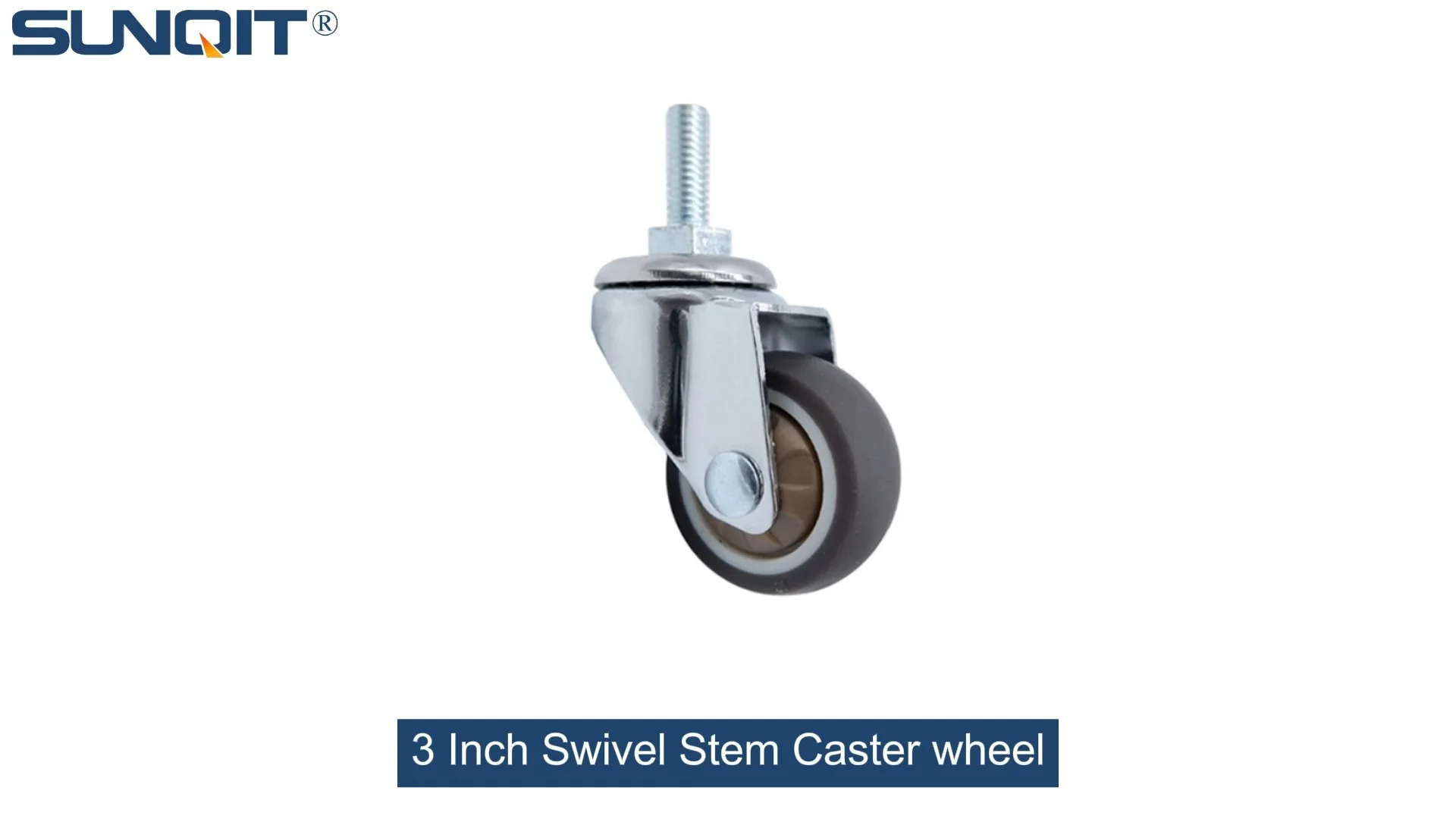
Swivel Stem Caster wheel
360 Degree Swivel Stem Caster. Threaded-post mount design, castors diameter 3 inch.Each swivel caster wheels loading 70KGS. Heavy enough and widely suit for carts, chairs, cabinet, flow rack, workbench, turnover rolley.
The Heartbeat of a Busy Workshop: Why Mobility Matters
Walk into any mechanical workshop, and you'll immediately notice the rhythm of activity: the hum of power tools, the clink of metal parts, and the constant movement of mechanics and technicians tending to engines, machinery, or equipment. At the center of this organized chaos are tool carts—those unsung heroes that carry wrenches, screwdrivers, spare parts, and diagnostic tools to wherever they're needed most. But here's the thing: not all tool carts are created equal. A cart that's cumbersome to move, gets stuck on uneven floors, or refuses to stay put when you need it to can turn a productive morning into a frustrating battle against inertia. That's where the right set of wheels comes in. Specifically, swivel stem caster wheels. These small but mighty components are the difference between a tool cart that works
with
you and one that works
against
you. In this article, we'll dive into why swivel stem caster wheels are a game-changer for mechanical workshops, how they enhance access to tools and materials, and what features to look for when upgrading your equipment. We'll also explore the role of caster accessories in maximizing performance and even touch on how these wheels integrate seamlessly with workbenches and other workshop essentials.
What Are Swivel Stem Caster Wheels, Anyway?
Let's start with the basics. A caster wheel is essentially a wheel mounted on a fork or bracket, designed to be attached to the bottom of a cart, cabinet, or piece of furniture to make it mobile. But swivel stem caster wheels take this a step further. Unlike fixed casters, which only roll forward and backward, swivel casters can rotate 360 degrees on their stem (the metal rod that attaches the wheel to the cart). This means you can maneuver the cart in any direction—left, right, forward, backward, or even in a tight circle—with minimal effort. Imagine pushing a cart loaded with heavy tools and needing to navigate around a workbench or a stack of spare tires. With fixed casters, you'd have to stop, adjust your grip, and pivot the cart manually. With swivel stem casters? You simply nudge the handle, and the wheels rotate to follow your lead. It's like the difference between driving a car with a stiff steering wheel and one with power steering—smooth, intuitive, and far less tiring.
The "stem" part is crucial here. The stem is the vertical rod that connects the caster to the cart's frame. It's typically threaded or designed to fit into a pre-drilled hole, making installation straightforward even for someone without advanced mechanical skills. This simplicity is a big plus in workshops where time is precious—you don't want to spend hours figuring out how to attach new wheels to your cart. But the real magic is in the swivel mechanism. Inside the caster housing, there's a raceway (a circular track) with ball bearings that allow the wheel assembly to rotate freely. The quality of these bearings directly affects how smoothly the caster swivels; cheap bearings might start to stick or grind after a few months of heavy use, while high-quality ones will keep spinning like new, even under load.
Pro Tip:
When shopping for swivel stem caster wheels, check the ball bearing count and material. Stainless steel bearings are ideal for workshops where oil, grease, or moisture is common, as they resist rust and corrosion better than standard steel.

The Brake Factor: Why "Swivel Stem Caster Wheel with Brake" Is a Must-Have
If there's one feature that elevates a good swivel stem caster wheel to a great one, it's the brake. A swivel stem caster wheel with brake isn't just about mobility—it's about control. Think about this scenario: you're rolling your tool cart over to a car lift, loaded with a torque wrench, socket set, and a heavy can of lubricant. You stop beside the lift, reach for the wrench, and suddenly the cart starts rolling backward, thanks to a slight slope in the workshop floor. Now you're juggling the wrench and grabbing for the cart, risking a spill or a fall. Not ideal. A brake mechanism prevents this by locking either the wheel itself or the swivel motion (or both), keeping the cart firmly in place until you're ready to move again.
There are a few common types of brakes on swivel stem casters. The most intuitive is the
foot brake
, a lever that you press down with your foot to engage the brake and lift to release. It's quick, easy, and doesn't require bending over—perfect for when your hands are full. Some models have a
total lock brake
, which locks both the wheel rotation and the swivel, ensuring the cart doesn't roll
or
pivot. This is especially useful on uneven surfaces or when you need the cart to stay aligned with a workbench. Then there's the
directional lock
, which keeps the swivel from rotating but allows the wheel to roll forward and backward—handy if you need to move the cart in a straight line without it veering off course.
For mechanical workshops, where tool carts often carry heavy loads (we're talking 200+ pounds of tools and parts), a reliable brake isn't just a convenience—it's a safety feature. A cart that drifts into a walkway could trip someone, or a sudden roll could cause tools to fall and damage equipment (or worse, injure a coworker). Investing in a swivel stem caster wheel with brake is an easy way to reduce these risks while making your workflow smoother.

Beyond the Wheel: The Role of Caster Accessories
A caster wheel is only as good as the accessories that support it. Caster accessories might not get as much attention as the wheel itself, but they're essential for maximizing performance, durability, and safety. Let's break down some of the most useful ones and how they enhance your tool cart's functionality.
First up:
brake pads and replacement locks
. Even the best brakes wear out over time, especially if they're used multiple times a day. Having spare brake pads on hand means you can replace them in minutes, rather than waiting for a new caster to arrive. Similarly, if the lock mechanism (the part that keeps the brake engaged) gets bent or broken, a replacement lock can save you from having to buy an entirely new caster.
Then there are
caster covers and caps
. These simple plastic or rubber accessories slip over the top of the caster stem or the wheel hub, protecting the internal bearings from dust, dirt, and debris. In a workshop, where metal shavings, oil, and sawdust are part of the daily grind, this is a big deal. Debris can get into the swivel raceway and cause the caster to stick or corrode, shortening its lifespan. A $5 cover could extend the life of your caster by years.
Stem extenders
are another underrated accessory. If your tool cart's frame is thicker than the caster stem, a stem extender adds length, ensuring a secure fit. No more wobbly wheels because the stem was too short to thread properly into the cart! And for workshops with especially rough floors (think cracked concrete or metal grates),
wheel guards
can protect the wheel itself from getting caught on debris or sharp edges. They act like a little bumper around the wheel, preventing snags that could stop the cart in its tracks.
Did You Know?
Some caster accessories are designed for ergonomics, too. For example, extended brake levers make it easier to engage the brake without bending down, which is a boon for technicians with back pain or mobility issues.

From Cart to Workbench: How Caster Wheels Enhance Workshop Flow
A mechanical workshop isn't just a collection of tools and carts—it's a system. Every piece of equipment, from the tool cart to the workbench, needs to work together to create a seamless workflow. Swivel stem caster wheels play a key role in this integration, especially when paired with workbenches. Let's say you're working on an engine mounted on a workbench. Your tool cart, equipped with swivel stem casters, glides easily into position right next to the bench. You engage the brakes, and the cart stays put as you grab a socket from the top shelf. When you need a different tool, you release the brake, swivel the cart around to the other side of the workbench, and lock it again. No more walking back and forth between a stationary cart and the bench—everything you need is within arm's reach.
Workbenches themselves can also benefit from swivel casters, though they're typically heavier and require more robust wheels. A mobile workbench with swivel stem casters can be repositioned to accommodate larger projects or moved out of the way when not in use, freeing up valuable floor space. Imagine needing to service a tractor engine that's too big to fit on your fixed workbench—simply roll a mobile bench into place, lock the casters, and you've got a instant workspace right where you need it.
The synergy between tool carts, workbenches, and swivel stem casters also reduces physical strain. Mechanics and technicians often spend hours on their feet, and any unnecessary lifting or pushing can lead to fatigue or injury. A cart that glides smoothly with minimal effort means less strain on the back and shoulders. When paired with a workbench at the right height, it creates an ergonomic setup where tools are accessible without bending or stretching, keeping the focus on the job, not the discomfort.
Real-World Impact: Stories from the Shop Floor
To really understand the difference swivel stem caster wheels make, let's look at a few real-world examples. Take Mike, a lead mechanic at a busy auto repair shop. A few years ago, his team was using old tool carts with fixed casters—heavy, noisy, and impossible to maneuver around the tight spaces between cars. "We'd spend more time wrestling with the carts than actually working on vehicles," Mike recalls. "If you needed to get to the back of the cart, you'd have to drag it sideways, which scratched the floor and sometimes tipped over if we had heavy parts on top." Then the shop invested in new carts fitted with swivel stem caster wheels with brake. "It was like night and day," Mike says. "Now, I can spin the cart 180 degrees with one hand, roll it right up to the car, and hit the brake. No more tipping, no more scratches, and we're probably 20% faster on each job because we're not wasting time moving tools around."
Another example comes from a manufacturing plant that produces industrial machinery. Their assembly line relies on tool carts to deliver bolts, washers, and small components to workers at each station. Before switching to swivel stem casters, the carts would often get stuck on the metal grates of the factory floor, causing delays. "We tried fixed casters, but they'd catch on the grates and stop," explains Sarah, the plant manager. "We switched to swivel stem casters with polyurethane wheels and added caster accessories like wheel guards. Now the carts roll over the grates like they're on a smooth floor. The workers love it—they can move the carts with their foot, even when their hands are full, and the brakes keep the carts from rolling into the assembly line."
These stories highlight a common theme: swivel stem caster wheels don't just improve mobility—they improve morale. When tools and materials are easy to access, technicians feel more in control of their work, and that translates to better focus, fewer mistakes, and a more positive work environment. It's not just about speed; it's about respect for the people doing the work.
Maintenance 101: Keeping Your Caster Wheels (and Accessories) Rolling Smoothly
Like any piece of equipment, swivel stem caster wheels and their accessories need a little TLC to keep performing at their best. The good news is, maintenance is simple and doesn't require fancy tools or expertise. Here's a quick checklist to follow:
1. Clean Regularly:
At the end of each shift, wipe down the caster wheels and stems with a rag to remove oil, grease, and debris. Pay extra attention to the swivel housing—this is where dust and metal shavings like to hide. For stubborn grime, use a toothbrush or small brush to dislodge particles from the bearing raceway.
2. Lubricate the Swivel Mechanism:
Every 2-3 months (or more often if the workshop is especially dirty), apply a few drops of lubricating oil (like 3-in-1 oil) to the swivel raceway. This keeps the ball bearings spinning freely and prevents rust. Avoid over-lubricating, though—excess oil can attract more dirt.
3. Inspect Brakes and Accessories:
Check the brake lever for cracks or bending, and test the brake to make sure it engages firmly. If the brake feels loose or slips, tighten the mounting screws or replace the brake pad (a common caster accessory). Also, inspect caster covers and guards for cracks—replace them if they're damaged to keep debris out.
4. Check Wheel Condition:
Look for signs of wear on the wheel tread, like flat spots or cracks. Polyurethane wheels are durable, but they can wear down over time, especially if used on rough surfaces. If a wheel is damaged, replace it immediately—driving on a worn wheel can damage the caster housing or cause the cart to wobble.
5. Tighten Loose Stems:
Over time, the stem that attaches the caster to the cart can loosen. Periodically check the stem nut or bolt and tighten it if it's wobbly. A loose stem can cause the caster to swivel unevenly or even fall off the cart.
Quick Fix:
If a caster starts to stick, try cleaning the swivel raceway with a degreaser, then lubricating it. Often, a little cleaning is all it takes to restore smooth movement.
Choosing the Right Caster: Key Factors to Consider
Now that you know why swivel stem caster wheels are important, how do you choose the right ones for your workshop? Here are the top factors to keep in mind:
Load Capacity:
This is the most critical factor. Every caster has a maximum weight it can support, and you'll need to calculate the total weight of your tool cart plus its typical load (tools, parts, etc.). As a rule of thumb, choose casters with a load capacity that's 20% higher than your estimated maximum load—this gives you a safety buffer. For example, if your cart and tools weigh 300 pounds, go for casters rated for at least 360 pounds.
Wheel Material:
The floor type in your workshop will dictate the best wheel material. Polyurethane wheels are versatile—they're quiet, smooth-rolling, and won't mark floors, making them ideal for concrete or tile. Rubber wheels offer better traction on slippery surfaces (like oil-spattered floors) but can wear down faster on rough concrete. Nylon wheels are super durable and resistant to chemicals, but they're noisier and can be hard on delicate floors.
Swivel Radius:
The swivel radius is the distance from the center of the stem to the edge of the wheel. A smaller radius means the caster can swivel in tighter spaces, which is great for workshops with limited room. Measure the clearance under your tool cart to ensure the caster has enough space to rotate without hitting the cart frame.
Brake Type:
As we discussed earlier, a swivel stem caster wheel with brake is a must for safety. Decide whether you need a foot brake, total lock, or directional lock based on how you use your cart. If you often work on slopes or uneven floors, a total lock brake is worth the investment.
| Feature | Polyurethane Wheels | Rubber Wheels | Nylon Wheels |
|---|---|---|---|
| Best For | Smooth concrete, tile, hardwood | Slippery or uneven floors | Industrial settings, chemical exposure |
| Noise Level | Quiet | Moderate | Loud |
| Floor Protection | Excellent (no marks) | Good | Poor (can scratch) |
| Durability | High | Medium (prone to wear) | Very High |
Wrapping Up: Invest in Mobility, Reap the Rewards
In the fast-paced world of mechanical workshops, every second counts. Swivel stem caster wheels might seem like a small detail, but they have a big impact on productivity, safety, and worker satisfaction. By choosing the right casters—ones with a reliable brake, durable wheels, and the right load capacity—paired with essential caster accessories, you're not just upgrading a tool cart; you're investing in a smoother, more efficient workflow. Whether you're a small auto shop or a large manufacturing plant, the benefits are clear: easier access to tools, less physical strain, fewer delays, and a workshop that runs like a well-oiled machine (pun intended). So the next time you find yourself struggling with a stubborn tool cart, remember: the solution might be right under your feet. Upgrade to swivel stem caster wheels, and feel the difference for yourself.